Angie Faith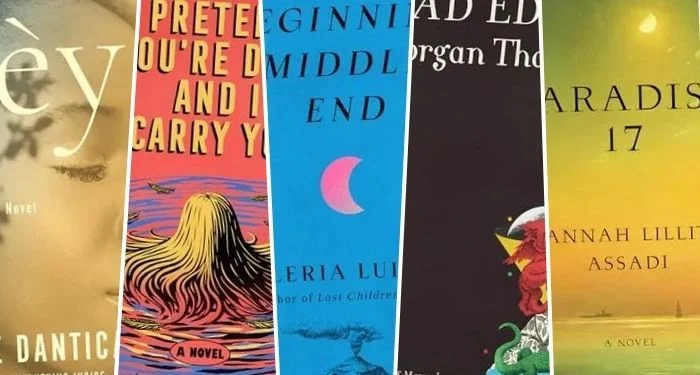
Following last month’s announcement of the sweeping longlists across Fiction, Nonfiction, Poetry, Translated Literature, and Young People’s Literature, the National Book Foundation has officially unveiled the highly anticipated shortlists for the 2026 National Book Awards. Among the five competitive categories, the Fiction shortlist has captured intense industry attention, spotlighting five works that grapple with inheritance, diaspora, identity, and the heavy imprint of history on personal lives.
The announcement sets the stage for the culmination of one of the literary calendar’s most prestigious events. The final winners will be revealed in November at the annual National Book Award Ceremony and Dinner in New York City. As anticipation builds across the publishing landscape, the release of the shortlist marks a critical milestone for the selected authors, their publishers, and the broader contemporary literary conversation.

The Road to the Shortlist: A Rigorous Selection Process
The path to the National Book Award shortlist is notoriously demanding. Earlier this fall, panels of independent judges—comprising esteemed authors, critics, translators, and literary professionals—culled through hundreds of submissions to assemble the initial longlists. From that substantial pool, the panels have now narrowed the field down to five finalists per category.
For the Fiction category, the 2026 shortlist represents a diverse geographical and stylistic spectrum. The nominated titles explore deeply insular personal struggles set against sweeping geopolitical backdrops, ranging from deathbed reflections in the shadow of historical conflict to cross-continental migrations and the intricacies of queer and autistic survival.
The finalists will each receive $1,000 and a bronze medal as recognition of their achievement. Meanwhile, the ultimate category winners, to be announced live at the November gala, will take home a cash prize of $10,000 alongside the foundational prestige associated with the accolade.

The 2026 Fiction Shortlist: Synopses and Critical Reception
The five novels securing a place on the 2026 Fiction shortlist offer a window into the pressing thematic concerns of contemporary literature. Critics and industry reviewers have widely praised the selections for their emotional resonance and structural ambition.
Paradiso 17 by Hannah Lillith Assadi
Published by Knopf, Hannah Lillith Assadi’s third work of fiction, Paradiso 17, centers on a Palestinian man’s reflections from his deathbed. Assadi, whose previous novel The Stars Are Not Yet Bells garnered widespread acclaim, has crafted a narrative that reviewers describe as both quiet and piercing. Publishers Weekly lauded the book as a "beautiful and heartbreaking novel," while The New York Times characterized it as "a study in inheritance, in the afterlife of ideology, in the way history seeps into every curated idyll." The novel explores how individual memories intertwine with generational and political displacement, cementing Assadi’s reputation for lyrical prose and profound psychological insight.
Dèy by Edwidge Danticat
Edwidge Danticat, a recipient of the National Book Critics Circle Award for Everything Inside, returns with Dèy, published by Random House Large Print. Set against the backdrop of the Haitian diaspora, the novel follows a Haitian American woman reckoning with the personal costs of concealed trauma. Kirkus hailed the book as a "powerful study of motherhood, nationhood, and violence," while The New York Times described it as "a love song and an elegy for the Haitian diaspora." Danticat’s latest contribution further solidifies her standing as a vital chronicler of displacement, resilience, and the enduring bonds of community.

Pretend You’re Dead and I Carry You by Julián Delgado Lopera
Julián Delgado Lopera follows up their acclaimed work Fiebre Tropical with Pretend You’re Dead and I Carry You, published by Liveright. Set for release in July 2027, the novel dives deep into Colombia’s complex and often taboo queer culture. The narrative follows a protagonist torn between the human need for belonging and the imperative of authentic self-expression. Publishers Weekly called it a "scintillating narrative," and Kirkus praised it as a "fierce Colombian coming-of-age story shaped by grief and secrecy," highlighting Delgado Lopera’s sharp ear for dialogue and unflinching examination of social marginalization.
Beginning Middle End by Valeria Luiselli
Valeria Luiselli, whose previous novel Lost Children Archive earned extensive international praise, returns with Beginning Middle End, published by Random House Large Print. The novel chronicles a writer and her 12-year-old daughter embarking on a road trip through Sicily while grappling with their family legacy. Publishers Weekly named the book "a masterpiece," describing it as an arresting and layered novel, while Kirkus praised it as "an offbeat migration story as piercing and artful as any in Luiselli’s oeuvre." The work continues Luiselli’s exploration of mobility, memory, and the stories families tell to make sense of the world.
Mad Eden by Morgan Thomas
Rounding out the shortlist is Mad Eden, the brilliant debut novel by Morgan Thomas, author of the story collection Manywhere. Published by Picador, the novel follows a trans telehealth worker whose hard-won safety and happiness with a partner are suddenly threatened. Library Journal praised the book as a "breathtaking and destabilizing story" that offers a deep dive into caretaking, obligation, love, and survival within a hostile world. Kirkus called it "radically inventive, compassionate, and perspicacious," while Publishers Weekly emphasized its propulsive, page-turning quality. Thomas’s nomination signals the growing prominence of distinct queer and neurodivergent perspectives in contemporary literary fiction.

Broader Implications and Industry Impact
The announcement of the National Book Award shortlists arrives at a crucial juncture for the publishing industry. Historically, selection as a National Book Award finalist or winner serves as a significant catalyst for commercial success and long-term literary legacy. Books featured on the shortlist routinely experience a substantial surge in sales, broader library adoption, and heightened international translation rights interest.
Furthermore, the 2026 list underscores a continued shift toward global, intersectional, and cross-cultural narratives within major American literary prizes. By elevating stories that traverse international borders—from Sicily and Colombia to Palestine and the Haitian diaspora—the National Book Foundation continues to validate literature that reflects an increasingly interconnected world.
As the literary community turns its focus toward the November ceremony, publishers, booksellers, and readers alike will engage in spirited speculation regarding which of these five exceptional finalists will ultimately claim the crown. Regardless of the final outcome, the 2026 fiction shortlist has already established itself as a definitive snapshot of the year’s most vital storytelling.