Angie Faith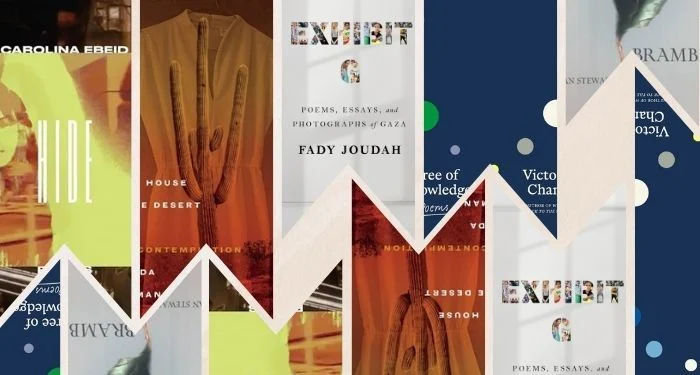
Following the release of the comprehensive longlists across categories including Fiction, Nonfiction, Poetry, Translated Literature, and Young People’s Literature last month, the National Book Foundation has officially unveiled the highly anticipated shortlists for the 2026 National Book Awards. Among these announcements, the five finalist volumes selected for the Poetry category represent some of the most conceptually deep, formally daring, and culturally resonant voices in contemporary literature.
The culmination of this year’s literary prize cycle will take place at the annual National Book Award Ceremony and Dinner this coming November. During the gala event, all shortlisted finalists will be recognized with a prize of $1,000. Ultimately, the winner in each individual category will receive a prestigious bronze medal alongside a cash award of $10,000.
A History of Literary Excellence and Prize Evolution

Established in 1950, the National Book Awards have grown to become one of the United States’ most prestigious literary honors. Administered by the National Book Foundation—a non-profit organization whose mission is to celebrate the best of American literature, expand its audience, and ensure that books occupy a prominent place in American culture—the awards originally sought to recognize books of exceptional quality written by American citizens and published by American presses. Over the decades, the scope and eligibility criteria of the awards have evolved to reflect a more inclusive and diverse literary landscape.
The addition of categories such as Translated Literature in recent years, alongside the sustained prominence of foundational categories like Poetry, underscores the evolving nature of the American literary canon. The selection process itself is rigorous. Independent panels of judges—comprising esteemed writers, critics, librarians, booksellers, and scholars—read hundreds of submissions before narrowing the field down to longlists, shortlists, and finally, the ultimate winners.
Chronology of the 2026 Award Cycle
The path to the 2026 National Book Award shortlists follows a tightly coordinated multi-month timeline designed to build public engagement and honor literary achievement:

- Early Autumn (September): Publishers and authors submit eligible titles published within the designated award year.
- Mid-September: The National Book Foundation announces the longlists, identifying ten standout titles in each of the five official categories.
- Mid-October: The pool of ten is officially winnowed down to a competitive shortlist of five finalists per category, setting the stage for the final round of deliberation.
- November: The National Book Award Ceremony and Dinner convenes in New York City, where the category winners are announced live.
The 2026 Poetry Shortlist: Detailed Overview and Critical Reception
The five collections comprising the 2026 National Book Award poetry shortlist offer a sweeping exploration of human consciousness, historical trauma, ecological awareness, and domestic space. Below is an examination of the nominated titles, their publishers, release dates, and critical commentary surrounding their publication.
Tree of Knowledge by Victoria Chang
Published by Farrar, Straus and Giroux on July 7, 2026, Victoria Chang’s Tree of Knowledge: Poems has captivated critics with its intellectual rigor and formal inventiveness. Reviewers have drawn compelling parallels between Chang’s poetic framework and the visionary artworks of Hilma af Klint. The Cincinnati Review praised the collection, noting, “Like af Klint’s artworks, Chang’s poems are vibrant and conceptually deep.” Meanwhile, Mother Jones observed the collection’s philosophical scope, stating, “Chang writes in both absolutes and inquiries as she artfully taps into what it means to be human while parsing through both personal and collective histories.” Chang continues to cement her status as a foundational voice in contemporary American poetry through her ability to weave abstract concepts into deeply felt lyrical experiences.
Hide by Carolina Ebeid
Released by Graywolf Press on March 3, 2026, Carolina Ebeid’s Hide explores the complex mechanics of lineage, diaspora, and memory. Publishers Weekly described the collection as “a memorable and skillful excavation of identity and inheritance.” The National Book Awards judges further contextualized the linguistic and cultural depth of the work, noting that Ebeid “interlaces American English, Palestinian Arabic, and Cuban Spanish as she excavates memories—of her Palestinian father and Cuban mother’s forced migrations—in order to reconstruct her own ancestry and chart her path forward.” The collection stands out for its multilingual dexterity and its refusal to treat heritage as a static monument, instead viewing it as living, shifting terrain.

Still House in the Desert: An eco-contemplation by Brenda Hillman
Published by Wesleyan University Press on September 8, 2026, Still House in the Desert marks the culmination of a major artistic milestone for acclaimed poet Brenda Hillman. The National Book Awards citation highlights the monumental nature of the work, describing how Hillman “concludes her masterful quartet about time with an ecological journey into a family home of the mid-20th century. Here, magical poems explore rooms as opportunities for dream, and domestic objects as the dream-shapes where culture and imagination inform each other.” Hillman’s signature blend of environmental attentiveness and lyric philosophy receives its most distilled and mature expression in this volume, positioning the home not merely as a domestic enclosure, but as an ecosystem tied to planetary rhythms.
Exhibit G: Poems, Essays, and Photographs of Gaza by Fady Joudah
Released by Milkweed Editions on September 22, 2026, Fady Joudah’s Exhibit G is a multimedia exploration of profound historical urgency. The collection incorporates poetry, essays, and photographs to document the reality of Palestinian life under siege and genocide. The L.A. Review of Books commended the sixth collection from Joudah, observing that the work is “animated by repetition and contradiction, [and] is stunning in its refusal to indulge categorical imperatives.” Writing for Lit Hub, critic Bilal Urick emphasized the groundbreaking nature of the publication, noting that Exhibit G “is among the first of its kind. The multimedia poetry collection—assembled in the diaspora, and yet, across form, content, and voice, never anywhere but Gaza—charts Palestinian life under genocide.” Joudah’s collection challenges traditional boundaries of the book format, bringing visual and textual evidence into a searing dialogue.
Bramble by Susan Stewart
Published by the University of Chicago Press on April 30, 2026, Susan Stewart’s Bramble draws on rich traditional forms to address contemporary and timeless philosophical questions. The National Book Awards described the volume as an expansive project that “evokes ballads, fairy tales, and the biblical book of Judges in a three-part contemplation on contradiction, entanglement, and struggle that explores personal suffering and change, applying that philosophy to the world around us.” Stewart demonstrates how older narrative archetypes can be effectively repurposed to interrogate the complexities of human ethics, personal endurance, and environmental entanglement.
Broader Impact and Implications for Contemporary Letters

The announcement of the 2026 poetry shortlist arrives at a time of renewed public interest in verse as a medium for processing collective crises, technological shifts, and sociopolitical transformations. By selecting collections that engage directly with international conflict, ecological degradation, ancestral migration, and domestic philosophy, the National Book Foundation judges have signaled that contemporary poetry remains an essential instrument for public discourse and emotional clarity.
Economically and culturally, a National Book Award shortlist placement carries significant weight for both authors and independent publishing houses. For presses such as Graywolf Press, Milkweed Editions, Farrar, Straus and Giroux, Wesleyan University Press, and the University of Chicago Press, the nomination provides increased visibility, expanded readership, and heightened distribution across independent bookstores and libraries nationwide. Furthermore, the financial recognition—bolstering both finalists and category winners—serves as a vital institutional investment in the labor of poets whose works often operate outside commercial mainstream structures.
As the literary community anticipates the formal presentation of the awards in November, these five shortlisted books stand as testament to the vitality, resilience, and expansive artistic range defining poetry in 2026.