Ali Ikhwan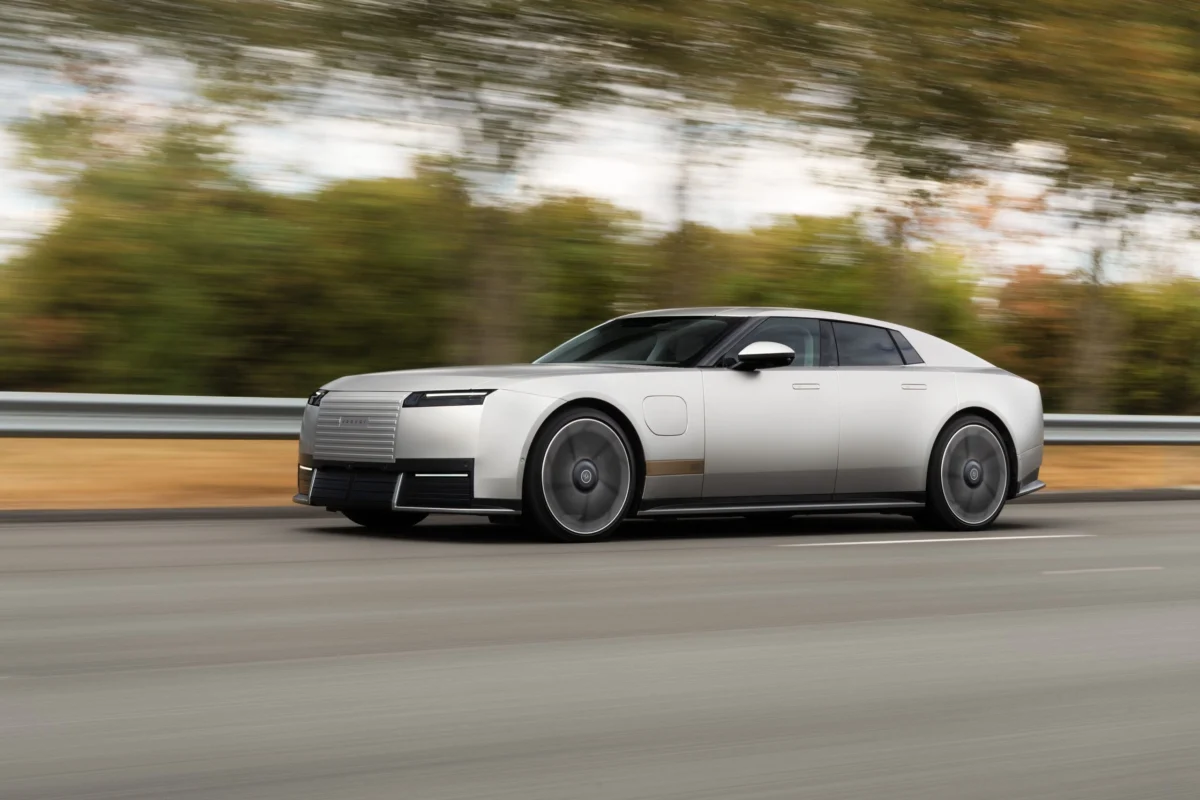
The automotive industry has witnessed few transformations as turbulent and ambitious as Jaguar’s recent pivot toward a pure-electric future. Following a controversial branding campaign in November 2024 that notably omitted images of cars, the British automaker has now moved to anchor its new identity in the physical world. On Tuesday, in a high-profile event held in New York City, Jaguar officially pulled the covers off the Type 01, a four-door luxury grand tourer that serves as the production evolution of the polarizing Type 00 prototype. This launch marks the end of an agonizing hiatus for the marque, which had ceased sales of new vehicles during its transition, and serves as a definitive test of whether a heritage brand can successfully reinvent its market positioning.
A Chronology of Transformation
The path to the Type 01 has been defined by high-stakes risk and public scrutiny. In November 2024, Jaguar initiated a radical rebranding strategy that sparked intense debate among industry analysts and traditionalists. The company shifted its focus entirely away from its historical internal combustion lineup toward a high-luxury, electrified future. By December, the unveiling of the Type 00 prototype further exacerbated these tensions, with the design drawing both sharp criticism and intrigue.
The period between the announcement and the current launch was marked by significant corporate upheaval. Notable among these changes was the departure of Gerry McGovern, the chief creative officer of Jaguar Land Rover (JLR), who had been instrumental in shaping the brand’s new aesthetic direction. Despite the internal turnover and the external backlash against the "no-car" marketing strategy, Managing Director Rawdon Glover has maintained a steadfast commitment to the company’s new trajectory. Glover’s leadership during this period has been defined by a refusal to pivot back to traditional design language, banking instead on the belief that the finished product would validate the company’s bold creative departure.
Design Philosophy and Aerodynamic Engineering
The Type 01 retains the striking silhouette of its predecessor, characterized by a low roofline, an elongated hood, and an extended rear overhang. Despite the visual weight suggested by its dimensions—standing 5,235 mm in length—the vehicle is a triumph of aerodynamic efficiency. Through the use of active vanes, a deployable spoiler, and sophisticated airflow management, the engineers have achieved a drag coefficient of 0.23 Cd, a figure that is remarkably low for a vehicle of this segment.
The production model incorporates several refinements to the Type 00 prototype, most notably the addition of rear doors, which provide a more balanced aesthetic profile. The front end has been softened to move away from the overly stark, bluff appearance of the prototype, while the rear features horizontal, full-width "hidden-until-lit" lighting, emphasizing the width and low stance of the vehicle. These design choices aim to move the car away from retro-futuristic concepts and into a space of modern, high-end grand touring.
Technical Specifications and Performance
Beneath the exterior, the Type 01 is engineered to compete at the absolute pinnacle of the electric vehicle market. It utilizes a tri-motor configuration—a 260-kW motor on the front axle paired with two 310-kW motors at the rear—delivering a combined output of 1,030 Pferdestärke (PS) and 1,365 Newton-meters of torque. This powertrain allows for a 0-to-62 mph sprint in just 3.2 seconds, with a secondary burst from 62 to 112 mph in a mere four seconds, reinforcing the company’s "power in reserve" philosophy.
The vehicle is built upon a dedicated 850-volt architecture, supporting a 118-kilowatt-hour usable battery. According to internal projections, this provides an EPA-estimated range of 400 miles, with WLTP figures extending to 450 miles. To address consumer concerns regarding charging infrastructure, the Type 01 supports 350 kW rapid DC charging, which is capable of replenishing 200 miles of range in approximately 13 minutes. All-wheel steering is standard, an inclusion intended to mitigate the physical footprint of the vehicle and ensure agility in urban environments.
Interior Innovation and the "Impossible Panel"
Inside, Jaguar has moved toward a minimalist, tech-forward environment. The cabin is bisected by a central spine that creates distinct zones for each passenger. In a break from traditional luxury conventions, the vehicle lacks a rear windscreen, replacing it with a "ClearSight" digital display integrated into the base of the windshield. This feed is designed to match the sightline of the side mirrors, aiming to reduce the cognitive load on the driver.
The human-machine interface consists of a 24-inch OLED curved display for the driver and a 7-inch secondary touchscreen for climate and audio controls. Notably, Jaguar has eliminated all physical switchgear in favor of touch-based inputs. The cabin experience is further defined by features such as "hot stone" massage seats and a sophisticated air purification and fragrance diffusion system, reflecting the current industry trend of treating the vehicle interior as a curated sanctuary.
A point of particular pride for the engineering team is the "impossible panel," a single, unbroken exterior component stretching over three meters from the A-pillar to the rear. The development of this panel required 1,500 hours of specialized work, including the reintegration of retired engineering expertise to master the complex, acute angles that standard modeling systems deemed unachievable.
Market Positioning and Competitive Strategy
With an anticipated starting price of approximately $170,000, Jaguar is positioning the Type 01 to occupy a specific "Goldilocks zone" in the luxury market. It sits above the premium sector but below the stratospheric pricing of ultra-luxury marques like Ferrari and Lamborghini. This strategy acknowledges the current struggle of Western automakers to successfully penetrate the high-end EV space, where brands like Mercedes-Benz have faced significant challenges.
Managing Director Rawdon Glover views this pricing strategy as essential for survival in an era where electric cars must earn their status based on performance and design rather than simply their power source. "One of us is going to break through the glass ceiling and make a success of EVs at elevated price points," Glover noted during the launch. "The best way to do that is not to play into the tropes of EVs."
The Challenge of Cultural Relevance
The success of the Type 01 rests heavily on whether it can attract a new, younger, and more diverse demographic. Jaguar’s leadership is cognizant of the fact that the traditional buyer profile—often associated with legacy luxury vehicles—may not be the base upon which a sustainable electric future can be built.
Jaguar acknowledges the rapid progress of Chinese manufacturers such as Li Auto and XPeng, noting that their speed of innovation and integration of technology have set a new benchmark for the industry. While Glover maintains that there is a distinct gap between these volume-focused competitors and a heritage brand like Jaguar, he admits that the market is changing rapidly. The company’s focus on its heritage and brand identity is intended to be its primary differentiator in a field that is increasingly becoming crowded with feature-heavy, commodity-driven electric vehicles.
Implications and Future Outlook
For Jaguar, the next 24 months are critical. The company has filed over 360 patents during the development of the Type 01, signaling a massive investment in intellectual property. However, the true measure of success will be determined by whether the brand can successfully transition its public perception from a manufacturer of traditional luxury cars to a leader in the high-end electric revolution.
If the Type 01 achieves its volume targets, it will validate the decision to move up-market and abandon the mid-tier premium segment. If it fails, the company faces a precarious future in an industry that is shifting away from its core historical strengths. As the automotive sector watches closely, the Type 01 stands not just as a new car, but as the primary instrument of a historic corporate gamble. The company’s ability to prove that "Jaguar is worth paying more for" will determine whether the brand maintains its relevance for the next generation of luxury consumers.