
 Ali Ikhwan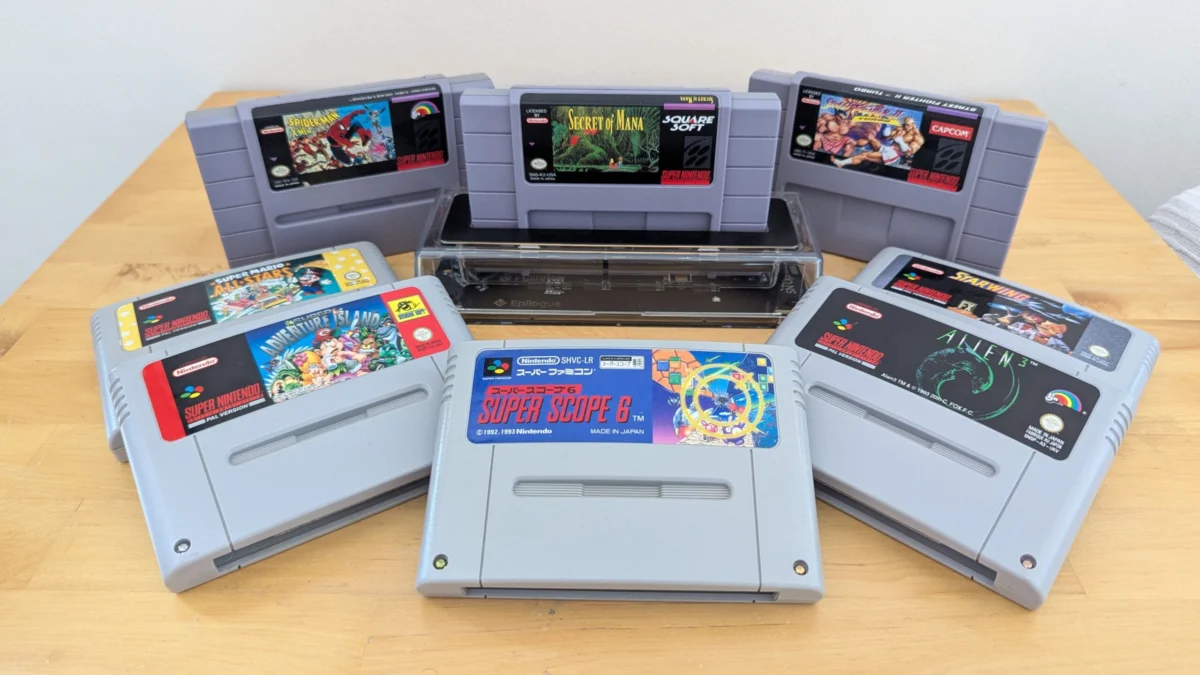
The landscape of interactive entertainment is currently navigating a significant transition as the industry pivots toward an all-digital future. With major hardware manufacturers like Sony signaling a phase-out of physical disc production for PlayStation consoles as early as 2028, the concept of media ownership has become a central point of debate among consumers and historians alike. Amidst this shift, the retro gaming sector is experiencing a renaissance, driven by a desire for tangible hardware and the preservation of gaming history. Romania-based hardware developer Epilogue has positioned itself at the forefront of this movement with the release of the SN Operator, a specialized peripheral designed to bridge the gap between 1990s analog cartridges and modern computing environments.
The SN Operator follows the commercial and critical success of the GB Operator, which launched in early 2021 to provide a similar interface for Game Boy, Game Boy Color, and Game Boy Advance titles. This latest iteration scales the technology for the Super Nintendo Entertainment System (SNES) and the Super Famicom (SFC), offering a plug-and-play solution that prioritizes authenticity, ease of use, and legal archival capabilities. As the market for original hardware becomes increasingly fragmented by aging components and the obsolescence of cathode-ray tube (CRT) televisions, the SN Operator emerges as a pragmatic alternative for enthusiasts who retain their original game libraries.
Hardware Design and Technical Specifications
The SN Operator is housed in a transparent perspex cuboid, maintaining the aesthetic language established by its predecessor. However, the device has been significantly enlarged to accommodate the physical dimensions of SNES cartridges, which are substantially larger than their handheld counterparts. The unit measures 185 mm in length, 70 mm in width, and 37 mm in height. Despite its larger footprint, the device remains relatively lightweight at 230 grams.
.jpg)
To ensure stability during cartridge insertion and removal, Epilogue has equipped the base with a high-friction rubber pad. A notable hardware refinement in the SN Operator is the inclusion of spring-loaded guard flaps within the cartridge slot. This design choice serves a dual purpose: it protects the internal 62-pin connector from dust and debris while mimicking the tactile experience of the original Nintendo hardware. Connectivity and power are handled via a single 1-meter braided USB-C to USB-C cable, ensuring compatibility with modern laptops and desktop configurations across Windows, macOS, Linux, and Raspberry Pi platforms.
A Chronology of Retro Gaming Integration
To understand the significance of the SN Operator, one must look at the evolution of how classic games have been accessed over the last three decades:
- 1990–1996: The Primary Era: Games were played exclusively on original silicon via analog signals to CRT televisions. Regional lockout chips (CIC) prevented cross-continental play between NTSC (North America/Japan) and PAL (Europe/Australia) territories.
- 1997–2010: The Rise of Software Emulation: The advent of PC-based emulators like ZSNES and Snes9x allowed users to play game files (ROMs) digitally. This era was characterized by legal ambiguity and the loss of the physical "ritual" of gaming.
- 2011–2020: The FPGA and Mini-Console Wave: Nintendo’s SNES Classic Edition and boutique hardware like the Analogue Super Nt introduced high-definition output. Field-programmable gate array (FPGA) technology sought to replicate original hardware logic at the transistor level.
- 2021–Present: The Hybrid Approach: Epilogue’s Operator line represents a hybrid model. It utilizes the physical cartridge as the "key" and data source, while offloading the processing to a computer via optimized software emulation.
The Playback Software Ecosystem
The core of the SN Operator experience is the "Playback" software, a proprietary interface developed by Epilogue to streamline the user experience. Upon inserting a cartridge, the software identifies the title, region, and authenticity of the game. This serves as a vital tool for collectors, as the market for high-value SNES titles has been flooded with counterfeit "repro" carts in recent years.
The software utilizes the BSNES emulator core by default, which is widely regarded in the technical community for its high degree of accuracy and "cycle-accurate" performance. For users with specific performance needs, the software also includes five versions of Snes9X and allows for the manual addition of third-party cores.
.jpg)
Beyond mere playback, the software provides an exhaustive suite of visual and functional tools:
- CRT Simulation: Advanced filters that replicate the scanlines and phosphor glow of vintage televisions.
- Save State Management: Unlike the original hardware, which relied on internal cartridge batteries (many of which are now failing), Playback allows for virtual save states. This enables players to save their progress at any frame of animation.
- Archival Tools: The device allows users to back up their cartridge’s ROM and save data to a digital format. This is a critical feature for preservation, as it allows players to replace failing save batteries without losing decades of progress.
Overcoming Historical Regional Barriers
One of the most significant technical achievements of the SN Operator is its total circumvention of the SNES’s historical regional restrictions. During the 1990s, Nintendo utilized both physical and electronic barriers to segment the global market. North American cartridges featured a rectangular, blocky design that would not fit into the rounded slots of Japanese or European consoles. Furthermore, internal lockout chips would prevent a console from booting a game from a different territory.
The SN Operator’s slot is designed to accept all physical cartridge shapes. More importantly, its software interface ignores lockout chips and compensates for the differences between NTSC (60 Hz) and PAL (50 Hz) video standards. Historically, PAL versions of games often ran 17% slower than their NTSC counterparts and featured "letterboxing" (black bars at the top and bottom of the screen). The SN Operator allows European players to experience their original cartridges at the intended 60 Hz speed, effectively "uncapping" the performance of games like Street Fighter II Turbo and Star Fox.
Market Data: The Rising Cost of Nostalgia
While the SN Operator itself is priced competitively at $60, the broader context of its utility is dictated by the secondary market for original software. According to historical pricing data from market aggregators, the value of "blue chip" SNES titles has seen a meteoric rise over the last decade.
.jpg)
| Title | 2014 Avg. Price (Loose) | 2024 Avg. Price (Loose) | Percentage Increase |
|---|---|---|---|
| EarthBound | $175 | $350 – $450 | 128% |
| Chrono Trigger | $95 | $200 – $250 | 136% |
| The Legend of Zelda: A Link to the Past | $30 | $35 – $45 | 33% |
| Hagane: The Final Conflict | $150 | $500+ | 233% |
This data suggests that while the SN Operator is an affordable entry point for those who already own libraries, the "barrier to entry" for new collectors is substantial. Epilogue has addressed this by ensuring the device supports niche peripherals, such as the SNES Mouse and the Super Scope, allowing users to extract maximum value from their existing collections without needing to track down expensive, obsolete hardware like CRT monitors or original light-gun sensors.
Analysis of Implications and Future Development
The SN Operator represents a shift in the philosophy of game preservation. By decoupling the cartridge from the original aging silicon and moving it to a software-defined environment, Epilogue is extending the lifespan of physical media indefinitely. However, the device is not without its current limitations. Technical reviews have noted that the "full-screen" mode in the Playback software currently fails to utilize the entire vertical and horizontal space of modern monitors, often leaving redundant black borders beyond the standard 4:3 aspect ratio.
Furthermore, the lack of support for "translation packs" is a notable omission for a region-free device. Many Super Famicom exclusives, particularly JRPGs like Bahamut Lagoon or Fire Emblem: Genealogy of the Holy War, remain untranslated. The ability to apply a software-based English patch to an authentic Japanese cartridge is a highly requested feature.
In a statement regarding future updates, Epilogue confirmed that they are actively investigating the implementation of translation pack support and a more robust online multiplayer component. The latter would allow players to engage in two-player games over the internet using their physical cartridges, a feat that was impossible during the console’s original lifecycle.
.jpg)
Conclusion
The SN Operator stands as a testament to the enduring legacy of the 16-bit era. By providing a professional-grade, legal, and user-friendly interface for original media, Epilogue has created a tool that serves both the casual nostalgic player and the serious gaming historian. As the industry moves further away from physical ownership, devices like the SN Operator ensure that the "cartridge era" remains accessible, functional, and preserved for future generations. While the cost of software remains a hurdle for newcomers, the hardware itself sets a new standard for the intersection of vintage media and modern technology.







