Ali Ikhwan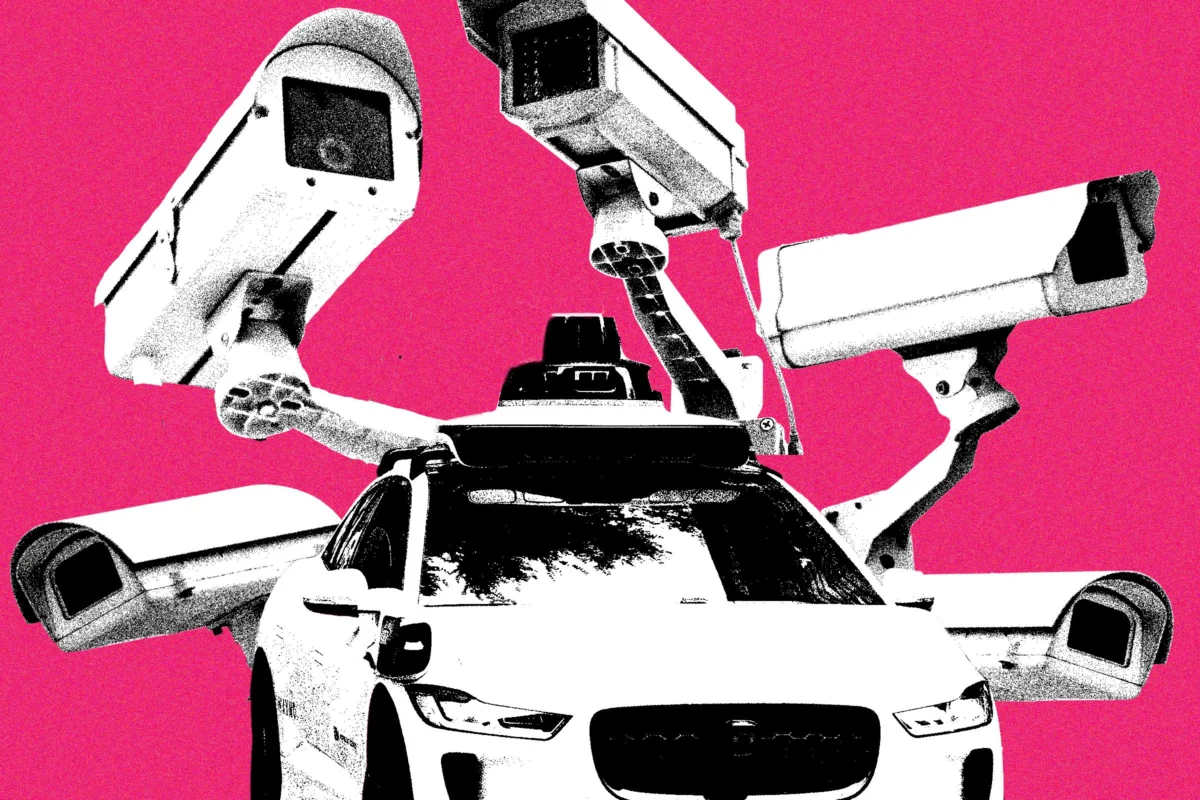
One afternoon this past summer, a self-driving Waymo vehicle pulled into a parking lot in San Mateo County, California, and remained stationary until local law enforcement arrived. The intervention was prompted by a 911 call placed by Waymo’s remote monitoring team—human operators who were observing the vehicle’s interior via a network of onboard cameras. The remote staff had flagged a concerning scene: two individuals, appearing to be teenagers, were brandishing what looked like a black handgun inside the cabin, handling the weapon and consuming alcohol between simulated shots.
While the incident concluded without violence—the object was identified as a toy firearm discharging water-filled Orbeez pellets—the episode serves as a stark reminder of the "invisible" presence monitoring passengers in the burgeoning robotaxi industry. This event has ignited a broader debate regarding the balance between passenger safety and the erosion of individual privacy in autonomous transport, a sector where the line between a protective security feature and invasive surveillance remains dangerously thin.
A New Era of Cabin Monitoring
Modern autonomous vehicles (AVs) are marvels of exterior sensing, utilizing a combination of LiDAR, radar, and high-definition cameras to navigate complex urban environments. However, the internal landscape of these vehicles is equally high-tech. To ensure safety and enforce operational policies, companies such as Waymo, Zoox, and Tesla have equipped their cabins with comprehensive monitoring systems.
These cameras serve multiple functions: they verify that riders meet age requirements, ensure the vehicle remains clean, detect lost property, and prevent illicit or hazardous behavior. Earlier this year, Waymo utilized its cabin monitoring system to intervene in rides where occupants were suspected of violating age policies, with remote employees activating vehicle intercoms to query passengers. For many riders, the sudden intrusion of a disembodied voice from a control center provides a jarring reminder that, despite the lack of a human driver, the cabin is far from private.
The Regulatory Vacuum and Terms of Service
The legal framework governing this data collection is currently underdeveloped. In the United States, there is no comprehensive federal privacy law covering the data harvested by autonomous systems. Instead, the industry relies on "terms of service" agreements—lengthy, often dense legal documents that users must accept to access ride-hailing applications. By clicking "I agree," passengers grant companies broad latitude to record, store, and, in certain instances, share their data.
Matthew Guariglia, a senior policy analyst at the Electronic Frontier Foundation (EFF), argues that the current state of affairs leaves consumers uniquely vulnerable. "We are being essentially abandoned by our lawmakers when it comes to consumer privacy and what companies can do with information after they have collected it," Guariglia says. He warns that the perception of the car as a private sanctuary is a relic of the past, advising riders to "behave as if there is a jumpy person in the front seat," because, in a digital sense, there often is.
Corporate Policies and Data Practices
Industry leaders maintain that their internal camera systems are essential for security. Waymo, for instance, utilizes automated technology to flag potential safety violations for human review. A 2025 patent filed by the company outlines a sophisticated system for conducting "predetermined ride checklists" before, during, and after a transit session. While the company has not confirmed the full extent of this system’s implementation, it reflects the trajectory of the industry toward total automated oversight.
Zoox, a subsidiary of Amazon, is similarly transparent about its recording habits, noting that its interior cameras are designed to record the entirety of a ride. While the company claims it does not save recordings of conversations between riders and support staff, the data gathered remains a cornerstone for product development and operational efficiency.
Tesla, entering the robotaxi fray with its Cybercab, utilizes a more granular opt-in structure. A green indicator on the central touchscreen alerts passengers when the camera is active. However, for those in the company’s "early access" programs, data sharing is often a mandatory condition of service, creating a tiered privacy landscape where early adopters trade personal data for the privilege of testing new technology.
Historical Precedents and Privacy Concerns
The skepticism surrounding robotaxi surveillance is rooted in the poor track record of the automotive industry regarding data stewardship. A 2023 investigation by Reuters revealed that Tesla employees had, over several years, circulated sensitive images captured by customer vehicles, including footage of individuals in compromising positions and footage of traffic collisions. Although Tesla maintained that its data collection was for the purpose of improving autonomous software and that recordings were anonymized, the technical reality allowed for the potential identification of specific vehicle locations—and by extension, the private homes and garages of their owners.
Furthermore, the industry’s history of monetizing driving data has deepened public mistrust. In 2024, General Motors faced a significant legal rebuke in California, settling for nearly $13 million in penalties after revelations that the company had sold driver data to brokers and insurance firms without explicit user consent. These incidents provide a compelling argument for those who fear that as the volume of data collected by AVs increases, the incentive for companies to find new, potentially invasive ways to monetize that information will only grow.
The Safety vs. Privacy Paradox
Proponents of interior monitoring argue that without these measures, the vehicles would be susceptible to misuse. Justin Brookman, director of technology policy at Consumer Reports, acknowledges the necessity of oversight. "You need some kind of check on what people do in a car with no driver," Brookman notes. "People are going to have sex in Waymos if there are no cameras."
The challenge lies in defining the boundaries of that oversight. If a vehicle is to be a public-facing utility, some level of monitoring is likely required to protect the equipment and ensure the safety of subsequent passengers. Yet, the current lack of transparency regarding how long this data is kept, who has access to it, and what specific triggers initiate a review by a human operator remains a significant concern for civil liberties advocates.
Implications for the Future of Transportation
As autonomous vehicles move from experimental pilot programs to ubiquitous urban infrastructure, the implications for privacy are profound. We are witnessing the transformation of the personal vehicle from a private, enclosed space into a monitored, public-facing data node.
The lack of standardized regulations means that consumers are currently left to choose between opting out of the technology entirely or accepting that their movements and actions will be subject to continuous surveillance. As the technology matures, lawmakers will eventually be forced to address these concerns. Potential future regulations could mandate "data minimization"—limiting the collection of footage to only what is strictly necessary for safety—and requiring clear, plain-language disclosures about data retention periods.
Until such protections are codified into law, the onus remains on the passenger. In a world of ubiquitous sensors and AI-driven monitoring, the concept of a private ride in an autonomous vehicle is increasingly a fiction. As the EFF’s Matthew Guariglia aptly summarizes, the interior of a robotaxi is no longer a private room, but an extension of the digital panopticon. For now, the safest approach for the average rider is to recognize the cameras as ever-present observers and to conduct themselves with the awareness that, in the digital age, being alone in a car does not mean being unobserved.