Muhammad Hendra
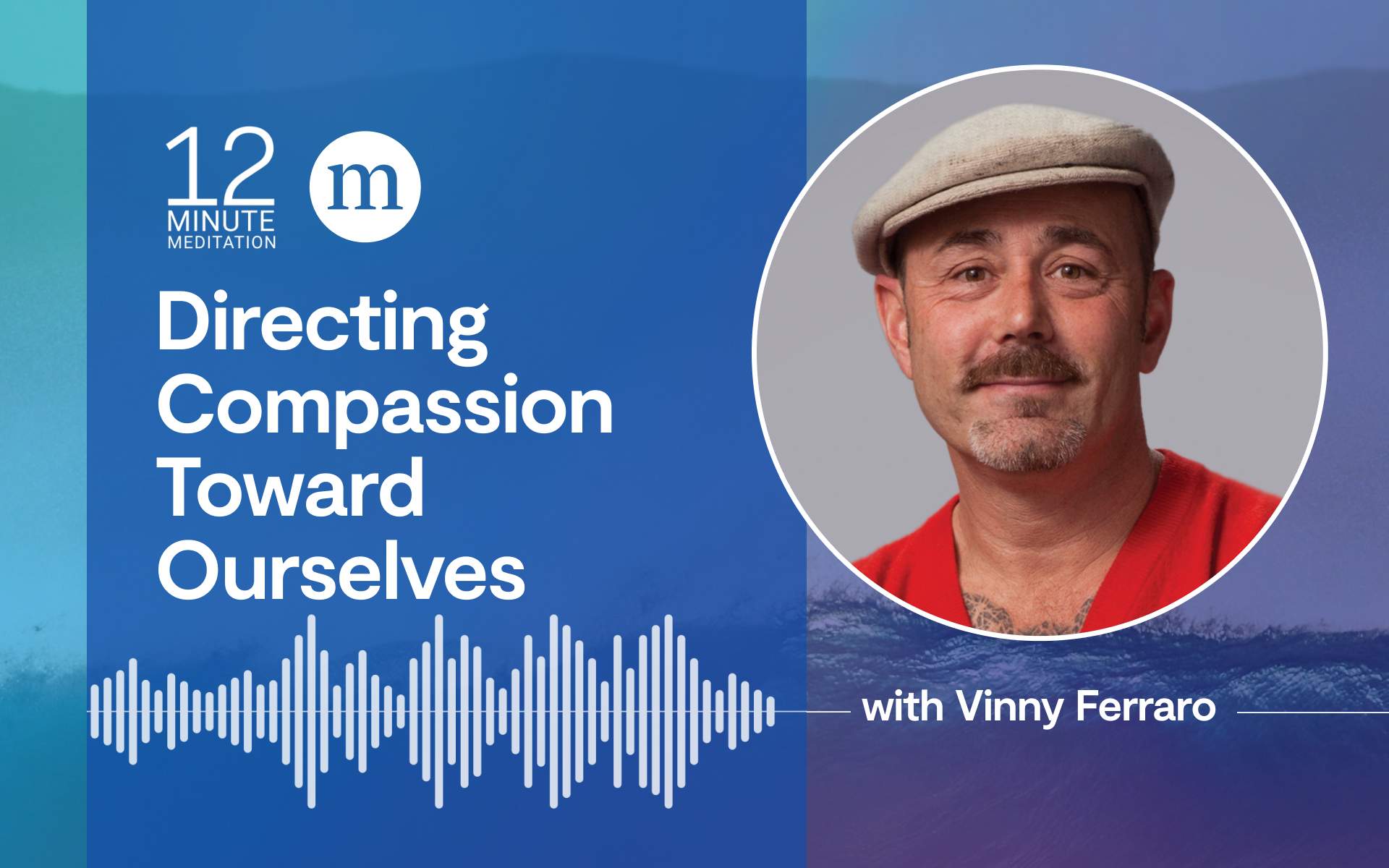
In an era defined by relentless societal pressures, digital perfectionism, and unprecedented levels of reported burnout, mindfulness experts and mental health advocates are increasingly turning their attention inward. Renowned meditation teacher and youth advocate Vinny Ferraro has released a comprehensive guided practice designed to help individuals confront their inner critics and cultivate radical self-compassion. The initiative arrives at a critical juncture for public mental health, addressing the pervasive cultural tendency to mask personal flaws behind curated public personas. By reframing vulnerability not as a liability, but as a foundational element of human resilience, Ferraro’s latest teaching provides a structured pathway toward emotional equilibrium and psychological healing.
The Core Philosophy of Radical Self-Acceptance
Modern psychological research consistently indicates that human beings are remarkably adept at self-criticism. Evolutionary psychologists suggest this negativity bias served an adaptive purpose in ancestral environments, alerting our forebears to potential social ostracization or physical danger. However, in contemporary society, this internal policing frequently manifests as chronic anxiety, imposter syndrome, and emotional exhaustion.
Ferraro’s guided meditation directly challenges this paradigm. Rather than urging practitioners to eliminate negative thoughts or eradicate perceived flaws—a strategy that often backfires by creating cognitive friction—the practice encourages individuals to meet themselves exactly where they are. By bringing mindful awareness and kindness to personal imperfections, participants learn to sit comfortably with the very difficulties they typically expend significant energy avoiding. According to contemplative traditions and modern mindfulness-based interventions (MBIs), this shift unlocks deep inner wisdom and equanimity, allowing individuals to navigate life’s inevitable stressors with greater emotional stability.
Chronology and Background of the Practice
The release of Ferraro’s guided self-compassion exercise is the culmination of decades of immersive teaching, clinical intervention, and community leadership. To understand the depth of this practice, it is necessary to examine the trajectory of Ferraro’s career in the mindfulness and contemplative spaces.
Beginning in the early 1990s, Ferraro immersed himself deeply in the practice of insight meditation, commonly known as vipassana. His early exposure to contemplative traditions laid the groundwork for a career dedicated to translating ancient meditative techniques into accessible, modern interventions for diverse populations.
In 1987, well before mindfulness entered the mainstream corporate and wellness lexicon, Ferraro began leading meditation and support groups in high-stress environments, including drug rehabilitation centers, juvenile detention halls, and transitional halfway houses. These formative years exposed him firsthand to the profound psychological toll of trauma, systemic neglect, and severe self-judgment among marginalized youth and adults.
Building upon this grassroots work, Ferraro co-founded Dharma Punx and served as a co-guiding teacher for the Against the Stream Buddhist Meditation Society, helping to democratize meditation for younger, urban demographics who often felt alienated by traditional institutional Buddhism. His pedagogical approach consistently emphasized somatic awareness, emotional regulation, and radical honesty.
In 2001, Ferraro expanded his reach by joining Challenge Day, a nationally recognized social and emotional learning (SEL) program. As Director of Training, he led experiential workshops for more than 110,000 adolescents across four continents, utilizing empathy-building exercises designed to dismantle social barriers and mitigate bullying. Simultaneously, as a board member and former Training Director for the Mind Body Awareness (MBA) Project, Ferraro authored the principal mindfulness-based curriculum tailored specifically for incarcerated youth. His pioneering work in this arena garnered national media attention and was prominently featured in the MTV documentary series If You Really Knew Me.
Today, serving as a Senior Trainer for Mindful Schools and leveraging decades of field experience, Ferraro brings this lineage of trauma-informed, compassionate instruction to the broader public through his guided exercises on self-compassion.
Supporting Data and the Mental Health Landscape
The necessity for accessible self-compassion interventions is underscored by a wealth of recent public health data regarding stress, anxiety, and emotional distress. According to reports from the World Health Organization (WHO), global prevalence rates for anxiety and depression increased by an estimated 25% during the initial years of the COVID-19 pandemic, a trend that has prompted persistent public health concerns.
Furthermore, data published by the American Psychological Association (APA) regularly highlights that a significant majority of adults report feeling overwhelmed by personal and societal stressors, including economic uncertainty, political polarization, and work-related burnout. Within organizational psychology, research pioneered by Dr. Kristin Neff and other leading self-compassion researchers demonstrates that individuals who practice self-compassion exhibit lower levels of anxiety and depression, greater emotional resilience, and higher psychological well-being compared to those who rely exclusively on harsh self-criticism for motivation.
Ferraro’s meditation addresses these empirical findings by providing a psychological counterweight. Where traditional motivational frameworks often utilize punitive self-talk—the belief that one must be hard on oneself to succeed—mindfulness-based frameworks demonstrate that sustainable growth is more effectively achieved through supportive self-regulation.
Statements and Analytical Perspectives from Contemplative Experts
While formal commentary on this specific release is integrated into the broader discourse of the mindfulness community, leading educators and mental health professionals have long championed the methodology underpinning Ferraro’s teachings.
Dr. Shauna Shapiro, a professor of psychology at Santa Clara University and a prominent researcher in neuroplasticity and mindfulness, frequently notes that what we practice grows stronger. "When we practice self-judgment, we wire our brains for criticism," Shapiro has observed in various academic forums. "Conversely, when we deliberately introduce kindness and mindfulness to our suffering, we foster neural pathways associated with healing, emotional regulation, and resilience."
Similarly, colleagues within the Mindful Schools network and the broader vipassana community view Ferraro’s work as a vital bridge between rigorous contemplative practice and practical, everyday application. Observers note that Ferraro’s unique background—spanning high-risk institutional settings, alternative youth cultures, and mainstream educational initiatives—gives his guided meditations a grounded, authentic quality that resonates deeply with individuals who might otherwise find traditional wellness spaces intimidating or overly dogmatic.
Broader Impact and Societal Implications
The implications of mainstreaming self-compassion practices extend far beyond individual wellness, touching upon organizational culture, education, and interpersonal relationships.
In educational settings, the integration of social and emotional learning programs—similar to those Ferraro helped pioneer with Challenge Day and the Mind Body Awareness Project—has been shown to improve classroom climate, reduce disciplinary infractions, and enhance academic engagement. By teaching young people to recognize and hold their emotional vulnerabilities with kindness rather than shame, educators lay the groundwork for emotionally intelligent adulthoods.
In the corporate and professional spheres, the shift toward self-compassion challenges the entrenched "hustle culture" narrative that equates self-worth exclusively with productivity and external achievement. As corporate wellness programs increasingly incorporate mindfulness and emotional regulation training, practices like those guided by Ferraro offer employees essential tools to mitigate burnout, manage stress, and foster healthier collaborative environments.
Ultimately, Vinny Ferraro’s guided meditation on directing compassion toward ourselves serves as both a personal refuge and a cultural commentary. It invites individuals to step off the treadmill of performative perfectionism and confront their inner reality with courage and grace. As contemporary society continues to grapple with complex psychological and social challenges, the cultivation of inner wisdom, equanimity, and radical self-acceptance remains an indispensable resource for individual healing and collective well-being.