The architecture of social media visibility has evolved far beyond the chronological feeds of the platform’s early years. For brands, digital creators, and enterprises navigating the competitive landscape of modern digital marketing, timing remains a critical variable in achieving algorithmic momentum. According to a comprehensive empirical analysis released by Buffer, which evaluated 9.6 million Instagram posts between January 2024 and December 2025, specific windows of time consistently generate higher engagement metrics than others. The research forms a core component of Buffer’s broader State of Social Engagement 2026 report, which synthesized performance indicators across 52 million posts spanning 10 distinct platforms.
![Best Time to Post on Instagram: Data from 9.6M Posts [Updated Sep 2026]](https://storage.ghost.io/c/6d/21/6d217297-aa70-41fe-b68d-e29e411dd3ed/content/images/2026/01/best-time-to-post-on-instagram-2026.png)
Strategic timing on Instagram operates as a foundational mechanism for early distribution. While content relevance, audio selection, and visual fidelity ultimately govern a post’s long-term success, initial user interaction dictates how the platform’s recommendation engine handles distribution. When content enters a follower’s feed at the precise moment of active platform usage, it accumulates vital early engagement signals. These metrics inform the algorithm that the asset warrants exposure to a broader audience segment.
Core Findings and Peak Engagement Windows
The data reveals that the optimal times to publish content on Instagram in 2026 are Thursday at 9 a.m., Wednesday at 12 p.m., and Wednesday at 6 p.m. Across the weekly cycle, Wednesday emerges as the most effective day overall for securing high median engagement, closely followed by Thursday and Tuesday. Conversely, Friday and Saturday demonstrate the lowest overall engagement across nearly all observed time slots.
![Best Time to Post on Instagram: Data from 9.6M Posts [Updated Sep 2026]](https://storage.ghost.io/c/6d/21/6d217297-aa70-41fe-b68d-e29e411dd3ed/content/images/2026/01/best-time-to-post-instagram-2026-heatmap.png)
Unlike legacy studies that pointed solely to uniform morning routines, contemporary data indicates a distinct shift toward evening hours. Across most days of the week, evening slots spanning from 6 p.m. to 11 p.m. routinely outperform morning hours. This behavioral pattern aligns closely with global demographic distributions on the application. According to industry audience metrics provided by Statista, more than one-third of Instagram’s user base falls within the 25 to 34 age bracket. This cohort predominantly utilizes evening hours to unwind following standard professional obligations, creating an extended window for passive consumption and interactive engagement.
Despite the dominance of evening hours, the dataset highlights notable anomalies. Most prominently, Thursday at 9 a.m. defies the evening trend, registering exceptionally high engagement rates. Analysts attribute this mid-morning surge to end-of-week professional planning cycles, during which users frequently consult industry resources and creator content before finalizing weekly schedules.
![Best Time to Post on Instagram: Data from 9.6M Posts [Updated Sep 2026]](https://storage.ghost.io/c/6d/21/6d217297-aa70-41fe-b68d-e29e411dd3ed/content/images/2026/01/best-day-to-post-instagram-2026-.png)
Day-by-Day Performance Chronology
Understanding the granular cadence of user activity allows social media managers to structure weekly content calendars with precision. The empirical breakdown of engagement across the seven-day cycle provides a framework for resource allocation:
- Monday: Engagement begins to stabilize as audiences return to professional routines. The strongest posting window occurs at 7 p.m., supported by adjacent hours at 6 p.m. and 8 p.m.
- Tuesday: Serving as the third-strongest day of the week, Tuesday maintains high engagement from mid-afternoon into early evening. The peak time is recorded at 7 p.m., preceded by high-performing slots at 3 p.m. and 5 p.m.
- Wednesday: As the highest-performing day overall, Wednesday introduces an unusual midday peak. The top time slot is 12 p.m., reflecting traditional lunch-hour browsing habits, followed by 6 p.m. and an early morning window at 8 a.m.
- Thursday: Demonstrating the week’s single highest individual engagement peak, Thursday morning at 9 a.m. leads the day, backed by 7 a.m. and 8 a.m. slots. This morning dominance is unique within the weekly dataset.
- Friday: Representing one of the weakest engagement periods of the week, Friday exhibits suppressed interaction rates throughout standard hours. Late evening windows, specifically 10 p.m. followed by 9 p.m. and an early outlier at 6 a.m., capture minimal remaining traffic.
- Saturday: Along with Friday, Saturday registers the lowest cumulative engagement across the weekly schedule. Users frequently detach from digital platforms during weekends, shifting peak interaction to late evening hours between 8 p.m. and 10 p.m. for light entertainment consumption.
- Sunday: Engagement begins to recover late in the day as users prepare for the upcoming work week. Sunday evenings from 8 p.m. to 10 p.m., peaking at 9 p.m., offer the most reliable window for weekend publishing.
Format-Specific Optimization: Reels, Carousels, and Stories
Instagram’s expanding suite of content formats serves distinct psychological needs for its user base. According to public statements from Adam Mosseri, Head of Instagram, platform behavior varies significantly depending on the format utilized. Users typically access Instagram Stories to monitor immediate updates from close social circles, utilize the Explore tab for discovery, and consume Reels for primary entertainment.
![Best Time to Post on Instagram: Data from 9.6M Posts [Updated Sep 2026]](https://storage.ghost.io/c/6d/21/6d217297-aa70-41fe-b68d-e29e411dd3ed/content/images/2026/05/image-6.png)
Despite these distinct user intents, Buffer’s aggregate analysis indicates that the overarching peak times apply uniformly across formats, though tactical execution varies by medium:
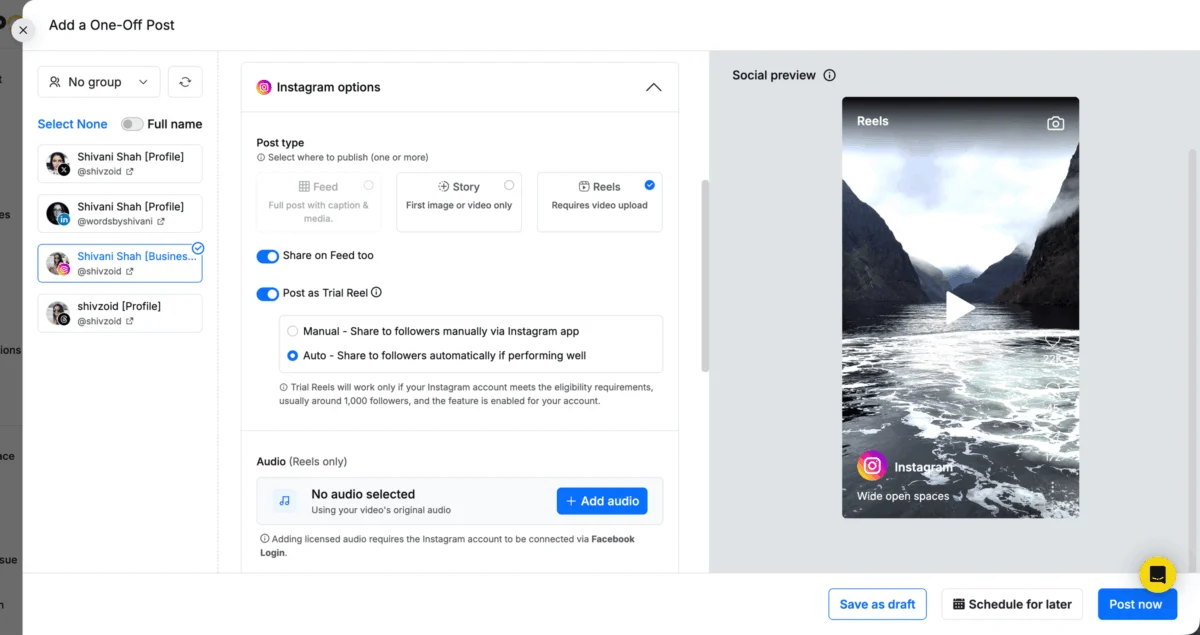
- Instagram Reels: Designed primarily for entertainment, Reels align naturally with post-work relaxation periods. Because the platform’s primary algorithmic signal emphasizes "sends per reach"—the frequency with which users share a video via direct message—delivering Reels during evening hours (6 p.m. to 11 p.m.) on Wednesdays and Thursdays maximizes the likelihood of active peer-to-peer distribution.
- Instagram Carousels: Multi-image carousels require deeper cognitive engagement and swiping behavior. These assets perform optimally during predictable pause points in the daily routine, such as the Wednesday noon lunch break or evening wind-down windows.
- Instagram Stories: Operating on a 24-hour expiration model, Stories prioritize frequency over precise timing slots. Industry recommendations suggest maintaining a steady cadence of one to two Stories daily to sustain top-of-mind awareness without fatiguing the audience.
Algorithmic Implications and Strategic Considerations
The mechanics of content discovery on Instagram have grown increasingly sophisticated. In contemporary platform architecture, recency remains a valuable catalyst for jump-starting distribution, but sustained reach depends heavily on deep engagement signals. The algorithm evaluates metrics such as comments, saves, shares, and direct message transmissions to determine whether an asset warrants placement in primary feeds and recommendation tabs.
![Best Time to Post on Instagram: Data from 9.6M Posts [Updated Sep 2026]](https://storage.ghost.io/c/6d/21/6d217297-aa70-41fe-b68d-e29e411dd3ed/content/images/2026/05/image-7.png)
Timing acts as a strategic multiplier rather than a standalone solution. Publishing exceptional content during an audience lull will frequently result in suppressed initial momentum, limiting the algorithmic runway necessary for viral or broad organic distribution. Conversely, deploying mediocre content during peak engagement windows rarely overcomes inherent deficiencies in creative execution or messaging clarity.
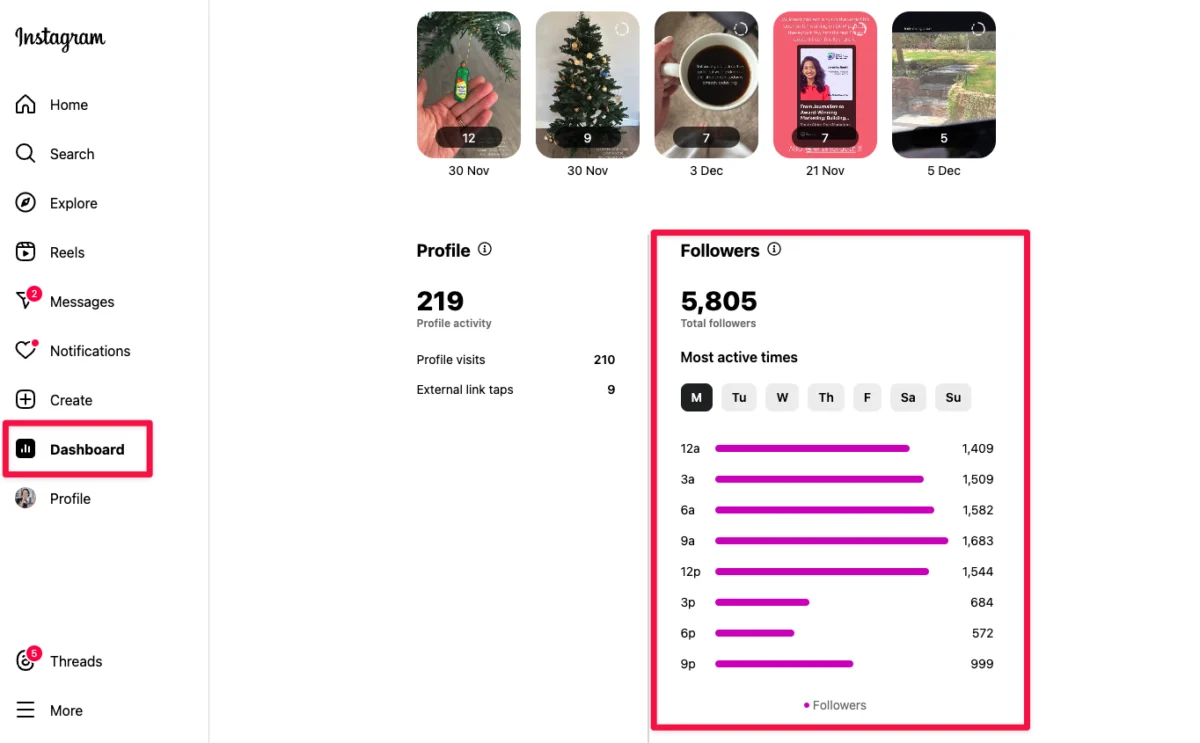
For organizations and independent creators, harmonizing posting schedules with verified audience analytics represents an accessible optimization step. While platform-wide data establishes reliable baselines, individual account demographics often diverge from global averages based on geographic location, niche industry focus, and follower base composition. Utilizing native analytics tools such as Instagram Insights allows administrators to cross-reference macro-level data with specific audience activity peaks, ensuring maximum alignment between content availability and consumer attention.