
 Indra Kusuma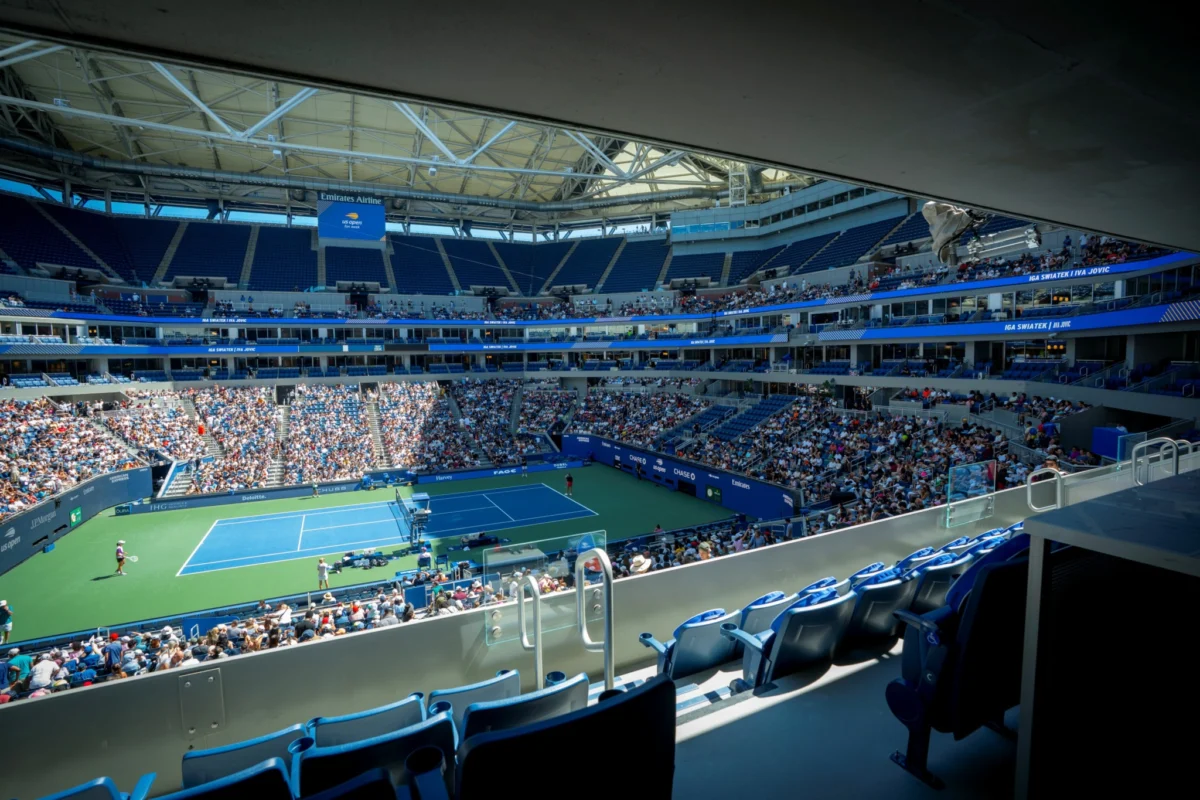
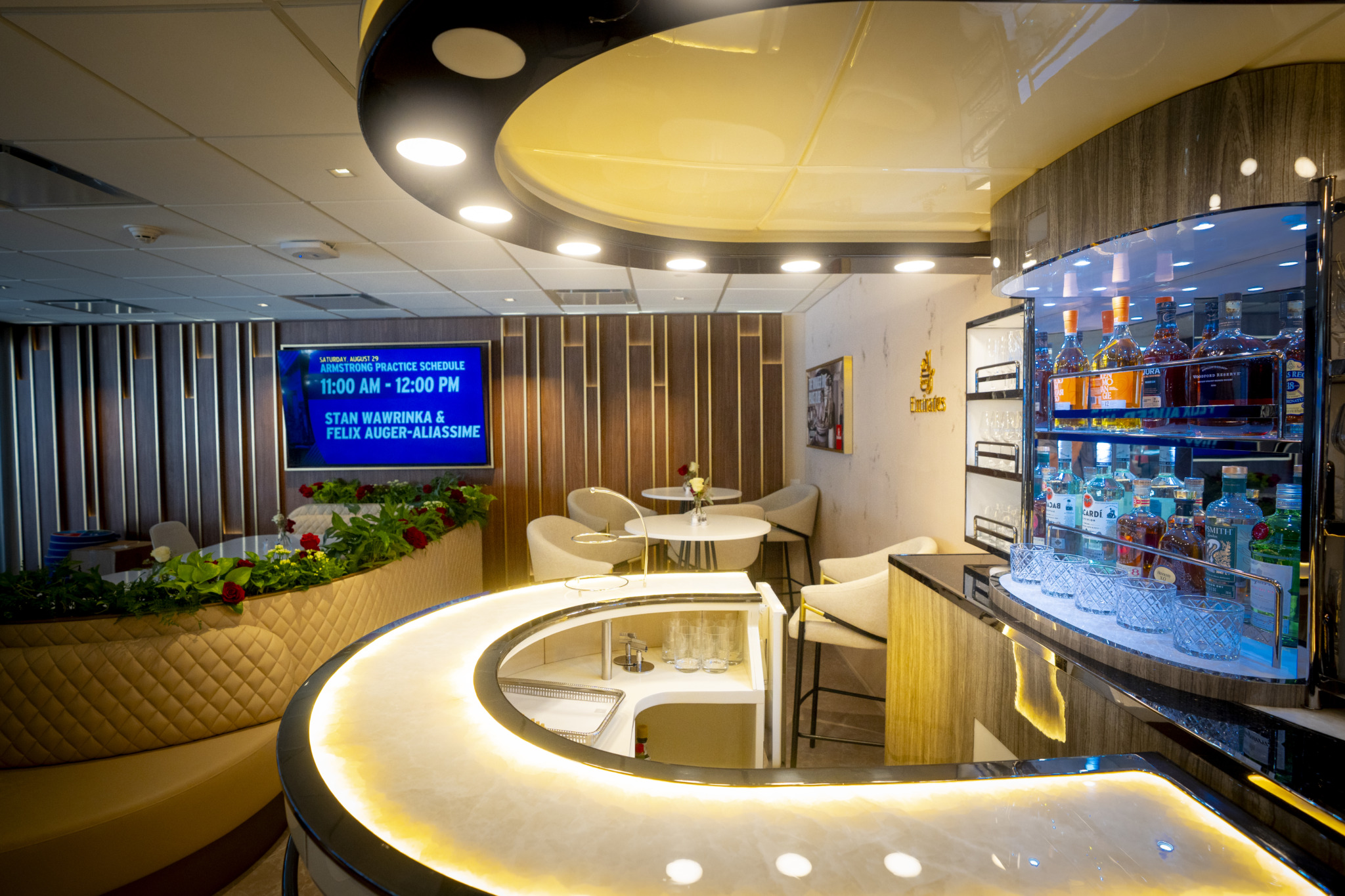
The intersection of global luxury aviation and elite professional sports has reached a new zenith at the Billie Jean King National Tennis Center. As Emirates marks its 15th consecutive year as the premier airline partner of the U.S. Open, the carrier has unveiled a 1,600-square-foot suite inside Arthur Ashe Stadium that functions as a literal translation of the Airbus A380’s front-cabin experience. Featuring signature leather-clad seating, high-gloss lacquered woodgrain, and a sophisticated aesthetic palette of ivory and champagne, the suite represents one of the most ambitious brand-immersion projects in the history of the Flushing Meadows facility.
The Architecture of the Sky on Solid Ground
The focal point of this newly reimagined hospitality space is the inclusion of the iconic horseshoe-shaped bar, a structural centerpiece synonymous with the upper deck of the Emirates A380 fleet. This marks the first time the design, originally commissioned in 2004 from the Paris-based design house Pierrejean Vision, has been replicated within the confines of a sporting venue.
The design history of this element is significant. Pierrejean Vision was tasked by Emirates two decades ago to move away from traditional airline catering concepts and toward a social, lounge-style environment. The resulting horseshoe geometry, which entered commercial service in 2008, has since become a hallmark of the airline’s flagship aircraft. By integrating this specific architectural element into the suite at Arthur Ashe Stadium, Emirates is effectively collapsing the distance between its 40,000-foot cruising altitude and the courtside intensity of a Grand Slam tournament.
Contextualizing the Billie Jean King National Tennis Center Transformation
The presence of the new suite is part of a much larger, multi-year, $800 million capital improvement project aimed at modernizing the Billie Jean King National Tennis Center. Led by the collaborative design firms HOK and ROSSETTI, this ambitious redevelopment is scheduled for completion in 2027.
The stadium, which originally opened in 1997, has undergone several phases of upgrades to address the growing demands of modern spectators. With more than one million attendees traversing the grounds during the annual August and September window, the United States Tennis Association (USTA) has prioritized a phased renovation approach to ensure the facility remains operational throughout the construction process.
The most recent iteration of this project—the second of three planned phases—has successfully introduced an expanded courtside bowl and two entirely new levels of luxury hospitality suites. These additions are designed not only to increase revenue potential but to elevate the spectator experience, offering amenities that compete with the most exclusive venues in global sports.
A Symbiotic Design Exchange
The partnership between Emirates and the U.S. Open has transcended the traditional limits of sponsorship. While the stadium suite brings the aircraft’s interior design to the tennis court, the airline has simultaneously initiated a "reverse journey" for its passengers. Throughout the duration of the tournament, travelers flying on Emirates routes are greeted by a thematic celebration of the U.S. Open, featuring specialized menus, championship-branded coasters, and dedicated headrest covers.
This bidirectional design exchange serves as a sophisticated marketing strategy. By aligning the prestige of the tennis championship with the premium service of the A380, Emirates reinforces its brand identity as a purveyor of high-end, global lifestyle experiences. For the U.S. Open, the collaboration provides a tangible link to international travel, emphasizing the tournament’s status as a premier global sporting event that draws talent and spectators from every continent.
Data and Infrastructure: The Numbers Behind the Experience
To understand the scale of this project, one must look at the logistical requirements of such an installation. The 1,600-square-foot footprint required by the Emirates suite is one of the most expansive premium spaces within the stadium. The integration of high-end materials—leather, lacquered wood, and custom lighting fixtures—necessitated a rigorous construction schedule that had to be coordinated alongside the stadium’s broader renovation efforts.

The USTA’s long-term vision for the Flushing Meadows site is rooted in data regarding crowd management and consumer demand. With the tournament’s attendance figures consistently reaching peak capacity, the pressure to expand premium seating has intensified. The new hospitality tiers added during the latest phase of the HOK+ROSSETTI project are intended to balance the stadium’s historical character with the modern necessity for enclosed, climate-controlled, and ultra-luxurious viewing areas.
Official Perspectives and Industry Implications
While formal statements regarding specific sponsorship values are rarely disclosed, industry analysts suggest that the longevity of the partnership—now entering its second decade—indicates a high degree of mutual benefit. The USTA’s ability to secure long-term commitments from marquee partners like Emirates is a critical component of its ability to finance the ongoing $800 million renovation.
From a design perspective, the suite’s ability to offer "unbroken views" of the court while maintaining a luxury lounge aesthetic is a strategic victory for the architects. The suite extends outward into terraced seating on the same axis as the court, bridging the gap between the isolation of a private club and the visceral, high-energy environment of a live match. This spatial fluidity is becoming a standard requirement for premium hospitality in major stadiums worldwide.
The Future of Sports Hospitality
As the 2027 completion date for the Billie Jean King National Tennis Center approaches, the Emirates suite stands as a prototype for how major brands will occupy physical space in the future. The trend is moving away from simple logo placement and toward total environmental branding. By creating a space that feels like an extension of their aircraft, Emirates has moved beyond the role of a sponsor to become a curator of the spectator’s environment.
The implications for this are significant. As stadium design continues to evolve, the distinction between high-end travel and high-end entertainment is blurring. The success of the Emirates suite demonstrates that spectators, particularly those in the premium tier, are increasingly prioritizing comfort, aesthetic consistency, and "Instagrammable" brand environments alongside the sporting action itself.

Analysis: Bridging the Gap Between Two Worlds
The collaboration is a masterclass in cross-industry synergy. By treating the suite as an "aircraft on the ground," Emirates has solved a fundamental problem in sports sponsorship: how to make a hospitality area feel authentic to the brand. Rather than simply placing a logo on a wall, the designers have utilized the tactile language of the airline—the scent, the materials, and the specific ergonomic feel of the cabin—to ground the brand in a physical space.
For the U.S. Open, this partnership underscores its commitment to innovation. By allowing a corporate partner to radically alter the interior of its flagship stadium, the USTA signals that it is willing to break with tradition in favor of modernization. The result is a facility that is not only a tennis venue but a versatile, high-tech hospitality hub capable of competing with the most sophisticated luxury spaces in New York City.
As the tournament concludes each year, the question arises as to how these spaces will be utilized in the future. With the final phase of the stadium’s redevelopment approaching, it is likely that the design language introduced by the Emirates suite will inform subsequent hospitality projects. The benchmark has been set: high-design, modular luxury that respects the integrity of the sport while providing an unparalleled level of comfort for the modern, discerning attendee.
In conclusion, the Emirates suite at Arthur Ashe Stadium is more than just a place to watch tennis; it is a manifestation of the modern global economy, where the lines between travel, sports, and luxury design are increasingly non-existent. Whether it is the horseshoe bar or the ivory-and-champagne color scheme, every element serves a specific purpose in reinforcing a narrative of exclusivity and excellence—a narrative that both Emirates and the U.S. Open are keen to curate for their shared, high-value audiences.







