
 Indra Kusuma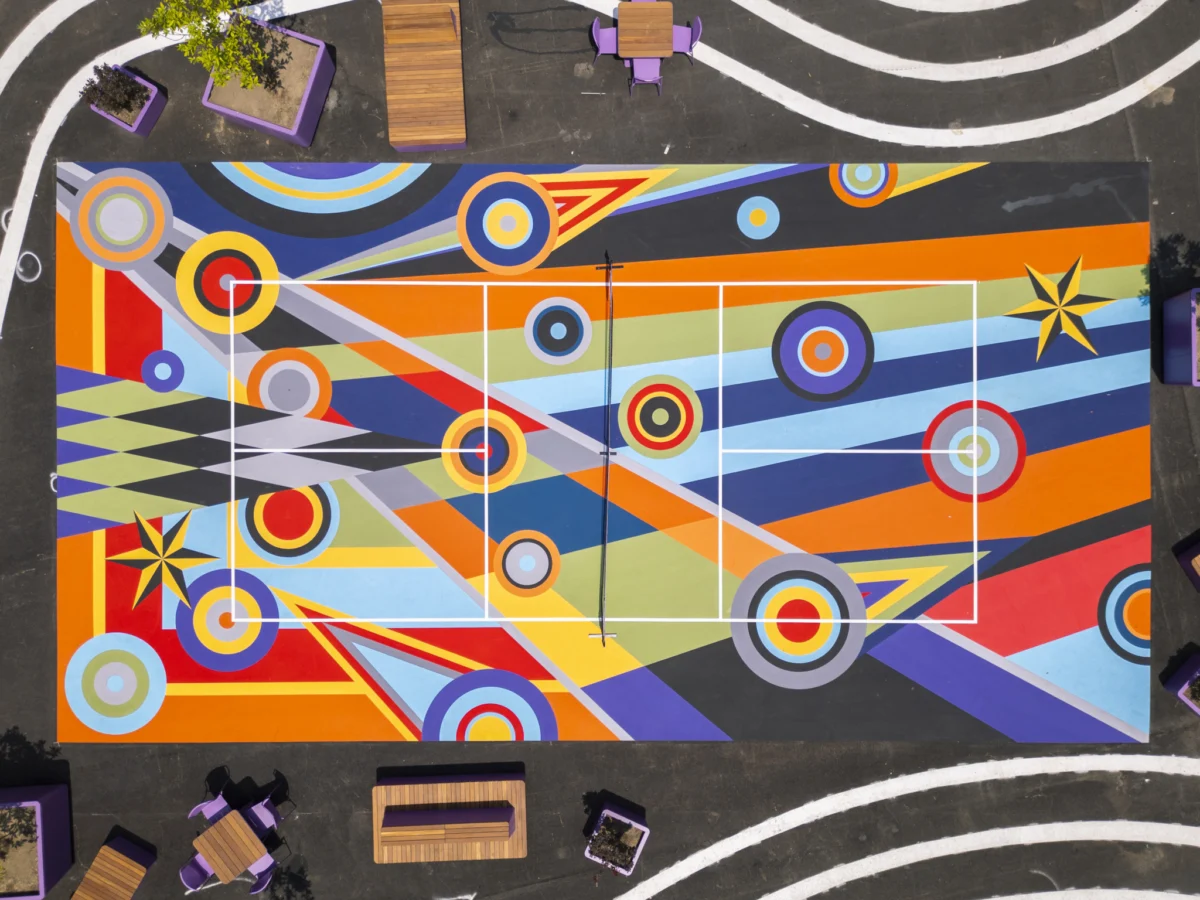
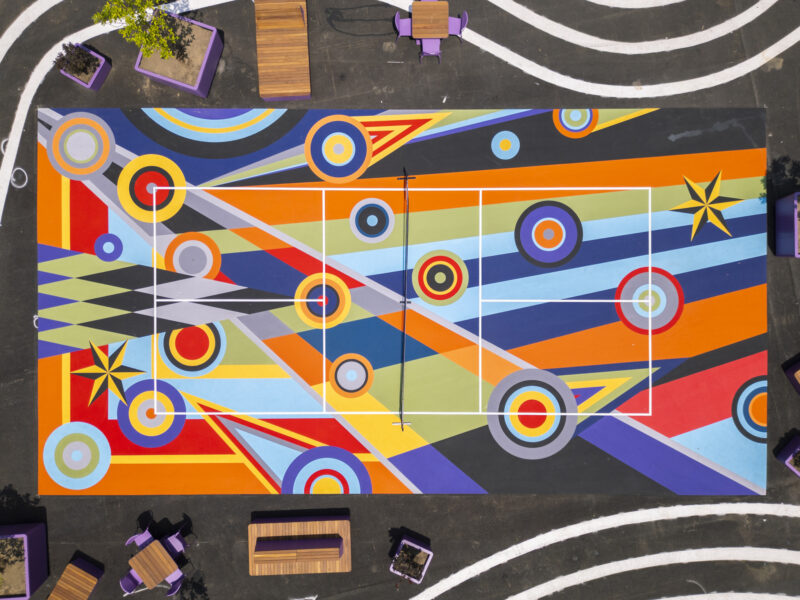
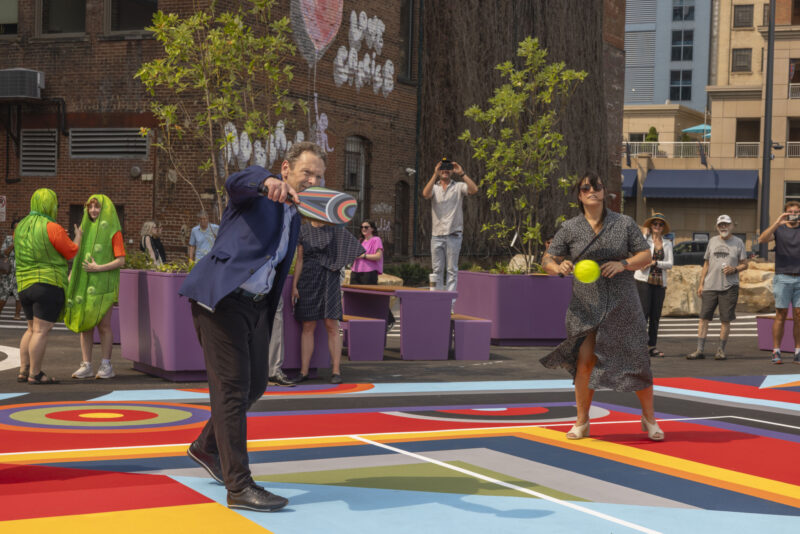
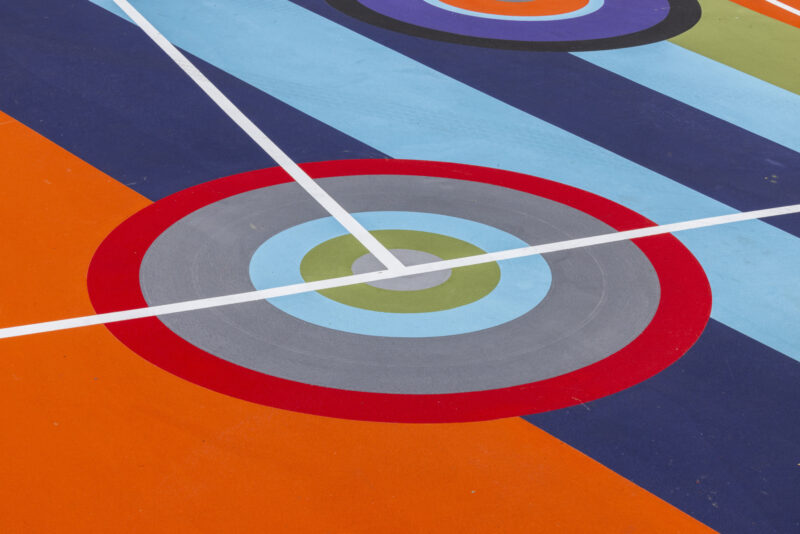
Pittsburgh’s burgeoning Arts Landing civic space has become the canvas for a groundbreaking public art commission by acclaimed artist Sharmistha Ray, whose latest installation, "Geometry of Play," transcends traditional observation, inviting active participation. This innovative work transforms a pair of standard pickleball courts into a vibrant, geometric mural that serves simultaneously as a fully playable surface and a dynamic piece of art. In this unique fusion, each game played on the courts becomes an integral, evolving component of the artistic composition, blurring the lines between spectator and participant, art and sport.
A New Paradigm for Public Art in Pittsburgh
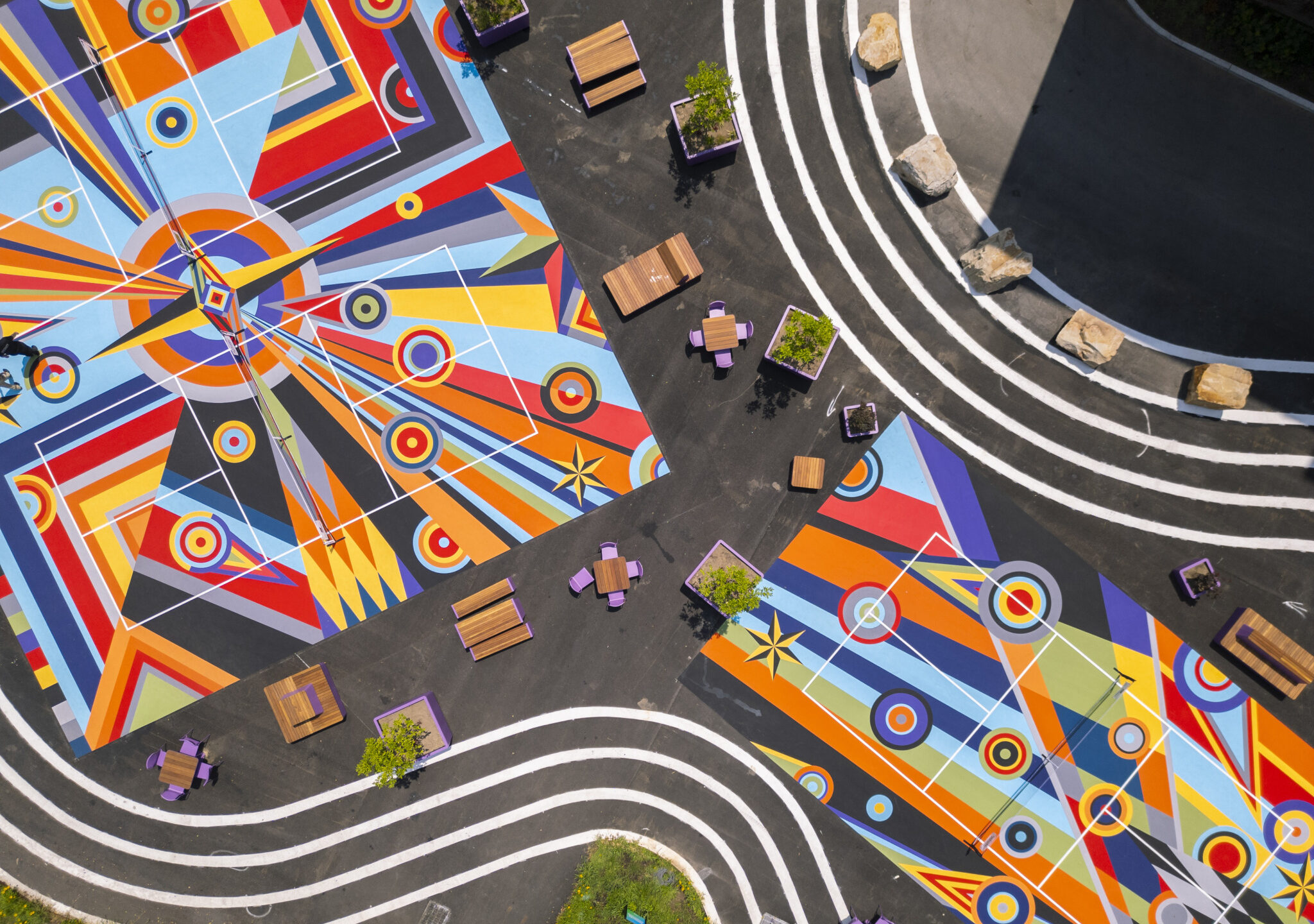
Unveiled as a cornerstone of the Pittsburgh Cultural Trust’s ambitious Arts Landing development, "Geometry of Play" marks a significant milestone as the city’s inaugural artist-designed pickleball courts. This pioneering installation joins a distinguished collection of seven other public art commissions, collectively enhancing Arts Landing as a vital new gathering space within Pittsburgh’s renowned Cultural District. The project underscores a contemporary shift in public art, moving beyond static display to embrace interactivity and community engagement as core tenets of its aesthetic and social value.
The genesis of "Geometry of Play" lies in the foundational lines and boundaries of the pickleball court itself, which Ray ingeniously utilized as the structural armature for an abstract composition. Her inspiration delves into the rich visual logic of historic game boards, an influence that profoundly shapes the mural’s intricate design. This concept elevates the act of play from mere recreation to a performative interaction with a deeply considered artistic framework.
From Ancient Games to Modern Play: The Art’s Inspiration
Ray’s artistic exploration draws deeply from ancient traditions, notably referencing the Indian game of Pachisi, a precursor to the popular American game Parcheesi. This historical lineage is visibly woven into the mural’s intricate tapestry, where interlocking circles, triangles, grids, and pathways converge to form a kaleidoscopic vision. The artist’s deliberate choice to incorporate the full ROYGBIV color spectrum is not merely an aesthetic decision but a symbolic gesture. This rainbow reference serves as a powerful emblem of inclusion and diversity, while simultaneously ensuring a constantly shifting visual experience for players as they navigate the vibrantly painted surface. The interplay of colors and shapes creates a dynamic visual language that responds to movement, making the artwork a living, breathing entity activated by human presence.
The dynamic nature of "Geometry of Play" is intrinsically linked to its functionality. The very act of playing pickleball on these courts transforms the installation. The fluid movements of players across the surface activate the intricate design, creating ever-changing perspectives and reinforcing the inherent accessibility and social nature of pickleball—a sport that has experienced an explosive surge in popularity across the United States in recent years. This integration fosters a shared civic space, transcending its primary function as a recreational facility to become a vibrant hub for both artistic appreciation and community gathering.
Sharmistha Ray: An Artist Bridging Cultures and Disciplines
Sharmistha Ray’s commission at Arts Landing is a testament to her extensive and interdisciplinary practice, which seamlessly spans painting, large-scale installation, and public art. Born in Kolkata, India, and raised in Kuwait before establishing her artistic career in the United States, Ray’s unique bicultural background profoundly informs her creative output. She frequently draws from rich South Asian visual traditions, reinterpreting them through the lens of geometric abstraction to explore universal themes of identity, belonging, and cultural exchange. Her work often serves as a dialogue between her heritage and her contemporary experiences, manifesting in forms that are both deeply personal and universally resonant.
Her artistic philosophy is rooted in the belief that art should be an accessible and integrated part of daily life, not confined to gallery walls. This ethos is vividly demonstrated in "Geometry of Play," where the boundaries between art and everyday activity dissolve. Ray’s previous significant projects further illustrate her innovative approach and commitment to public engagement. These include a monumental installation at Grand Central Terminal, which transformed one of New York City’s most iconic public spaces, and a major commission for Pittsburgh International Airport’s new terminal, designed to greet travelers with a sense of place and wonder. Her collaborative animated works, featuring an original score by the Grammy Award-winning musician Arooj Aftab, highlight her versatility and willingness to push the boundaries of artistic expression across different mediums. These prior engagements underscore Ray’s consistent trajectory of creating impactful, site-specific works that engage broad audiences in diverse public environments.
Arts Landing: Pittsburgh’s Vision for an Integrated Cultural District
The development of Arts Landing itself represents a significant investment in Pittsburgh’s urban fabric and cultural infrastructure. Designed by the internationally acclaimed landscape architecture firm Field Operations, known for projects like New York City’s High Line, the $31 million development is a meticulously planned initiative by the Pittsburgh Cultural Trust. Its overarching goal is to weave together public art, dynamic performance spaces, recreational facilities, and diverse community programming into a cohesive and vibrant urban destination within the heart of the Cultural District.
The Trust’s vision for Arts Landing was to create a truly multi-functional public realm that could serve as a catalyst for community interaction and cultural enrichment. The selection of artists for the inaugural commissions was a carefully curated process, aiming to showcase a diverse range of contemporary artistic voices. Alongside Sharmistha Ray’s "Geometry of Play," Arts Landing features installations by an impressive roster of artists, including Vanessa German, Thaddeus Mosley, Shikeith, Mikael Owunna and Marques Redd, Lenka Clayton and Phillip Andrew Lewis, Darian Johnson, and John Peña. These inaugural commissions are slated to remain on view for at least one year, ensuring a sustained period of cultural vibrancy and public engagement.
Statements from Key Stakeholders and Broader Implications
Representatives from the Pittsburgh Cultural Trust have expressed immense enthusiasm for the project and its broader implications. "Arts Landing is more than just a new civic space; it’s a living canvas designed to foster connection and creativity," stated a spokesperson for the Trust. "Sharmistha Ray’s ‘Geometry of Play’ perfectly encapsulates our vision, transforming a popular recreational activity into an immersive artistic experience. It redefines how public art can interact with urban life, making culture accessible and engaging for everyone."
Sharmistha Ray herself has reflected on the profound potential of such interactive installations. "My aim with ‘Geometry of Play’ was to dismantle the invisible barrier that often exists between viewer and artwork," Ray commented. "By inviting people to literally step into the composition, every game becomes a living, breathing performance, and every player, an unwitting collaborator. The historical game board inspiration roots the work in universal patterns of play and interaction, while the rainbow palette champions diversity and dynamism. It’s about finding joy and connection within a shared, evolving aesthetic."
From the perspective of urban design, Field Operations emphasized the critical role of integrated art in creating meaningful public spaces. "Our design for Arts Landing sought to create a seamless blend of natural elements, functional spaces, and artistic interventions," explained a representative from Field Operations. "The incorporation of ‘Geometry of Play’ was instrumental in achieving this. It demonstrates how thoughtful design can elevate everyday activities, transforming them into extraordinary experiences that define a place."
The Impact and Future of Integrated Art in Urban Spaces
The integration of art and recreation, as exemplified by "Geometry of Play," carries significant implications for urban planning, cultural tourism, and community well-being. Studies have consistently shown that vibrant public art installations can dramatically increase foot traffic in urban areas, boosting local businesses and contributing to economic revitalization. Data from other cities with strong public art programs indicates an average increase of 15-20% in pedestrian activity in areas surrounding major installations, translating into substantial economic benefits for nearby retail and hospitality sectors.
Furthermore, projects like "Geometry of Play" foster a greater sense of community ownership and pride. By providing accessible, engaging, and free cultural experiences, Arts Landing is poised to become a vital social condenser, drawing diverse demographics together. The growing popularity of pickleball, which has seen an estimated 21% growth in participation in the U.S. in the past year alone, ensures that the courts will be actively used, maximizing the art’s exposure and interactive potential. This blend of physical activity and aesthetic engagement aligns with contemporary trends advocating for holistic urban environments that support both mental and physical health.
In a broader context, "Geometry of Play" contributes to an evolving definition of public art. It challenges the traditional notion of art as something to be passively observed, advocating instead for an experiential model where the audience is an active co-creator. This approach reflects a growing global movement in urban design to create spaces that are not just visually appealing but are also functional, inclusive, and responsive to the needs of their communities. The long-term presence of these inaugural commissions, with "Geometry of Play" at its heart, positions Arts Landing as a dynamic cultural anchor, promising to enrich Pittsburgh’s urban landscape for years to come.
Arts Landing, now home to this pioneering work, is free and open to the public daily from 7 a.m. to 10 p.m., inviting residents and visitors alike to experience the intersection of art, play, and community in a truly unique setting.







