Pranda Michaela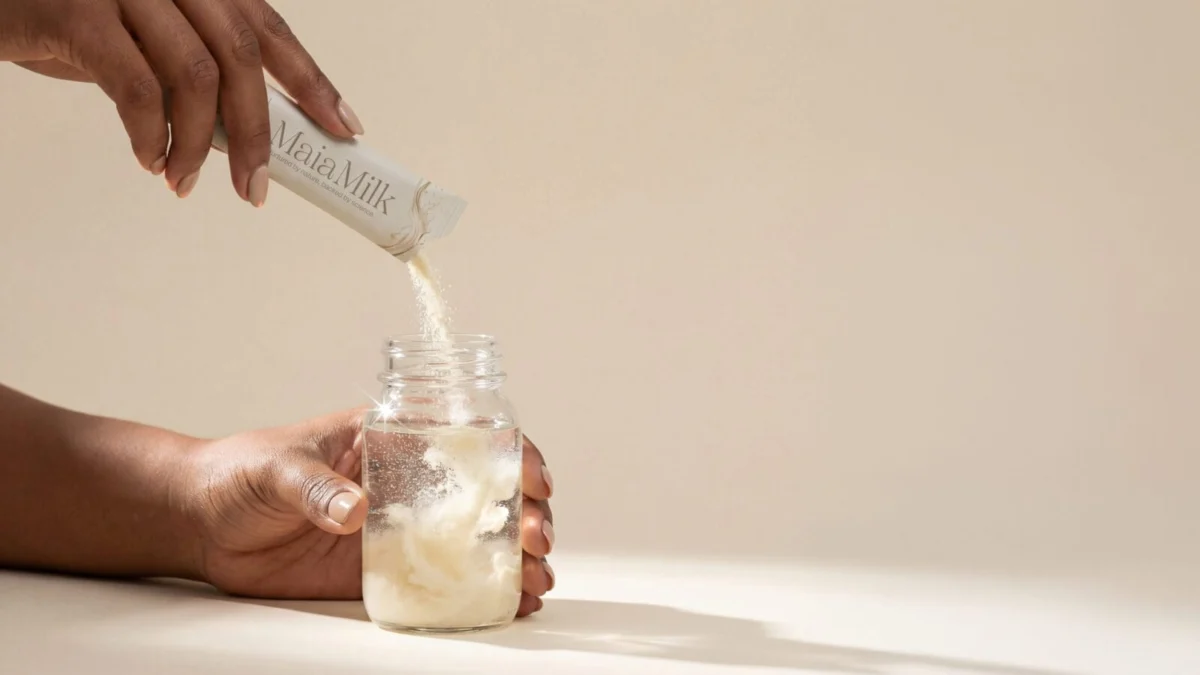
The landscape of infant feeding is continually evolving, presenting new challenges and innovative solutions for parents navigating the complexities of nourishing their children. For many new and expecting mothers, the concept of donor human milk has primarily been encountered through informal channels, often late at night via social media groups. This scenario typically involves either individuals with surplus milk seeking to share it or parents in urgent need of additional ounces. The inherent question of safety in such transactions has long been a concern. Concurrently, donor milk is widely recognized as a critical medical necessity within Neonatal Intensive Care Units (NICUs) for the most vulnerable infants. However, a novel option is emerging that bridges this gap, offering a meticulously screened and tested product accessible directly to families at home, requiring no refrigeration or complex preparation. MaiaMilk, a brand offering shelf-stable, freeze-dried donor human milk, is poised to redefine convenience and accessibility in this specialized area of infant nutrition.
The Growing Need for Donor Milk Options
The decision to use donor milk stems from a variety of circumstances. Many parents find that returning to work significantly impacts their ability to pump sufficient milk to meet their baby’s needs. Others experience challenges with milk supply that do not align with their infant’s demands. Furthermore, recent years have seen a rise in formula recalls, prompting increased parental anxiety and a search for alternative feeding solutions. While many mothers initiate breastfeeding with the intention of continuing exclusively, various personal or medical reasons can lead to the cessation of breastfeeding. Data from the Centers for Disease Control and Prevention (CDC) indicates that fewer than one in four infants are exclusively breastfed by six months of age, highlighting a widespread need for supplementary or alternative feeding strategies.
Tara Overton, Chief Operating Officer of MaiaMilk and a former long-standing leader in donor milk operations at its sister company, Ni-Q, understands these pressures firsthand. Her career in milk banking predates her own parenthood. "I was involved in managing and operating our milk bank," Overton shared. "Day in and day out, I witnessed mothers who were overproducers, moms with an abundance of extra milk." However, when she became a mother herself and returned to full-time work, her own milk supply did not meet her expectations, creating a personal need for supplementary support.
"Most of us are aware that donor milk exists," Overton explained. "We tend to think of it either as a hospital-specific resource or as something obtained through somewhat unsettling online exchanges." She elaborated on her own privileged position: "I was in an incredibly advantageous situation simply because of my employment. I recognized that this level of access was not available to most other mothers." This realization fueled her commitment to finding ways to make safe, screened donor milk accessible to a broader population.
Ni-Q has a proven track record, having supplied donor milk to hospitals for nearly 15 years. MaiaMilk, launched in early 2026, aims to leverage this established trust and expertise, making it available directly to consumers in their homes rather than solely within hospital settings.
The Rigorous Process of Donor Milk Preparation
The journey of donor milk begins with mothers who produce more milk than their own baby requires. MaiaMilk implements a stringent screening process for its donors, which includes a comprehensive review of their medical history, detailed lifestyle questionnaires, and essential blood testing. Following approval, these donors are compensated for their efforts. "We compensate our donor mothers," Overton stated. "This allows them to earn additional income by donating their milk." Upon collection, the milk undergoes further testing before being pasteurized. This critical step is designed to eliminate any potentially harmful bacteria, ensuring the safety of the final product.
The pasteurized milk is then freeze-dried into a powder. This process significantly extends its shelf life and eliminates the need for refrigeration. The freeze-dried powder is packaged into single-serving packets. Before distribution, each batch of MaiaMilk undergoes a final round of testing. Overton likens the end product to instant coffee. "It’s literally just powder," she described. "You simply mix this powder with warm water." The convenience of these packets is a key feature, designed to be stored easily in a diaper bag, on a nightstand, or in a kitchen drawer, ready for use precisely when needed.
Understanding the Cost of Donor Milk
MaiaMilk is positioned as a premium product, and its pricing reflects the comprehensive processes involved. A four-packet pack, each yielding two ounces of prepared breastmilk, is priced at $62. A significant portion of this cost is attributed to the donor compensation program. "It is paramount to us to honor the time, energy, and effort invested by our donors," Overton emphasized. The rigorous testing protocols, which occur at multiple stages before a packet reaches the consumer, also contribute to the overall cost. "This meticulous testing requires time and resources," Overton explained, "but it is essential to ensure the utmost safety of the product."
Ensuring the Safety and Efficacy of Donor Milk
The safety of donor milk is contingent upon its proper screening and testing. When milk is sourced through informal or peer-to-peer channels, verifying its safety and origin can be challenging. Home testing strips and at-home pasteurization methods offer limited assurance. The U.S. Food and Drug Administration (FDA) has also raised concerns regarding the safety of unpasteurized human milk obtained from informal sources.
MaiaMilk operates under strict regulatory compliance. The product is manufactured in an FDA-registered facility, adheres to current Good Manufacturing Practices (cGMP), and each batch undergoes independent third-party laboratory verification before distribution. This multi-layered approach to quality control and safety assurance is central to MaiaMilk’s offering.
Scenarios Where Donor Milk Proves Beneficial
Overton shared her personal experience, noting, "I was always just one feeding away from being able to provide all the milk my babies needed. One extra packet or one extra feeding a day made a significant difference for me." This highlights the utility of donor milk as a supplemental resource. It can be particularly valuable in situations where a mother’s milk has not yet fully come in, or when a baby is experiencing feeding difficulties, providing an immediate alternative.
The convenience of donor milk is also a major advantage for various situations. It can be a lifeline during travel, for unexpected rough days of pumping, or as a reliable option to leave with a caregiver. "The convenience is truly remarkable and incredibly helpful," Overton stated.
For families formed through surrogacy or for LGBTQ+ parents, donor milk can play a particularly vital role. Standard feeding advice often does not adequately address their unique circumstances. "There are already fewer feeding options available to them, depending on their specific situation," Overton observed. "This can help to fill that gap."
Accessibility of Donor Milk
Traditionally, most nonprofit milk banks primarily supply donor milk to hospitals. When donor milk products are available for at-home use, they often involve complex logistics such as cold chain shipping and the necessity for freezer space and precise thawing procedures. MaiaMilk bypasses these logistical hurdles by offering a shelf-stable product that requires no special storage or preparation beyond adding water.
Overton’s message to mothers facing feeding challenges is one of reassurance and empowerment. "It is perfectly acceptable to struggle, and struggling does not equate to failure," she stated. "Continue to do your best, and your baby will thrive – and you will too."
For mothers who have an abundance of milk beyond their baby’s needs, MaiaMilk and Ni-Q are actively seeking donors. This initiative echoes the support that many mothers have received.
Motherly readers can avail themselves of a special offer: a 10% discount on any MaiaMilk order, regardless of size and with no minimum purchase requirement, by using the code MOTHERLY10 at getmaiamilk.com/motherly. This initiative aims to make this innovative feeding solution more accessible to a wider audience.