In a remarkable convergence of individual innovation and corporate strategy, a private software plugin developed by a Buffer engineer for his personal e-ink display has officially launched, coinciding perfectly with the public release of Buffer’s new application programming interface (API). The story began a few weeks ago when Andy Yates, an engineer at Buffer, received an unexpected email at his personal address from the team at TRMNL, a company renowned for its elegantly designed, minimalist e-ink displays and a robust plugin ecosystem. TRMNL’s scouting efforts had identified a private plugin named "Buffer" within their community and sought to inquire if Yates would be willing to release it for broader public access. Unbeknownst to the TRMNL team, Yates was not merely a user but an integral part of the very company his plugin referenced. This fortuitous timing, coupled with Buffer’s public API being merely a week away from its general availability, transformed a personal hack into a compelling showcase for the power of open APIs and community-driven development.
The Genesis of a Personal Hack: From Idea to E-Ink Display
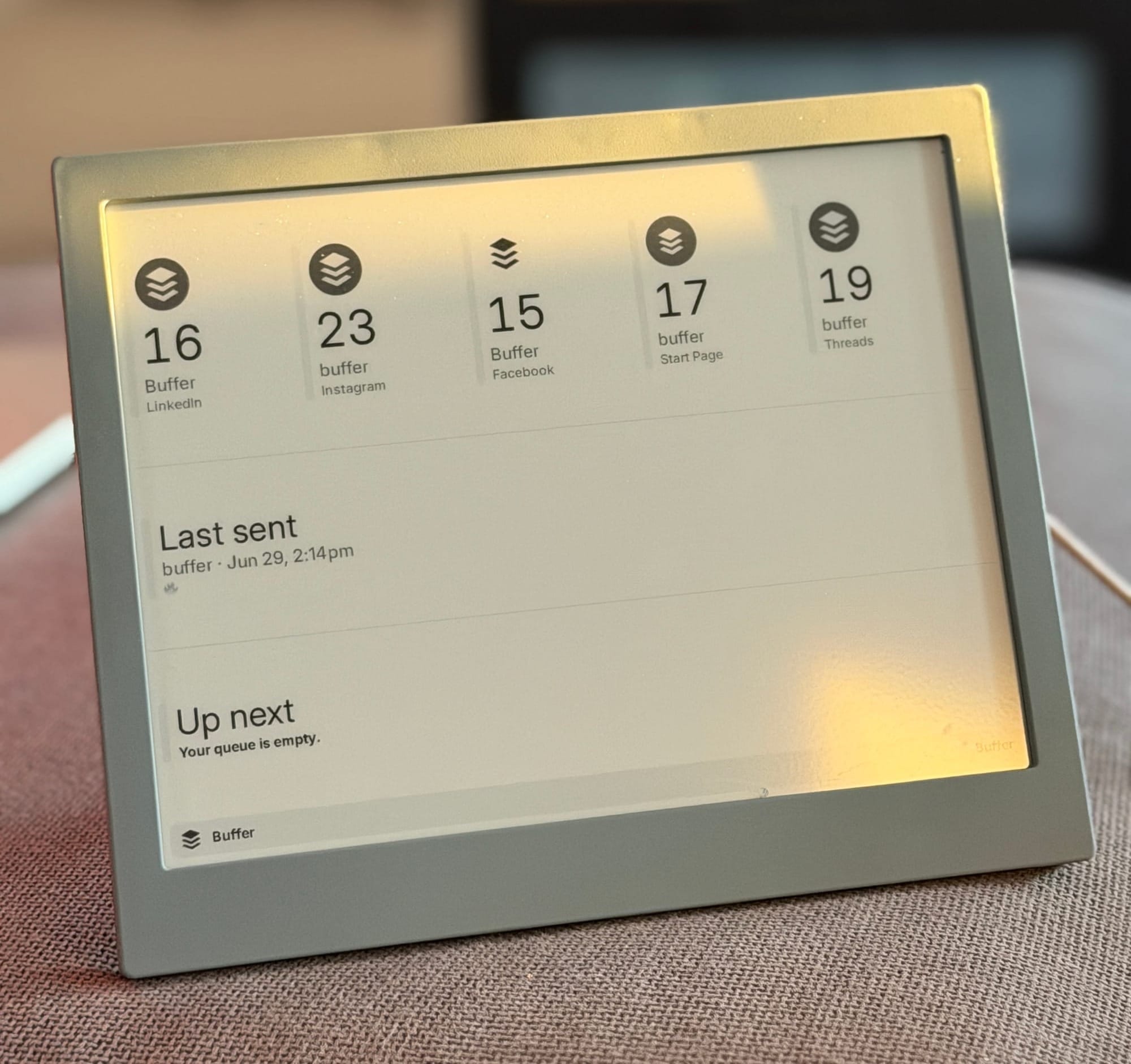
Andy Yates’s journey with the "Buffer" plugin began, as many innovative projects do, from a personal curiosity and a desire to enhance his immediate workspace. Having recently acquired a TRMNL e-ink display, Yates, an enthusiast of building custom plugins, pondered how his Buffer queue—the schedule of social media posts managed by Buffer—could be visually represented on the device. TRMNL displays embody a distinct philosophy: to provide calm, ambient information on one’s desk without demanding constant interaction. These devices typically display essential data such as calendars, weather updates, and to-do lists, powered by hundreds of community-contributed plugins. Yates envisioned a display that would show his Buffer queue counts, a recently sent post, or an upcoming scheduled post, refreshing automatically. This vision materialized into a private build, a utility tailored specifically to his workflow, which he used daily. The plugin, initially a testament to his individual ingenuity and the flexibility of the TRMNL platform, has now transitioned from a private tool to an official offering, available to any TRMNL owner who wishes to connect their Buffer account. This evolution underscores the potent combination of developer initiative and an accessible platform.
Buffer’s API Launch: A Foundation for Innovation
The timing of TRMNL’s inquiry could not have been more opportune for Buffer. The social media management platform, utilized by over 200,000 creators, small businesses, and marketers globally each month, was on the cusp of a significant technological milestone: the general availability of its new public API. An API serves as a set of rules and protocols that allows different software applications to communicate with each other. For Buffer, this API represents a strategic move to foster a broader ecosystem of integrations and custom solutions, empowering developers and businesses to build innovative tools atop Buffer’s core functionality. The development of such an API is a complex undertaking, involving meticulous planning, robust security measures, and extensive testing to ensure stability, scalability, and ease of use for third-party developers. The goal is often to democratize access to a platform’s data and features, enabling a wider array of use cases that the primary development team might not have envisioned. The serendipitous discovery of Andy Yates’s plugin, therefore, became an almost immediate validation of Buffer’s API strategy, demonstrating its practical utility even before its official public unveiling.
TRMNL’s Vision: Ambient Computing and a Thriving Ecosystem
TRMNL’s e-ink displays are at the forefront of the ambient computing trend, a paradigm where technology seamlessly integrates into the environment, providing information discreetly without requiring active engagement. Unlike smartphones or traditional monitors that demand attention through vibrant colors and dynamic content, e-ink displays offer a calm, low-power, and persistent visual experience, mimicking the appearance of ink on paper. This design choice aligns perfectly with the idea of a "glanceable" interface, where critical information is always present but never intrusive. The company’s success is largely attributed to its commitment to fostering a vibrant plugin ecosystem. By providing robust developer tools, clear documentation, and a supportive community, TRMNL encourages users and third-party developers to create custom applications that extend the utility of their displays. This approach not only enriches the user experience but also creates a diverse marketplace of solutions that cater to a wide range of individual needs and preferences. The proactive scouting by the TRMNL team for promising private plugins, as exemplified by their discovery of Yates’s "Buffer" plugin, highlights their dedication to curating and expanding this ecosystem, ensuring that the best community innovations are brought to the forefront.
The Buffer Plugin: Technical Underpinnings and User Experience
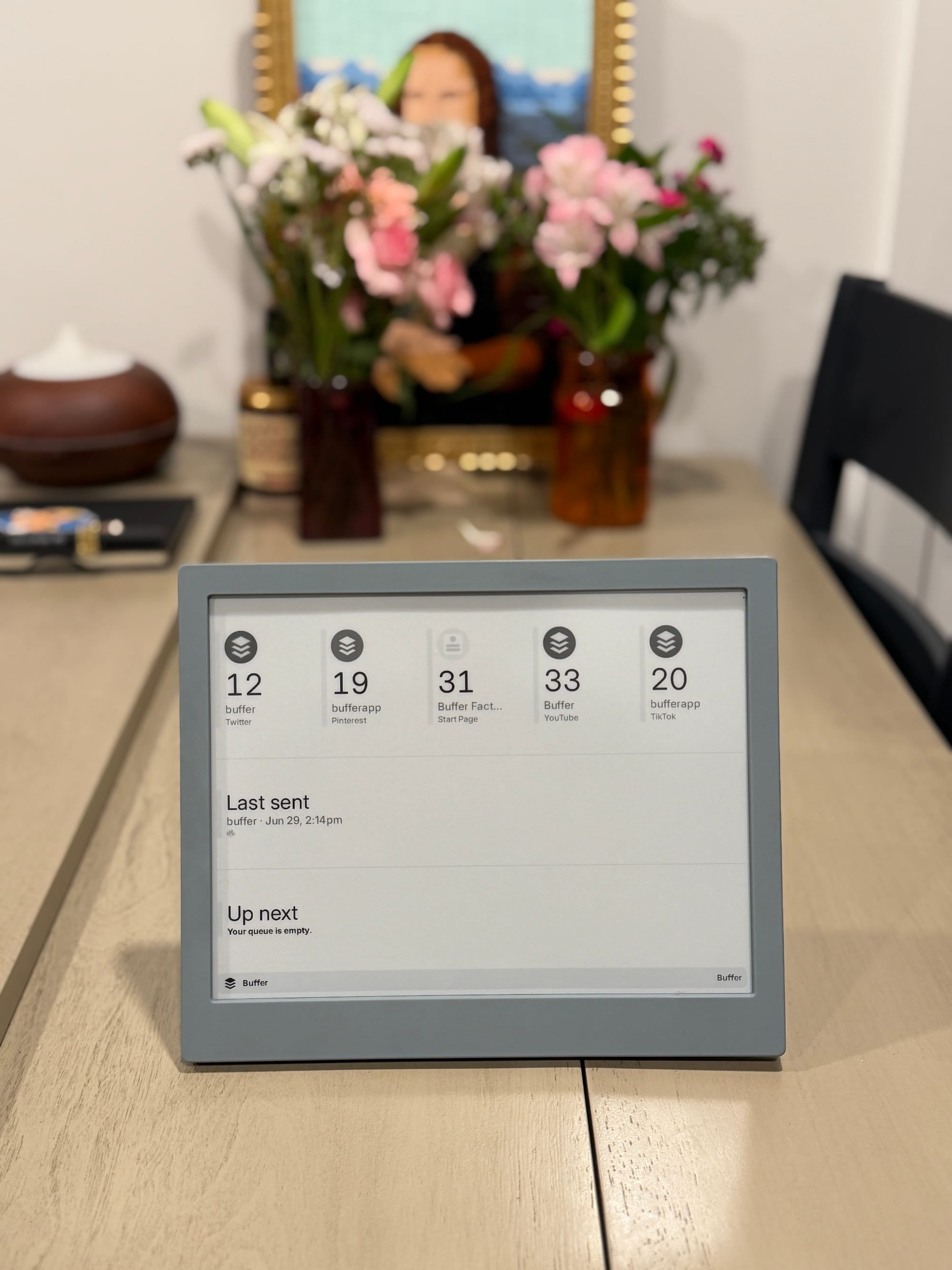
The "Buffer" plugin for TRMNL displays offers users a concise, real-time overview of their social media scheduling activities. It provides key metrics such as the number of posts currently in the queue for various social channels, along with details of the most recently sent or upcoming post. This information is refreshed automatically, ensuring that the display always reflects the current state of a user’s Buffer account. From a technical standpoint, the plugin operates entirely on TRMNL’s platform, eliminating the need for users or even the original developer, Andy Yates, to manage any server infrastructure. This serverless approach simplifies deployment and maintenance, making it highly accessible. The plugin connects securely to Buffer’s API using the OAuth flow with Proof Key for Code Exchange (PKCE). PKCE is a modern, secure authorization method designed to prevent authorization code interception attacks, particularly relevant for public clients like single-page applications or mobile apps, ensuring that user data remains protected without requiring the manual copying of sensitive API keys. This robust security implementation is crucial for maintaining user trust and adhering to best practices in API integration. The user setup flow for the plugin has also been significantly refined, thanks to collaborative efforts between Andy Yates and Ikraam from the TRMNL team. This partnership led to the addition of new features and a more intuitive onboarding process, enhancing the overall user experience.
The Psychological Impact of Ambient Information Displays
The concept of an ambient display, such as the TRMNL showing a Buffer queue, subtly yet profoundly alters how users interact with and perceive their digital workflows. Traditionally, checking a social media schedule involves a deliberate, active step: opening the Buffer application or website, navigating to the queue, and consciously reviewing its status. This "pull" model of information retrieval means that the act is easily deferred or forgotten amidst other tasks. The Buffer team noted that this often leads to a sudden realization of an empty or dwindling queue, causing a brief "oh no" moment. In contrast, an ambient display operates on a "push" model, where information is passively presented in the periphery of one’s attention. The Buffer queue, glowing calmly on a desk, becomes a constant, gentle reminder. If the queue is running low, it prompts a proactive response without the jolt of a sudden discovery. This continuous, low-friction awareness can foster more consistent posting habits, which is crucial for maintaining an active and engaged social media presence. Furthermore, there is an intangible satisfaction derived from seeing one’s digital work manifested as a physical object. The abstract concept of a "queue" transforms into a tangible presence on the desk, providing a sense of control and accomplishment that a mere row in a dashboard might not convey. This shift in interaction modality represents a significant benefit for productivity and mental well-being, reducing cognitive load and decision fatigue.
A Model of Open Collaboration and Ecosystem Building
The development and public release of the Buffer plugin exemplify a successful model of open collaboration that benefits both platform providers and the broader developer community. The involvement of Ikraam from the TRMNL team in working directly with Andy Yates highlights TRMNL’s commitment to nurturing its plugin ecosystem. This hands-on support, which included adding new features and simplifying the setup flow, is a cornerstone of why their community remains so vibrant and productive. Beyond the immediate plugin, Ikraam also contributed the Buffer connector, featuring the new API flow, to TRMNL’s public providers repository. This is a critical step in fostering an open-source ethos: by making the underlying connector available, TRMNL effectively does "the hard part" for future developers. Any individual or team wishing to build their own Buffer-related plugin on the TRMNL platform can now leverage this existing component, accelerating their development process. This "build once, reuse many times" philosophy is fundamental to scalable innovation and strengthens the entire ecosystem. It lowers the barrier to entry for new developers, encourages experimentation, and ultimately leads to a richer array of available plugins for end-users.
Strategic Implications for Buffer and TRMNL
For Buffer, the launch of this plugin and the surrounding narrative provide a compelling real-world example of the utility and potential of its newly released public API. It serves as a powerful testament to the API’s ease of use and the innovative applications it enables, right out of the gate. This story will undoubtedly encourage other developers to explore Buffer’s API, fostering a larger developer community and expanding the platform’s reach beyond its direct integrations. A robust API ecosystem is a key driver for modern software companies, enabling them to become central hubs for various workflows and increasing their stickiness in the market. The increased visibility through TRMNL’s platform also acts as a subtle yet effective marketing channel, introducing Buffer to a new demographic of users who value ambient information and minimalist design.
For TRMNL, the official Buffer plugin further solidifies its position as a leading platform for ambient displays with a strong community focus. The partnership with a recognized brand like Buffer enhances the credibility and attractiveness of their plugin ecosystem. It demonstrates TRMNL’s capability to support integrations with popular professional tools, making their devices more valuable to a business-oriented audience. The collaborative development process also reinforces TRMNL’s image as a developer-friendly platform, which is crucial for sustained growth of its community and the continuous influx of new and innovative plugins. This synergy between the two companies illustrates how independent innovation, when supported by open platforms, can create mutual benefits and enhance user experiences across different technological domains.
Broader Industry Trends: Open APIs and Ambient Tech
This incident also highlights two significant trends shaping the broader technology landscape: the increasing importance of open APIs and the rise of ambient computing. Open APIs have become foundational for interoperability in the digital age, enabling a vast network of interconnected services and applications. Companies that embrace open API strategies often see accelerated innovation, expanded market reach, and stronger developer communities. This approach allows businesses to focus on their core competencies while relying on third-party developers to extend functionality in creative ways. The success of the Buffer plugin for TRMNL is a microcosm of this larger trend, showcasing how a well-designed API can unlock unforeseen value. Simultaneously, the growing popularity of devices like TRMNL displays signifies a shift towards more seamless, less intrusive technology. As digital fatigue becomes a common complaint, ambient computing offers a refreshing alternative, allowing users to stay informed without being constantly tethered to screens that demand active engagement. This movement towards ‘calm technology’ suggests a future where information is delivered intelligently and contextually, integrating more harmoniously into daily life rather than constantly vying for attention.
Engaging the Community: The Buffer x TRMNL Giveaway
To celebrate this unique collaboration and the launch of the Buffer plugin, Buffer and TRMNL have partnered to host a special giveaway. Running from July 13 to July 20, the promotion offers participants the chance to win one of four TRMNL devices, along with exclusive Buffer swag bundles. This initiative serves as a direct engagement strategy, aiming to generate excitement, increase visibility for both the new Buffer API and the TRMNL platform, and attract new users to both services. Details for entering the giveaway are prominently featured on Buffer’s LinkedIn post, requiring a few simple steps to participate. Winners will be announced on July 27. As a consolation for those who enter but do not win, TRMNL is offering a special discount code, "bufferxtrmnl," providing $10 off any device purchase. This offer is valid from July 27 through September 7, ensuring that a wider audience can experience the benefits of TRMNL displays and the new Buffer integration. Such promotional activities are crucial for converting interest generated by news stories and product launches into tangible user acquisition and foster a deeper connection with their respective communities.
In conclusion, the journey of Andy Yates’s personal "Buffer" plugin from a private project to an official TRMNL offering, perfectly synchronized with Buffer’s public API launch, is a compelling narrative of innovation, collaboration, and strategic alignment. It underscores the immense potential unleashed when companies embrace open platforms and empower their communities, showcasing how a simple idea can evolve into a widely adopted tool that enhances daily workflows and exemplifies the future of ambient, interconnected technology.