
 Ali Ikhwan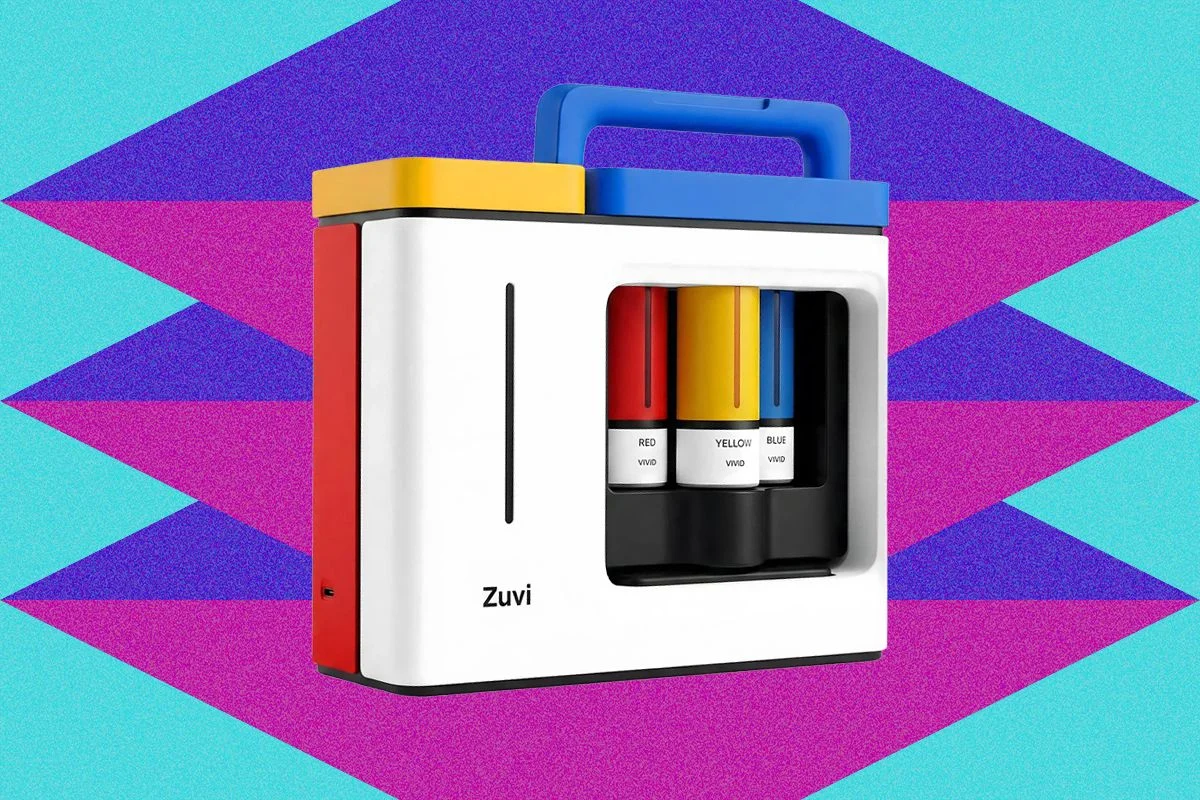
The emergence of high-tech beauty devices has promised to revolutionize personal care routines, yet the recent introduction of the Zuvi ColorBox has sparked significant debate regarding the efficacy and economic viability of automated hair coloring systems. As the beauty technology sector continues to expand, valued at an estimated $52 billion globally, companies like Zuvi are attempting to bridge the gap between professional salon results and at-home convenience through the integration of hardware, proprietary chemistry, and generative artificial intelligence. However, technical evaluations and consumer feedback suggest that the transition from manual application to machine-assisted coloring faces substantial hurdles, particularly concerning color theory accuracy, long-term hardware support, and the cost-to-benefit ratio for the average consumer.
The Technical Framework of the Zuvi ColorBox
The Zuvi ColorBox is designed as a semi-permanent hair dye delivery system that utilizes a proprietary machine and specialized cartridges to mix custom shades. Unlike traditional at-home kits, which typically require users to manually mix a developer and a colorant, the ColorBox aims to simplify the process by allowing users to select or "generate" shades via a smartphone application. The hardware then dispenses a calculated mixture intended to achieve the desired hue.
One of the primary technical critiques of the current system involves its color mixing logic. The device currently utilizes a primary color palette, a choice that critics and professional cosmetologists argue limits the spectrum of achievable shades. In professional printing and advanced color theory, a CMYK (Cyan, Magenta, Yellow, and Key/Black) or a more complex multi-tonal system is generally required to produce the nuance found in human hair. Without a dedicated black pigment or a sophisticated neutralizing agent, the device struggles to produce deeper, more "ashy," or complex neutral tones, often resulting in overly vibrant or "washed-out" pastel results that may not align with user expectations.
Furthermore, the integration of generative AI within the Zuvi app has become a focal point of scrutiny. While AI is used to simulate how a color might look on a user’s hair, the technology often fails to account for the physical variables of hair biology, such as porosity, thickness, and the existing "underlying pigment" of the hair. Professional hair coloring is a subtractive and additive process that requires an understanding of how new pigment interacts with the hair’s current state; a machine that lacks sensors to analyze hair health may inadvertently provide misleading previews, leading to unsatisfactory physical outcomes.
Chronology of Development and Market Entry
The trajectory of Zuvi as a company began with its focus on energy-efficient hair drying technology. Its flagship product, the Zuvi Halo, gained international attention for using infrared light to dry hair at lower temperatures, purportedly preserving hair moisture and health. Following the success of the Halo, the company sought to diversify its portfolio by entering the lucrative hair color market.
In early 2023, Zuvi began teasing a transition into automated color delivery, positioning the ColorBox as a sustainable alternative to the waste-heavy traditional dye market. By late 2023 and early 2024, the device moved into limited release and influencer testing phases. During this period, the narrative surrounding the device shifted from pure innovation to a more cautious assessment of its practical application.
Industry analysts noted that while the initial price point of the hardware was kept competitive to encourage adoption, the recurring cost of proprietary cartridges—priced at approximately $22 each—mirrored the "razor and blade" business model. This timeline reflects a broader trend in the "smart home" and "beauty tech" industries where hardware serves as a gateway to a subscription-like ecosystem of consumables.
Comparative Cost Analysis and Consumer Economics
To understand the market position of the Zuvi ColorBox, it is necessary to compare its operational costs with both traditional DIY methods and professional salon services.

- Traditional DIY: A high-quality tube of semi-permanent dye from a beauty supply store typically costs between $10 and $18. These products are often highly concentrated and can be diluted with standard hair conditioner to create various shades, effectively providing multiple applications from a single purchase.
- Zuvi ColorBox: With cartridges retailing at $22, the cost per application can meet or exceed traditional methods, especially for users with long, thick, or curly hair who may require multiple cartridges for a single session.
- Professional Salon Services: A professional semi-permanent gloss or color treatment ranges from $60 to $150. While the ColorBox is significantly cheaper than a salon visit, it lacks the "insurance" of a professional result.
Data from the American Salon Association suggests that "color correction"—the process of fixing a failed at-home dye job—is one of the most expensive services in the industry, often costing upwards of $100 per hour. Critics of the ColorBox argue that by adding layers of technical "guesswork" through a machine that may not accurately interpret color theory, the device increases the statistical likelihood that a user will eventually require a professional correction, thereby negating any initial savings.
Environmental Impact and the Risk of Proprietary E-Waste
Zuvi has marketed the ColorBox as a tool for reducing dye waste, as the machine can dispense precise amounts and store leftovers in included containers. In a traditional setting, users often mix more dye than necessary, leading to chemical waste being washed down the drain. However, the environmental argument is complicated by the introduction of electronic hardware and proprietary plastic cartridges.
The "Right to Repair" movement and environmental advocacy groups have long warned about the dangers of proprietary hardware in the consumer electronics sector. If a company providing the software and the specialized cartridges were to cease operations or discontinue a specific model, the hardware—in this case, the ColorBox—becomes functionally obsolete. This phenomenon, often referred to as "bricking," transforms a functional appliance into e-waste that is difficult to recycle due to the combination of circuit boards, motors, and plastic casings. Unlike a traditional mixing bowl and brush, which can be used for decades regardless of market fluctuations, the ColorBox is entirely dependent on Zuvi’s corporate longevity.
Industry Reactions and Expert Perspectives
While Zuvi maintains that its product empowers the consumer and simplifies a traditionally messy process, the professional cosmetology community has expressed skepticism. Licensed professionals emphasize that hair coloring is as much a science of chemistry as it is an art.
"The challenge with any automated system is the lack of a tactile and visual assessment of the hair’s integrity," says a report on the future of beauty tech. "A machine cannot feel if the hair is too compromised to take color, nor can it see the subtle yellow or orange undertones that need to be neutralized with specific opposite pigments."
Conversely, tech enthusiasts argue that every disruptive technology faces initial resistance. They point to the evolution of digital photography and home brewing as examples where automated systems eventually reached a level of sophistication that satisfied both hobbyists and semi-professionals. For Zuvi, the path forward likely involves moving away from basic primary color mixing and toward a more robust CMYK-style system, alongside improved sensors that can better inform the AI’s color recommendations.
Broader Implications for the Beauty Industry
The Zuvi ColorBox serves as a case study for the broader "Keurig-ification" of the household. From coffee makers to juice extractors and now hair dye dispensers, the trend toward specialized, app-connected hardware is reshaping consumer habits. This shift raises important questions about consumer autonomy and the definition of convenience.
If the goal of beauty technology is to democratize professional-grade results, the current iteration of automated coloring suggests that the technology has not yet surpassed the efficacy of traditional, manual methods. For niche scenarios—such as dyeing hair extensions, maintaining a single streak of color, or "dip-dyeing" ends—the ColorBox offers a tidy, novel solution. However, for full-head applications or complex color changes, the reliance on a machine that adds a layer of digital abstraction to a chemical process may remain a hurdle for widespread adoption.
As the industry moves forward, the success of such devices will likely depend on their ability to prove that they are not just "gadgets for gadget’s sake," but tools that offer a tangible improvement over a bottle of dye and a dollop of conditioner. Until then, the Zuvi ColorBox remains a bold, if polarizing, experiment in the ongoing fusion of technology and personal aesthetics.







