Pranda Michaela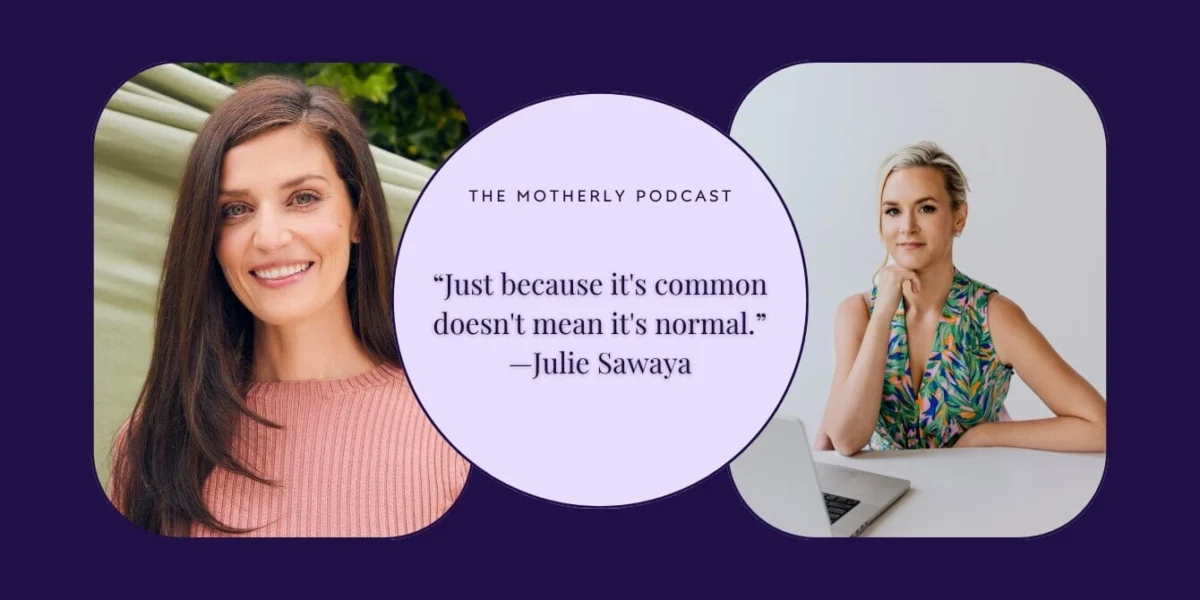
Julie Sawaya, a trained nutritionist with a meticulous approach to her own health, found herself in a state of disbelief during her time at Stanford Business School. Convinced that her healthy lifestyle would translate into optimal nutrient levels, she underwent an at-home nutrient test. The results were a stark revelation: nearly every nutrient on the panel registered in the "red zone." This personal shock, echoed by her co-founder and fellow nutritionist Ryan, ignited a mission that would lead to the creation of Needed, a company dedicated to addressing the pervasive issue of perinatal nutritional depletion. Their foundational premise is as alarming as it is empirically supported: while an overwhelming 97 percent of pregnant women utilize prenatal vitamins, an equally staggering 95 percent remain nutritionally depleted. The root of this widespread deficiency, Sawaya and her team discovered, lies not in a lack of effort on the part of expectant mothers, but in the outdated and male-centric standards upon which most prenatal vitamins are designed, with their origins tracing back to 1941.
This profound insight into the inadequacies of conventional prenatal care was further explored in an episode of The Motherly Podcast, where Sawaya sat down with host Liz Tenety. The discussion delved into the nuances of optimal nutrition during pregnancy and the postpartum period, the societal normalization of maternal depletion, and the arduous yet rewarding journey of building both a company and a family simultaneously.
The Genesis of Needed: A Personal Discovery Fuels a Mission
The "aha" moment for Sawaya and her co-founder, Ryan Woodbury, occurred in 2016. As at-home nutrient testing became more accessible, they, as self-proclaimed health enthusiasts who frequented farmers’ markets, were eager to validate their informed dietary choices. The results, however, painted a dramatically different picture. Both individuals, despite their diligent efforts, were found to be significantly nutritionally depleted. Sawaya’s personal experience, with almost every nutrient indicator in the red, served as a powerful catalyst. This shared discovery led them to investigate the broader implications of women’s nutritional health, uncovering a "silent but ubiquitous epidemic" where over 95 percent of women experience nutritional depletion across various life stages. The pregnancy phase, in particular, revealed a persistent deficiency despite widespread prenatal vitamin use.
The Flawed Foundation of Prenatal Nutrition
The core of the problem, as identified by Sawaya, lies in the fundamental design of standard prenatal vitamins. "What it takes to nourish a woman is orders of magnitude different from what’s in a standard prenatal vitamin," she explained. The prevailing nutritional guidelines, Recommended Daily Allowances (RDAs), were established in 1941, a period marked by wartime scarcity. These RDAs are primarily designed to prevent overt deficiency diseases, not to promote optimal health. Alarmingly, research indicates that 83 percent of the studies underpinning the pregnancy and breastfeeding RDAs did not include pregnant or breastfeeding women. The vast majority of the foundational research was conducted on men, with extrapolated data then applied to women. This "bare minimum paradigm," rather than an optimal one, forms the basis of what is currently available to expectant mothers.
The Systemic Underemphasis on Maternal Nutrition
The underemphasis on nutrition within mainstream pregnancy care is a multifaceted issue. Firstly, the medical system itself offers minimal nutritional education. Physicians typically receive less than four hours of nutritional training throughout their four-year medical school curriculum and are often not equipped to refer patients to registered dietitians. Consequently, many women lack access to specialized guidance on nutritional requirements.
Secondly, the practical realities of prenatal care in the U.S. contribute to this oversight. Obstetricians often have average appointment times of merely 12 minutes. Nutrition typically only becomes a point of discussion if a specific diagnosis, such as gestational diabetes, arises. Sawaya recounted her own first pregnancy, where the extent of the nutritional consultation was a simple question: "Are you taking a prenatal?" Upon her affirmative response, the inquiry ended, with no follow-up regarding the specific vitamin, its contents, or her overall dietary intake. This "check the box" approach is further exacerbated by a pervasive misconception among consumers. Based on thousands of interviews conducted by Needed, a common response from patients inquiring about prenatal vitamin recommendations is: "Take anything, they’re all the same." This widespread belief, Sawaya asserts, highlights a critical disconnect, as "just because it’s common doesn’t mean it’s normal."
The Far-Reaching Impact of Nutritional Status
The nutrient environment before conception, during pregnancy, and throughout the postpartum period holds significant implications for the woman, the baby, and society at large. Scientific evidence firmly links nutrition to pregnancy outcomes. Conditions such as gestational diabetes, hypertension, and preterm birth have demonstrable nutritional correlations. Beyond birth, research indicates that choline consumption in utero can yield cognitive benefits for children up to three to five years of age.
However, Sawaya emphasizes the profound impact on maternal well-being. During pregnancy, the body prioritizes fetal development, meaning that the difference between optimal and minimalistic nutrition is most acutely felt by the mother. In instances involving essential nutrients like omega-3 fatty acids and folate, the body may even draw from the maternal brain to supply the fetus. Pregnancy, fertility, and the postpartum period represent the most nutritionally demanding phases of a woman’s life. The period between weaning and the onset of perimenopause, the second most nutritionally demanding phase, is comparatively brief, underscoring the continuous nutritional needs of women.
Needed’s Differentiated Approach to Perinatal Nutrition
Needed distinguishes itself by prioritizing "optimal" nutrition over constraints related to pill count, cost, or profit margins. While many companies engage in white-labeling – rebranding standard supplements with minor tweaks – Needed dedicated three and a half years to in-depth research and development. Their flagship product, the eight-capsule prenatal multivitamin pro, is designed to be practitioner-grade, optimizing 26 vitamins and minerals, delivering up to 12 times the nutrition of average leading prenatals. Their three-capsule prenatal offers eight times the nutrition. Importantly, Needed’s philosophy is not simply "more is more." They advocate for carefully calibrated dosages, sometimes lower than industry peers, such as in the case of folate, recognizing that excessive amounts are not always beneficial. Their approach is systemic, ensuring that each product is designed to be safely taken in conjunction with others, from egg quality support to cycle and perimenopause support.
Challenging the Normalization of Maternal Depletion
The normalization of maternal depletion, Sawaya posits, is deeply ingrained in societal expectations. Women are often conditioned to accept exhaustion, self-sacrifice for their families, and the pressure to excel in both their professional and personal lives without feeling well. This is further compounded by a lack of adequate paid leave in the U.S., with many women expected to return to work as early as two weeks postpartum. Achieving a fundamental shift requires a significant cultural transformation.
While products like Needed’s are vital, they are not a panacea. Sawaya stresses the importance of raising awareness about the signs of depletion and validating that these experiences are real and that alternative solutions exist. The ultimate vision for Needed is a future where their products are no longer necessary, a state where women are adequately nourished and can fully engage in all aspects of their lives without the burden of nutritional deficiency.
Navigating Depletion as a Founder and Mother
Sawaya’s personal journey is a testament to the challenges and triumphs of balancing ambitious professional pursuits with the demands of motherhood. Having experienced four pregnancies and raised three children while building Needed, she acknowledges the continuous effort required to combat depletion in her own life. Vitamins are strategically placed on her desk as a visual reminder, and her children now play a role in reminding her to take them. Despite her extensive knowledge, habit formation remains an ongoing process. She recognizes that prioritizing her well-being, including daily outdoor time, movement, mindful evening routines, and dedicated weekend time with her children, is essential for managing stress and feeling better.
The mission of Needed serves as a powerful intrinsic motivator, but Sawaya emphasizes the necessity of establishing boundaries. The dual roles of a company founder and a working mother are demanding, and she extends this understanding to mothers whose primary role is homemaking, acknowledging the significant challenges inherent in that capacity as well.
A Vision for Centering Mothers
If granted a "magic wand" to enact one change in supporting mothers in the U.S., Sawaya’s immediate response is to elevate the importance of mothers within society. She advocates for a paradigm shift where women are celebrated for their daily contributions, envisioning a reality where "literally every day should be Mother’s Day." She views mothers as the bedrock of society and believes that in an era of declining birth rates, a fundamental reevaluation of national priorities is necessary, placing mothers and children at the forefront.
Motherhood as a Catalyst for Superpowers
Motherly’s belief that motherhood unlocks superpowers resonates deeply with Sawaya. She identifies her own superpower as the ability to foster connection and make individuals feel seen and supported within group settings. This skill, honed through raising three children and often navigating group parenting dynamics, translates seamlessly to her leadership at Needed, where her team has grown. Contrary to her initial fears that motherhood might impede her professional capabilities, Sawaya has found the opposite to be true. Her experiences as a mother have enhanced her efficiency, clarity of priorities, and communication skills. She expresses a wish that she had embraced this understanding earlier in her twenties, encouraging others not to fear motherhood but to embrace its transformative power.
This interview has been edited and condensed for clarity. Listen to the full conversation on The Motherly Podcast.