 Ali Ikhwan
The official release of the Apple iPhone Duo has fundamentally altered the mobile software landscape, sparking a wave of creative development that leverages the device’s unique hinge architecture and dual-screen capabilities. While Android manufacturers have spent the past seven years iterating on folding hardware—often struggling to gain widespread developer support—Apple’s entry into the foldable market has immediately galvanized the indie developer community. This shift highlights a recurring phenomenon in consumer technology: Apple’s adoption of a form factor often serves as the definitive catalyst for standardized, high-quality software optimization.
A Seven-Year Evolution: From Android Pioneers to Market Maturation
The journey of the foldable phone began in earnest around 2017 and 2018, with early prototypes and subsequent commercial releases from manufacturers like Samsung, Motorola, and Google. Despite the longevity of these devices, the ecosystem remained fragmented. Android developers were tasked with supporting a wide array of aspect ratios, hinge mechanisms, and software skins, leading to inconsistent user experiences.

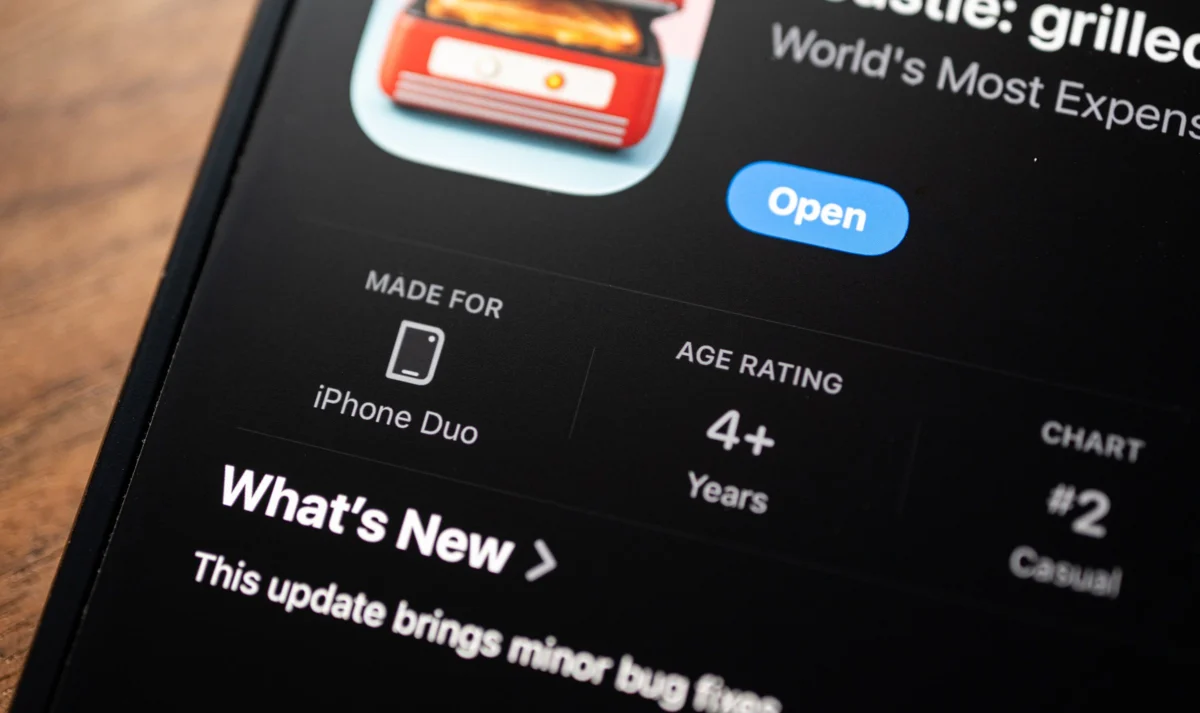
Market data suggests that while foldables captured a niche segment of the premium smartphone market, they lacked the "killer app" ecosystem required for mainstream adoption. According to industry analysis from Counterpoint Research, foldable shipments have grown steadily, yet the lack of cohesive developer incentives often meant that folding-specific features remained secondary to standard mobile UI design. The iPhone Duo, by contrast, has entered a market with a highly unified operating system (iOS) and a developer base that is historically quick to adapt to Apple’s proprietary hardware innovations. The "Made for iPhone Duo" badge appearing on the App Store now functions as a marker of high-fidelity optimization, providing a clear path for developers to monetize their efforts.
Chronological Milestones of the Folding Era
The development of the foldable category has moved from experimental novelty to functional necessity over the last decade:
- 2017-2018: Early prototypes of foldable OLED panels surface, with manufacturers testing internal hinges and protective polymer screens.
- 2019: The launch of the first generation of commercial folding phones. These devices were marred by durability concerns, specifically regarding screen creasing and hinge failures.
- 2020-2022: Incremental improvements in water resistance, hinge stiffness, and glass technology (Ultra-Thin Glass) significantly improved the user experience.
- 2023: Android manufacturers began focusing on the "external display" experience, attempting to make the folded phone as functional as a standard slab handset.
- 2024: Apple enters the market with the iPhone Duo, emphasizing its "Tabletop Mode"—a configuration where the device is partially folded to allow for split-screen interactivity.
Software Innovation and the "Tabletop" Paradigm
The most significant shift observed in the weeks following the iPhone Duo’s release is the emergence of software that treats the hinge as a primary input mechanism. Unlike traditional mobile applications that rely on touch gestures, the new generation of Duo-optimized apps utilizes the physical orientation of the device.

In applications like Battlefleet Duo, developers are effectively recreating the tactile experience of analog board games. By using the 7.6-inch internal display in a 90-degree fold, the app splits the UI into a "command deck" on the bottom and a "tactical map" on the top. This design mimics the physical separation of a classic tabletop game, allowing for local, face-to-face multiplayer that leverages the device’s unique geometry.
The economic model for these applications is also evolving. Developers are moving away from the "freemium" model that dominated the early App Store, opting instead for one-time purchases or transparent, limited-free-trial structures. For instance, Battlefleet Duo offers a $5 one-time fee to unlock unlimited gameplay, signaling a departure from the ad-heavy, subscription-fatigued landscape of the mid-2020s.
Retro-Simulation and New Utility
The creative use of hardware is not limited to gaming. Apps like Flipcorder demonstrate a trend toward "skeuomorphic" design—software that mimics the physical behavior of obsolete hardware. By utilizing the iPhone Duo’s outer screen as a "lens cap" and the internal display as a viewfinder, Flipcorder forces a physical engagement with the device that a standard smartphone cannot replicate. The app’s success in cataloging footage by date, while filtering it through a retro VHS aesthetic, demonstrates how hardware constraints can be turned into a deliberate stylistic choice.

Similarly, RectoVerso represents a significant advancement in educational technology. By using Apple Intelligence to synthesize study material from PDFs and class notes into flashcards, the app integrates high-level machine learning with a physical interaction: the act of "partially opening" the phone to reveal an answer. This "progressive disclosure" of information provides a tactile feedback loop that improves retention, according to cognitive studies on physical versus digital note-taking.
Broader Economic and Industrial Implications
The entry of Apple into the foldable market carries profound implications for the mobile industry. First, it forces competing platforms to re-evaluate their software development kits (SDKs). Android developers may feel a renewed pressure to standardize their foldable experiences to match the high-quality benchmarks set by iOS developers.
Second, the "Made for iPhone Duo" certification is likely to influence hardware design in future iterations. If developers prioritize specific hinge angles or display ratios, Apple may refine its hardware to better accommodate these popular software use cases. This feedback loop—where software informs hardware design—is the hallmark of a mature product category.

Furthermore, the surge in development for the iPhone Duo acts as a hedge against the stagnant sales growth of traditional smartphone designs. As consumers hold onto devices for longer periods, the foldable form factor offers a clear, value-add proposition that justifies the high price points of premium handsets. When a $3 app like Toastie—a quirky, experimental tool for virtual cooking—can drive significant consumer interest, it confirms that users are seeking novel ways to interact with their devices.
Official Responses and Future Outlook
While Apple has not provided official sales data regarding the iPhone Duo, industry observers point to the rapid proliferation of optimized apps as a leading indicator of strong consumer adoption. Developers, speaking on condition of anonymity due to non-disclosure agreements, report that Apple’s engineering teams provided early access to documentation regarding the device’s hinge-sensing API, a level of support that was notably absent during the early years of the Android foldable market.
The challenge moving forward will be maintaining this momentum. As the novelty of the folding form factor subsides, developers will need to move beyond "quirky" experiences and toward deep, multi-tasking workflows that increase productivity. The current trend of using the device for soundscapes (as seen in Portal) or rhythm gaming (as seen in PianoFold) serves as a foundational "sandbox" phase. The next stage of the iPhone Duo’s lifecycle will likely be defined by enterprise software, professional creative suites, and complex multitasking environments that take full advantage of the internal display’s real estate.

Ultimately, the launch of the iPhone Duo has not only provided a new piece of hardware for consumers; it has rejuvenated the mobile software industry by introducing a new dimension of interaction. The success of this transition will depend on whether developers can continue to justify the hardware’s premium price through sustained, high-quality, and innovative software experiences that differentiate the folding experience from the standard smartphone status quo. As it stands, the foldable market has finally entered its era of professionalization and mass-market potential.