Pranda Michaela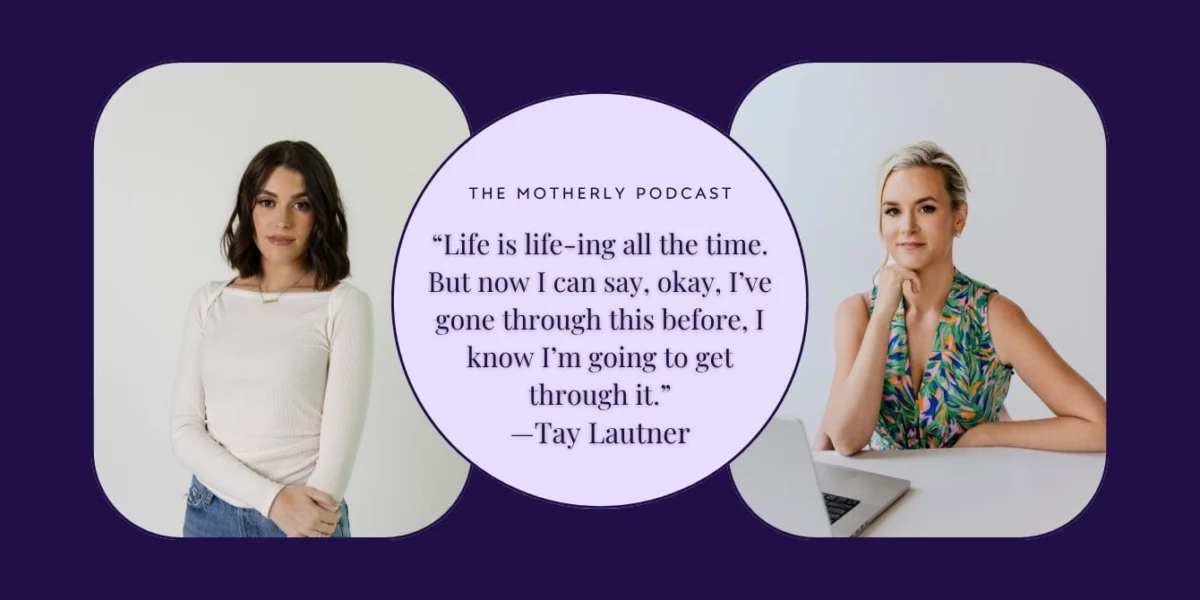
Tay Lautner’s career trajectory is a testament to resilience and a profound commitment to care, initially at the front lines of the COVID-19 pandemic as a new nurse, and subsequently as a prominent voice in the mental health advocacy space after burnout and a Post-Traumatic Stress Disorder (PTSD) diagnosis necessitated a career shift. Now, as she approaches her first Mother’s Day, she is preparing for a role that will undoubtedly test the coping mechanisms she has meticulously cultivated. In an in-depth conversation on "The Motherly Podcast," Lautner shared candid insights into her experiences, from the unexpectedly challenging first trimester of pregnancy to the pivotal moments that reshaped her professional and personal life.
A Nurse’s Crucible: Navigating the Pandemic’s Early Days
Lautner’s nursing career began in February 2020, just as the world was grappling with the nascent stages of the COVID-19 pandemic. Freshly graduated and having passed her NCLEX, she was assigned to a telemetry floor that, by December of that year, was converted into a dedicated COVID-19 unit. This rapid pivot thrust her into an environment fraught with uncertainty, fear, and overwhelming patient loads.
"I graduated at the end of 2019 and passed my NCLEX in February of 2020, so right before COVID," Lautner recalled. "Everything shut down. I thought, I just spent all of this time going to school and getting my degree and my license. I’m going to apply to this one hospital, and if I get the job, great. If not, I’ll stick it out and wait through COVID. I got it, and I was a telemetry nurse, which is basically a cardiac nurse. At the end of 2020, we converted to COVID, and I was a COVID nurse for four or five months."
The intensity of this period cannot be overstated. Healthcare systems worldwide were strained, and frontline workers faced unprecedented emotional and physical demands. Lautner described the experience as a "whirlwind," particularly as a new nurse working nights during a surge that overwhelmed staffing ratios. "It was definitely something I was not prepared for, and I don’t think most were, because you can’t really prepare for a global pandemic," she stated. "I wasn’t working during the first surge, when it was really scary and no one knew what was going on and there wasn’t enough PPE. I was working during the huge influx of patients because of flu season. We were out of ratio. I was this little new nurse working nights. It feels like a whirlwind that I even went through that."
The personal toll of such an experience is significant. Studies have shown a substantial increase in mental health challenges among healthcare professionals during the pandemic. A 2021 report by the American Medical Association highlighted that nearly 93% of physicians experienced burnout, with a significant portion reporting symptoms of anxiety and depression. Lautner’s experience aligns with these broader trends, underscoring the profound impact of prolonged exposure to trauma and high-stress environments.
The Breaking Point and the Path to Healing
Despite the immense challenges, Lautner initially exhibited a characteristic resilience, a trait she attributes, in part, to her background as a dancer. "It took a very long time, because I’m a little stubborn," she admitted. "I kept saying I could tough it out. I think that’s the dancer mentality, and I think any athlete would attest to it. You tough it out and you keep going. I didn’t realize how much I was struggling."
The realization that she was not okay began to surface when her husband, Taylor Lautner, noticed a change in her demeanor. "It took my husband saying, ‘You seem a little checked out,’ and I said, ‘No, I’m just working nights.’ That was the first time I thought, am I okay?"
The catalyst for her departure from the hospital was contracting COVID-19 herself, an experience that, paradoxically, provided the necessary distance for her to confront her struggles. "Then I got COVID, not from working, from the outside world," she explained. "I had to go on disability. I had long COVID and I was sick for a month or two, and I really could not do anything. Even doing the laundry was a very hard task. I would almost pass out. It took being removed from the environment and being still and not being able to distract myself. I finally left the hospital around September of 2021."
This period of forced stillness was crucial for her recovery. "I’m thankful that I did get sick, because I think it would have taken me a really long time to remove myself otherwise," she reflected. "I would have said, oh, I can go to part-time, I can go to one day a week. It would have slowly worked its way down and it would not have been good for me. With any trauma response, it’s hard to assess what’s going on in your body and your mind while you’re still very much actively in the environment."
Following her departure from the hospital, Lautner was diagnosed with PTSD, depression, and anxiety. This diagnosis became the foundation for her subsequent work in mental health advocacy. The healing process, she emphasized, was multifaceted. "A lot of therapy," she stated when asked about her recovery. "Therapy made me accept the fact that what I went through wasn’t okay, because I would always end each sentence with ‘But I’m okay. It’s fine. I got through it.’ My therapist had to tell me that what I went through actually is not okay, and that no one should be going through it, let alone someone my age."
The development of a robust mental health toolkit became paramount. This included consistent therapy, journaling, cultivating quiet mornings, and establishing regular check-ins, even during periods of perceived well-being. "I had never fully struggled to that extent before, so I didn’t have any tools or tricks or self-care practices in my back pocket," she explained. "Now it’s really about continuing to build my toolbox. I check in with my therapist once a month, even when things are great. Journaling, having quiet time in the morning, whatever it is, being consistent with it. When hard things come up, it’s a lot less scary. It doesn’t take away the impact. Life is life-ing all the time. But now I can say, okay, I’ve gone through this before, I know I’m going to get through it, and these are the steps I have to take."
From Dance to Diagnosis: A Career Transition
Lautner’s path to nursing was not a direct one. She initially pursued a degree in dance, a passion she had cultivated from a young age. However, she found herself questioning the long-term viability and financial investment of a dance career. A suggestion to explore nursing, stemming from her positive experiences volunteering at hospitals and her aptitude for science, proved transformative.
"It’s funny, because I never said ‘I want to do nursing.’ It was something that felt like it was always there, and I didn’t realize I had a love for it," she revealed. "I was a dance major. I danced my whole life, and I realized it wasn’t exactly what I wanted to be paying for in college. Someone said I should try nursing, because I had volunteered at hospitals and really enjoyed it, and I loved all of my anatomy and physiology classes. I loved anything that had to do with science and the body. It ended up being my favorite thing. It was the first time in school I ever had straight As. I graduated with honors."
This academic success and newfound passion set the stage for her entry into the healthcare field, a path that would soon be irrevocably shaped by a global health crisis.
The Unfolding of Motherhood and the Legacy of "Lemons"
As Lautner prepares to welcome her first child, a daughter, she acknowledges the profound implications this new role will have on her established self-care practices. "It’s definitely going to be rewiring my brain and rearranging how I show up for myself, because I’m going to have a little human that I’m caring for, and that’s obviously going to come first," she stated. "So it’s about putting my baby first and still finding the time to check in with myself, to have a few minutes of quiet. I think it’s going to take a minute to get into that routine, but I’m hopeful I will get there."
A key aspect of her approach to motherhood is modeling healthy self-care for her daughter. "I also want my kids to see me taking that time for myself," she emphasized. "How are they going to learn to do that if I’m not leading by example?"
The name "Lemons" for her mental health platform, The Lemons Foundation, and her personal brand, Lemons by Tay, emerged organically from her own experiences. "When I left the hospital, I still really wanted to find a way to connect with people," she explained. "Everyone was struggling with their mental health, whether you were a healthcare worker or whatever you were doing, even if you were just sitting at home. I’m really big on community and human-to-human interaction. So I started a blog and I was trying to think of a name, and Lemons just came to mind. At that time in my life it really felt like life was chucking lemons at me. It wasn’t handing me one, it was throwing thousands."
This initiative evolved from a blog into a nonprofit dedicated to destigmatizing mental health and later expanded into "The Squeeze," a podcast co-hosted with her husband, Taylor. "The Squeeze" delves into mental health experiences within the context of the spotlight, a conversation initiated by the realization that many people were unaware that individuals in the public eye also faced such struggles.
"When I first started doing a lot of this mental health work, people would come up to me and say they didn’t realize famous people dealt with mental health struggles," Lautner said. "I don’t consider myself famous, which was part of what was funny about it. But being married to my husband, who has been in the spotlight for the majority of his life, and having friends in the same boat, I’ve had a closer look behind the curtain. It doesn’t matter how much money you make, where you’re at in the world, your job, your anything. People are going to struggle with their mental health. It may look a little different, but it’s something that everyone deals with."
Her creative partnership with her husband is a source of joy and strength. "He’s my best friend. We really enjoy being with each other, and we also really enjoy being creative together," she shared. "We always joke that he’s the talent. He just shows up, and I say ‘Hey, we’re going to do this,’ and he says ‘Great.’ It’s fun, because I get to take all of the stuff that he’s gone through and learned, and he’s so creative with how he sees a social clip being played out. He’ll say ‘This should go here.’ It’s really cool to be collaborative with the person you love."
Looking ahead to her daughter’s arrival, Lautner expressed excitement about witnessing her husband embrace fatherhood. "I always say that I started dating him because I knew he’d be a really good dad. I’m so excited to see him be a father," she stated. "It’s been really cool to walk through this pregnancy together, because it has not been fun, and he’s been such a help." Their shared history of navigating mental health challenges has further strengthened their bond and their ability to support each other. "We’ve both struggled with our mental health, and we’ve done a lot of work separately and a lot of work together. We did a lot of it in the earlier years of our relationship, so now it’s a lot easier to work through things, whether I’m needing more from him or he’s needing more from me."
When asked about her primary preparations for the baby’s arrival, Lautner admitted to a tendency to anticipate future challenges. "It’s weird, because a lot of the stuff I worry about actually won’t even be a thing for another 10 or 15 years, which is silly and very much like me, worrying about things that are so out of my control and so far in the future," she confessed. She is, however, actively seeking wisdom from experienced mothers and drawing upon her past experiences, including nannying a young child.
The anticipation of raising a daughter has brought a unique sense of purpose. "One of the first things I said was that I’m so excited for her to see me work," Lautner shared. "I look up to my mom. She’s one of the hardest workers, and she still works to this day. I went to after-school daycare because my parents were at work every day. Seeing that hard work from my mom shaped me, and I’m excited to have my daughter see it in me, and to know she can achieve whatever she wants. She can dream big. That’s definitely my personality."
Lautner’s narrative is a powerful illustration of transformation, demonstrating how profound personal challenges can be leveraged to foster understanding, advocate for change, and ultimately, build a more resilient self, preparing her not only for motherhood but for a future dedicated to making a positive impact.