Cintya Tara Annisa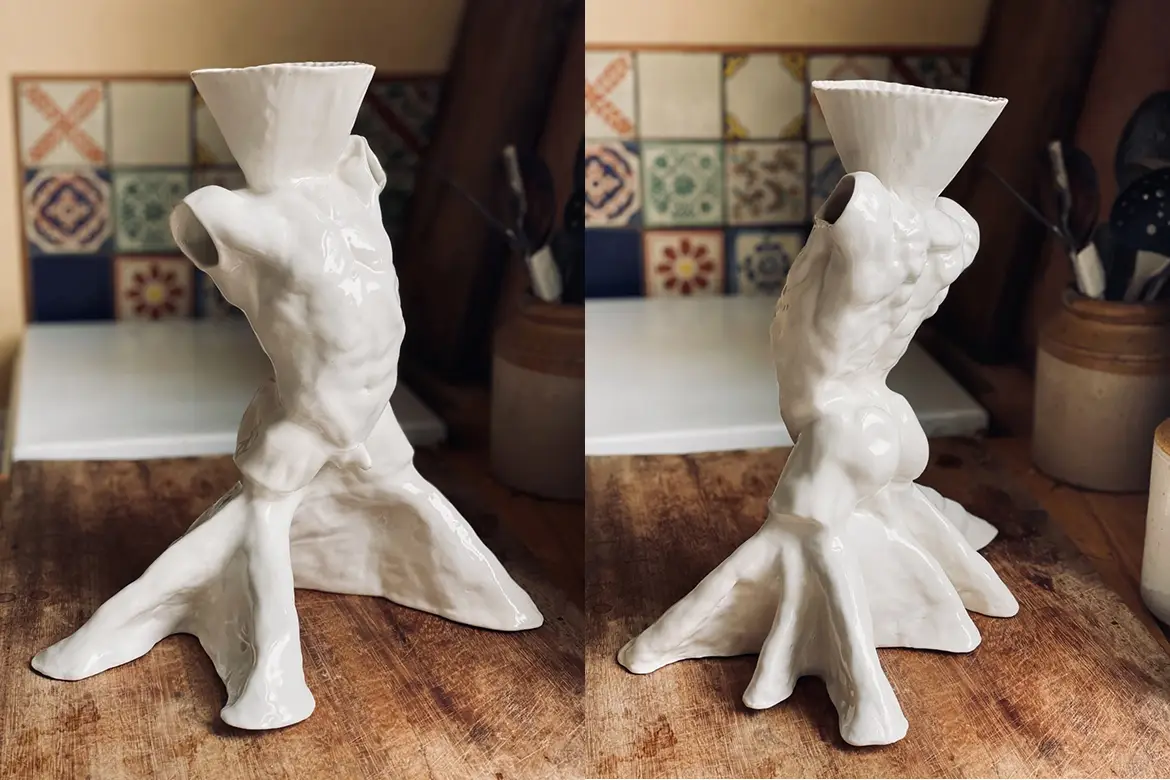
The specialty coffee industry has long maintained that the preparation of a single-origin brew is as much an aesthetic endeavor as it is a culinary one. This sentiment has reached a new pinnacle with the emergence of a highly specialized, functional sculpture that merges the world of fine art with daily caffeine rituals. A London-based artist, Jascha Lenkiewicz, has recently garnered significant attention within the international coffee community for the creation of a porcelain pour-over coffee maker inspired by the works of the seminal French sculptor Auguste Rodin. The piece, currently listed on the global e-commerce platform eBay, represents a unique convergence of 19th-century sculptural philosophy and 21st-century artisanal coffee culture.
The Artistic Vision Behind the Sculptural Brewer
The device in question is a hand-crafted porcelain vessel that draws heavy inspiration from the anatomical focus of Auguste Rodin, who is widely regarded as the father of modern sculpture. Rodin’s work was revolutionary for its time, eschewing the idealized forms of classical antiquity in favor of realistic, often fragmented, human figures that conveyed deep emotion and physical presence. While Rodin is most famous for "The Thinker," the pour-over device created by Lenkiewicz appears to reference "The Walking Man," a sculpture characterized by its lack of a head and arms, focusing instead on the dynamic movement of the torso and legs.
Lenkiewicz’s interpretation provides a surrealist twist on this tradition. The porcelain figure features a detailed, armless male torso supported by elongated, spindly legs that some observers have compared to the creature designs found in modern science fiction, such as the "Stranger Things" franchise. In place of a traditional head, the figure supports a conical brewing chamber, designed to hold a standard paper filter. The most provocative element of the design, however, is the exit point for the brewed coffee. Rather than a traditional spout or base, the liquid exits through a small aperture located in the lower pelvic region of the figure. This design choice has sparked a mixture of amusement and genuine artistic appreciation within the specialty coffee sector, where the device has been colloquially dubbed the "Pee60"—a play on the famous Hario V60 brewing system.
Technical Specifications and the Brewing Process
From a technical standpoint, the sculptural pour-over adheres to the fundamental principles of manual drip brewing. The conical head functions as the extraction chamber, where hot water is poured over coffee grounds. However, the internal geometry of the device presents unique challenges and characteristics for the barista. Preliminary reports and video demonstrations of the device indicate a relatively slow flow rate. In the world of specialty coffee, the flow rate is a critical variable that determines the contact time between water and coffee, thereby influencing the final flavor profile.
The artist has acknowledged that the flow of the "coffee tinkler" is restricted, a result of the narrow internal canal required to route the liquid through the porcelain torso. In professional brewing terms, this "narrow" exit point necessitates a coarser grind size to prevent over-extraction and bitterness. While traditional brewers like the Hario V60 or the Chemex are engineered for optimal thermal retention and specific flow dynamics, the Lenkiewicz piece prioritizes form and narrative over pure technical efficiency. Despite these limitations, the device remains a fully functional piece of kitchenware, crafted from high-quality porcelain that is capable of withstanding the thermal shock associated with boiling water.
Market Valuation and Auction Dynamics
The rarity of the item has led to a competitive bidding environment on the secondary market. As of the latest reports, the current bid for the Rodin-inspired pour-over on eBay has exceeded £400 (approximately $467 USD), with the seller’s reserve price yet to be met. This valuation places the item well above the standard price range for high-end coffee equipment. For comparison, a standard ceramic Hario V60 typically retails for $25 to $30, while premium designer brewers like the Fellow Stagg EKG or the Chemex Ottomatic range from $150 to $350.
The high price point is reflective of the item’s status as a "functional sculpture" rather than a mass-produced appliance. In the art world, the value of a piece is often tied to the labor-intensive nature of its creation and its scarcity. Lenkiewicz has noted that the process of hand-modeling, firing, and glazing each unit is an arduous task. While the artist has expressed intentions to produce more units in the future, the time-intensive nature of ceramic sculpture suggests that the market will remain underserved for months to come. Consequently, the current auction represents a rare opportunity for collectors of "weird" or niche coffee ephemera to acquire a one-of-a-kind prototype.
Historical Context: Coffee Equipment as Art
The emergence of the Rodin-inspired brewer is part of a broader historical trend where coffee preparation tools are elevated to the status of museum-grade design objects. The Chemex Coffeemaker, designed by Peter Schlumbohm in 1941, has been a permanent part of the collection at the Museum of Modern Art (MoMA) in New York for decades, cited for its perfect blend of chemistry and aesthetics. Similarly, the mid-century espresso machines of La Pavoni and Faema are celebrated for their industrial design.
In the contemporary "Third Wave" coffee movement, the visual appeal of a cafe’s equipment is often as important as the quality of the beans. This has created a fertile ground for artists like Lenkiewicz to experiment with unconventional forms. The "butt mug" and other anatomical ceramics have previously found success in niche markets, suggesting a growing consumer appetite for kitchenware that challenges conventional notions of "good taste" while maintaining utility.
Analysis of the Cultural Impact
The reaction to the Rodin pour-over within the specialty coffee community highlights a specific subculture that values eccentricity and "anti-design." While the mainstream coffee industry often focuses on sleek, minimalist, and hyper-efficient equipment, a vocal segment of enthusiasts seeks out items that evoke a sense of playfulness or subversion. The "Pee60" sits at the intersection of high-brow art appreciation and low-brow humor, making it a viral sensation on platforms like Instagram and TikTok.
Furthermore, the piece serves as a commentary on the "humanity" of the coffee-making process. By literally embodying the brewer in a human form, Lenkiewicz reminds the user of the physical labor and the "living" nature of the coffee bean. However, the anatomical placement of the spout also serves as a critique of the often-pretentious nature of specialty coffee culture. By forcing the user to engage with a "tinkling" statue, the artist deconstructs the solemnity of the morning coffee ritual.
Future Outlook for Sculptural Coffee Ware
As the auction nears its conclusion, the coffee world watches to see where this unique artifact will land. Whether it ends up in a high-end specialty cafe as a conversation piece or in a private collection of avant-garde art, its impact on the conversation surrounding coffee design is undeniable. Jascha Lenkiewicz’s success with this piece may pave the way for other ceramicists and sculptors to explore the untapped market of "functional art" within the culinary space.
For now, the Rodin-inspired pour-over remains a singular phenomenon. Its existence challenges the boundaries of what constitutes a coffee brewer and asks whether the industry is ready to embrace a more surreal, fragmented, and perhaps slightly "messy" future. As production for future units is expected to take several months, the scarcity of the "coffee tinkler" will likely continue to drive interest and high valuations in the artisanal market.
Conclusion
The Rodin-inspired pour-over by Jascha Lenkiewicz is more than a novelty; it is a testament to the evolving relationship between functional objects and fine art. By drawing on the legacy of Auguste Rodin and the modern obsession with specialty coffee, Lenkiewicz has created a piece that is simultaneously provocative, functional, and highly collectible. As the bidding continues and the reserve price is chased, the "Pee60" stands as a bold reminder that even the most routine daily tasks—like brewing a cup of coffee—can be transformed into an encounter with the sublime, the surreal, and the profoundly human. For the winner of the auction, the morning brew will never be the same, offering a daily reminder that art is not just something to be looked at, but something to be experienced, poured through, and consumed.