
 Ali Ikhwan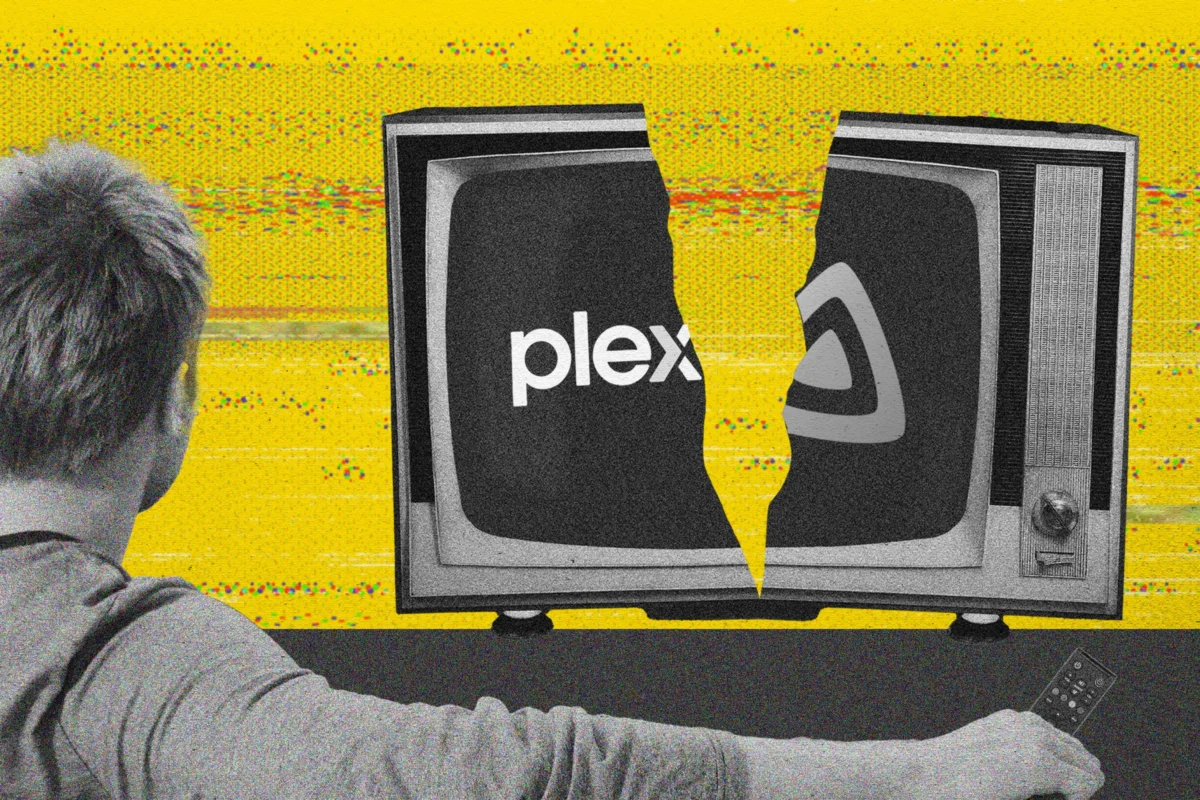
The landscape of home media consumption is undergoing a significant transformation as users increasingly seek alternatives to traditional streaming platforms. For over a decade, Plex has stood as the preeminent solution for individuals wishing to organize personal collections of television shows, movies, and music into a centralized, Netflix-style interface. However, recent strategic shifts by Plex Inc., characterized by a pivot toward ad-supported content and social networking features, have created a schism within its user base. This evolution has paved the way for Jellyfin, a free and open-source alternative, to emerge as a formidable contender for those prioritizing privacy and local control over commercial convenience.
The Shifting Paradigm of Plex: From Media Server to Streaming Hub
Plex began its life as a fork of the Xbox Media Center (XBMC) project, designed specifically to simplify the process of streaming local files to various devices. For years, it was the gold standard for "cord-cutters." However, as the streaming market became saturated with services like Netflix, Disney+, and Max, Plex’s business model shifted. To ensure long-term viability, the company began integrating "Free Movies and TV," an ad-supported video-on-demand (AVOD) service, and more recently, social features such as user reviews and activity feeds.
While these additions aim to make Plex a "one-stop shop" for all media, they have introduced significant clutter to the user interface. Many long-term users, who primarily utilize the platform for its Digital Video Recorder (DVR) capabilities and personal library management, find these features intrusive. The tension between Plex’s corporate goals—which require user growth and advertising revenue—and the desires of its core "power user" demographic has never been more apparent.
The Economic Reality of Lifetime Licensing
A primary driver of the recent discourse surrounding Plex is its pricing structure. For years, the "Plex Pass" has offered premium features, including hardware-accelerated transcoding, offline downloads, and advanced DVR controls. Traditionally, the lifetime subscription was viewed as a high-value investment for enthusiasts. However, recent reports indicate a drastic shift in the cost-benefit analysis.
In a move that surprised many in the tech community, Plex recently adjusted the pricing for its lifetime pass in certain markets and tiers. While the standard promotional price often hovered around $120 USD, some regional pricing and new tiers have seen figures cited as high as $750. At such a price point, a lifetime pass represents more than a decade’s worth of annual subscriptions. This pricing strategy suggests that Plex is moving away from the "pay once, use forever" model in favor of recurring revenue, a trend seen across the software-as-a-service (SaaS) industry. For users unwilling to commit to a perpetual subscription, the allure of a truly free, open-source alternative like Jellyfin becomes increasingly pragmatic.
Jellyfin: The Open-Source Response to Commercialization
Jellyfin emerged in late 2018 as a fork of Emby, another media server project that transitioned from open-source to a proprietary, "open-core" model. Jellyfin’s mission is to provide a completely free, no-strings-attached media server that remains under the total control of the user. There are no premium tiers, no tracking, and no centralized corporate servers required for authentication.
For basic local streaming, Jellyfin is remarkably robust. The software supports a wide array of metadata scrapers, ensuring that movie posters, cast lists, and plot summaries are automatically populated. Furthermore, because it lacks the corporate overhead of Plex, the interface is notably cleaner, focusing strictly on the user’s own media rather than pushing external streaming content.
Technical Barriers: Remote Access and Networking Infrastructure
The most significant divide between Plex and Jellyfin lies in the ease of remote access. Plex utilizes a centralized infrastructure that facilitates "Relay" connections. When a user wants to watch their home media from a hotel or a mobile network, Plex’s servers act as a middleman to navigate the complexities of Network Address Translation (NAT) and firewalls. For the average user, this means remote access "just works" with minimal configuration.
Jellyfin, by design, lacks this centralized infrastructure. To access a Jellyfin server outside the home, the burden of networking falls entirely on the user. This typically requires one of several advanced setups:
- Port Forwarding: Opening a specific port on the home router to allow external traffic.
- Reverse Proxy: Using software like Nginx or Caddy to manage incoming requests securely via a domain name.
- Virtual Private Networks (VPNs): Utilizing services like Tailscale or WireGuard to create a secure tunnel between the mobile device and the home network.
While these methods offer superior privacy and security, they represent a steep learning curve for non-technical users. This "tinker factor" remains the primary hurdle preventing Jellyfin from achieving mainstream dominance.
Live TV and DVR: A Critical Comparison
For many users, the ability to integrate live over-the-air (OTA) television is a "killer feature." Plex has spent years refining its tuner support, offering a plug-and-play experience for a wide variety of hardware, including Hauppauge and HDHomeRun tuners. Plex also includes Electronic Program Guide (EPG) data as part of the Plex Pass subscription, providing users with up to two weeks of TV listings.
Jellyfin’s approach to live TV is more restrictive. Officially, it primarily supports HDHomeRun devices. Users with other hardware, such as internal PCIe tuner cards, often must rely on third-party middleware like NextPVR or tvheadend to bridge the gap. Furthermore, Jellyfin does not provide its own EPG data. Users must either rely on the limited data broadcast over-the-air or subscribe to a third-party service like Schedules Direct.
There have also been documented complications with third-party data providers. For instance, Schedules Direct has previously issued warnings regarding the use of certain open-source tools due to bugs that could lead to account suspension. This highlights the fragility of an open-source ecosystem that relies on external, often paid, data streams.
The Plugin Ecosystem and Customization
Where Jellyfin lacks in out-of-the-box convenience, it excels in extensibility. Because the code is open-source, a vibrant community has developed a vast library of plugins. These allow users to:
- Integrate third-party subtitle services (OpenSubtitles, Bazarr).
- Apply custom CSS themes to the web and TV interfaces.
- Automate library requests via tools like Ombi or Jellyseerr.
- Implement advanced "Intro Skipping" and "Credit Skipping" logic.
Plex offers some of these features natively, but they are often locked behind a paywall or subject to the design whims of Plex’s developers. For the enthusiast who views their media server as a hobby or a "homelab" project, Jellyfin offers a level of granular control that Plex cannot match.
Data Privacy and Centralization Concerns
A growing segment of the media-hosting community is concerned with data sovereignty. Plex requires users to sign in through its centralized servers. This means that even if you are only watching local files on your local network, Plex Inc. has a record of when you are active and, potentially, what you are watching (depending on telemetry settings).
Jellyfin operates on a decentralized model. There is no "Jellyfin account" at a corporate level. All user accounts exist solely on the local server hardware. For privacy advocates, this is the ultimate advantage. In an era where data breaches and the monetization of user habits are commonplace, the ability to host a media server that is completely invisible to the outside world is a significant draw.
Market Analysis and Future Outlook
The competition between Plex and Jellyfin reflects a broader trend in the software industry: the tension between the "walled garden" and the "open common." Plex is currently positioned to become a major player in the streaming aggregation space, aiming to compete with the likes of Google TV and Apple TV. Its success depends on its ability to appeal to a broad, non-technical audience that values ease of use above all else.
Conversely, Jellyfin is positioned as the "enthusiast’s choice." As Plex continues to add features that its core users find redundant, Jellyfin’s user base is expected to grow. The future of the platform depends on its ability to simplify its networking and hardware compatibility. If Jellyfin can bridge the gap in remote access ease—perhaps through better integration with zero-config VPNs—it could pose a serious threat to Plex’s market share among tech-savvy consumers.
In conclusion, the choice between Plex and Jellyfin is not merely a technical one, but a philosophical one. Plex offers a polished, professional experience that "just works," albeit at the cost of privacy and a growing subscription burden. Jellyfin offers total freedom and a clean, focused interface, but requires a significant investment of time and technical effort to maintain. As physical media sees a niche resurgence and streaming costs continue to rise, the importance of these personal media solutions will only continue to grow. For now, Plex remains the king of convenience, but Jellyfin is rapidly becoming the champion of the people.







