
 Ali Ikhwan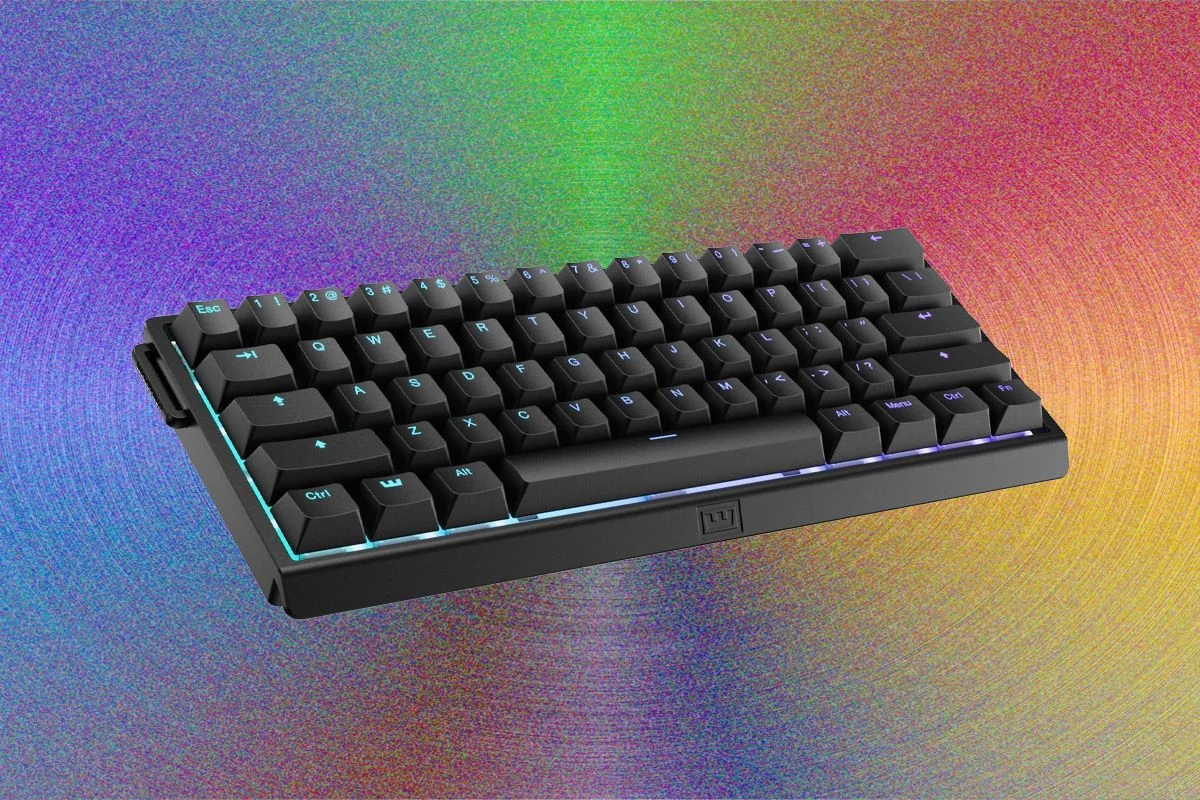
The release of the Wooting 60HE v2 marks a significant milestone in the peripheral industry, signaling the maturation of Hall Effect technology from a niche enthusiast curiosity to a dominant force in competitive gaming. As professional esports athletes and enthusiasts alike seek every possible millisecond of advantage, the hardware landscape has shifted away from traditional mechanical contacts toward magnetic sensors. The 60HE v2 arrives at a time when the debate over hardware-assisted movement has reached a fever pitch, particularly concerning the implementation of Simultaneous Opposing Cardinal Direction (SOCD) customization and its implications for competitive integrity.
The Technical Foundation of Hall Effect Sensors
To understand the impact of the Wooting 60HE v2, one must first examine the underlying technology that separates it from standard mechanical keyboards. Unlike traditional switches that rely on physical metal-to-metal contact to complete an electrical circuit, Hall Effect switches utilize magnets and sensors. As a key is depressed, a sensor on the Printed Circuit Board (PCB) measures the change in the magnetic field.
This analog input allows for features that are physically impossible on traditional hardware. Most notably, it enables "Rapid Trigger" technology, where the actuation and reset points are dynamic rather than fixed. In a standard mechanical keyboard, a key must travel back up past a specific reset point before it can be pressed again. With the Lekker switches found in the 60HE v2, the key resets the instant it begins to move upward, allowing for near-instantaneous repetitive inputs. This technical granularity provides a level of control that is particularly transformative in titles requiring precise movement, such as Counter-Strike 2 and Valorant.
The SOCD Controversy and Competitive Integrity
The most debated feature of the 60HE v2 is the implementation of SOCD customization. In traditional keyboard logic, pressing two opposing directional keys (such as ‘A’ for left and ‘D’ for right) results in either both inputs being registered (canceling movement) or the first input taking priority. SOCD allows the firmware to dictate that the most recent input overrides the previous one immediately, without the user having to fully release the first key.
This functionality, often referred to in the community as "Snap Tap" (a term popularized by Razer) or "Rappy Snappy" (Wooting’s iteration), reduces the human error associated with "counter-strafing." In tactical shooters, players must come to a complete stop to achieve maximum accuracy. By using SOCD, the transition from moving left to standing still or moving right is achieved with zero-millisecond delay.
The advantage provided by this feature has led to significant pushback from game developers. In August 2024, Valve Corporation officially banned the use of hardware-based SOCD in Counter-Strike 2, stating that such features "blur the line between manual input and automation." Players detected using these features on official servers now face being kicked from matches. Despite these bans in specific professional circuits, the feature remains a primary selling point for the general consumer market and remains legal in many other competitive titles.
Chronology of the Analog Keyboard Market
The trajectory of Wooting as a company mirrors the broader industry’s shift toward analog technology.
- 2017: Wooting launches the Wooting One, the first successful analog mechanical keyboard, utilizing optical switches to simulate controller-like pressure sensitivity.
- 2019-2021: The company pivots toward Hall Effect sensors, recognizing the superior durability and precision of magnetic fields over optical sensors.
- 2022: The original Wooting 60HE is released to critical acclaim, quickly becoming the gold standard for professional Valorant players.
- 2023: Major industry players, including Razer, SteelSeries, and Corsair, begin releasing their own Hall Effect boards (e.g., the Huntsman V3 Pro and Apex Pro), validating Wooting’s initial vision.
- 2024: Wooting introduces the 60HE v2, focusing on refined build quality, improved switch compatibility, and enhanced repairability to maintain its market lead.
Engineering and Build Quality Analysis
The 60HE v2 is built upon the GH60 form factor, a standardized 60% layout that has long been the favorite of the custom keyboard community. While many gaming brands utilize proprietary mounting points to lock consumers into their specific ecosystems, Wooting’s adherence to the GH60 standard allows users to swap the internals into a vast array of third-party cases, ranging from affordable plastic to premium heavy aluminum.

Internally, the v2 features a sophisticated stack designed for both performance and acoustics. The assembly includes:
- The Lekker Switches: These switches bridge the tactile gap that plagued early magnetic keyboards. Early Hall Effect boards often felt "mushy" or inconsistent; the Lekker switches provide a smooth, linear travel that mimics high-end mechanical switches like the Cherry MX Red or Gateron Yellow.
- The PCB and Sensor Array: The heart of the device, featuring high-polling rate sensors that minimize input latency.
- Acoustic Dampening: A silicone layer and optional foam inserts are included to mitigate the "ping" often associated with hollow plastic keyboard cases.
- KS-20 Compatibility: Perhaps the most significant upgrade in the v2 is the adoption of the KS-20 switch design. While competitors like Keychron or ASUS often limit users to a single type of proprietary switch, the 60HE v2 is compatible with magnetic switches from Gateron, Geon, and other emerging manufacturers.
One point of contention among enthusiasts is the placement of the USB-C port. Following the GH60 standard, the port is located on the far left of the PCB. While this ensures compatibility with aftermarket cases, some modern designs prefer a centered port on a separate daughterboard to prevent stress on the main PCB. However, Wooting’s decision to prioritize standardization appears to be a calculated move to support the longevity and moddability of the device.
Software Ecosystem: Wootility vs. Industry Bloat
A critical component of the Wooting experience is "Wootility," the company’s configuration software. In an era where peripheral manufacturers often require bulky, resource-heavy software suites that mandate account logins and constant internet connections, Wooting has opted for a lightweight, web-browser-based alternative.
The software allows for granular control over every aspect of the keyboard:
- Per-key Actuation: Users can set the actuation point of every individual key from as shallow as 0.1mm to as deep as 4.0mm.
- RGB Calibration: To address a common quirk where LEDs lean toward a blue tint, the software provides precise RGB color correction. Setting the values to approximately 203/192/180 allows users to achieve a "true white" light, a level of detail rarely found in consumer-grade software.
- Analog Mapping: Keys can be mapped to simulate Xbox or PlayStation controller inputs, allowing for gradual acceleration in racing games or stealthy movement in third-person action games.
Market Implications and Competitive Analysis
At a retail price of $240, the Wooting 60HE v2 sits at the premium end of the market. However, when compared to the flagship offerings from mainstream brands, the value proposition becomes clearer.
| Feature | Wooting 60HE v2 | Razer Huntsman V3 Pro | SteelSeries Apex Pro |
|---|---|---|---|
| Switch Tech | Hall Effect (Lekker) | Gen-2 Analog Optical | OmniPoint 2.0 (HE) |
| Standardization | GH60 Compatible | Proprietary | Proprietary |
| Software | Web-based (No install) | Razer Synapse (Heavy) | SteelSeries GG (Heavy) |
| Price | $240 | $249 | $249 |
| Repairability | High (Modular) | Low (Proprietary) | Moderate |
Industry analysts suggest that Wooting’s success has forced a "feature war" in the peripheral space. The rapid adoption of SOCD and Rapid Trigger by legacy brands is a direct response to Wooting’s market disruption. However, Wooting maintains an edge through its "Peak Repairability" philosophy. By making the device easy to disassemble and using non-proprietary mounting standards, the company aligns itself with the growing "Right to Repair" movement, a factor that increasingly influences purchasing decisions among tech-savvy consumers.
The Broader Impact on Gaming and Accessibility
Beyond the competitive advantages in esports, the analog nature of the 60HE v2 has significant implications for accessibility. The ability to adjust actuation force and distance means that users with motor impairments can customize the keyboard to their specific physical needs—preventing accidental keypresses for those with tremors or allowing for extremely light touches for those with limited finger strength.
Furthermore, the 60HE v2’s success demonstrates a shift in consumer behavior. Players are increasingly willing to tolerate backorders and premium pricing for hardware that offers transparency, modularity, and specialized performance. The "Wooting Effect" has proven that a small, focused company can dictate the technological roadmap of an entire industry, forcing multibillion-dollar corporations to adapt to a new standard of input precision.
Conclusion
The Wooting 60HE v2 represents the current zenith of gaming keyboard engineering. While the controversy surrounding SOCD and its ban in certain professional leagues highlights the growing tension between hardware capabilities and competitive fairness, the technical merits of the device are undeniable. Through its combination of Hall Effect precision, robust repairability, and user-centric software, the 60HE v2 has moved beyond the status of a mere peripheral to become a foundational tool for the modern digital era. For those willing to navigate the current backorder cycles and the $240 investment, it offers a level of future-proofing and performance that remains largely unmatched in the current market.







