
Managing a digital presence across multiple social media platforms has evolved from a secondary marketing task into a complex, multi-faceted operational challenge for modern enterprises, small businesses, and individual content creators alike. As digital ecosystems expand to include an increasing number of networks—ranging from legacy giants like Meta and X to emerging decentralized protocols like Bluesky and niche text networks like Substack Notes—professionals face the daily burden of content creation, rapid repurposing, trend forecasting, and granular analytics review. For independent creators and small business owners, this operational overhead runs concurrent with the fundamental demands of daily enterprise management. Consequently, the market for social media management software has matured significantly, shifting away from simple batch-scheduling applications toward comprehensive, ecosystem-integrated platforms equipped with artificial intelligence automation, advanced community management inboxes, and sophisticated attribution tracking.

Industry evaluations of the software landscape reveal a distinct segmentation among available tools, separating beginner-friendly scheduling utilities from enterprise-grade compliance suites. At its core, a contemporary social media management platform functions as a centralized dashboard that enables organizations to plan, schedule, publish, engage with, and analyze content across disparate networks without the friction of separate platform logins. While entry-level tiers generally focus on multi-channel scheduling and basic metrics, advanced enterprise configurations integrate complex social listening mechanisms, customer relationship management (CRM) bridges, employee advocacy modules, and dedicated influencer discovery engines. Selecting an appropriate tool requires careful analysis of organizational scale, budgetary constraints, technical proficiency, and distinct operational requirements.
Buffer: Streamlining Operations for Creators and Small Businesses

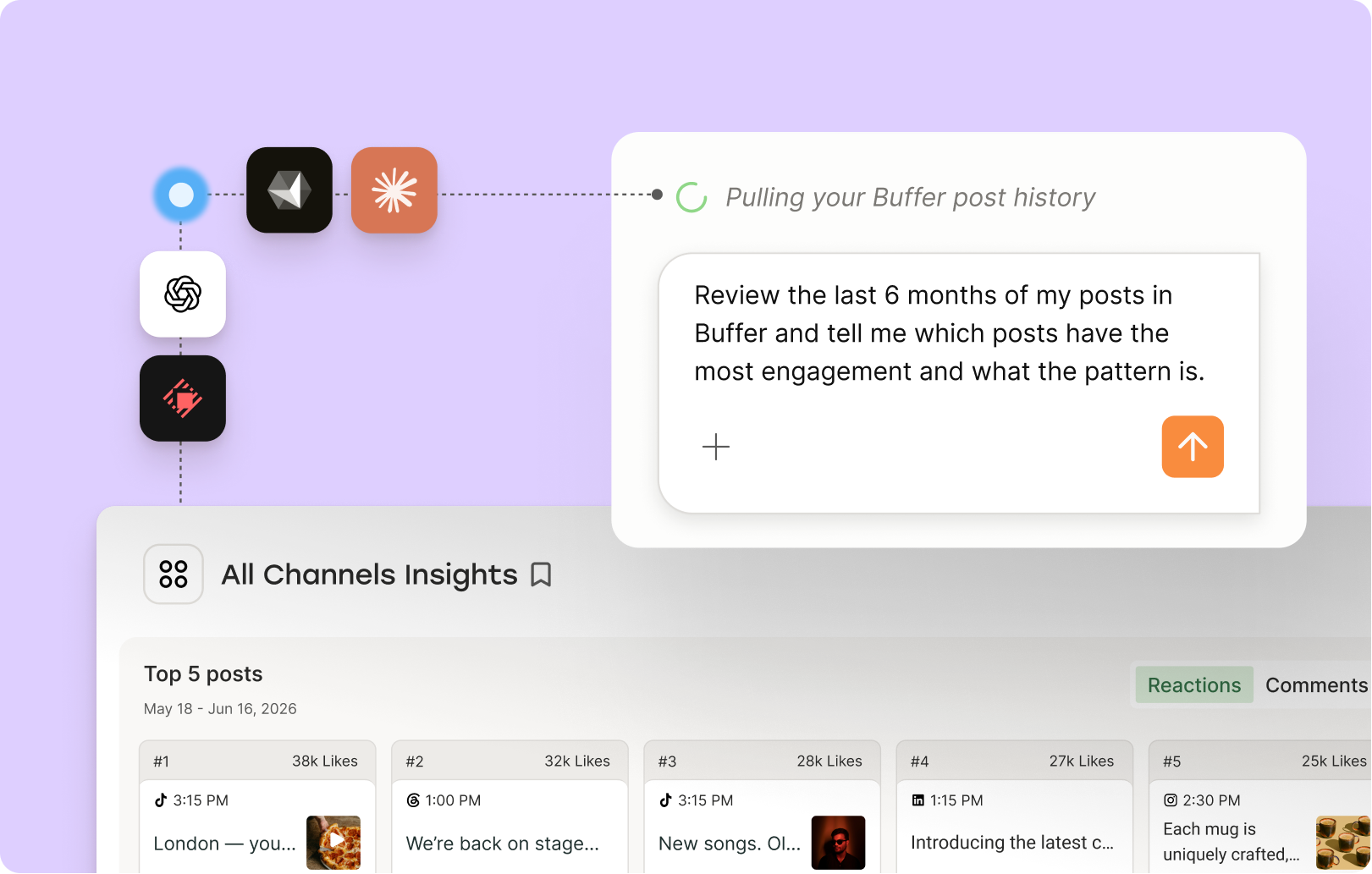
Buffer remains a foundational plug-and-play solution tailored specifically to independent creators and small-scale teams seeking multi-channel deployment without a steep learning curve. Utilizing a flexible per-channel pricing model that initiates at $6 per month alongside a robust forever-free tier supporting up to three channels, Buffer prioritizes interface simplicity and rapid onboarding. Core functionalities include a drag-and-drop content calendar, a centralized "Community" inbox for cross-platform comment and direct message management, and a dedicated "Create" space for structured ideation and tagging. While the platform lacks the deep multi-layered approval workflows and heavy-duty enterprise social listening required by multinational corporations, its adaptability to newly launched networks—such as rapid integrations for Threads and Bluesky—cements its utility for agile solo operators and growing small businesses aiming for sustainable digital consistency.
Hootsuite and Talkwalker: Advanced Social Listening for Enterprise Teams

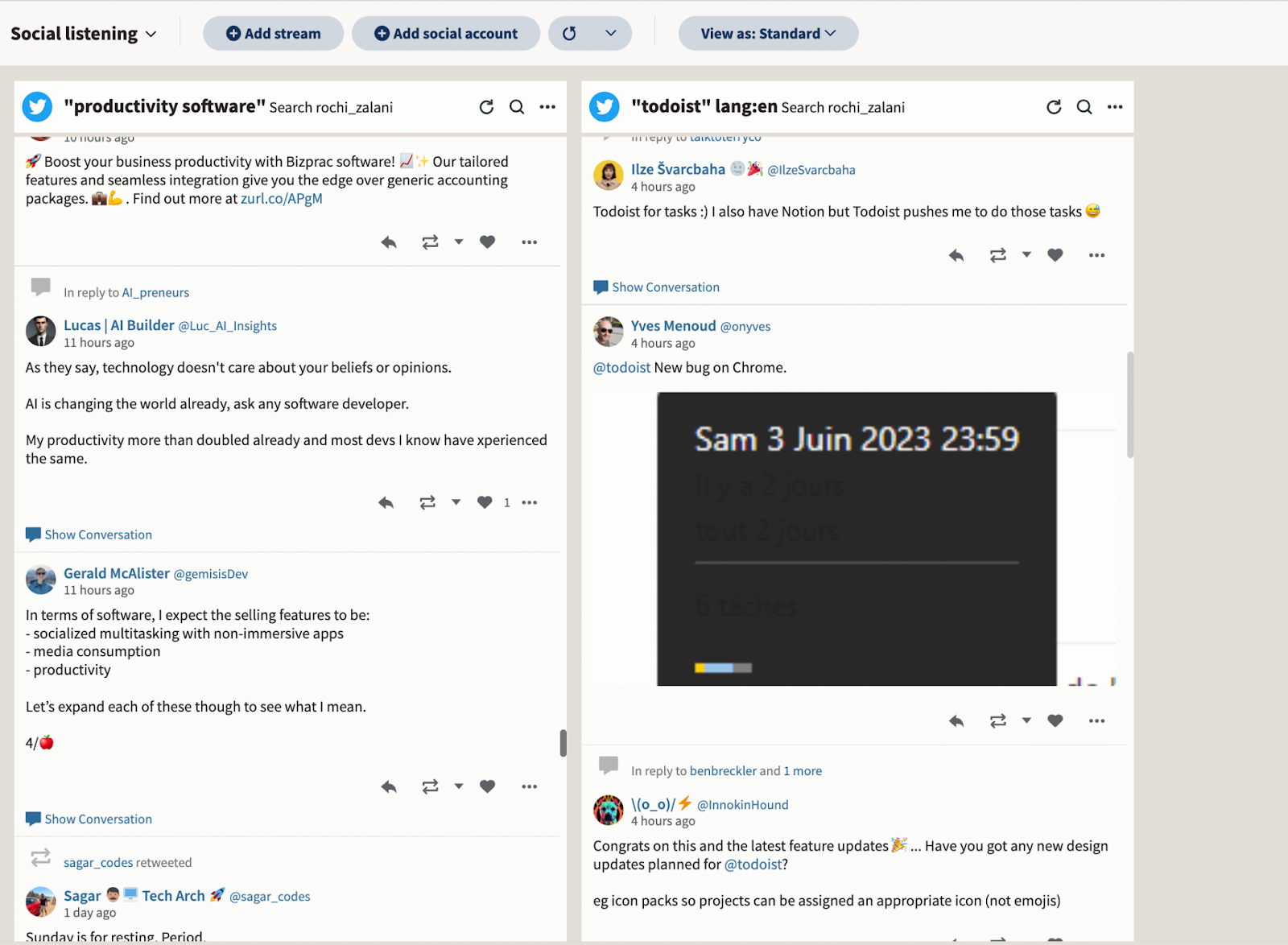
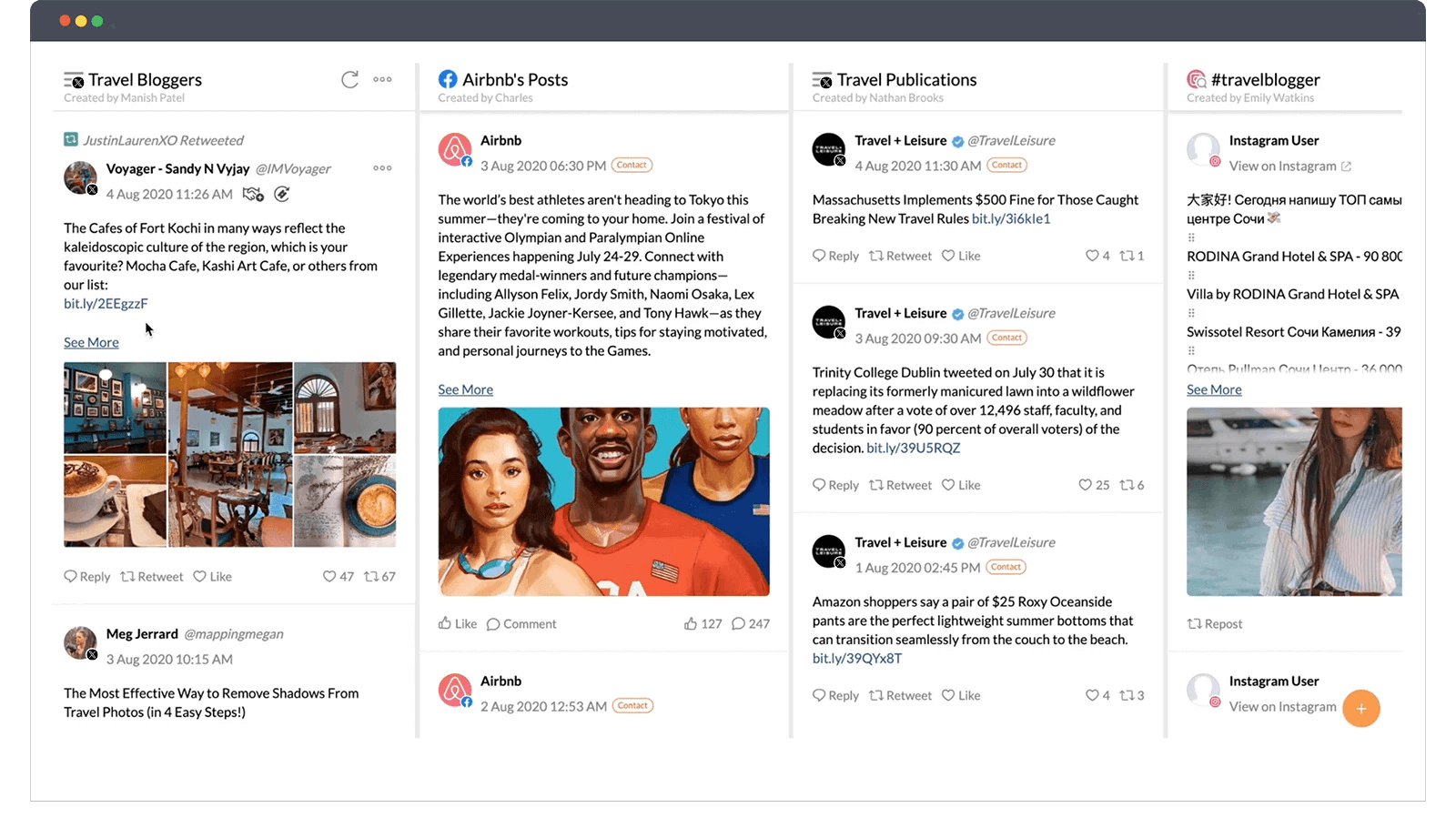
For larger organizations requiring rigorous brand monitoring and structural governance, Hootsuite occupies a prominent position in the enterprise market. Priced at $99 per user per month with no permanent free tier, the platform distinguishes itself through powerful social listening capabilities further amplified by its acquisition of Talkwalker. This integration empowers large-scale marketing departments to analyze sentiment, track regional keyword volume, and generate comprehensive historical reports on industry topics. Additionally, Hootsuite offers granular team management controls, allowing administrators to establish sub-teams with minute permission levels. Despite its rich feature set, the complexity of its interface often introduces a substantial learning curve, positioning it primarily as a solution for well-resourced corporate marketing departments.
Tailwind: Specialized Optimization for Pinterest-First Strategies

Tailwind addresses the specialized demands of visual discovery platforms by functioning as an official Pinterest partner dedicated entirely to pin design, scheduling, and organic growth strategies. Operating at a starting price of $29.99 per month with a limited free tier restricted to five posts monthly, the software utilizes preset-interval scheduling algorithms designed to maximize audience engagement and content lifespan. A standout capability is its one-click design transformation tool, which converts standard photographic assets into optimized Pinterest pins within a unified workspace. While its browser extension and feature set are hyper-focused on visual curation—extending limited secondary support to Instagram and Facebook—Tailwind remains an essential utility for brands whose primary acquisition funnel relies on search-driven visual platforms.
SocialPilot: White-Label Collaboration for Modern Agencies

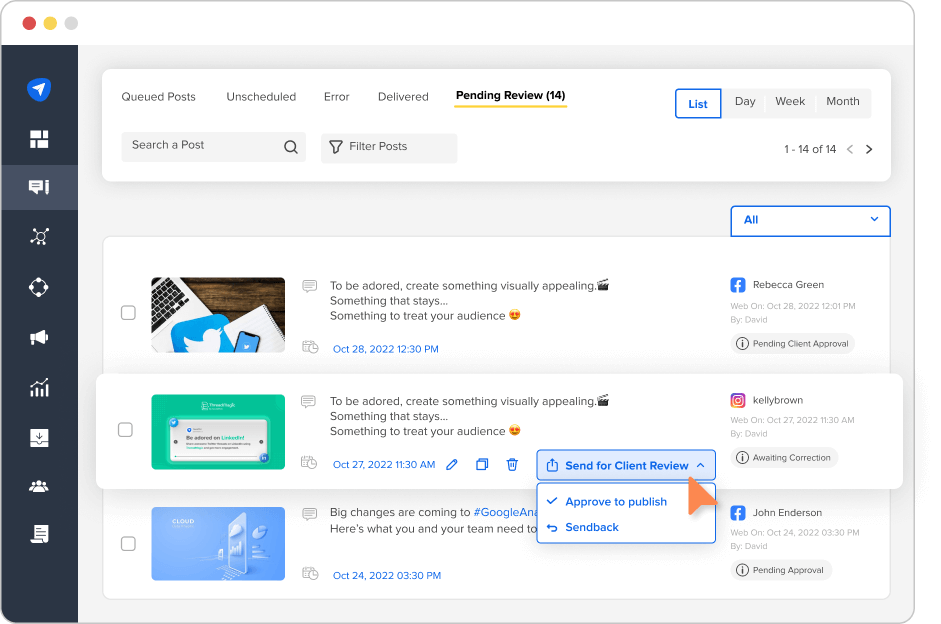
Designed explicitly to address the logistical friction faced by digital marketing agencies, SocialPilot provides a centralized hub centered on client management, white-label dashboards, and frictionless approval workflows. Priced at $30 per month for a single user, the platform enables managers to generate direct, no-signup approval links that consolidate all client-facing assets onto a single review screen. Agencies can customize the dashboard environment with their own branding while maintaining distinct sub-accounts for various clients. Combined with role-based access controls and native multi-channel scheduling, SocialPilot delivers agency-grade collaboration features at a significantly lower total cost of ownership compared to traditional enterprise software suites.
Zoho Social: Ecosystem Integration for Established Tech Stacks
Zoho Social leverages the broader enterprise infrastructure of the Zoho ecosystem, offering seamless native integration with products such as Zoho CRM and Zoho Desk. Available at a starting price of $14 per month alongside a single-user free tier, the software bridges the operational gap between marketing initiatives and customer support operations. By connecting social media interactions directly to customer service ticketing systems, Zoho Social allows businesses to manage incoming social queries with the same rigor as traditional support channels. While it lacks revolutionary standalone features, its tight integration with existing Zoho enterprise deployments makes it a pragmatic, cost-effective choice for organizations already embedded within the Zoho software environment.
Sprout Social and Tagger Media: Combining Marketing, Advocacy, and Influencer Operations
Sprout Social occupies the upper echelon of the enterprise software market, delivering a highly polished platform that unifies traditional social media management with employee advocacy programs and influencer marketing tools following its acquisition of Tagger Media. Priced at $99 per seat per month for foundational tiers—with advanced capabilities requiring higher subscription levels—Sprout Social is engineered for large corporations that demand deep data visualization, sophisticated analytics, and multi-departmental governance. The integration of influencer discovery and campaign management addresses a critical operational bottleneck for marketing managers tasked with running simultaneous organic social and influencer campaigns. However, its high cost structure and pricing scalability restrict its adoption primarily to enterprise-level organizations with substantial marketing budgets.
Oktopost: B2B Revenue Attribution and Buyer Journey Tracking

Oktopost caters exclusively to business-to-business (B2B) organizations by aligning social media publishing directly with lead generation and revenue attribution. Rather than focusing on consumer-centric vanity metrics such as follower counts or raw impressions, Oktopost automatically appends UTM parameters to shared content and organizes every published post within broader campaign structures. Its analytics engine tracks the B2B buyer journey to quantify the exact financial impact of social media initiatives on the corporate pipeline. Because pricing is custom and public trials are unavailable, the platform is targeted strictly at enterprise B2B marketing teams with defined attribution models and dedicated software procurement budgets.
Later: Transitioning Toward Influencer Marketing and Campaign Management
Later has undergone a strategic corporate rebrand, shifting its primary market identity from a traditional visual content scheduler to an all-in-one platform emphasizing influencer marketing, creator discovery, and campaign management alongside its legacy scheduling tools. Starting at $25 per month with a posting cap of 30 posts per profile on entry tiers, Later integrates social listening and link-in-bio creation into a single dashboard. While its scheduling interface remains clean and user-friendly, the strategic pivot toward influencer infrastructure means standard day-to-day posting has taken a secondary role in product development. Organizations seeking high-volume scheduling without strict post caps must evaluate whether the platform’s advanced influencer tools justify its operational limitations.
Socialinsider: Deep Analytics and Competitor Benchmarking
Socialinsider operates as a dedicated, laser-focused analytics platform rather than a comprehensive publishing suite. Priced at $99 per month for up to 20 accounts, the tool provides exhaustive reporting on engagement rates, impression volume, reach, and content-pillar performance across major social networks. Furthermore, it excels in competitor benchmarking, allowing digital strategists to analyze rival key performance indicators (KPIs) to refine their overarching content strategy. Because it lacks native scheduling and engagement capabilities, Socialinsider is typically deployed as a companion analytics layer integrated alongside simpler publishing tools or managed via manual publishing workflows.
Manychat: Automated Conversational Marketing and Lead Generation

Manychat functions as a specialized chat automation add-on designed to convert social media engagement into qualified leads through direct message (DM) and comment-triggered workflows. Operating at a starting price of $15 per month with pricing scaling according to contact volume, Manychat automates interactive customer conversations across Instagram, Facebook, WhatsApp, and beta implementations of TikTok. The software addresses the severe operational challenges of managing high-volume promotional campaigns—such as automated resource delivery following specific comment triggers—ensuring 24/7 responsiveness without manual intervention. Its restriction to messaging-centric platforms means it must be paired with traditional schedulers to cover non-messaging networks like LinkedIn or X.
Sprinklr: Unified Enterprise Customer Experience Governance

Sprinklr represents the pinnacle of enterprise customer experience management, embedding social media governance, social listening, competitive benchmarking, and conversational commerce into an expansive corporate infrastructure. Designed to meet the stringent security, compliance, and multi-persona requirements of global enterprises, Sprinklr unifies customer touchpoints across all major social networks, messaging apps, and review channels. While its AI-powered image detection, granular permission structures, and vast integration ecosystem provide unmatched oversight for multinational corporations, the platform demands a substantial financial investment and involves a notoriously protracted implementation and training timeline.
Strategic Criteria for Software Selection

Choosing the optimal social media management tool requires a structured evaluation of organizational requirements across five critical dimensions: network compatibility, reporting depth, collaboration capabilities, scalable pricing, and specialized features. Organizations must ensure that prospective tools support both legacy channels and emerging decentralized protocols to future-proof their digital strategies. Furthermore, reporting mechanisms must extend beyond basic engagement metrics to accurately measure return on investment, while team collaboration features require granular permission controls to protect brand safety across multiple user tiers. Because software costs escalate rapidly as organizations expand their profile counts and team sizes, financial projections must account for long-term scalability rather than introductory pricing tiers alone. By aligning these criteria with distinct operational goals and leveraging extended trial periods, businesses can secure a software solution that streamlines workflows, maintains publishing consistency, and drives sustainable digital growth.