
 Indra Kusuma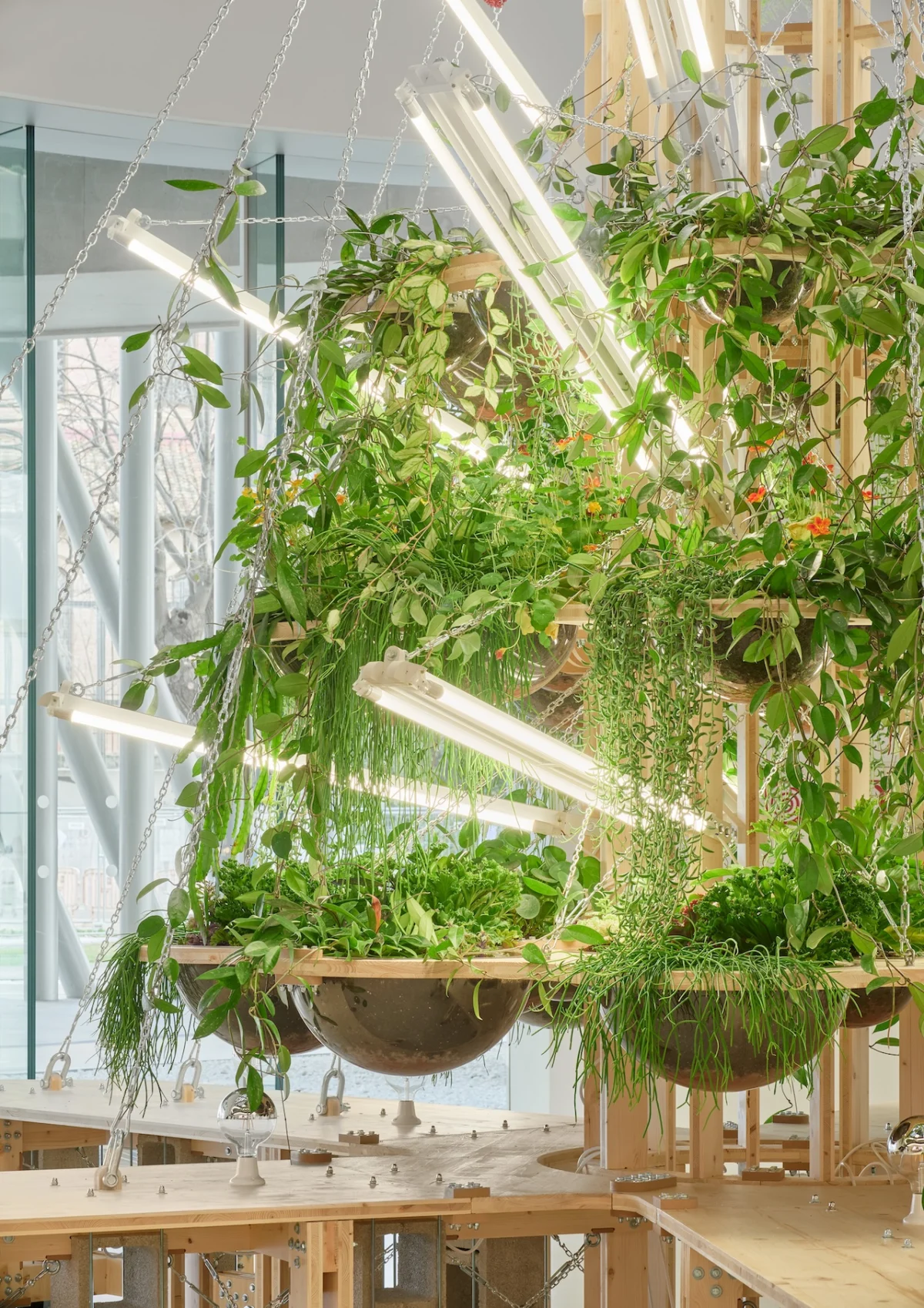
The MAXXI National Museum of 21st Century Arts in Rome, renowned for its architectural grandeur designed by the late Zaha Hadid, continues its innovative "Entrate" program by hosting "Con-Vivere," a fantastical yet deeply resonant installation by the Barcelona-based architecture duo TAKK. Curated by Martina Muzi, "Entrate" (meaning "Entries" or "Incomes") is a strategic initiative launched by MAXXI to activate its expansive lobby space, transforming it from a transitional area into an engaging, thought-provoking prelude to the museum’s collections. This second edition, following Nacho Carbonell’s evocative "Memory, in practice" last year, sees Mireia Luzárraga and Alejandro Muíño of TAKK crafting an immersive environment that challenges conventional notions of living, productivity, and human-nature relationships.
The "Entrate" Initiative: Redefining Museum Entrances
The "Entrate" program represents a forward-thinking approach by MAXXI to maximize the public interface of its iconic building. Launched under the curatorial vision of Martina Muzi, the initiative seeks to leverage the museum’s entrance hall as a dynamic platform for contemporary architectural and artistic expression. The goal is to immediately draw visitors into a dialogue with cutting-edge design, setting the stage for the progressive art and architecture housed within MAXXI’s galleries. Rather than merely a point of passage, the lobby becomes an integral part of the museum’s exhibition space, encouraging interaction and contemplation from the moment visitors step inside.

The inaugural installation in 2023, Nacho Carbonell’s "Memory, in practice," set a high bar, offering visitors an evocative setting that explored themes of memory and material transformation through organic forms and tactile textures. Carbonell’s work, characterized by its sculptural and almost primal aesthetic, provided a distinct entry point into MAXXI’s modernist framework. TAKK’s "Con-Vivere" takes the baton, building on this precedent but shifting the focus towards urgent ecological and social dialogues, using a vibrant and deliberately decorative language that directly confronts established architectural dogmas.
TAKK’s "Con-Vivere": A Manifesto for Shared Living

TAKK’s "Con-Vivere" – a title that playfully translates to "co-living" or "conviviality" – is more than an exhibition; it is a meticulously designed spatial manifesto. The installation proposes a radical re-imagining of how humans could and should coexist, not only with each other but crucially, with non-human species and the broader natural environment. Luzárraga and Muíño have orchestrated a series of interconnected environments within the MAXXI lobby, each designed to foster interaction, relaxation, and a deeper understanding of ecological interdependence.
The journey into "Con-Vivere" commences with a crib-like oval welcome station, an inviting structure crowned with lights and adorned with an abundance of florals. This initial piece immediately signals TAKK’s deliberate departure from austere modernist aesthetics. Mireia Luzárraga articulates this philosophical stance, explaining that the duo consciously rejects the modernist dictum that decoration is superfluous. Their work embraces flourishes, from flowers intricately woven into surfaces to the incorporation of vegetables as nourishing, cleansing, and beautifying elements within interior design. This approach is not merely aesthetic; it is a critical commentary on historical architectural trends.

Deconstructing Modernism: Ornament, Gender, and Value
Luzárraga delves into the historical context of architectural ornament, noting the fervent discussions during the modernist era. "There has been a lot of discussion on ornament in architecture during modernism," she states. "The excuse was that ornament attracts dust and disease but there was also something behind that: The idea that ornament was more related to feminized labor and therefore has to be banned. So, we also like working with ornament and with techniques that are more associated with feminized labor – and with colors less associated with architecture."

This statement unveils a profound layer of TAKK’s artistic and architectural philosophy. By reintroducing and celebrating ornamentation, as well as techniques and color palettes historically marginalized or deemed "feminine" in architectural discourse, TAKK directly critiques the patriarchal underpinnings of modernism. The rejection of ornament was often intertwined with a dismissal of crafts and decorative arts, historically domains associated with women, perpetuating a hierarchy that valued "masculine" structural purity over "feminine" embellishment. "Con-Vivere" thus becomes an act of architectural reclamation, asserting the value of previously devalued aesthetic and labor forms. The installation’s vibrant colors, soft textures, and organic forms stand in stark contrast to the often monochromatic and stark lines associated with conventional modernist architecture, including elements of MAXXI’s own imposing structure, thereby creating a compelling visual and conceptual dialogue.
Elements of Conviviality: From Rest to Harvest

The installation features several distinct yet interconnected elements, each designed to embody the spirit of "Con-Vivere":
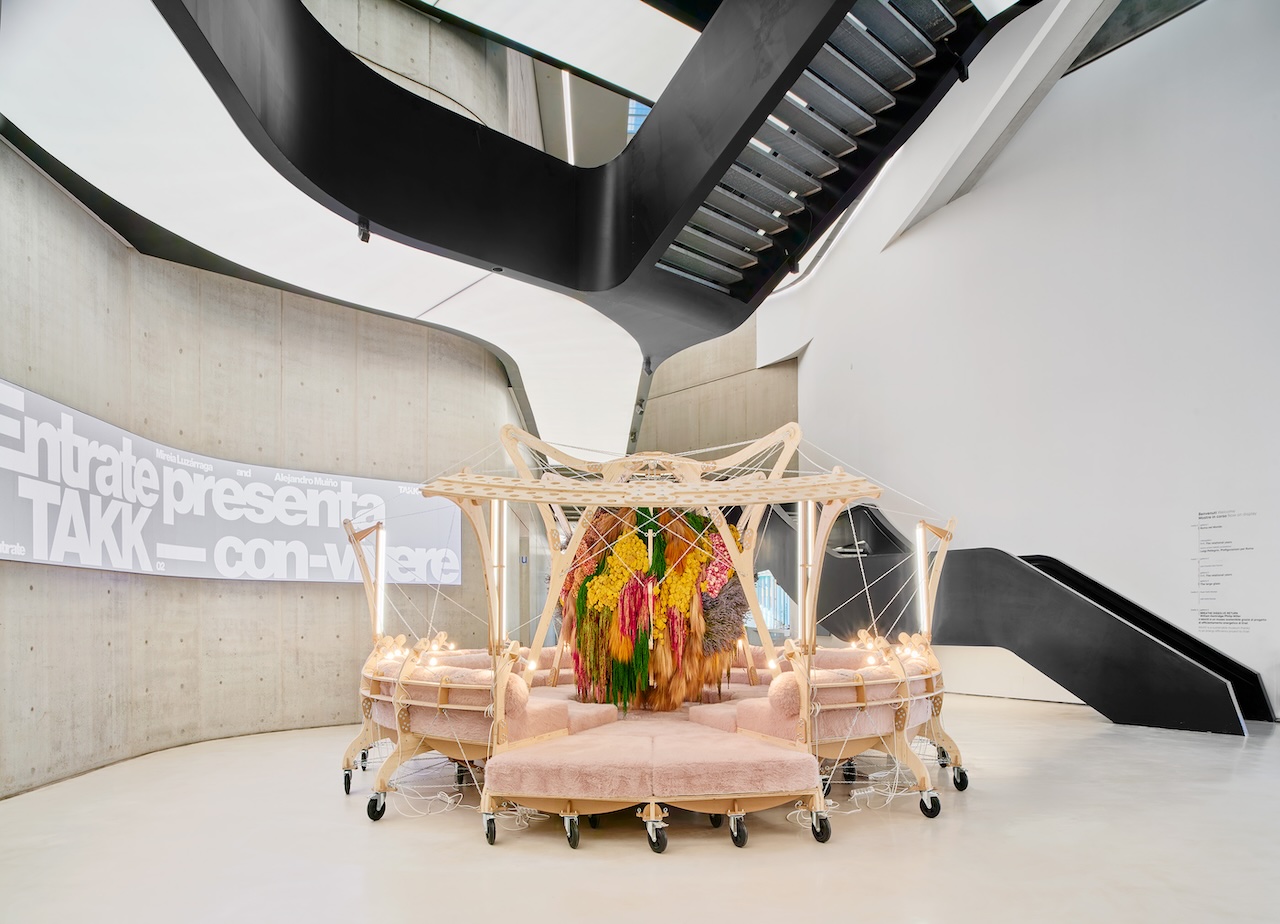
- The "Divano Collettivo" (Collective Sofa): A striking six-meter-diameter circular sofa, upholstered in plush pink faux fur, forms a central gathering point. This inviting piece actively beckons visitors to relax, unwind, and "do nothing." Luzárraga highlights its anti-capitalist sentiment: in a society driven by constant productivity, the sofa offers a radical space for collective idleness. Suspended above its center is a voluminous floral bouquet, contributing not only to the visual richness but also to the sensory experience with its calming aromatic qualities. This piece exemplifies the installation’s commitment to creating spaces that prioritize well-being and communal leisure over transactional engagement.
- The Edible Plant Tower: A towering structure supports a cascading system of planters, nurturing various species of edible Mediterranean plants. This vertical garden is irrigated from above, creating a self-sustaining miniature ecosystem within the museum. The promise of a future banquet, where the ripe bounty will be harvested and shared at communal tables positioned below, connects the installation to ancient practices of shared sustenance and the contemporary clarion call for food sovereignty. This element underscores the interconnectedness of food production, community, and ecological cycles, advocating for local, sustainable food systems.
- The "Wellness Bed": This unique piece offers a multi-sensory experience focused on restorative rest. Here, relaxation is modulated not only by the soothing presence of fragrant vegetables but also by integrated light therapy. The wellness bed serves as a micro-environment for individual rejuvenation, yet its placement within the broader "Con-Vivere" narrative emphasizes personal well-being as a component of collective health and ecological harmony.
The Water Parliament: A Call for Ecological Agency

Perhaps the most potent symbol of TAKK’s ecological message is the "water parliament" – a fountain inviting visitors to climb up for a jacuzzi experience. While playfully interactive, this piece carries a profound message: water, the sustaining life source, must be understood not merely as a resource for human consumption but as a complex body of relationships involving countless other living entities. Luzárraga emphasizes that every human impact on natural systems has a deeply reverberative effect across all species.
This concept builds upon TAKK’s previous critically acclaimed work. For the last Venice Biennale of Architecture, they created "Water Parliaments" for the Catalan Pavilion, where they explored the vital importance of understanding water as a non-anthropocentric entity with its own inherent value and agency. Luzárraga expresses encouragement regarding recent legal developments where waterways, such as certain rivers, have been granted legal personhood and political agency. This legal innovation, recognizing natural entities with rights akin to humans, aligns perfectly with TAKK’s vision of establishing more democratic contracts between humans and the living planet. Looking ahead, TAKK will continue this critical dialogue in an upcoming installation about sediments for the World Congress of Architecture, further exploring the fundamental elements that constitute our planet’s complex ecosystems.

Architectural Precision Meets Whimsicality
Despite the seemingly whimsical and organic aesthetic of "Con-Vivere," the installation is a testament to meticulous planning and architectural precision. All of the settings are composed of lightweight structural systems, ingeniously set on wheels to allow for flexibility and adaptability within the MAXXI lobby. This modularity not only speaks to a contemporary need for adaptable spaces but also highlights TAKK’s commitment to practical, sustainable design solutions.

The execution of the installation is remarkably faithful to TAKK’s initial, immaculately detailed digital drawings. Luzárraga explains their process: "We move from the computer to the construction, and it’s exactly the same – we draw it in the computer, we cut it exactly with the CNC milling machine, and then we assemble it." This reliance on CNC (Computer Numerical Control) milling ensures precise fabrication, bridging the gap between digital design and physical construction with minimal deviation. While the final result exudes a joyful and hopeful quality, inviting improvisation in its use, there is no improvisation in its structural integrity or conceptual rigor. The installation, therefore, is a powerful blend of artistic vision and engineering exactitude.
A Broader Manifesto: Decolonizing Architecture and Challenging Anthropocentrism

Ultimately, TAKK’s enchanting creations at MAXXI transcend mere aesthetics, weaving together a powerful critique of colonialism, modernism, capitalism, and anthropocentrism. This critique is inextricably linked to an embrace of feminist ethos and the urgent realities of the climate crisis. Luzárraga articulates their core mission: "We are always working in this idea of how we should face this current crisis of climate change, through exploring cohabitation formats between us and the rest of the living entities of the planet."
The architects advocate for a radical shift away from anthropocentric perspectives, specifically challenging the "male-white-European-human perspective" that has historically dominated architectural and environmental discourse. Their work seeks to establish "more democratic contracts" between humanity and the vast array of living species, many of which are currently facing the existential threat of the sixth mass extinction. "Con-Vivere" is thus not just an exhibition; it is a call to action, urging visitors to reconsider their place within the planetary ecosystem and to envision new, equitable modes of coexistence.

By integrating art, architecture, ecological philosophy, and social commentary, TAKK’s "Con-Vivere" at MAXXI serves as a vital contribution to contemporary cultural discourse. It demonstrates how architectural practice can move beyond structural concerns to become a powerful tool for advocating for a more inclusive, sustainable, and respectful future for all inhabitants of the planet. The MAXXI lobby, through this innovative "Entrate" program, has been transformed into a vibrant laboratory for these critical ideas, inviting every visitor to engage in the profound act of "Con-Vivere."
Photography courtesy José Hevia and MAXXI.







