Muhammad Hendra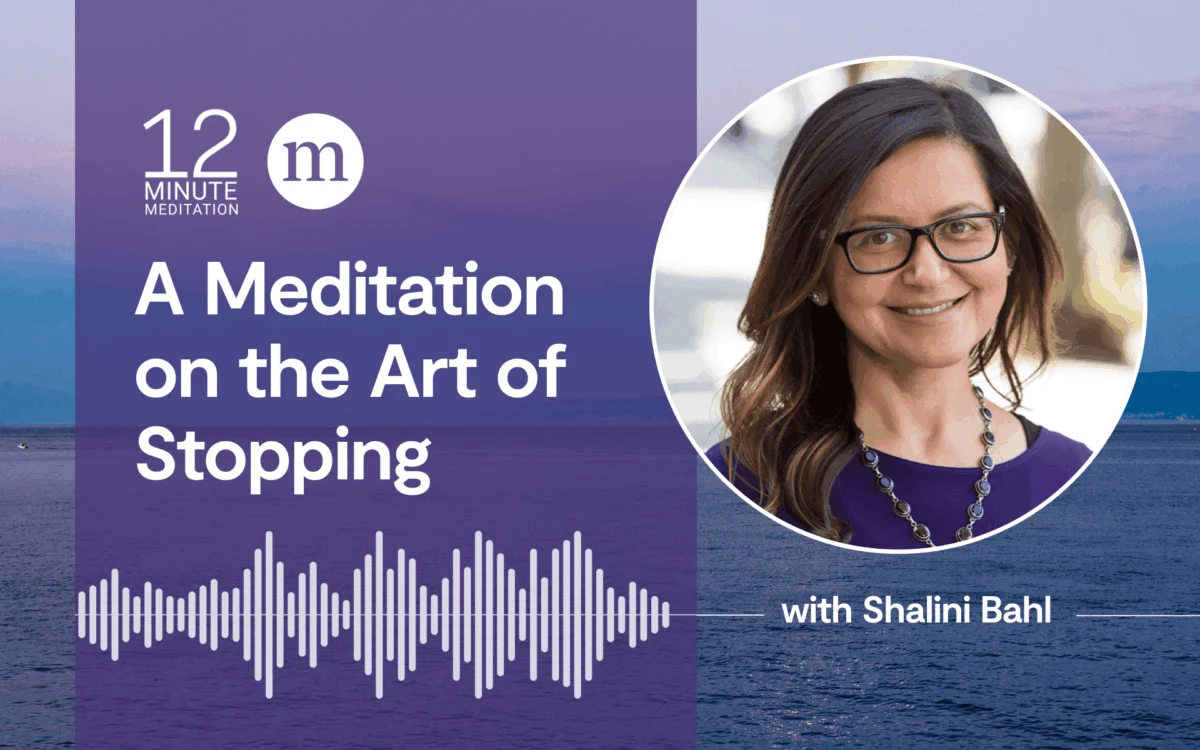
In a contemporary landscape increasingly characterized by ceaseless activity and digital saturation, prominent mindfulness educator Shalini Bahl is spearheading a renewed understanding of mindfulness, positing it not as an arduous, prolonged endeavor but rather as a series of accessible "micro-moments." This perspective emphasizes that the fundamental essence of mindfulness lies in the simple act of stopping—pausing to notice, to breathe, and to gently interrupt the often-unconscious, ingrained habits of thought with a quiet, present awareness. This teaching, recently highlighted through guided practices and an article on Mindful.org, underscores the profound power of brief, intentional pauses in cultivating a more mindful existence.
The traditional perception of mindfulness and meditation often conjures images of extended sessions, deep contemplation, or silent retreats. However, Bahl’s approach demystifies these practices, reframing them as an accumulation of discrete instances: stopping, breathing, truly noticing one’s own body and life, acknowledging distractions, and then gently returning to the present moment, repeatedly. This iterative process, she argues, constitutes the very fabric of sustained mindfulness. Her latest guided practice, titled "The Art of Stopping," invites individuals to release the mind’s habitual patterns of pushing, pulling, and ceaseless mental activity, opting instead for a fleeting moment of pure being. This philosophy is particularly pertinent in an era where sustained attention is a scarce commodity, offering a practical bridge between formal meditation and the demands of daily life.
The Evolution of Mindfulness: From Ancient Roots to Modern Micro-Practices
Mindfulness, at its core, is an ancient practice rooted in Buddhist traditions, particularly Vipassanā meditation, which emphasizes insight into the true nature of reality. For centuries, these practices were largely confined to monastic settings or dedicated spiritual communities, often involving intensive, multi-day retreats designed to cultivate deep states of concentration and awareness. The secularization of mindfulness began in earnest in the late 20th century, largely propelled by figures like Jon Kabat-Zinn, who developed Mindfulness-Based Stress Reduction (MBSR) in the 1970s at the University of Massachusetts Medical School. Kabat-Zinn’s work sought to extract the therapeutic essence of mindfulness from its religious context, making it accessible to a broader population grappling with chronic pain and stress.
This initial secularization brought mindfulness into healthcare and psychological circles, demonstrating its efficacy through scientific research. However, even MBSR typically involves an eight-week program with daily formal meditation practices, which, while highly effective, can still present a barrier for individuals with extremely busy schedules. The evolution toward "micro-practices," championed by educators like Shalini Bahl, represents the next frontier in making mindfulness truly ubiquitous. This shift acknowledges the realities of modern life—characterized by demanding careers, family responsibilities, and constant digital connectivity—where finding an hour for formal meditation can feel insurmountable. Micro-practices offer a pragmatic solution, integrating mindfulness seamlessly into the rhythm of daily activities, transforming mundane moments into opportunities for conscious awareness.
Shalini Bahl’s Perspective: Deconstructing the "Art of Stopping"
Shalini Bahl, recognized as a contemporary voice in mindfulness education, articulates "the art of stopping" as a deliberate counter-cultural act against the pervasive pressure to constantly "do" and "achieve." Her teaching posits that the relentless mental chatter—the "pushing, pulling, running in circles"—is a deeply ingrained habit, often leading to stress, anxiety, and a disconnect from one’s present experience. By advocating for brief, intentional stops, Bahl encourages individuals to disengage from this mental momentum, even if only for a few seconds.
This approach is not about escaping reality or achieving a permanent state of bliss, but rather about cultivating a muscle of presence. When one stops, even for a moment, to notice the breath, the sensations in the body, or the sounds in the environment, they are actively disrupting the automatic pilot mode that often governs daily life. This disruption creates a small but significant space between stimulus and response, allowing for conscious choice rather than reactive behavior. Bahl’s emphasis on these "micro-moments" acknowledges that life is inherently filled with distractions and mental wanderings. The practice is not about never getting distracted, but about the gentle, repeated act of noticing the distraction and returning to the present, over and over again. This iterative process builds resilience, self-awareness, and emotional regulation over time.
The Power of Micro-Practices: Bridging Meditation and Daily Choices
The concept of micro-practices is gaining significant traction due to its practicality and demonstrable effectiveness. As Bahl elaborates in her article on Mindful.org, these brief interventions serve as a crucial bridge between formal meditation sessions and the myriad choices we make throughout our day. For instance, a person might practice a 10-minute meditation in the morning, but without micro-practices, the benefits might quickly dissipate amidst the day’s stressors. A micro-practice—such as taking three conscious breaths before responding to an email, pausing to feel one’s feet on the ground while walking, or simply noticing the taste of food during a meal—helps to extend the mindful state into everyday actions.
Research supports the notion that even brief periods of mindfulness can yield significant benefits. Studies have shown that short mindfulness exercises can improve mood, reduce stress, and enhance cognitive function. For example, a 2013 study published in Emotion found that even a brief 10-minute mindfulness meditation could reduce mind-wandering and improve attentional focus. Another study in Health Psychology demonstrated that short mindfulness interventions could reduce emotional reactivity to stress. These findings bolster Bahl’s argument that the cumulative effect of numerous small acts of stopping can be as, if not more, impactful than infrequent long sessions, especially for beginners or those with demanding lifestyles.
Supporting Data and Broader Implications
The global mental health crisis and the pervasive nature of stress underscore the urgent need for accessible mental well-being tools. According to the World Health Organization, depression is a leading cause of disability worldwide, and anxiety disorders are also highly prevalent. A 2023 report by the American Psychological Association indicated that stress levels remain alarmingly high among adults, with significant impacts on physical and mental health. In this context, mindfulness, particularly in its micro-practice form, offers a low-barrier, cost-effective intervention.
The growing popularity of mindfulness apps, which often feature short guided meditations and reminders for mindful breaks, further illustrates the public’s embrace of these condensed practices. Data from market research firms show that the mindfulness and meditation app market is projected to reach billions of dollars, indicating a strong demand for easily digestible mindfulness content. This trend aligns perfectly with Bahl’s emphasis on integrating mindfulness into the rhythm of daily life rather than sequestering it to specific, time-consuming periods.
The implications of this "art of stopping" extend beyond individual well-being. In corporate environments, where employee burnout and stress are significant concerns, integrating micro-mindfulness breaks can enhance productivity, improve decision-making, and foster a more positive work culture. Educational institutions are also exploring the benefits of short mindfulness exercises to help students manage stress, improve concentration, and enhance emotional regulation. By democratizing mindfulness through micro-practices, Shalini Bahl’s teachings contribute to a broader societal shift towards proactive mental health management and a greater appreciation for the present moment.
Official Responses and Community Reception
While specific "official responses" to Shalini Bahl’s latest practice are not explicitly detailed, her work, prominently featured on Mindful.org—a leading platform for mindfulness education—indicates significant endorsement within the mindfulness community. Mindful.org’s decision to publish her article and feature her guided practice signals their recognition of the value and relevance of her approach. Experts in the field of contemplative studies and psychology often laud methods that enhance the accessibility and applicability of mindfulness, especially for populations that find traditional practices challenging.
The general reception from participants and practitioners of mindfulness is inferred to be largely positive, given the practical challenges many face in sustaining longer meditation habits. Individuals often report feeling less overwhelmed and more empowered when mindfulness is presented as a series of small, achievable steps rather than a daunting commitment. This perspective fosters a sense of agency and reduces the common misconception that one must be a "perfect" meditator to experience benefits. The emphasis on "coming back again, over and over" normalizes distraction and removes the pressure of achieving a ‘mind-empty’ state, making the practice more forgiving and sustainable.
Conclusion: The Enduring Relevance of Present Moment Awareness
Shalini Bahl’s teachings on "the art of stopping" represent a crucial evolution in the modern understanding and application of mindfulness. By breaking down the practice into manageable, repeatable micro-moments, she effectively dismantles barriers to entry, making profound self-awareness accessible even in the most hectic of lives. This redefinition aligns perfectly with the demands of the 21st century, offering a potent antidote to pervasive distraction and chronic stress. As society continues to grapple with an accelerating pace of life and an overload of information, the ability to simply "stop" and reconnect with one’s quiet presence emerges not merely as a beneficial practice, but as an essential skill for cultivating resilience, clarity, and well-being. The sustained engagement with these micro-moments promises a path to not just momentary calm, but a fundamental shift in how individuals navigate their lives, fostering a deeper, more enduring connection to the present.