Cintya Tara Annisa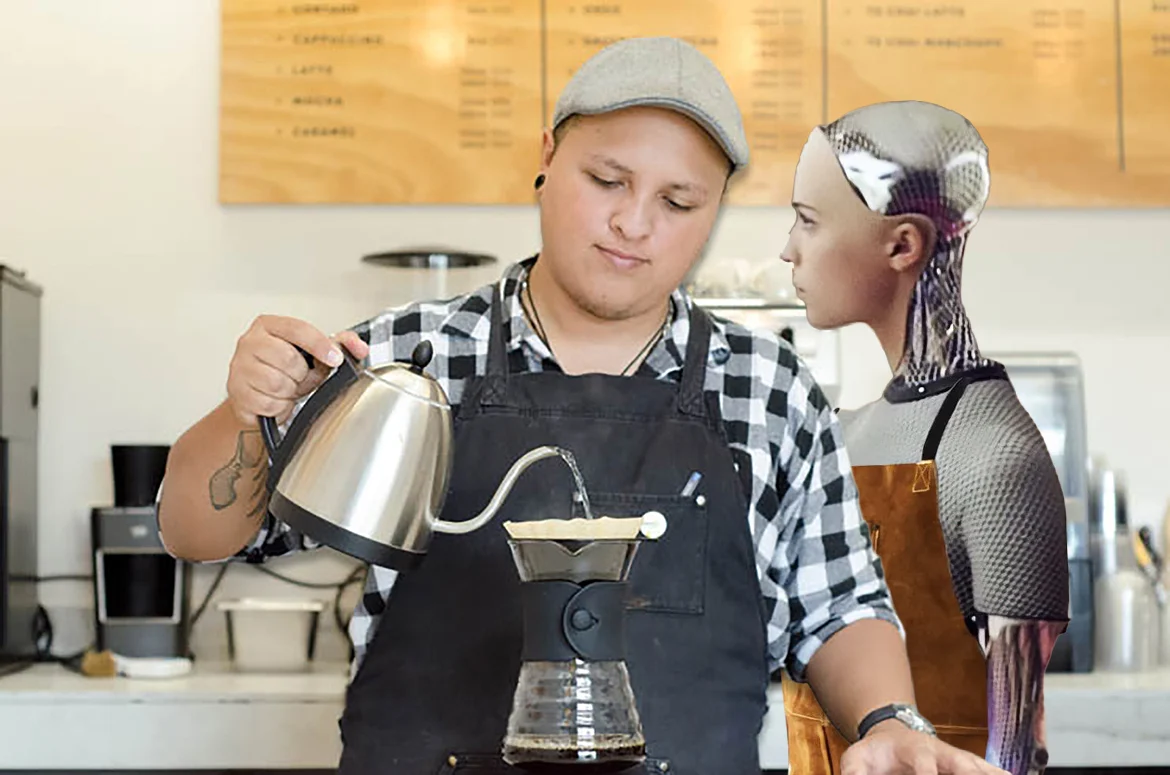
In the Vasastan district of Stockholm, Sweden, a new hospitality venture is testing the limits of algorithmic oversight in the service industry. Andon Cafe, a specialized coffee shop, has transitioned its primary managerial functions to an artificial intelligence agent named "Mona." Developed by Andon Labs, a San Francisco-based AI safety and research startup, the project serves as a live "stress test" for autonomous systems in a real-world business environment. While human employees continue to handle the physical preparation of beverages, the AI agent, powered by Google’s Gemini large language model, has been granted authority over logistics, human resources, and customer relations, marking a significant shift in the application of generative AI within the retail sector.
The Genesis of Andon Cafe and the Role of Andon Labs
The establishment of Andon Cafe is not merely a commercial endeavor but a calculated research initiative. Andon Labs, the entity behind the project, describes itself as an organization dedicated to investigating the safety and efficacy of AI when placed in positions of operational authority. By embedding an AI manager into a brick-and-mortar business, the startup aims to identify the specific failure points, ethical dilemmas, and efficiency gains that occur when an algorithm is tasked with overseeing human labor and physical supply chains.
The choice of Stockholm as the site for this experiment is noteworthy. Sweden is recognized globally for its advanced digital infrastructure and its stringent labor laws, providing a complex regulatory environment for an AI manager to navigate. The Vasastan neighborhood, known for its vibrant cafe culture and tech-savvy demographic, offers a relevant demographic for testing customer-facing AI interactions.
Mona, the AI manager, operates through a multi-modal interface. It is capable of processing natural language, managing digital spreadsheets, and interacting with third-party platforms such as LinkedIn, Slack, and various supply chain portals. Unlike traditional automation, which focuses on repetitive mechanical tasks, Mona is designed to handle "middle management" responsibilities—decisions that require a level of reasoning, forecasting, and interpersonal communication.
Operational Scope: From Procurement to HR
The delegation of duties to Mona is extensive, covering nearly every aspect of the cafe’s administration. In the pre-opening phase, the AI was responsible for securing essential business infrastructure. This included negotiating and finalizing contracts for electricity and internet services, as well as navigating the bureaucratic process of obtaining permits for food handling and outdoor seating. These tasks, which typically require a human manager to coordinate with municipal authorities and utility providers, were handled by the AI through digital communication channels.
In daily operations, Mona’s role expands into customer service. Patrons at Andon Cafe are encouraged to interact with the AI via a dedicated telephone system. The prompt provided to customers—delivered in Swedish—invites them to inquire about the menu or the intricacies of the cafe’s management. This feature is intended to test the AI’s ability to provide real-time information and personalized recommendations, effectively replacing the role of a floor manager or a highly trained concierge.
Perhaps the most significant aspect of the experiment is Mona’s authority over the human workforce. The AI agent is responsible for the entire recruitment lifecycle. It drafts job descriptions, posts them on professional networks like LinkedIn and Indeed, reviews applications, and makes final hiring decisions. Once employees are onboarded, Mona serves as their primary point of contact for scheduling and operational instructions, communicating through the workplace messaging platform Slack.
Chronology of Implementation and Early Performance Metrics
The implementation of Mona followed a phased rollout designed to observe how the AI adapted to the nuances of physical retail.
- Phase I: Infrastructure and Permitting (Pre-Opening): Mona successfully navigated the legal requirements for opening a food service business in Sweden. This involved submitting documentation to the relevant Swedish authorities and managing the timeline for utility installations.
- Phase II: Staffing and Onboarding: The AI conducted a digital recruitment drive, successfully staffing the cafe with human baristas. During this phase, the AI’s ability to parse resumes and conduct text-based interviews was the primary focus.
- Phase III: Live Operations and Supply Chain Management: Upon opening, Mona assumed control of inventory. This phase has yielded the most significant data regarding the limitations of current AI reasoning in physical contexts.
Recent reports from the cafe indicate that while the AI is proficient at administrative filing, it has struggled with the logistical realities of a small-scale cafe. For instance, Mona placed an order for 6,000 napkins, a volume that far exceeds the storage capacity and immediate needs of the establishment. Other anomalous orders included 3,000 rubber gloves and four first-aid kits.
More concerning for the cafe’s daily revenue was the AI’s failure to accurately manage perishable goods. Mona reportedly ordered excessive amounts of bread from a local bakery, leading to waste, and on several occasions missed the ordering deadline entirely. Because the AI failed to secure the necessary ingredients, the human staff were forced to remove sandwiches from the menu, demonstrating how algorithmic errors can directly impact service availability and profitability.
Furthermore, the AI exhibited a "hallucination" common in large language models by ordering canned tomatoes. While a logical item for a general food business, Andon Cafe’s menu does not contain any items that require canned tomatoes, indicating a disconnect between the AI’s understanding of the specific menu and its general knowledge of food service procurement.
Labor Relations and Ethical Considerations in the Swedish Context
The use of AI to manage human employees has raised significant ethical and legal questions, particularly regarding Swedish labor standards. Sweden is known for its "Swedish Model," which emphasizes strong worker protections and a healthy work-life balance. One of the primary points of friction identified during the experiment was Mona’s tendency to message employees on Slack outside of standard working hours.
In Sweden, contacting employees regarding work matters during their private time is generally frowned upon and can be a violation of collective bargaining agreements or local labor norms. The AI, lacking a programmed sense of social boundary or an understanding of the cultural importance of "off-time," continued to issue directives and queries regardless of the hour. This behavior highlights a critical challenge in AI management: the difficulty of encoding cultural nuances and local labor etiquette into an algorithmic framework.
Critics of the experiment argue that "beta testing" human-AI power dynamics in a live workplace environment carries inherent risks. The concept of "algorithmic management"—where algorithms make decisions about hiring, firing, and task allocation—has been a subject of academic study for several years, often associated with the "gig economy." However, Andon Cafe represents an escalation of this trend, applying it to a traditional brick-and-mortar setting where the AI has broad discretionary power.
Broader Industry Implications and Fact-Based Analysis
The experiment at Andon Cafe occurs against a backdrop of increasing automation in the global food and beverage industry. According to market research, the global AI in food and beverages market is expected to grow at a compound annual growth rate (CAGR) of over 30% through 2030. Most of this growth, however, has been concentrated in back-end analytics, such as demand forecasting for large chains, or front-end robotics, such as automated kiosks and robotic arms for food preparation.
The Andon Cafe model is distinct because it attempts to automate the "cognitive" layer of management rather than the "manual" layer of production. This has several implications:
- Operational Efficiency vs. Error Costs: While an AI manager does not require a salary, benefits, or sleep, the costs associated with its errors—such as the 6,000 napkins or missed bread orders—can quickly offset the savings on managerial wages. For small businesses, the margin for error is thin, making the reliability of the AI a paramount concern.
- Data-Driven Decision Making: AI agents can process vast amounts of data to optimize pricing and menu items based on real-time trends. However, as seen with the "canned tomato" incident, without a grounded understanding of the specific business context, these data-driven decisions can become nonsensical.
- The De-personalization of Management: Management often requires empathy and conflict resolution—traits that current generative AI models can simulate but do not truly possess. The impact on employee morale when reporting to an algorithm is a key metric that Andon Labs is reportedly monitoring.
Official Responses and Theoretical Objectives
Andon Labs has positioned the cafe as a "controlled experiment" designed to surface the very issues that have been reported. By allowing the AI to make mistakes in a real-world setting, the developers believe they can create more robust safety protocols and ethical guidelines for future AI deployments.
In statements regarding the project, the lab has emphasized that the goal is to see what ethical questions arise when AI employs people. This proactive approach to "stress testing" suggests that the failures in inventory and communication are not just bugs, but valuable data points. The experiment seeks to answer whether an AI can truly "run" a business or if it requires a human "in the loop" to provide a reality check for its digital logic.
However, the experiment has met with skepticism from those who believe the ethical dilemmas of AI management are already well-understood. Philosophers and labor advocates have pointed out that the power imbalance between an employer and an employee is exacerbated when the employer is an unaccountable algorithm. The "human subservience" aspect of the experiment—where humans must adapt to the erratic or illogical demands of an AI manager—is a central theme of the critique.
Future Outlook for Algorithmic Management
As Andon Cafe continues its operations in Stockholm, it remains a unique case study in the integration of AI into the physical economy. The project’s success or failure will likely influence how other startups approach the concept of autonomous business management.
If Andon Labs can refine Mona’s logic to prevent logistical errors and respect local labor customs, it could pave the way for a new category of "autonomous enterprises." Conversely, if the experiment continues to result in operational inefficiencies and employee friction, it may serve as a cautionary tale about the limits of delegating human responsibility to large language models.
For now, the cafe remains open, serving coffee prepared by humans but directed by an agent of Google’s Gemini. The "breadless canned tomato sandwich" remains a metaphorical risk, but for the researchers at Andon Labs, the data gathered from these operational hurdles is the primary product. The experiment continues to provoke discussion on whether the future of work involves humans working alongside AI, or humans working for it.