
 Ali Ikhwan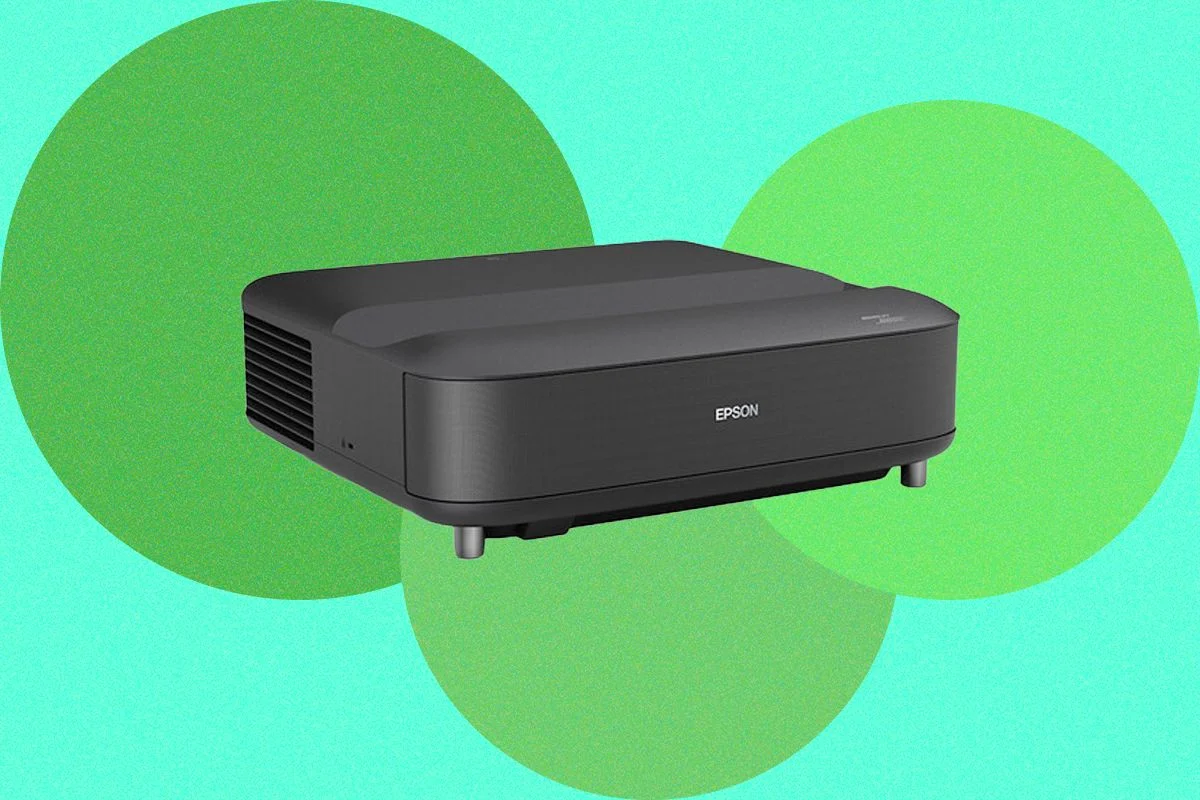
The landscape of home entertainment has undergone a significant shift as consumers increasingly move away from traditional large-format televisions in favor of ultra-short-throw (UST) projection systems. At the forefront of this transition is the Epson Lifestudio Grand Plus, also identified as the LS970. This unit represents a high-end entry into the UST market, a segment defined by its ability to project massive images from a distance of mere inches from the wall. Priced at $3,800, the Lifestudio Grand Plus is positioned as a premium solution for users seeking a cinematic experience without the logistical hurdles of traditional long-throw projectors, which require ceiling mounts or significant room depth.
The primary appeal of UST technology lies in its spatial efficiency. Unlike long-throw models that must be placed at the rear of a room—creating the risk of shadows if a person walks in front of the lens—the LS970 sits directly beneath the projection surface. This placement allows for seamless integration with existing media furniture, providing a centralized hub for streaming devices, soundbars, and gaming consoles. However, as the market for these devices matures, the expectations for brightness, color accuracy, and software integration have reached new heights.
Technical Specifications and Product Evolution
The Lifestudio Grand Plus arrives as a direct successor to the previous year’s Lifestudio Grand, bringing substantial hardware improvements. While the predecessor was capped at a 120-inch image, the LS970 expands this capability to 150 inches, catering to the growing demand for true "wall-to-wall" cinema. Brightness has also seen a notable upgrade, moving from 3,600 lumens to 4,000 lumens. This increase is critical for UST projectors, which are often used in living rooms with ambient light rather than dedicated, windowless home theaters.

Epson utilizes its proprietary 3LCD technology in the LS970. Unlike many competitors that use single-chip DLP (Digital Light Processing) systems, 3LCD displays 100% of the RGB color signal for every frame. This eliminates the "rainbow effect"—a common visual artifact in DLP projectors where viewers see momentary flashes of color—and ensures that color brightness is equal to white brightness. The lens system features an f/1.8 aperture, designed to provide a sharp focus across the expansive projection area, though it faces stiff internal competition from Epson’s own Pro Cinema lineup.
The Challenges of Configuration and Physical Setup
Despite its high-end positioning, the LS970 presents a setup process that reflects the inherent sensitivities of ultra-short-throw optics. Because the light is projected at an extremely steep angle, even the slightest misalignment or wall imperfection is magnified. Industry data suggests that UST projectors are most effective when paired with Ambient Light Rejecting (ALR) screens, which are designed to reflect light from below toward the viewer while absorbing light from above.
During technical evaluations, the LS970 demonstrated a high degree of "fussiness" regarding placement. To achieve a 150-inch image, the unit must be positioned approximately 11.2 inches from the wall. For a smaller 80-inch image, that distance shrinks to just one inch. The physical weight and footprint of the device require a sturdy, deep media console.
A significant point of friction identified during testing involves the auto-keystoning software. While modern competitors like the Leica Cine Play 1 or the Soundcore Nebula P1 offer near-instantaneous image alignment, the Epson LS970’s software feels comparatively dated. On standard flat white walls, the internal sensors often struggle to correct for micro-variations, leading to a "wavy" test pattern. Epson representatives have noted that while the unit is designed to be versatile, it performs optimally in controlled environments with professional-grade screens. This suggests that the $3,800 investment in the projector may necessitate an additional expenditure for a fixed-frame screen to achieve the advertised picture quality.

Image Performance and Optical Analysis
Once properly calibrated, the Lifestudio Grand Plus delivers a visual experience characterized by high dynamic contrast and vivid saturation. In "Filmmaker Mode," a setting designed to disable post-processing and present content as the director intended, the projector excels at rendering deep blacks and realistic skin tones.
Technical benchmarks using HDR10+ content reveal that the LS970 handles subtle color gradients with precision. In scenes involving natural landscapes—such as winter fields or sunsets—the projector distinguishes between closely related shades of orange, red, and brown that lower-end models often crush into a single hue.
However, optical comparisons place the LS970 in a unique position within Epson’s own catalog. The Epson Pro Cinema LS9000, a long-throw model priced only $200 higher at $4,000, offers superior optical clarity. The LS9000 utilizes a more advanced lens system with an aperture of f/2.0 to f/3.0 and a dedicated ZX processor for dynamic contrast. These components allow for a deeper level of focus across the entire screen and more nuanced black levels. While the LS970 is the superior choice for small rooms, the LS9000 remains the benchmark for pure image fidelity.
Integration of Google Gemini and Smart Features
A standout feature of the Lifestudio Grand Plus is its integration of Google TV and, more importantly, Google Gemini. While most smart projectors rely on basic voice assistants for simple tasks like volume control, the inclusion of Gemini—Google’s advanced artificial intelligence—transforms the user interface into a more conversational and capable tool.

Users can execute complex queries, such as requesting a list of specific genres from a particular year, with high accuracy. Gemini also manages hardware functions, such as muting or adjusting settings, through natural language processing. This represents a significant leap forward in the "smart" projector category, moving the device closer to the functionality of a high-end smartphone or computer.
Despite the power of the AI, the initial digital integration remains prone to glitches. Technical reports indicate that the Google Home app occasionally fails to recognize the LS970 on local networks, forcing users to manually input account credentials. This suggests that while the hardware is ready for the AI era, the underlying firmware requires further refinement to ensure a seamless "out-of-the-box" experience.
Gaming and Multimedia Versatility
The LS970 is not merely a cinema tool; it is heavily marketed toward the gaming community. It supports 4K resolution at a 120 Hz refresh rate when connected to a compatible gaming PC or next-generation console. This high refresh rate is essential for reducing motion blur in fast-paced titles.
In testing with graphically intensive games like Crimson Desert and Pragmata, the projector maintained smooth frame rates and exceptional detail. The massive 150-inch scale provides a level of immersion that a 65-inch or even 85-inch television cannot replicate. Small details, such as the texture of foliage or the reflections on metallic armor, are rendered with a clarity that justifies the 4K designation.

Furthermore, the projector includes a built-in 20-watt soundbar with Dolby Atmos support. While it cannot replace a dedicated multi-speaker home theater system or a high-end standalone soundbar like the Focal Muso Hekla, it provides a "thunderous" audio profile that is sufficient for casual viewing. For music enthusiasts, the audio may lack the surgical precision of audiophile-grade equipment, but for movies and gaming, it offers a significant upgrade over standard television speakers.
Connectivity and Industrial Design
The industrial design of the LS970 is functional but presents some ergonomic challenges. The unit features three HDMI ports, including one with eARC (Enhanced Audio Return Channel) support for high-bandwidth audio passthrough to external receivers. However, these ports are located in a recessed corner of the chassis. Given that the projector typically sits low to the ground on a console, accessing these ports can be difficult once the unit is placed.
The remote control follows a layout similar to the Amazon Fire TV stick, featuring dedicated buttons for YouTube, Netflix, and Amazon Prime. While the layout is intuitive, the lack of backlighting is a notable omission for a device intended to be used in dark rooms. Additionally, the remote’s Bluetooth pairing range is somewhat limited, requiring the user to be within a few feet of the unit for initial synchronization.
Market Impact and Future Implications
The release of the Epson Lifestudio Grand Plus signals a broader trend in the consumer electronics industry: the convergence of professional-grade optics with consumer-grade artificial intelligence. By incorporating Google Gemini, Epson is betting that the future of the home cinema is not just about the screen size, but about the intelligence of the interface.

The LS970 occupies a competitive middle ground. It is more capable than entry-level UST projectors but faces pressure from "lifestyle" long-throw models like the Leica Cine Play 1, which offers superior color vibrancy at a different price point. For consumers, the choice now depends on room geometry. If a user has the space for a long-throw setup, the Epson LS9000 remains the internal gold standard. However, for those in modern apartments or multipurpose living rooms where a traditional projector is impractical, the LS970 stands as one of the most powerful and bright UST options available today.
In summary, the Epson Lifestudio Grand Plus is a robust, high-brightness machine that successfully bridges the gap between office-grade projection power and home-cinema luxury. While its setup process requires patience and its software has minor connectivity hurdles, the resulting 150-inch 4K image, bolstered by the most advanced AI assistant in the category, makes it a formidable contender in the evolving home entertainment market.







