
The modern social media landscape demands flexibility, precision, and strategic diversity from creators, small business owners, and large agencies alike. While some digital strategies rely heavily on short-form or long-form video, others lean on text-centric storytelling, high-resolution imagery, or mixed-media schedules. To manage this fragmentation, organizations turn to social media management tools to streamline publishing, track granular analytics, handle unified inboxes, and enforce team workflows. Examining how different platforms scale is critical for digital operators seeking optimal return on investment.
Market Positioning and Core Operating Philosophies

Buffer and RecurPost approach social media management from fundamentally different operational philosophies. Buffer is architected around rapid, flexible publishing designed to accommodate everyone from individual creators to sprawling enterprise teams. It emphasizes a gentle learning curve and maintains a robust free tier with minimal operational friction. Its system prioritizes fresh content creation, backed by an accessible interface that gets posts from the ideation stage to the queue with minimal latency.
Conversely, RecurPost anchors its product ecosystem on continuous, behind-the-scenes content recycling. It utilizes evergreen libraries that auto-loop scheduled material across designated time slots, augmented by advanced Instagram direct message (DM) automations. This divergence in philosophy dictates how each platform handles pricing models, content composition, analytics depth, and team collaboration frameworks.
Detailed Pricing Models and Cost Scenarios

Pricing structures reveal a stark contrast between Buffer’s channel-based scaling and RecurPost’s flat-rate plans augmented by modular add-ons. Buffer utilizes tiered pricing within specific plans, introducing volume discounts when managing more than ten channels. Crucially, Buffer’s Team plan incorporates unlimited user seats, meaning the addition of team members does not inflate the monthly baseline cost.
RecurPost employs a flat plan model across Starter, Personal, and Agency tiers, supplemented by a la carte add-ons for extra profiles, user seats, daily posting slots, Meta Ads Manager boosts, and AI credits. While RecurPost omits a perpetual free tier—relying instead on a 14-day trial—it allows users to expand profile counts for a nominal fee per profile rather than forcing an immediate migration to a higher subscription tier.
Financial analysis across various operational scales demonstrates distinct cost-efficiency profiles. For a solo creator managing three channels, Buffer’s free tier incurs no cost, whereas RecurPost’s Starter plan requires a baseline financial commitment. However, for smaller teams managing a moderate number of channels, RecurPost can present a competitive rate, though expenses escalate rapidly once user seats and specialized add-ons surpass baseline allotments.

Scheduling, Content Composition, and Publishing Workflows
The mechanics of publishing highlight how structural design influences daily productivity. Buffer’s composer facilitates immediate idea capture and platform-specific customization. A standout component of Buffer’s architecture is the Create space—a centralized board resembling a Kanban workflow where users deposit, develop, and organize unassigned ideas into columns like to-do, in progress, and done before moving them into the publishing queue. Team plans allow collaborative access to this ideation board.
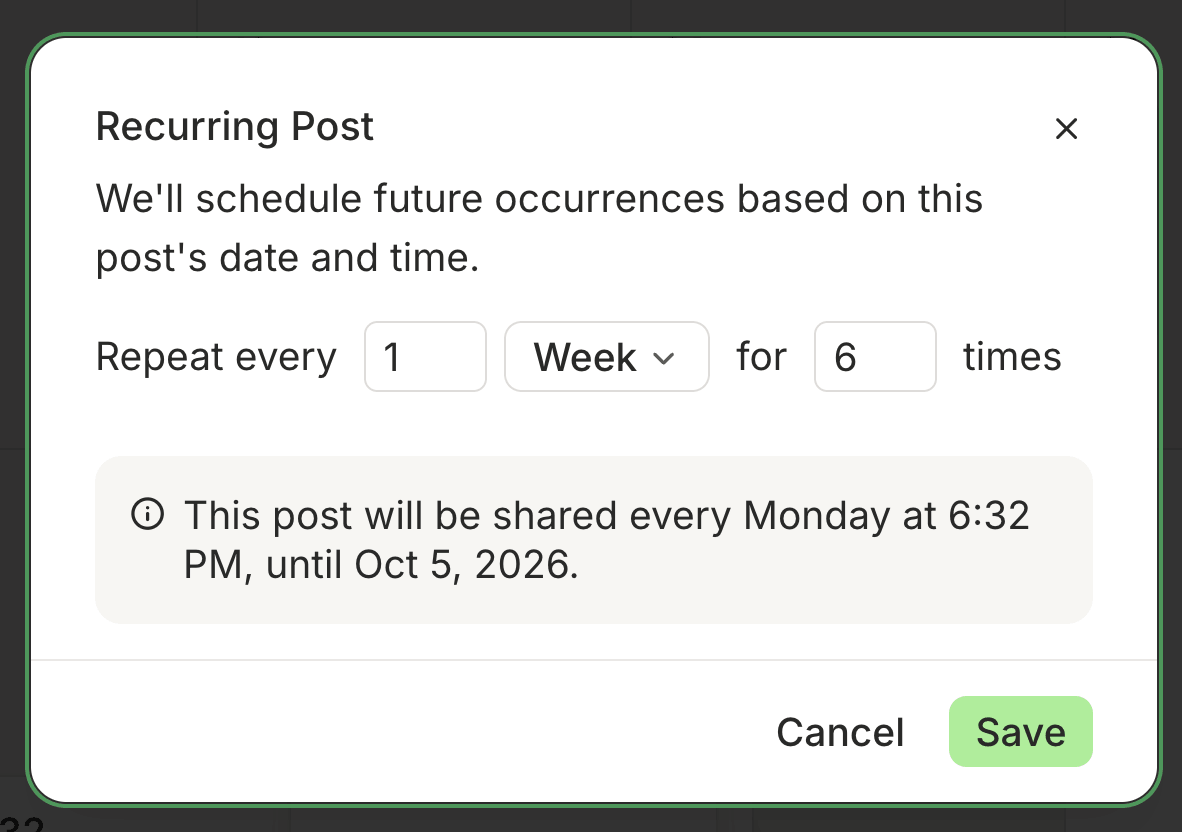
RecurPost approaches scheduling through the lens of evergreen continuity. Users populate categorized libraries with content that loops continuously according to weekly or monthly time slots. While this structure requires an initial learning curve, it excels at managing repetitive, foundational promotional material. RecurPost also offers advanced Instagram publishing features, including trial reels, scheduled creator tagging, licensed audio integration through Facebook, and Meta Ads Manager post-boosting integrations.
Unified Inbox and Customer Engagement Capabilities
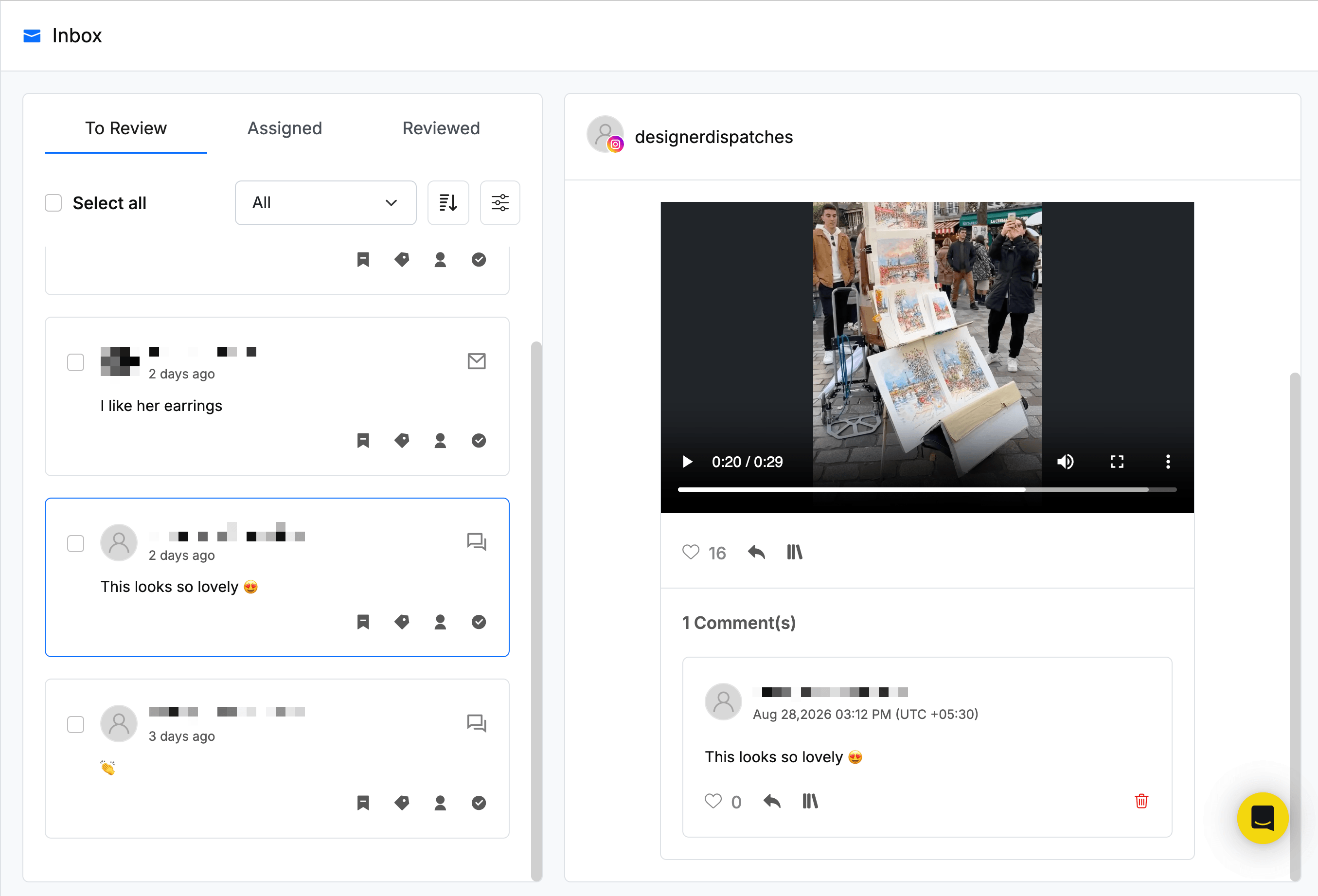
Audience engagement tools dictate how effectively brands cultivate community from within a centralized dashboard. Buffer’s Community inbox encompasses a broad platform footprint, enabling administrators to respond to comments and mentions across numerous networks, including Facebook, LinkedIn, Instagram, Threads, Bluesky, X (formerly Twitter), Google Business Profiles, TikTok, YouTube, and Mastodon. It incorporates AI reply suggestions, response time tracking via Comment Scores, and organization-wide saved replies for frequently asked questions.
RecurPost narrows its native inbox scope to a select group of business-verified platforms—specifically Instagram professional accounts, Facebook Pages, LinkedIn Company Pages, and Google Business Profiles. However, it compensates for this narrower reach by integrating direct message management and sophisticated Instagram DM automation. These automations permit instant or follower-gated triggers based on specific keywords or blanket rules on posts and reels. While powerful for lead generation, RecurPost lacks saved reply templates outside of automated flows, increasing the manual labor required for general comment moderation.

Analytics, Insights, and Reporting Infrastructure
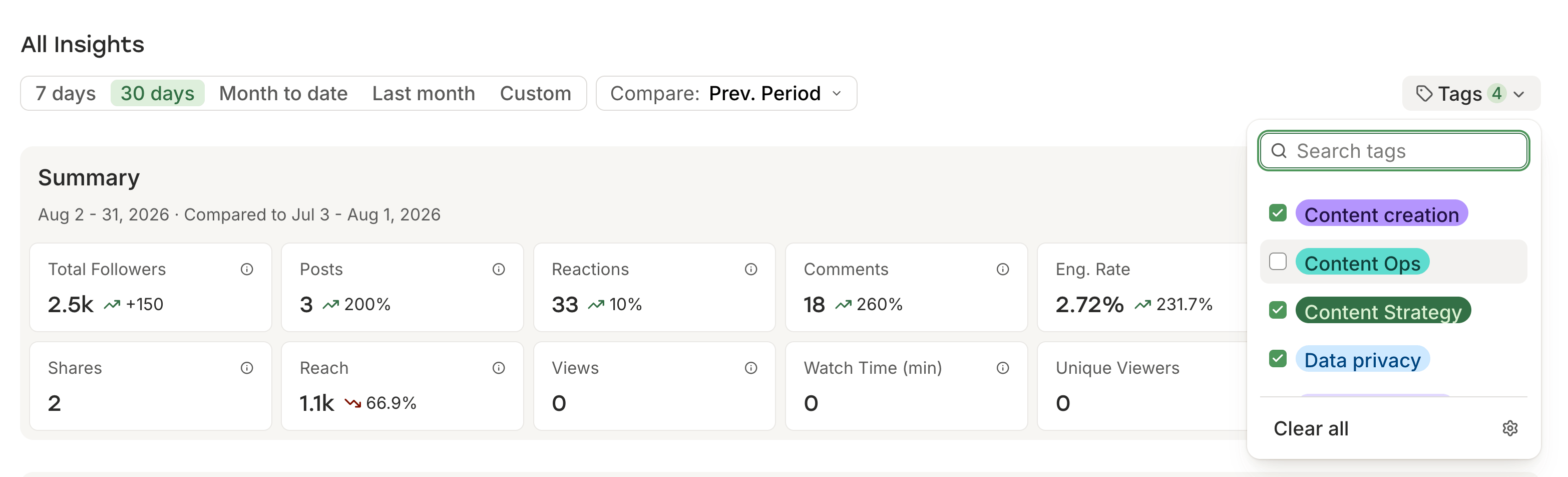
Data evaluation tools separate tactical optimization systems from client-facing reporting suites. Buffer’s analytics infrastructure, housed within Insights, aggregates performance metrics across ten platforms. It incorporates AI-driven weekly takeaways, tag-based filtering to evaluate performance by content topic, and versatile export capabilities in PDF, CSV, and Markdown formats. Users can construct customized dashboards by grouping channels or date ranges to satisfy distinct stakeholder reporting requirements.
RecurPost leans heavily into exhaustive reporting tailored for agency environments. Its analytics suite captures deep demographic breakdowns—including age, gender, country, and city metrics—alongside link click performance and publishing cadence. The custom report builder permits granular adjustments to data visualization types and supports white-labeled PDF generation equipped with agency branding. Furthermore, RecurPost features a natural-language AI chat interface for querying performance data, though users must remain vigilant regarding how the model interpolates absent metrics.

Team Collaboration, Workspaces, and Governance
Organizational oversight requires distinct permission hierarchies to protect brand integrity. Buffer’s Team plan supports unlimited users while enforcing strict, channel-level permissions. Administrators can customize whether a user possesses full publishing access, requires managerial approval before a post enters the queue, or holds view-only access to specific community inboxes. This granular control mitigates accidental publishing errors across multi-user environments.
RecurPost organizes team collaboration around segregated workspaces. Account limits are distributed across these workspaces rather than multiplied per client environment. While this structure isolates client data effectively for third-party agencies, RecurPost lacks an enforced approval workflow for one-off posts within workspaces. Any team member with access can publish or reply immediately without mandatory supervisory sign-off, introducing potential governance risks for enterprise deployments.
Artificial Intelligence Integration and Developer Ecosystems
Artificial intelligence features have transformed from novelties into core operational utilities. Buffer’s AI Assistant operates without usage caps across all subscription levels, facilitating ideation, cross-platform content repurposing, and image alt-text generation. Additionally, Buffer supports Model Context Protocol (MCP) integrations, enabling direct interaction with the platform from external developer environments like Claude, ChatGPT, Cursor, and Raycast.
RecurPost utilizes a credit-based AI consumption model, allocating monthly allowances for post and image generation. During testing, RecurPost’s AI image generation capability produced high-quality visual assets aligned with specific prompt instructions. However, the lack of a persistent, visible credit counter inside the application interface creates uncertainty regarding remaining resource allocations.
In terms of developer infrastructure, Buffer maintains an extensively documented public API available on all plans, supported by active community channels, dedicated developer guides, and full-time advocacy staff. RecurPost maintains a functional API and MCP framework, but offers sparse public documentation and minimal community support, placing the burden of custom integration entirely on technical end-users.
Strategic Recommendations by User Archetype
Selecting the appropriate platform depends heavily on the operational profile of the user:

- Creators and Solopreneurs: Buffer emerges as the superior choice due to its robust free tier, unlimited AI assistance, and straightforward scheduling mechanics. RecurPost is preferable only if evergreen content recycling is the absolute cornerstone of the creator’s strategy.
- Small Businesses and Growing Teams: Organizations requiring strict multi-tiered approval workflows and unconstrained user scaling find Buffer’s permission structure more reliable. Teams prioritizing automated Instagram marketing funnels and evergreen looping may find RecurPost advantageous.
- Video Creators: RecurPost provides a specialized advantage for video-heavy workflows, offering comprehensive YouTube long-form video management and deep Instagram and TikTok publishing features.
- Agencies: Buffer offers predictable cost scaling through unlimited user seats, robust multi-channel inbox support, and rigorous client approval controls. RecurPost suits agencies requiring deep white-labeled reporting and strict workspace isolation, provided they account for per-seat overage fees.
Conclusion and Summary of Implications
The evaluation of Buffer and RecurPost demonstrates that software selection must be driven by workflow requirements rather than feature checklists alone. Buffer remains the versatile standard for organizations prioritizing fresh content creation, cross-platform inbox management, transparent pricing, and robust team governance. RecurPost serves as a specialized engine for evergreen recycling, automated lead generation via direct messages, and video-centric publishing campaigns. Prospective buyers are encouraged to leverage Buffer’s perpetual free tier and RecurPost’s 14-day trial to evaluate how each architecture aligns with their daily operational demands.