rifanmuazin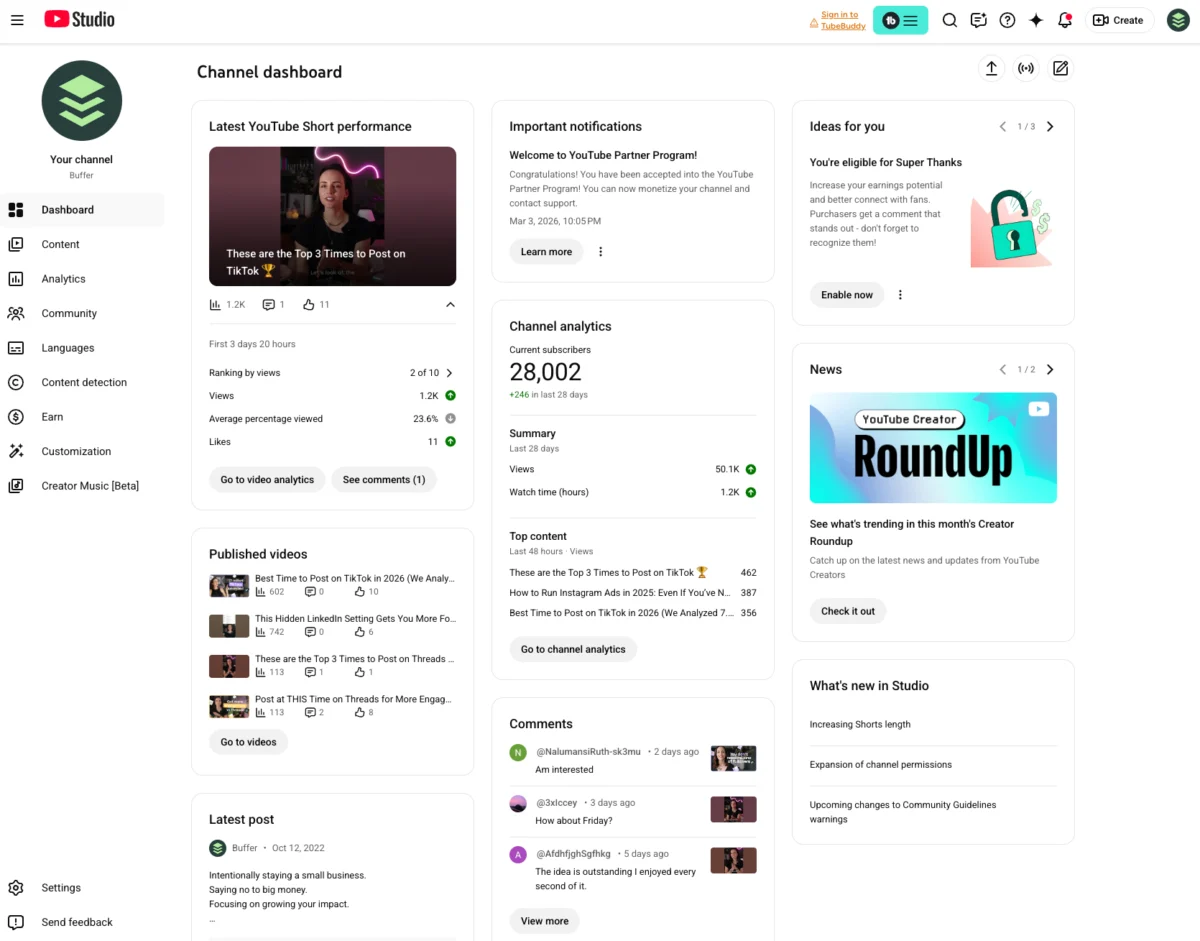
A groundbreaking analysis of nearly two million videos across YouTube’s diverse landscape, encompassing both traditional long-form content and the increasingly popular YouTube Shorts, has unveiled crucial insights into the most effective posting times for maximizing audience engagement. Conducted by leading social media analytics firm Buffer, the extensive research indicates a significant evolution in viewer habits since previous studies, providing creators with a refined, data-driven roadmap to optimize their content release strategies. While content quality, compelling titles, and captivating thumbnails remain paramount, the precise timing of an upload emerges as an easily actionable lever that can provide a considerable boost in initial visibility and engagement, ultimately influencing algorithmic reach.
The study’s methodology involved meticulously tracking the median engagement of 1.8 million videos, comparing performance across every hour and day of the week. This granular approach allowed Buffer’s data scientists to pinpoint distinct patterns, leading to concrete recommendations for both long-form videos and YouTube Shorts. A key innovation in this latest analysis is the separation of data for these two formats, acknowledging their divergent consumption patterns and delivering more accurate, tailored guidance. This distinction is critical in a dynamic platform environment where short-form content has rapidly carved out its own niche, often appealing to different audience behaviors and viewing contexts.
Understanding the Evolving YouTube Landscape
YouTube, with its billions of users and vast library of content, operates on a complex algorithm designed to connect viewers with videos they are most likely to enjoy. Initial engagement – measured through likes, comments, shares, and watch time – plays a pivotal role in how widely a video is distributed by the algorithm. Posting content when a creator’s target audience is most active and receptive can significantly enhance this initial engagement, providing an advantageous push that might otherwise be missed. This becomes even more salient in an increasingly competitive creator economy, where every strategic advantage counts. The platform’s continuous evolution, including the prominent integration of Shorts, necessitates ongoing research into user behavior to stay ahead of trends.
Previous analyses, including Buffer’s own 2025 report, had highlighted different peak times, often pointing towards weekday afternoons. The current findings, however, reveal a notable shift, suggesting that audience viewing habits have adapted, possibly influenced by changes in work-life patterns, increased mobile consumption, and the growing prevalence of on-demand entertainment. This fluidity underscores the importance of regularly re-evaluating posting strategies rather than relying on static, outdated information.
Optimal Times for Long-Form YouTube Videos: A Weekend Morning Surge
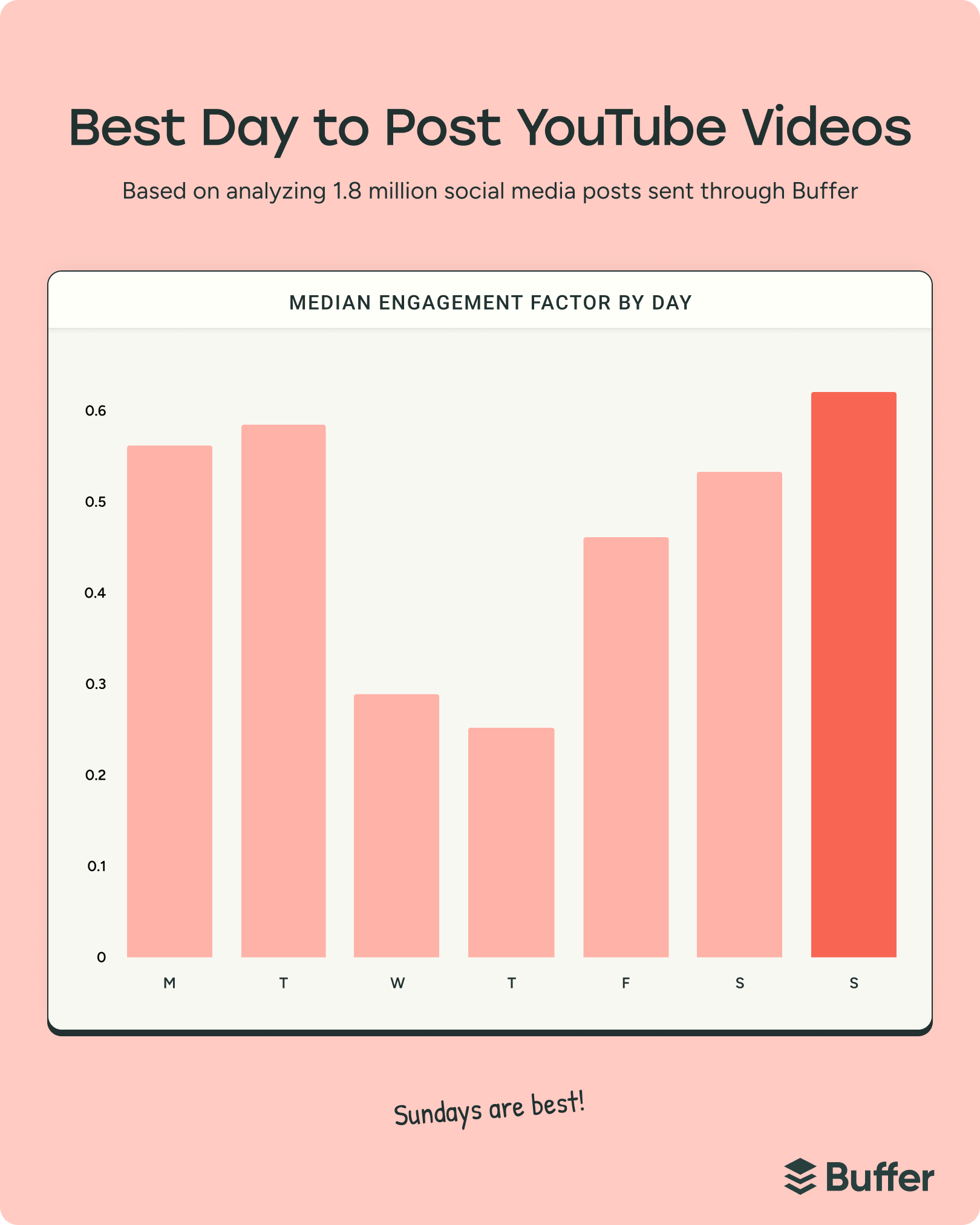
For long-form YouTube videos, the study’s findings indicate a decisive shift towards weekend mornings as the prime engagement window. The standout time, achieving the highest engagement factor of the entire week, is Sunday at 10 a.m. This slot significantly outpaces all others, suggesting that viewers are more inclined to dedicate time to longer content during their weekend leisure hours. Other top-performing times for long-form content include Sunday at 9 a.m. and Friday at 12 p.m., reinforcing a pattern of morning and late-week engagement.
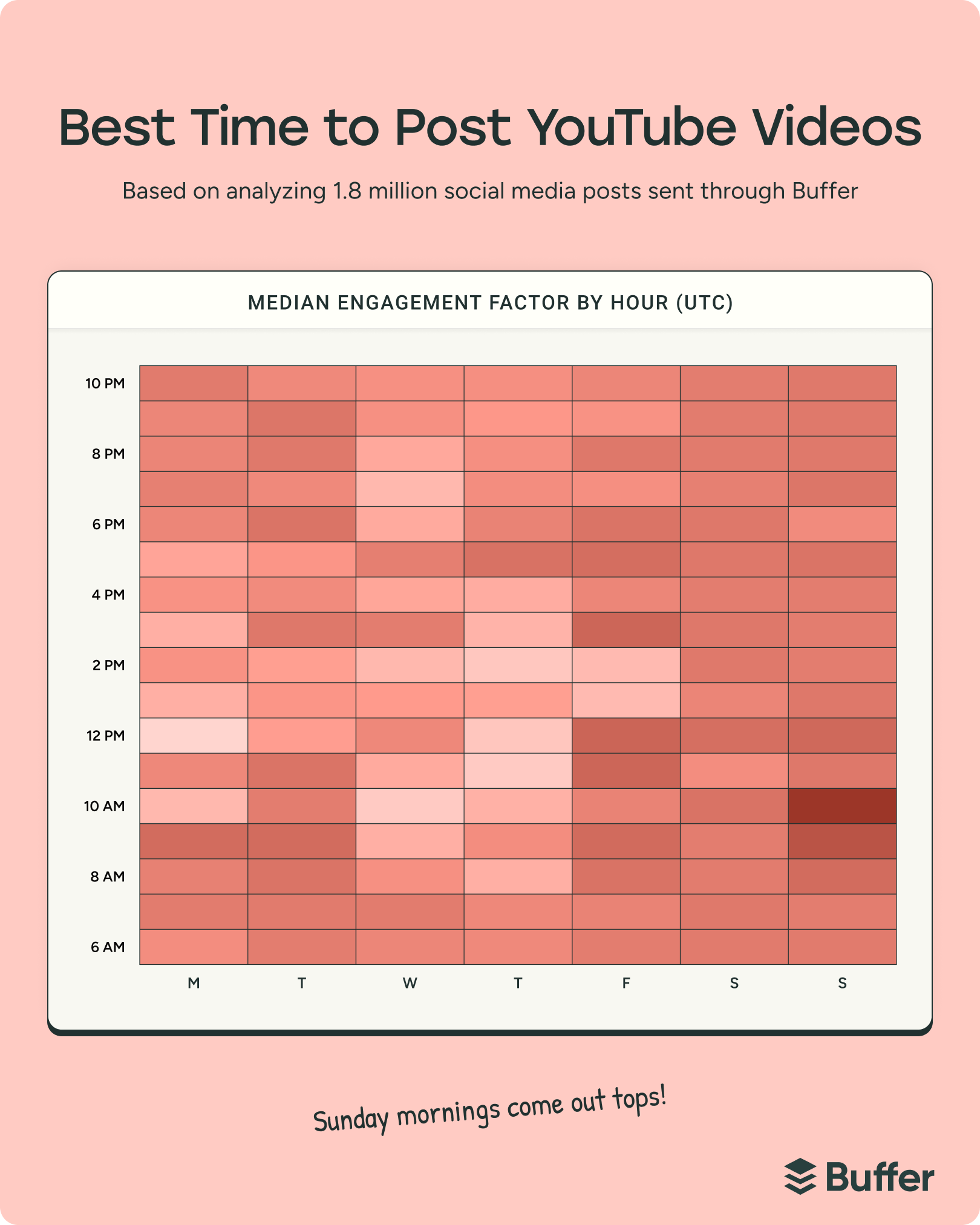
Generally, videos shared between 8 a.m. and 11 a.m. tend to garner the highest engagement for long-form content. This morning trend represents a clear departure from the previous analysis, which had identified late afternoon (3–5 p.m.) on weekdays as the sweet spot. The current data strongly suggests that weekends, and particularly Sundays, now offer significantly higher engagement than midweek days for in-depth video consumption.
Conversely, the study identified the early-to-mid afternoon on weekdays as the least favorable times for long-form video uploads. Specifically, engagement dips noticeably on Wednesday and Thursday afternoons, with Thursday at 2 p.m. registering one of the week’s lowest engagement factors (0.11). This could be attributed to viewers being occupied with work, school, or other commitments during these hours, making them less available for longer viewing sessions.
Detailed Daily Breakdown for Long-Form Videos:
- Monday: Best at 9 a.m., followed by 10 p.m. and 7 a.m. Monday mornings appear strong, with a secondary late-evening window.
- Tuesday: Best at 9 a.m., with other peaks at 11 a.m. and 8 a.m. Tuesday mornings from 8-11 a.m. are consistently high-performing, making it a reliable weekday option.
- Wednesday: Best at 7 a.m., followed by 3 p.m. and 5 p.m. Generally one of the weaker days, though early morning and mid-afternoon slots still offer reasonable engagement.
- Thursday: Best at 5 p.m., followed by 6 p.m. and 7 a.m. The weakest day for long-form engagement, with midday and early afternoon particularly low. Evening uploads are the strongest option if Thursday is unavoidable.
- Friday: Best at 12 p.m., with other peaks at 11 a.m. and 3 p.m. Uniquely, Friday midday outperforms morning, with 12 p.m. standing out as a high-engagement slot (0.70 engagement factor).
- Saturday: Best at 12 p.m., followed by 10 a.m. and 3 p.m. Moderate and consistent engagement throughout the day, suitable for weekend-focused audiences.
- Sunday: Best at 10 a.m. (0.95 engagement factor), with 9 a.m. (0.80) and 12 p.m. (0.67) also performing exceptionally well. Sunday mornings are unequivocally the strongest time for long-form video releases.
It is important to note that these times are universally applicable, thanks to mathematical normalization performed by Buffer’s data scientists, eliminating the need for time zone conversions. This ensures creators worldwide can apply these recommendations directly to their local schedules.
Optimal Times for YouTube Shorts: The Evening Scroll Dominates
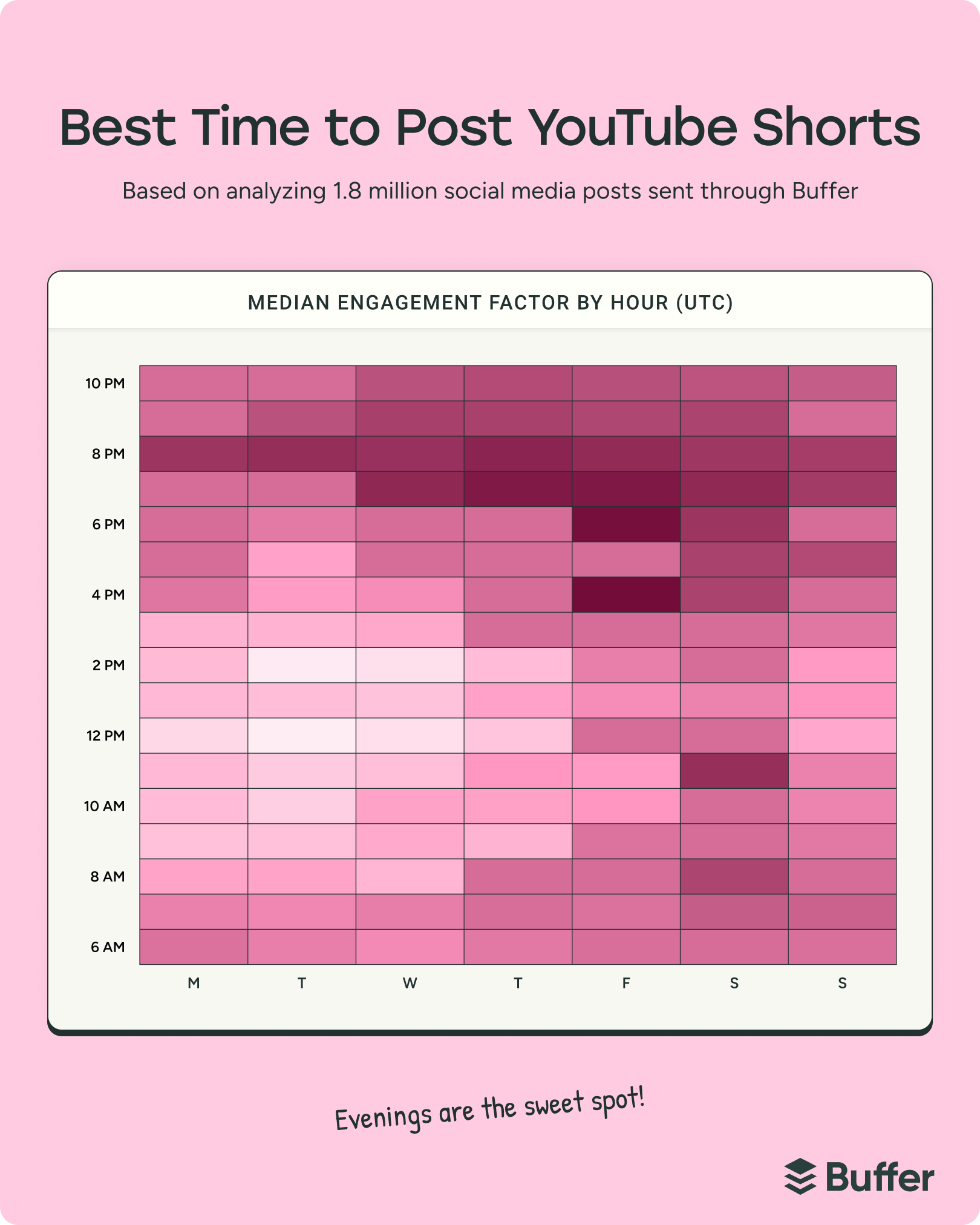
In stark contrast to long-form content, YouTube Shorts exhibit a distinctly different engagement pattern, predominantly peaking in the evenings. The comprehensive analysis of 1.8 million YouTube Shorts revealed that Friday at 4 p.m. is the absolute best time to post, followed closely by Friday at 6 p.m. and Friday at 7 p.m. This positions Friday as the undisputed top day for Shorts engagement.
The data indicates that YouTube Shorts engagement generally peaks in the evenings, typically between 6 p.m. and 11 p.m. This trend aligns intuitively with how individuals consume short-form content: often as a way to unwind, relax, or fill brief moments of downtime at the end of the day. Unlike long-form videos which might require dedicated viewing sessions, Shorts are frequently consumed in short bursts, making evening leisure hours ideal.
The weakest times for posting YouTube Shorts are typically during the afternoon, between 12 p.m. and 5 p.m., with the notable exception of Friday, where the late afternoon is a prime window.
Detailed Daily Breakdown for YouTube Shorts:
- Evenings consistently dominate the optimal posting times for Shorts across most days.
- Saturday presents an interesting anomaly, being the only day where a morning slot (11 a.m.) breaks into the top three, suggesting a potential early-day viewing window for Shorts during the weekend.
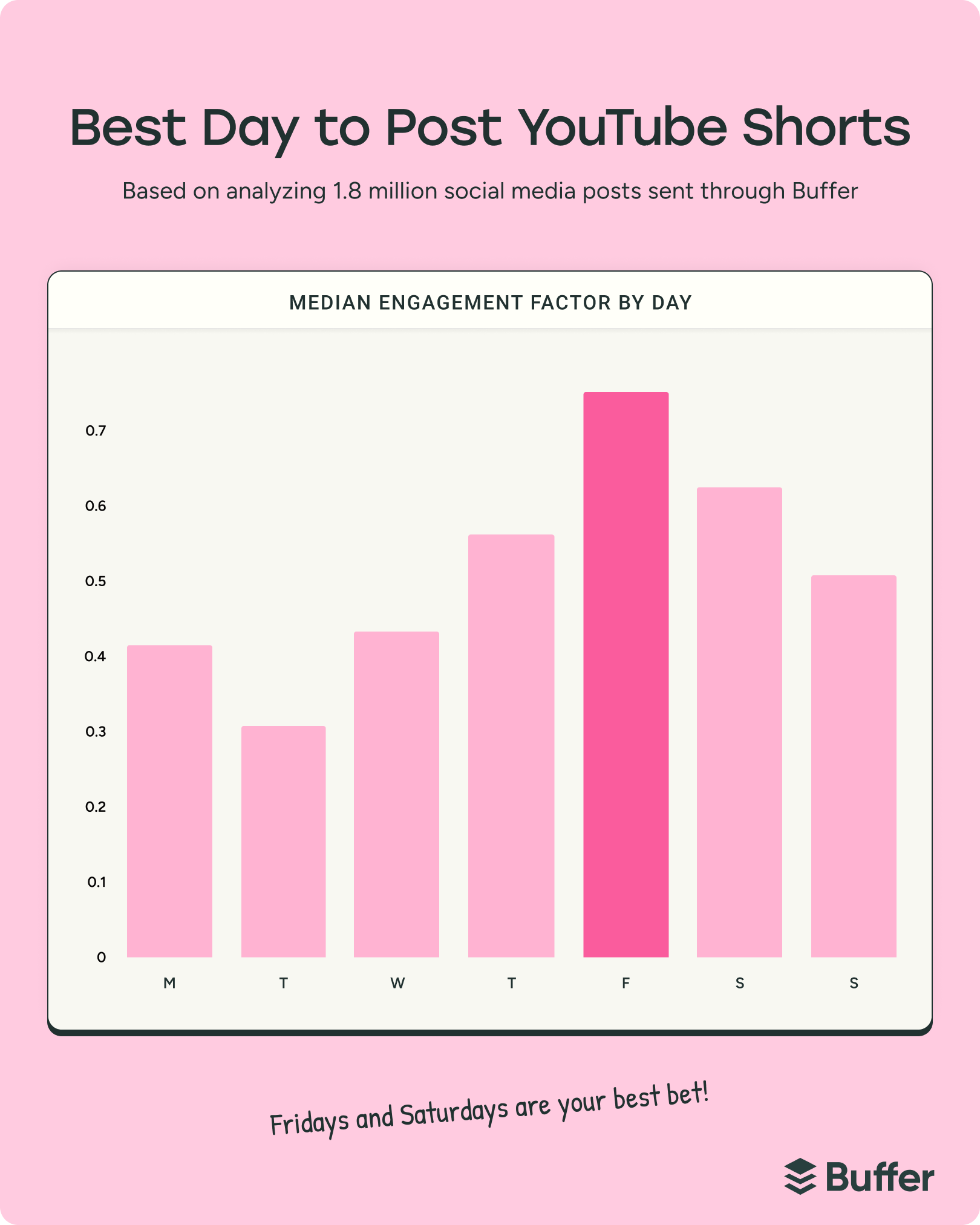
- The overall best day for posting Shorts is Friday, followed by Saturday and then Thursday.
- The worst days to post YouTube Shorts are Tuesday and Monday. Creators focusing primarily on Shorts would be wise to prioritize the latter half of the week, from Thursday through Saturday, with Friday serving as a crucial anchor day.
Long-Form vs. Shorts: A Tale of Two Strategies
The divergence in optimal posting times between long-form videos and YouTube Shorts is perhaps the most significant revelation of this study. There is almost no overlap in their peak engagement windows:
- Long-form videos: Best on weekend mornings (e.g., Sunday 10 a.m.).
- YouTube Shorts: Best on weekday evenings (e.g., Friday 4 p.m.).
This clear separation offers a strategic advantage for creators producing both formats. It means that long-form content can be scheduled for morning uploads without competing for audience attention with evening Shorts drops, allowing for optimized reach across both content types simultaneously. This dual-strategy approach enables creators to tap into different audience segments and viewing behaviors throughout the week.
Implications for Creators and Marketers
These findings carry significant implications for anyone looking to maximize their reach and engagement on YouTube, from individual content creators to large marketing teams. While content quality, strong SEO, compelling titles, and eye-catching thumbnails remain foundational elements for success, optimizing posting times adds another layer of strategic depth.
Buffer’s analysts underscore that consistent, data-driven scheduling can provide a crucial initial push for videos. "The YouTube algorithm is constantly learning and adapting," stated a representative from Buffer’s research team. "Initial engagement signals to the algorithm that content is valuable, leading to broader distribution. By aligning uploads with peak audience activity, creators can significantly improve their chances of breaking through the noise and reaching a wider audience from the outset."
However, this data serves as general guidance. Every audience is unique, and individual channel analytics offer the most precise insights.
Finding Your Channel’s Unique Best Time to Post
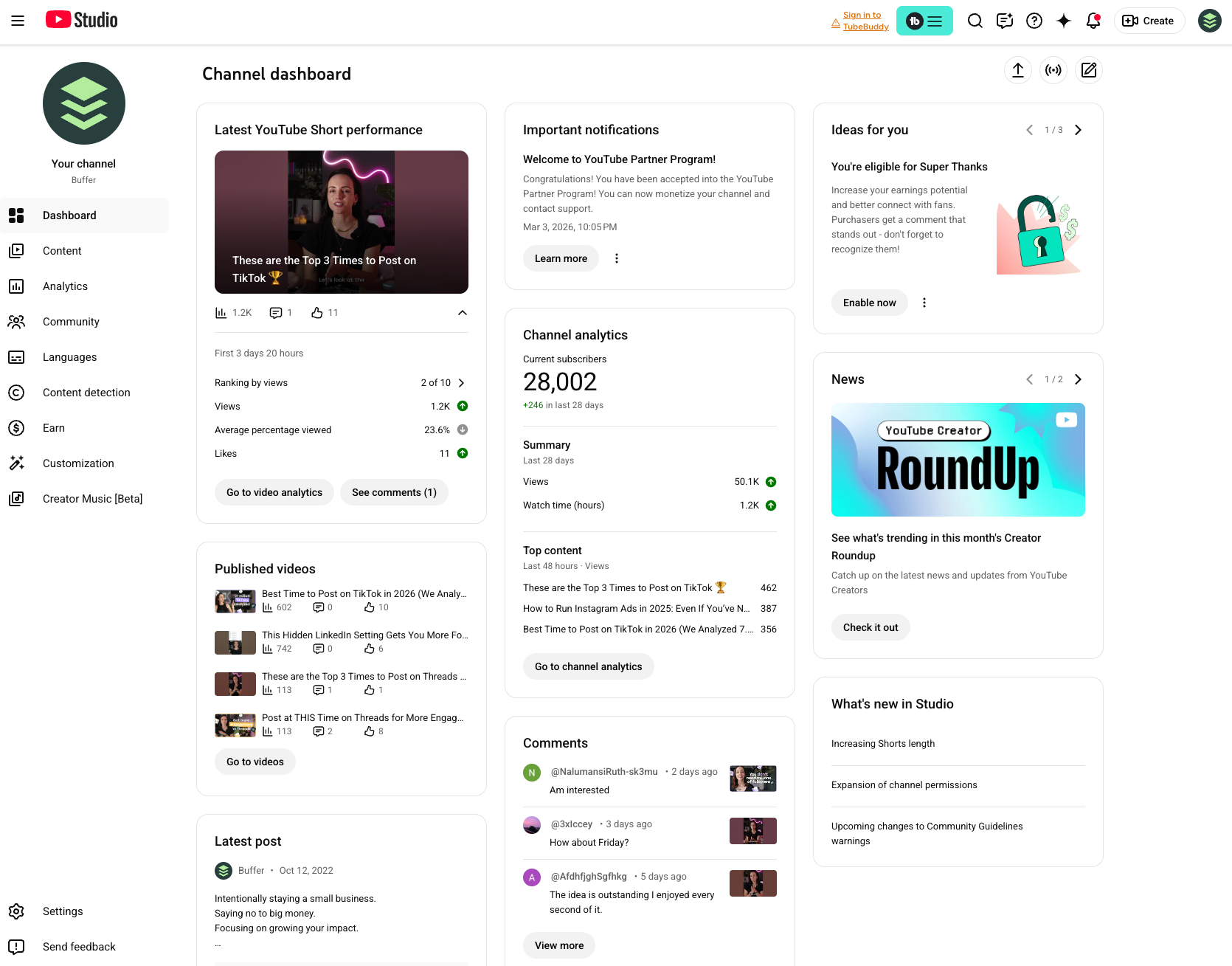
Even with robust industry-wide data, tailoring a posting schedule to your specific audience is essential. YouTube Studio Analytics provides creators with powerful tools to identify their unique audience’s viewing habits.
Here’s a step-by-step guide to leveraging YouTube Analytics:
- Access YouTube Studio: Navigate directly to studio.youtube.com. This serves as your channel’s central control hub for content management, monetization, and performance monitoring. Familiarizing yourself with its interface is crucial for any serious creator.
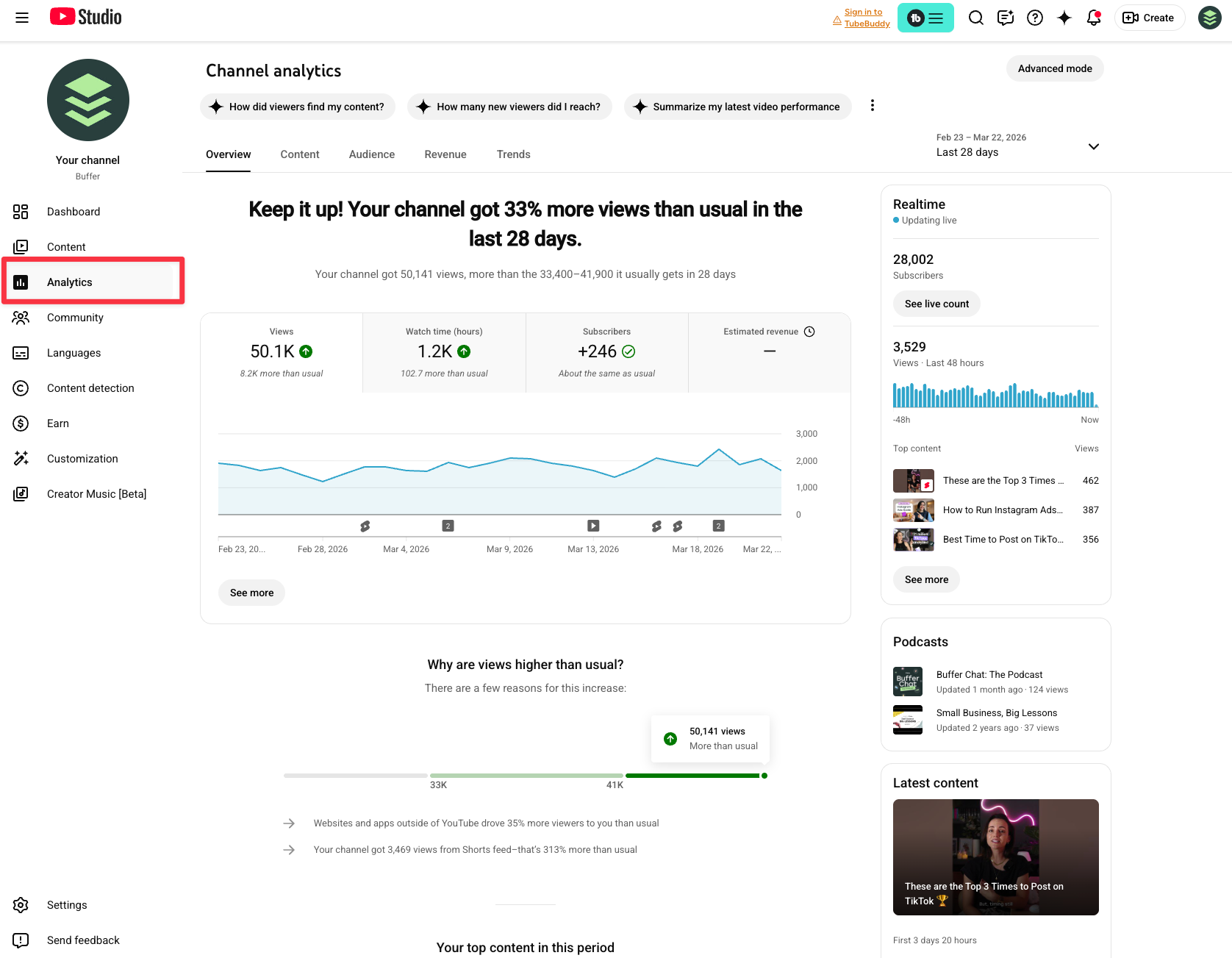
- Explore YouTube Analytics: On the left-hand sidebar, click the "Analytics" tab. This section offers a wealth of data on your channel’s overall viewership, watch time, subscriber growth, and engagement metrics. Regular review of this dashboard should be a core component of your content strategy.
- Navigate to the Audience Tab: Within the Analytics section, select the "Audience" tab at the top of the screen. Here, you’ll find in-depth demographic information about your viewers, including location, age, gender, and the types of content they typically watch (Shorts, Live, long-form). These insights are invaluable for understanding who your audience is and what they prefer.
- Locate "When Your Viewers Are on YouTube": Scroll down within the Audience tab to find a unique heatmap titled "When your viewers are on YouTube." This visualization, presented in your local time zone, highlights your audience’s most active hours with darker purple blocks and least active times with lighter shades. These dark purple slots are strong indicators of the best times to post for your specific subscriber base and wider viewership.
It is advisable to check these personalized analytics regularly, as audience behavior can shift over time. The data typically reflects activity over the past 28 days, ensuring that your posting strategy remains agile and responsive to current trends.
Beyond Timing: A Holistic Approach to YouTube Success
While optimized posting times offer a clear advantage, they are part of a larger ecosystem of factors contributing to YouTube success. Creators must maintain a holistic approach, continuously refining their strategies across multiple dimensions:
- Content Quality: High-quality, engaging, and valuable content remains the bedrock of any successful YouTube channel.
- SEO Optimization: Strategic use of keywords in titles, descriptions, and tags helps videos get discovered through search.
- Thumbnails: Compelling and informative thumbnails are critical for attracting clicks in a crowded feed.
- Audience Engagement: Actively interacting with comments, fostering a community, and responding to viewer feedback builds loyalty.
- Consistency: Regular uploads, even if not daily, help maintain audience interest and algorithmic favor.
- Cross-Promotion: Sharing YouTube content across other social media platforms can drive new viewers.
The latest Buffer study offers a valuable, updated perspective on YouTube posting strategies, emphasizing the distinct dynamics of long-form and short-form content. By combining these broad insights with personalized audience data from YouTube Studio, creators and marketers are better equipped than ever to navigate the platform’s complexities and maximize their content’s impact in an ever-evolving digital landscape. The message is clear: data-driven decision-making, coupled with compelling content, is the most reliable path to sustained growth and engagement on YouTube.