Angie Faith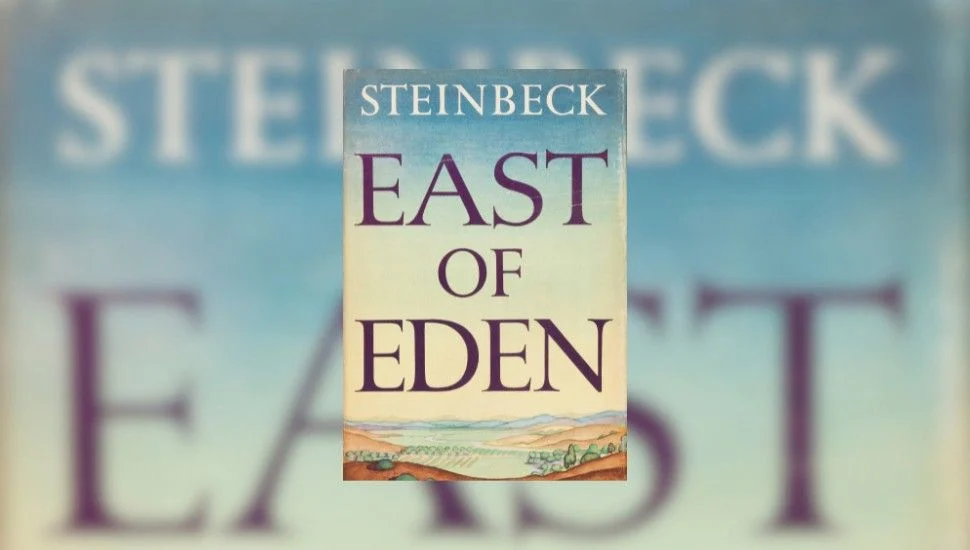
John Steinbeck’s sweeping 1952 American classic, East of Eden, is once again making the leap from the printed page to the screen, arriving on Netflix this Thursday. Widely regarded as a monumental achievement in 20th-century literature, the novel explores complex themes of generational trauma, paternal rejection, free will, and the perpetual human struggle between virtue and vice. Loosely structured as a modern retelling of the biblical Book of Genesis—specifically the narrative of Cain and Abel—the voluminous text played a pivotal role in cementing Steinbeck’s literary legacy and contributed significantly to his receipt of the Nobel Prize in Literature a decade later in 1962.
The upcoming streaming series marks the latest major effort to translate the dense, multi-generational saga for visual media. Its predecessor, a celebrated 1955 feature film directed by Elia Kazan, famously launched James Dean into cinematic stardom. However, due to the sheer scope of Steinbeck’s narrative, that cinematic adaptation omitted roughly two-thirds of the book, focusing almost exclusively on the final section involving the younger generation of brothers, Aron and Cal Trask.
The new Netflix adaptation aims to rectify these historical omissions. Significantly, the project is directed by Zoe Kazan, the granddaughter of the iconic filmmaker behind the 1955 movie, creating a unique generational bridge to the source material. Industry analysts and literary critics anticipate that the serialized television format will finally allow for a comprehensive exploration of the novel’s intricate plotting, philosophical underpinnings, and sprawling historical timeline.
Main Facts and Casting Details
The modern adaptation boasts a high-profile ensemble cast designed to capture the heavy dramatic weight of Steinbeck’s characters. Academy Award-nominee Florence Pugh takes on the complex and polarizing role of Cathy Ames, the calculating and deeply troubled matriarch whose presence looms large over the narrative. Meanwhile, actor Hoon Lee steps into the role of Lee, the Trask family’s resident philosopher and loyal servant, a character widely considered by scholars to be the moral and intellectual core of the novel—dimensions that were largely sidelined in the 20th-century film version.
Rounding out the robust blockbuster cast are Mike Faist, Ciarán Hinds, Christopher Abbott, Joseph Zada, Martha Plimpton, and Tracy Letts. The involvement of such acclaimed performers underscores Netflix’s substantial financial and artistic investment in prestige literary adaptations, a strategy increasingly utilized by major streaming platforms to attract discerning audiences and critical acclaim.
Chronology and Background Context of the Work
Published in September 1952 by Viking Press, East of Eden was viewed by Steinbeck himself as his magnum opus. The author famously wrote to his editor, Pascal Covici, stating, "It has everything in it I have been able to learn about my art or craft or world in all my life." Set primarily in the Salinas Valley of California and the farmlands of Connecticut between the American Civil War and the end of World War I, the novel chronicles the intertwined destinies of two families, the Hamiltons (loosely based on Steinbeck’s own maternal ancestry) and the Trasks.
The narrative pivots heavily around the concept of timshel, a Hebrew word translated by Steinbeck’s characters as "thou mayest," which signifies humanity’s ultimate freedom to choose between good and evil. This philosophical anchor elevates the family drama into a universal exploration of human agency.
Following its publication, the novel received mixed reviews from contemporary critics who found its moral framework heavy-handed, yet it resonated deeply with the reading public, instantly becoming a New York Times bestseller. Over the decades, its cultural footprint expanded exponentially, solidifying its place in high school and university curricula across the United States.
Broader Impact and Literary Tourism
The impending release of the Netflix series has sparked a renewed surge of cultural interest in Steinbeck’s broader bibliography and the geographical landscapes that inspired his writing. Fans and literary tourists frequently make pilgrimages to California’s Salinas Valley to visit the National Steinbeck Center. Located in downtown Salinas, the institution stands as one of the largest literary museums in the United States dedicated entirely to a single author, housing original manuscripts, correspondence, and artifacts related to Steinbeck’s life and career.
Beyond the physical museum, admirers of the author routinely visit the historic Steinbeck House in Salinas, where the author was born and spent his formative adolescent years. The intersection of classic literature and modern streaming distribution highlights a growing industry trend: prestige television adaptations serving as powerful catalysts for driving new generations of readers back to physical bookstores and municipal libraries.
Implications for the Prestige Streaming Landscape
The launch of East of Eden arrives at a critical juncture for the streaming industry, as platforms increasingly pivot toward pre-packaged intellectual property with built-in global recognition. By choosing a serialized format rather than a feature film, the production team has acknowledged that certain literary works cannot be successfully condensed into a standard two-hour runtime without sacrificing thematic depth.
If successful, this adaptation could pave the way for more nuanced, long-form interpretations of mid-century American classics that were previously deemed unadaptable or were poorly served by mid-century Hollywood censorship and time constraints. As viewers tune in this Thursday, November 1st, the cultural conversation will undoubtedly center on how faithfully and imaginatively the series manages to breathe new life into Steinbeck’s timeless exploration of guilt, redemption, and the enduring weight of family legacies.