Angie Faith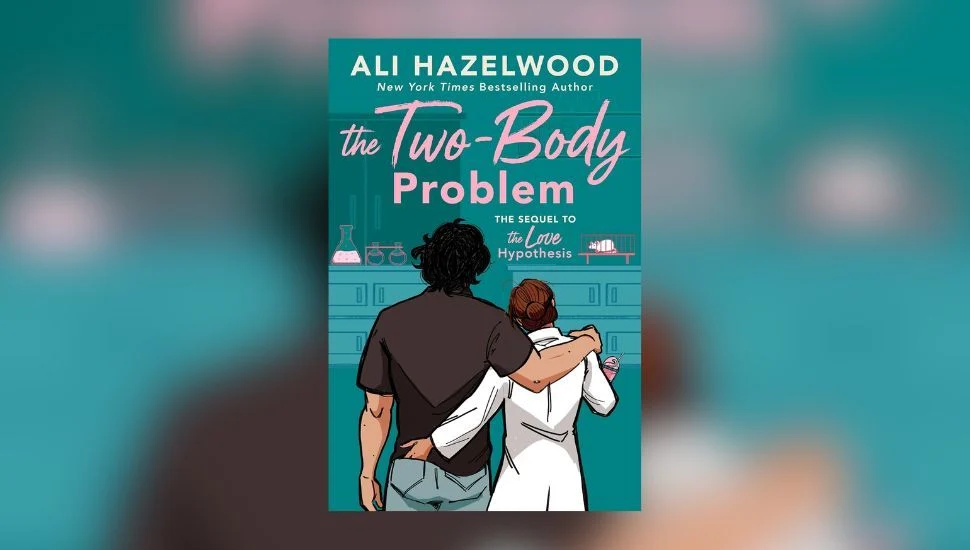
The literary and entertainment landscapes are experiencing a significant convergence as author Ali Hazelwood officially announces a sequel to her breakout 2021 contemporary romance novel, The Love Hypothesis. Titled The Two Body Problem—a clever scientific pun referencing Liu Cixin’s acclaimed science fiction masterwork, The Three-Body Problem—the forthcoming book is already slated for a major motion picture adaptation developed by MRC for Amazon MGM Studios. This dual announcement arrives immediately on the heels of the feature film adaptation of the original novel, which premiered globally on Prime Video on September 23. The rapid expansion of the intellectual property highlights the enduring commercial viability of STEM-focused romance narratives within contemporary publishing and Hollywood production pipelines.
The Evolution of a Publishing Phenomenon
To understand the magnitude of the current announcement, one must examine the unprecedented trajectory of The Love Hypothesis. Originally conceived and published online as a fictional work within the Star Wars fandom—specifically centering on the dynamic between characters Rey and Kylo Ren, a sub-genre colloquially known as "Reylo"—the manuscript underwent substantial revision to strip away proprietary franchise elements. Rebranded with original characters Olive Smith, a doctoral candidate in biology, and Adam Carlsen, a brooding young professor, the novel was traditionally published by Berkley Books in September 2021.
The title rapidly ascended the New York Times bestseller list, lingering there for over a year and anchoring itself as a foundational text in the burgeoning "STEMinist romance" subgenre. The narrative formula—combining higher education academic environments, neurodivergence coding, forced proximity tropes, and witty dialogue—resonated deeply with a global audience, particularly digital-native readers on platforms like TikTok’s BookTok community. The commercial triumph of the book not only cemented Hazelwood’s career as a full-time author but also signaled to major film studios that contemporary romance literature, particularly stories featuring women in science, technology, engineering, and mathematics fields, possessed immense cinematic potential.
Chronology of Development and Media Expansion
The timeline leading to the dual announcement of the sequel and its pre-emptive film adaptation underscores the modern velocity of intellectual property management in the digital age.
September 2021: Berkley Books publishes The Love Hypothesis, which immediately captures critical acclaim and commercial dominance, ultimately becoming a multi-week New York Times bestseller.
2022–2023: Hazelwood expands her literary footprint with subsequent STEM-centric romances including Love on the Brain and Check & Mate, cultivating an intensely loyal readership while subsidiary rights for her catalog are actively shopped in Hollywood.
September 23: The feature film adaptation of The Love Hypothesis premieres globally on Prime Video, generating substantial digital discussion and driving a resurgence in book sales.
October: Ali Hazelwood officially reveals the cover and title of the sequel, The Two Body Problem, via her official Instagram account, concurrently confirming that MRC and Amazon MGM Studios have secured adaptation rights for the new manuscript prior to its publication.
Analyzing the Academic and Industrial Backing
The partnership between MRC and Amazon MGM Studios for The Two Body Problem indicates a robust financial and strategic commitment to Hazelwood’s literary universe. In the contemporary entertainment industry, pre-emptive screen adaptations—where studios option screen rights based on unreleased or newly announced book proposals—have become increasingly common for proven authors with built-in audiences.
Industry analysts point out that adapting romance literature represents a lower-risk, high-reward strategy for streaming platforms. Unlike high-concept fantasy or science fiction that requires extensive world-building exposition and expensive visual effects, contemporary romance relies heavily on character chemistry, dialogue, and relatable emotional stakes. By setting these narratives within recognizable academic and laboratory environments, productions like the adaptation of The Love Hypothesis and the forthcoming The Two Body Problem offer built-in visual shorthand that appeals directly to core demographic groups aged 18 to 35. Furthermore, the involvement of established independent production entities like MRC provides institutional backing that ensures high production values, potentially elevating the romantic comedy genre within the streaming ecosystem.
The Cultural Impact of STEM-Centric Fiction
The success of Ali Hazelwood’s bibliography extends beyond traditional publishing metrics, touching upon broader cultural conversations regarding representation in literature and higher education. For decades, popular romance fiction predominantly featured protagonists in corporate, artistic, or domestic settings. By centering her protagonists within rigorous academic institutions—highlighting the gender disparities, imposter syndrome, funding struggles, and intellectual rigor faced by women in science—Hazelwood helped pioneer a space where professional ambition and emotional vulnerability coexist.
The title of the sequel itself, The Two Body Problem, serves as a dual entendre. In physics and celestial mechanics, the two-body problem is a classic physics challenge involving predicting the motion of two point particles subject to mutual gravitational force. Metaphorically, within academic circles, the term frequently describes the complex dilemma faced by romantic partners in academia who are both trying to secure tenure-track positions at the same university or geographic location. By weaving academic realities into the narrative framework, the author maintains the authentic grounding that initially attracted readers to her work, ensuring that the fictional universe remains tethered to recognizable lived experiences within the scientific community.
Official Statements and Creative Insights
While specific plot details regarding The Two Body Problem remain tightly guarded, Hazelwood utilized her social media presence to share initial insights with her readership. Alongside the cover reveal on Instagram, the author expressed enthusiasm for returning to the thematic elements that defined her debut novel while pushing her characters into new emotional and professional territory.
Representatives for Amazon MGM Studios and MRC have emphasized their commitment to maintaining the core characteristics that made the first adaptation resonate with audiences, focusing on strong casting, witty banter, and an authentic portrayal of contemporary academic life. Although full casting and crew details for The Two Body Problem adaptation have yet to be publicly disclosed, industry insiders anticipate rapid development updates given the aggressive timeline established by the studio partners.
Broader Implications for the Publishing and Film Industries
The simultaneous rollout of a book sequel and an immediate film option reflects a broader industrial trend where literary and cinematic properties are developed in tandem. Traditional publishing windows—which historically allowed a book to breathe, build an organic audience, and establish a long-tail market presence before Hollywood intervention—have been compressed by the demands of streaming content creation.
For authors navigating this hyper-accelerated landscape, the model pioneered by Hazelwood offers a lucrative blueprint. By leveraging community-driven platforms, establishing clear thematic niches, and maintaining direct communication channels with readership bases, writers can command significant multi-media interest. As production ramps up on the cinematic universe stemming from The Love Hypothesis and advances toward The Two Body Problem, the project stands as a definitive case study in modern intellectual property synergy, marking a significant milestone for romance literature in the twenty-first century.