Muhammad Hendra
In an era defined by rapid technological acceleration, continuous digital connectivity, and pervasive societal uncertainty, the timeless practice of mindfulness has transitioned from an alternative wellness trend into a recognized cornerstone of public health. Amid growing global demand for accessible mental health interventions, renowned scientist, author, and mindfulness pioneer Jon Kabat-Zinn has released a new 20-minute guided meditation focusing on the "breathscape." Designed to help individuals anchor themselves in immediate sensory experience without the burden of external agendas, the release arrives at a critical juncture for psychological research and workplace wellness initiatives.
The newly introduced audio practice is intricately tied to Kabat-Zinn’s broader educational framework, serving as a companion piece to his acclaimed book Meditation is Not What You Think and complementing his comprehensive Guided Mindfulness Meditation Series. By emphasizing the simple act of being awake and aware, the program seeks to address rising global rates of chronic stress, anxiety, and burnout by returning practitioners to the fundamental mechanics of human consciousness.
The Evolution of Mindfulness in Modern Society
To understand the significance of Kabat-Zinn’s latest contribution, it is necessary to examine the historical trajectory of mindfulness in Western medicine and psychology. Mindfulness is not a contemporary invention; its roots extend deeply into ancient contemplative traditions, primarily Buddhist psychology, spanning more than two millennia. However, the systematic secularization and clinical integration of these practices began in earnest during the late 20th century.
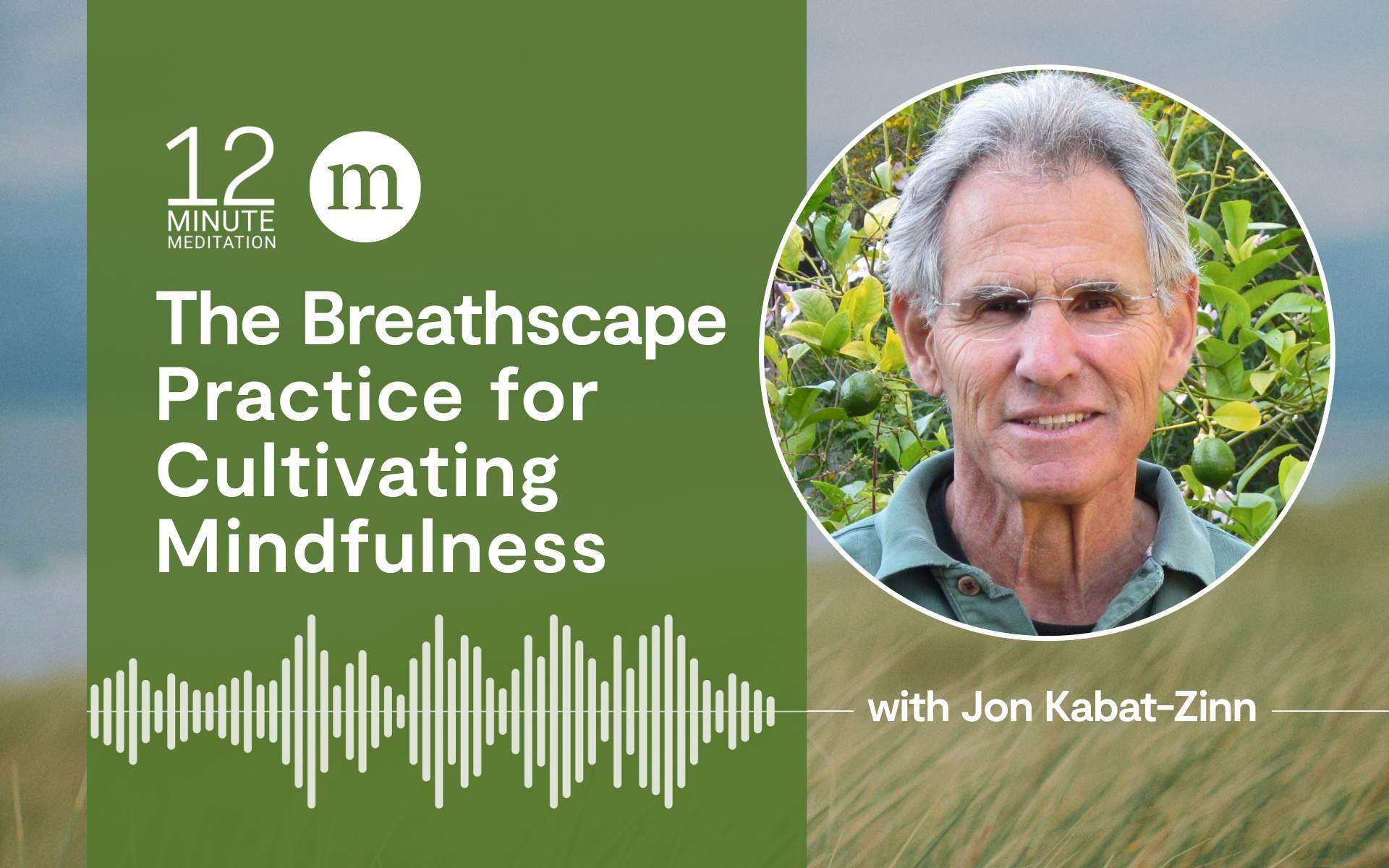
In 1979, Jon Kabat-Zinn founded the Stress Reduction Clinic at the University of Massachusetts Medical School, where he established Mindfulness-Based Stress Reduction (MBSR). At the time, Kabat-Zinn operated with little more than professional conviction and a hypothesis that contemplative practices could alleviate chronic pain and psychological suffering for patients who had exhausted conventional medical treatments.
Over the subsequent decades, MBSR evolved from a fringe clinical experiment into a global healthcare standard. The historical chronology of this movement highlights its steady institutional acceptance:
- 1979: Jon Kabat-Zinn establishes the Stress Reduction Clinic at UMass Medical School, introducing MBSR to chronic pain patients.
- 1990: Kabat-Zinn publishes his seminal work, Full Catastrophe Living, bringing mindfulness principles to the mainstream reading public.
- Early 2000s: Academic interest surges, leading to the establishment of dedicated mindfulness research centers at major universities, including Oxford, Harvard, and Stanford.
- 2010s–Present: Mindfulness principles integrate heavily into corporate wellness programs, educational curricula, military training, and clinical psychology through modalities like Mindfulness-Based Cognitive Therapy (MBCT).
Today, mindfulness is backed by thousands of peer-reviewed scientific studies documenting its structural and functional impacts on the human brain, solidifying its status as a legitimate evidence-based modality.
The Science of the Present Moment
Kabat-Zinn’s core philosophy hinges on a central paradox of human psychology: the past is accessible only through memory in the present moment, and the future can only be anticipated or planned for in the here and now. Contemporary neuroscience and psychological data strongly support the assertion that inhabiting the present moment yields measurable cognitive and physiological benefits.

According to data compiled by the American Psychological Association (APA), regular mindfulness practice correlates with significant reductions in cortisol, the primary stress hormone. Furthermore, neuroimaging studies utilizing functional magnetic resonance imaging (fMRI) have demonstrated that mindfulness meditation can alter brain structure. Specifically, regular practice is associated with decreased grey matter density in the amygdala—the region responsible for fear, anxiety, and the fight-or-flight response—and increased thickness in the prefrontal cortex, which governs higher-order functions such as executive decision-making, working memory, and emotional regulation.
The 20-minute breathscape practice designed by Kabat-Zinn leverages these neurobiological mechanisms. By directing attention exclusively to the physical sensations of breathing without attempting to manipulate or judge the breath, practitioners engage in what psychologists term "open monitoring." This cognitive exercise trains the brain to interrupt automatic ruminative loops, thereby lowering baseline stress levels and fostering greater cognitive flexibility.
Clinical and Industry Implications
The release of Kabat-Zinn’s 20-minute guided meditation arrives as institutions across multiple sectors grapple with unprecedented mental health challenges. Public health data from organizations such as the World Health Organization (WHO) indicate that anxiety and depressive disorders cost the global economy approximately $1 trillion each year in lost productivity. Consequently, employers, educational institutions, and healthcare providers are actively seeking scalable, cost-effective interventions to build psychological resilience among populations.
Healthcare economists and clinical researchers note that brief, structured meditation modules like the breathscape practice offer a highly viable public health tool. Unlike intensive therapeutic interventions that require specialized, one-on-one clinical staff, digital audio guides can be disseminated instantly to millions of individuals at minimal cost.

Workplace wellness experts point out that integrating short, intentional mindfulness breaks into the workday directly combats the cognitive fatigue associated with constant multitasking and digital distraction. Organizations that have incorporated structured mindfulness programs report measurable improvements in employee engagement, lower rates of absenteeism, and enhanced emotional intelligence among leadership teams.
Expert Perspectives and Broader Context
While mainstream adoption of mindfulness has accelerated rapidly, experts in the field frequently emphasize the importance of maintaining fidelity to the original intentions of teachers like Kabat-Zinn. In recent interviews discussing his ongoing educational initiatives—including his contributions to digital masterclasses and literary projects like Coming to Our Senses—Kabat-Zinn has consistently warned against reducing mindfulness to a mere productivity hack or a superficial stress-management tool.
Instead, advocates argue that mindfulness should be understood as an ethical framework and a profound shift in human orientation toward experience. By engaging in practices that require no external agenda other than radical presence, individuals cultivate qualities of wisdom, compassion, and patience that extend far beyond personal well-being, positively influencing interpersonal relationships and community dynamics.
Future Outlook for Mindfulness Research

As research into contemplative science continues to mature, future scientific inquiries are expected to focus on personalized mindfulness interventions, long-term longitudinal studies on aging and cognitive preservation, and the integration of digital therapeutics into mainstream healthcare systems.
As practitioners and researchers alike continue to navigate an increasingly complex global landscape, resources such as Jon Kabat-Zinn’s 20-minute breathscape meditation serve as vital anchors. By offering a structured, scientifically grounded, and accessible pathway back to the present moment, these tools reinforce the enduring relevance of ancient wisdom translated for the modern world.