
 Indra Kusuma
The luxury hospitality sector is undergoing an unprecedented transformation, with five of the world’s most distinguished hotel brands extending their renowned land-based experiences to the high seas and tranquil rivers. Aman, Four Seasons, Ritz-Carlton, Waldorf Astoria, and the legendary Orient Express are pioneering a new era of ultra-luxury cruising, launching bespoke, residential-style mega-yachts and river vessels designed to offer hyper-curated intimacy and unparalleled service. This strategic pivot transcends mere market expansion; it represents a meticulous, fluid translation of each brand’s unique architectural identity, spatial design philosophy, and six-star hospitality into a marine environment, achieved through deep collaborations with leading architecture and interior design experts who are reimagining marine design from the keel up. Industry analysts view this movement as a significant redefinition of luxury travel, signaling a shift towards highly personalized, intimate, and design-centric voyages that cater to the discerning ultra-high-net-worth individual (UHNWI) seeking exclusive experiences.
The New Frontier of Luxury Travel: A Market in Motion
The global luxury travel market, valued at over $1 trillion annually, continues to exhibit robust growth, driven by a demographic of affluent travelers prioritizing experiential journeys over conventional tourism. Within this segment, luxury cruising has emerged as a particularly attractive niche, projected to grow significantly in the coming years. This growth is fueled by a desire for privacy, bespoke services, and unique destinations that traditional cruise lines often cannot accommodate. As such, the entry of these iconic hotel brands into the maritime domain is not merely opportunistic but a calculated response to evolving consumer preferences and a strategic move to capture a larger share of the expanding experiential luxury market. These ventures are designed to offer an alternative to both large-scale cruise ships and private superyacht charters, blending the best of both worlds: the curated itineraries and amenities of a luxury cruise with the intimacy and exclusivity of a private yacht.
Pioneering the Seas: Brand-Specific Deep Dives
Each brand is bringing its distinct identity to the water, offering ambitious yacht concepts that reveal a fascinating future for luxury cruising. The common thread is an unwavering commitment to design excellence, personalized service, and an intrinsic connection to the marine environment.
Four Seasons Yachts: Mid-Century Glamour and Ocean Immersion
Four Seasons Yachts launched its maiden voyage with Four Seasons I in March 2026, setting a new benchmark for ocean luxury. Inspired by the golden age of yachting, the vessel hosts approximately 200 guests in just 95 all-suite accommodations, emphasizing quality over capacity. Ben Trodd, CEO of Four Seasons Yachts, articulated the brand’s guiding principle: "Rather than focusing on maximizing capacity, we focused on maximizing the quality of the guest experience. From the beginning, we were inspired by the golden age of yachting and a desire to create a deeper connection to the sea." The design subtly nods to iconic vessels like Christina O, weaving maritime-inspired details throughout.
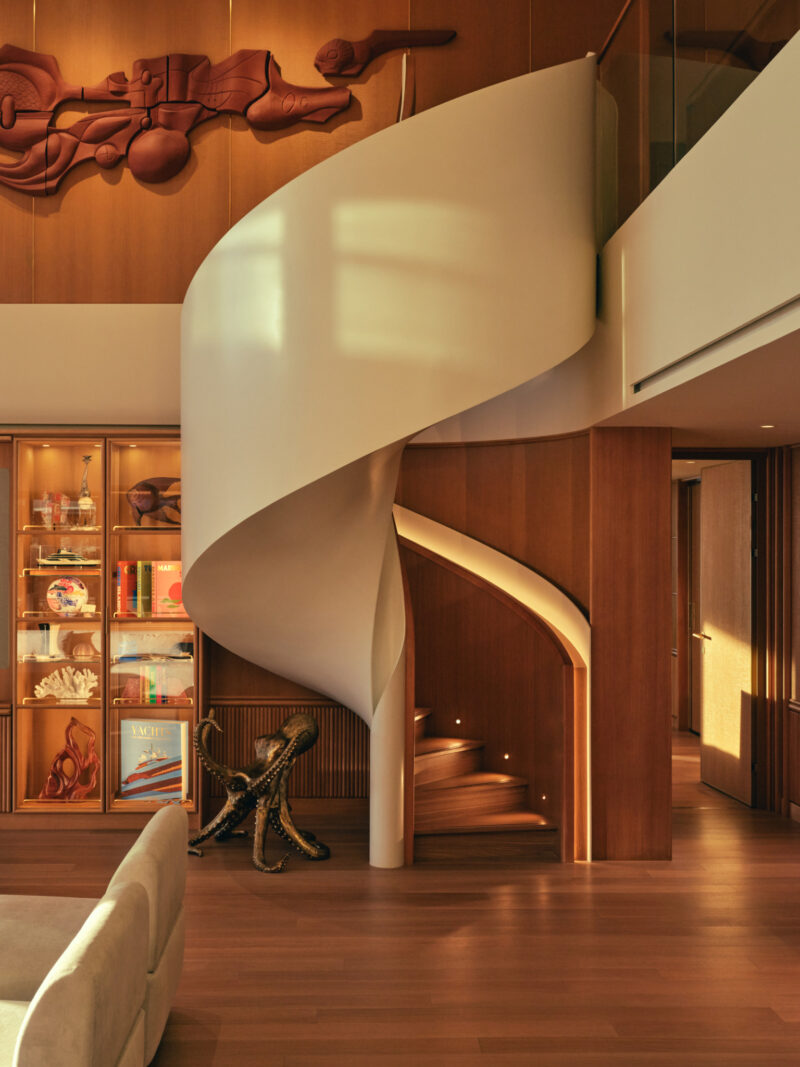
Collaborating with Fincantieri, Tillberg Design of Sweden, MBDS, and Prosper Assouline, Four Seasons has achieved a residential philosophy at sea. The suites boast generous scale, expansive private terraces, and the absence of interior rooms, creating the feel of an elegant private residence. A significant engineering innovation involved routing the yacht’s structural support beams through its interior core, freeing the hull for expansive, uninterrupted floor-to-ceiling glass walls. This ensures panoramic ocean views from every vantage point, reinforcing the brand’s desire to keep guests intimately connected to the sea. Handcrafted details abound, from intricate mosaic work inspired by classical and contemporary art to a Nautilus-inspired spiral staircase, serving as a sculptural centerpiece. Curated displays of books, objects, and artifacts by Prosper Assouline further personalize the suites. A sister ship, Four Seasons II, is slated for a 2028 debut, offering an even more intimate experience with 79 suites.
Orient Express Sailing Yachts: Cinematic French Minimalism and Sustainable Innovation
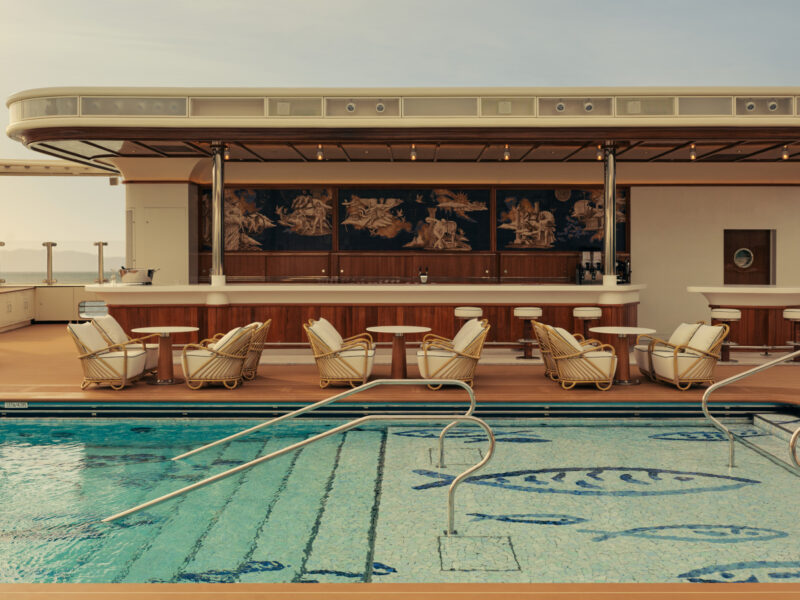
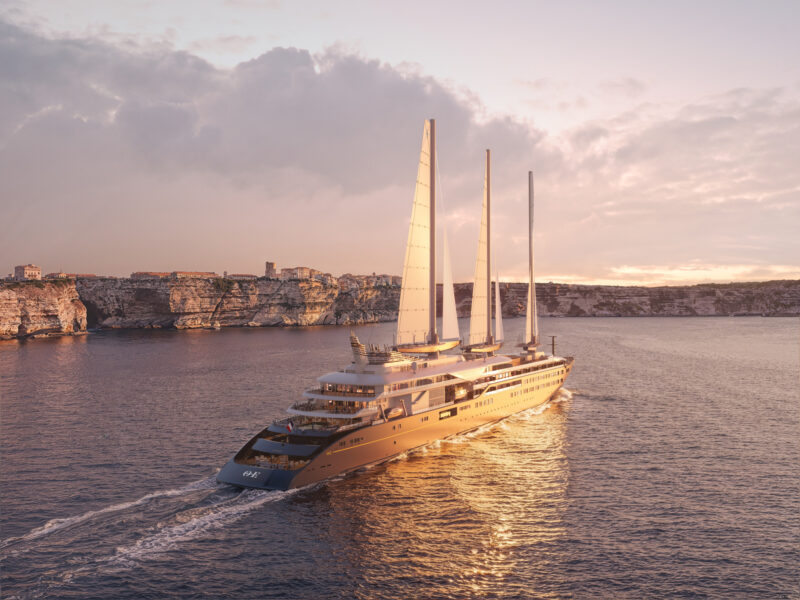
Echoing the grandeur of classic ocean liners and its legendary trains, Orient Express extended its legacy into yachting with the launch of the Corinthian in June 2026. This 220-meter vessel blends the intimacy of a superyacht with the romantic legacy of an iconic ocean liner, hosting a maximum of 110 guests across 54 suites. Maxime d’Angeac, artistic director of Orient Express, stated, "The objective was to remain faithful to a certain idea of travel, its rhythm, refinement, and continuity, and transpose it into life at sea while maintaining a constant dialogue between the interior, exterior, and movement."
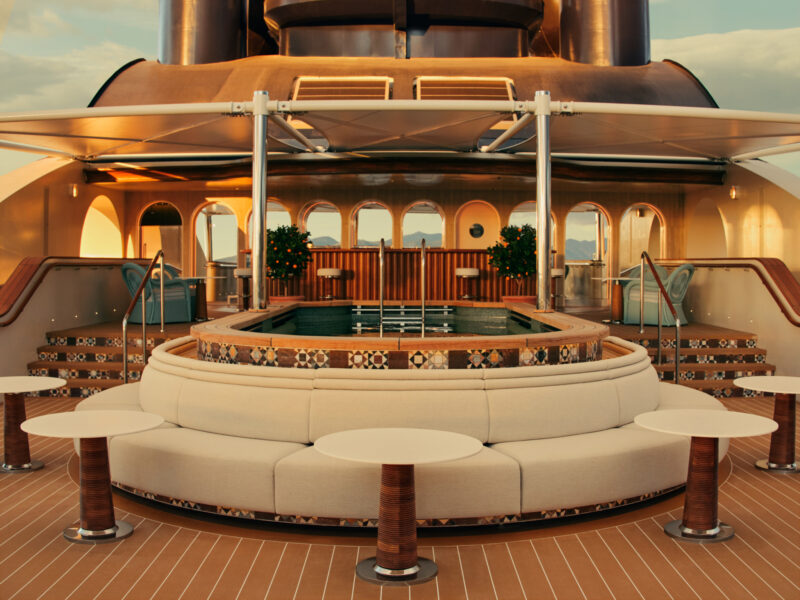
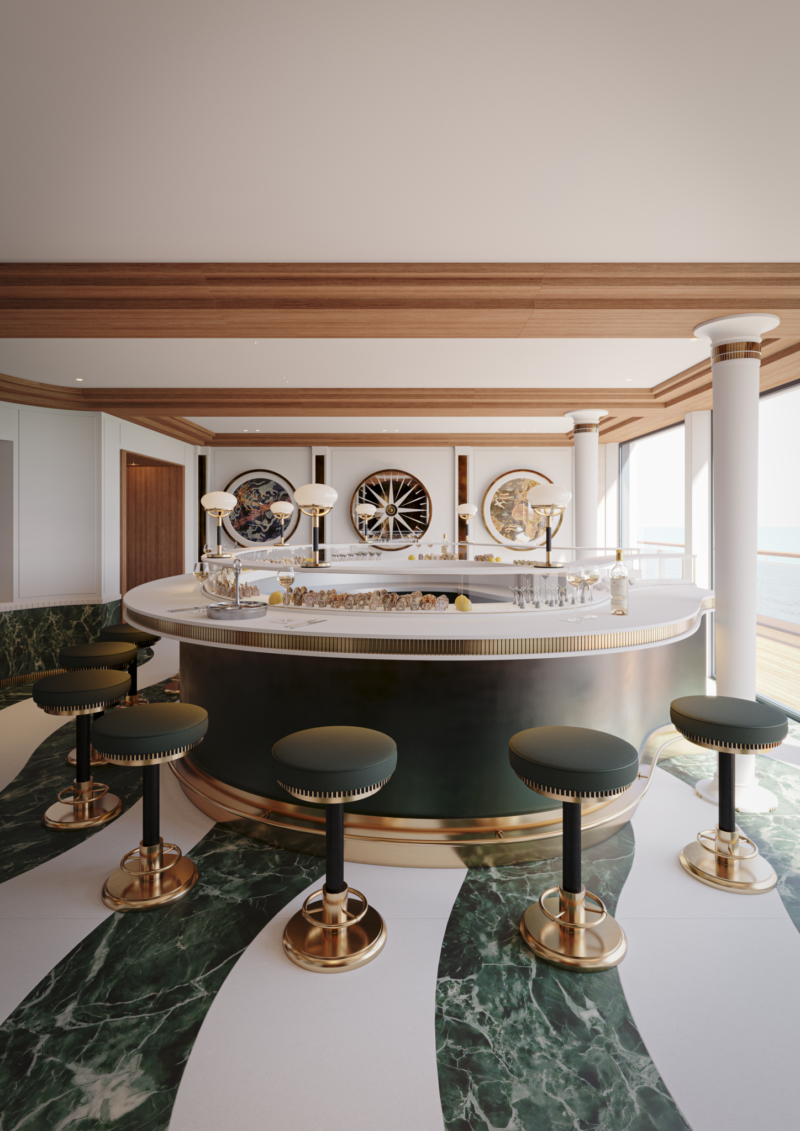
The Corinthian is defined by a disciplined architectural language focused on proportion, clarity, and spatial composition, rather than mere decorative style. Its design draws deeply from the Orient Express brand’s unique vision of travel, expressed through exquisite architecture, craftsmanship, and meticulous attention to detail. The relationship between light and the horizon is paramount, with interiors precisely framing and accompanying the maritime experience. A defining feature is its naval engineering by Chantiers de l’Atlantique, which relies primarily on wind propulsion through SolidSail technology, utilizing three carbon-fiber masts supporting rigid sails, complemented by LNG-hybrid engines for sustainable power. This innovative approach places it in a different relationship to movement, silence, and the sea compared to traditional cruise formats. Interiors feature a palette of warm neutrals, polished woods, marble, and rich textiles, reinforcing a commitment to French craftsmanship through bespoke furnishings, custom carpets, and sculptural lighting. The yacht’s champagne bar, L’Encre, with its deep green veined marble and polished brass, exemplifies a contemporary interpretation of Art Deco.
Aman at Sea: Restrained Ryokan Minimalism and Exclusive Wellness
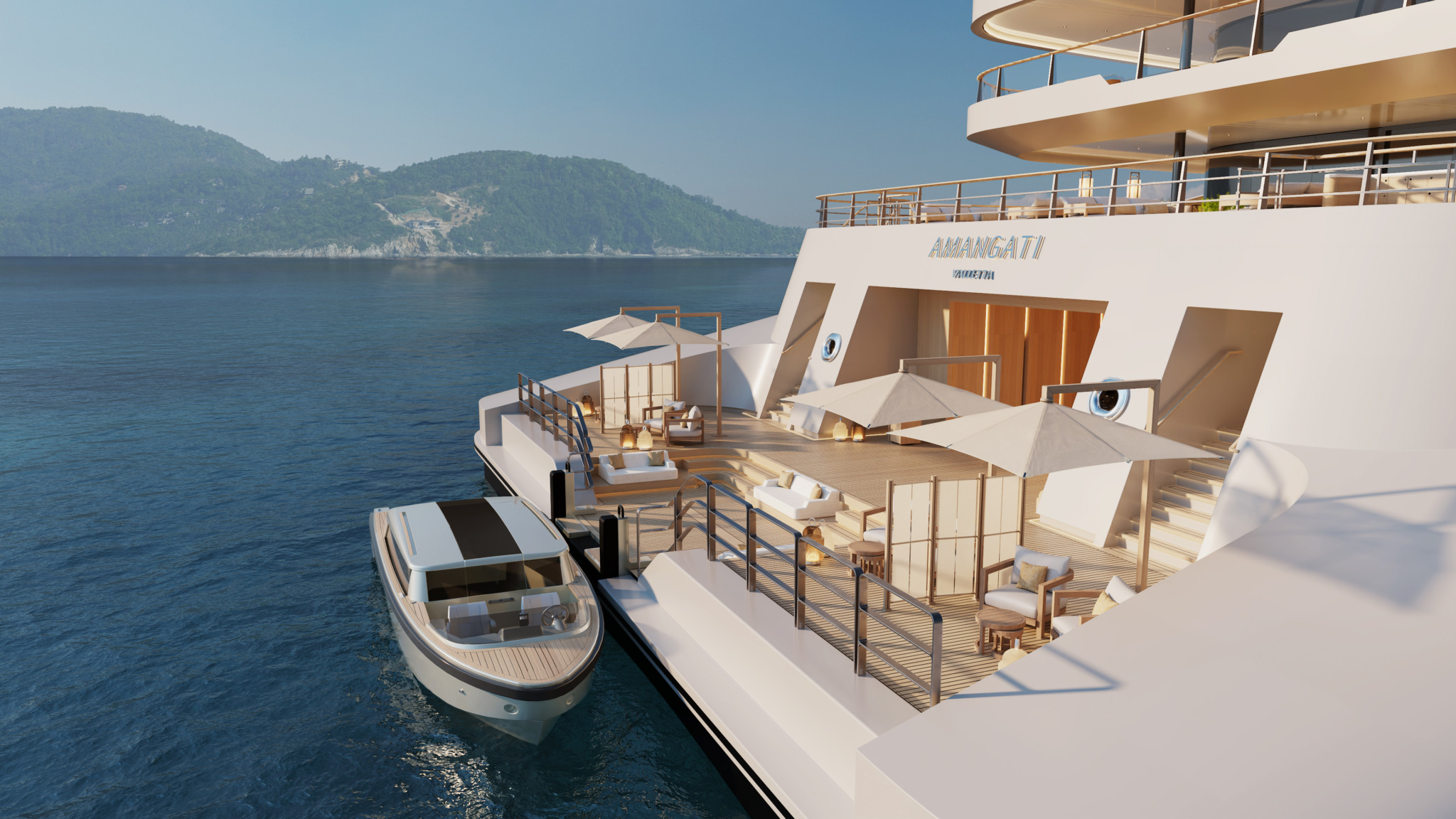
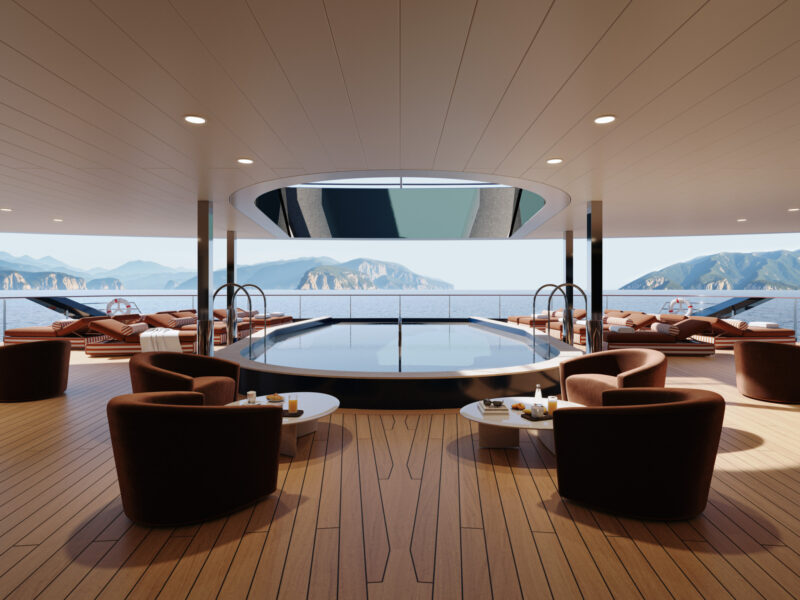
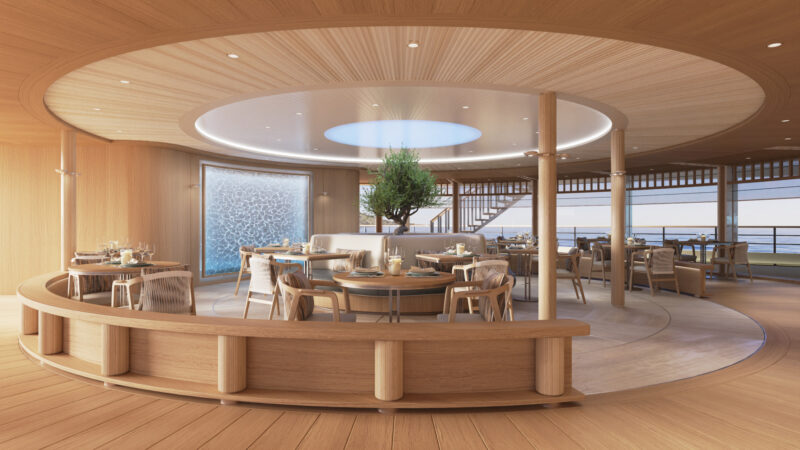
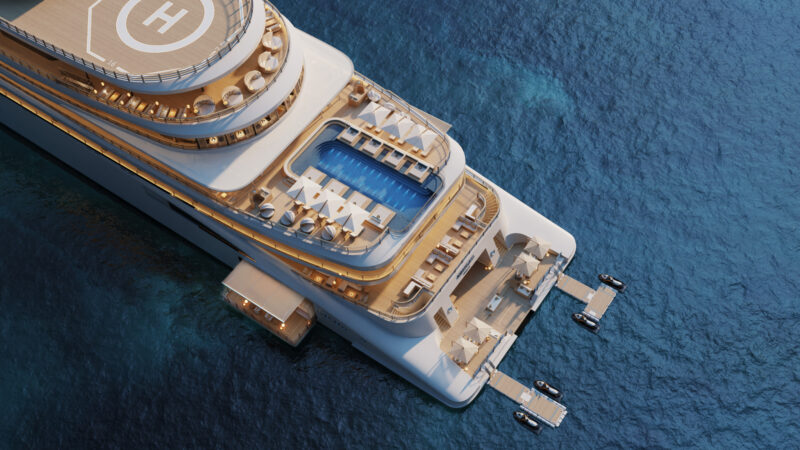
Aman is set to offer one of the most exclusive guest experiences with the spring 2027 launch of Amangati (Sanskrit for "peaceful motion"). This 183-meter motor yacht, spanning nine decks, welcomes just 94 guests across 47 expansive, ocean-facing suites, boasting a two-to-one staff-to-guest ratio. Designed to function as a floating private retreat, Amangati operates on hybrid diesel-electric propulsion, prioritizing quiet operation as a core element of the onboard experience.
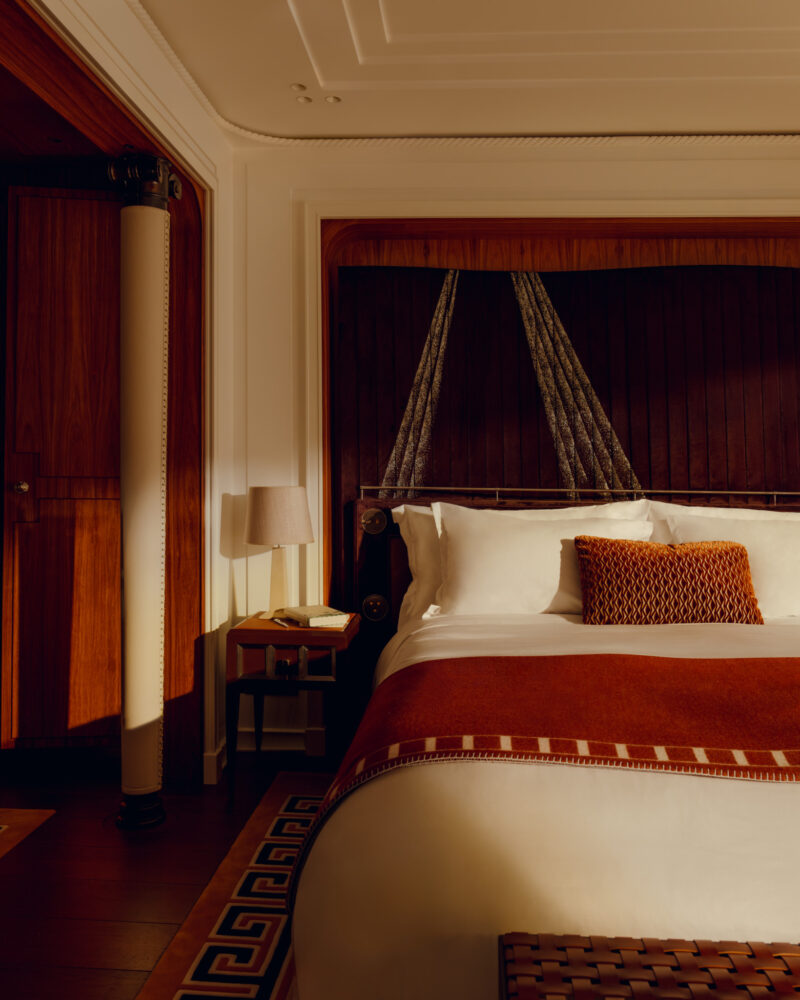
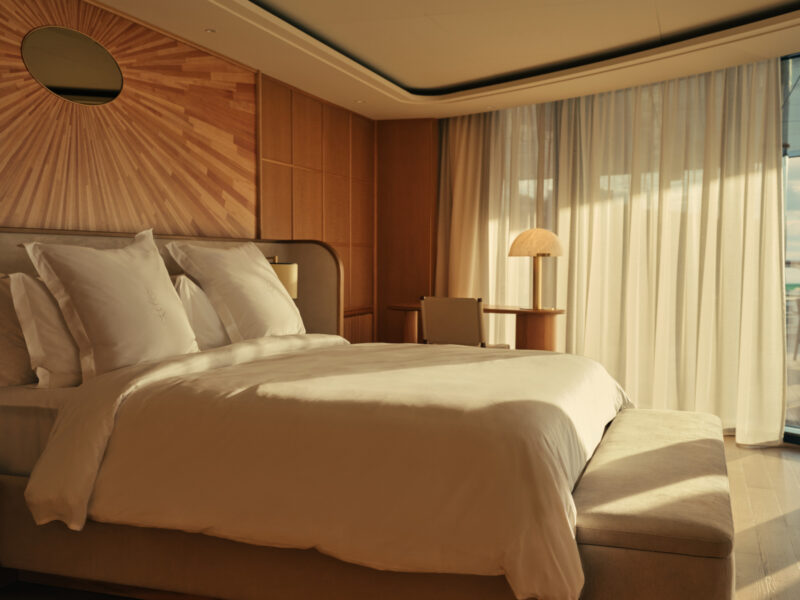
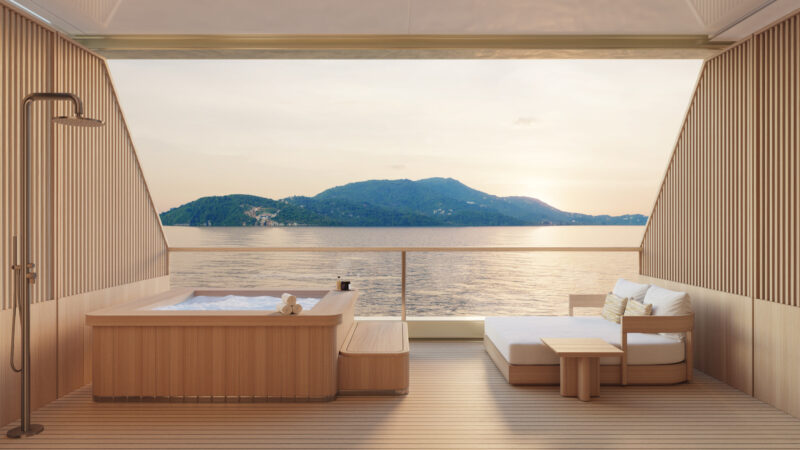
The project addresses a perceived gap between traditional cruising and private superyacht charters, offering a more personal travel experience. Aman partnered with Sinot Yacht Architecture & Design for interiors and T. Mariotti S.p.A. for construction, translating its architectural language—particularly the minimalist principles of the Japanese ryokan—through Sinot’s Scandinavian design sensibility. Suites are conceived as private sanctuaries with soaring 2.5-meter ceilings, full-height glass walls, and expansive private terraces. A material palette of ash wood, eucalyptus and sen woods, travertine, hand-carved glasswork, and woven linens reinforces the yacht’s restrained aesthetic.
Central to Amangati is the Aman Spa, spanning over 11,000 square feet, featuring eight ocean-facing treatment suites, each with a private terrace and whirlpool. Jonathan Wilson, CEO of Aman at Sea, emphasized: "Wellness has always been woven into the fabric of every Aman property—not as an amenity, but as a philosophy. The opportunity to realize that at sea, with genuine space and without compromise, was central to the design of Amangati from the outset, creating a destination in itself." Beyond wellness, the yacht offers four distinct dining venues, expansive outdoor gathering spaces, two helipads, and a fleet of limousine tenders. The retractable Selora Marina transforms the stern into a waterside lounge, deepening the connection between the yacht and the sea.
Ritz-Carlton Yacht Collection: Yacht-Club Sophistication and Curated Experiences
The Ritz-Carlton was among the first major luxury hospitality brands to venture into maritime luxury, launching its Yacht Collection with Evrima in 2022, followed by Ilma in 2024, and Luminara in 2025. This fleet embraces a residential, contemporary aesthetic inspired by private yacht clubs, deliberately moving away from the scale of traditional cruise ships. Evrima accommodates 298 guests, Ilma 448, and Luminara 452, allowing for a more intimate experience. Public spaces are designed to feel like those of a private yacht, with a strong emphasis on comfort and craftsmanship.
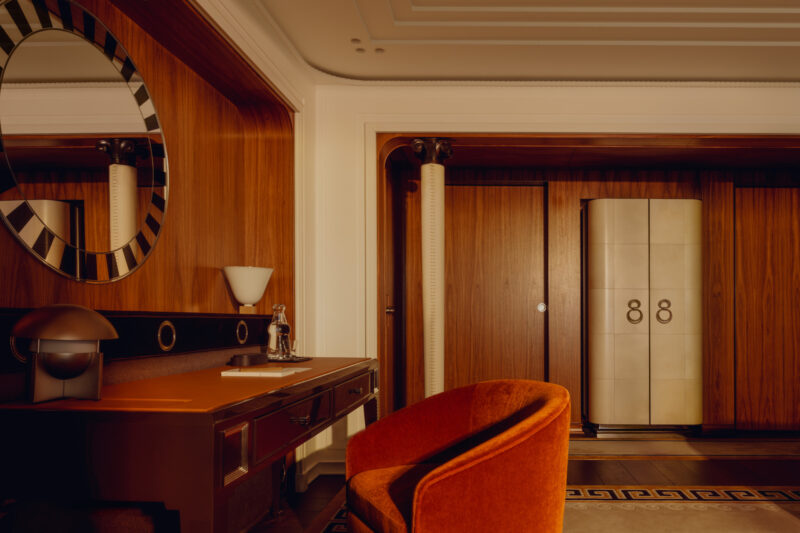
The brand translates its land-based luxury through residential-style interior design, using an organic material palette of rich walnut finishes, Italian Arabescato Corchia stone, and Emperador marble. They bypassed commercial cruise suppliers, sourcing pieces from high-end residential furniture brands like Minotti, Giorgetti, and Poltrona Frau. Collaborations with Helsinki-based Aivan for the exterior, AD Associates for interiors (with creative direction by Chapi Design), and DPA for lighting design underscore this commitment. Each yacht possesses a unique design narrative reflected in its name, interiors, and art collection. Luminara (Latin/Italian for light) features 731 artworks, including a seven-deck light sculpture, The Pharos, and Alfhild Külper’s six-story textile installation, Path to Light. Evrima (Greek for discovery) emphasizes exploration with cozy social spaces and an expansive marina. Ilma (Maltese for water) draws on Malta’s mythology and coastline, seamlessly blending interior and exterior spaces. The collection aims for guests to experience an effortless connection to the world around them, feeling as if they are aboard a private yacht.
Waldorf Astoria River Vessel: Grand-Hotel Glamour on the Nile
Waldorf Astoria has chosen a distinctive path, focusing its maritime venture on the historic Nile River with the Waldorf Astoria Nile River Experience, slated to debut in late 2026. This five-deck river vessel features just 29 suites, deliberately limiting passenger count to differentiate itself from traditional river cruise lines. It is positioned as a floating boutique hotel, offering slow, immersive travel between Luxor and Aswan, translating its signature hospitality into a highly private maritime setting.
This venture distinguishes itself by embracing heritage. While peers lean into contemporary residential design, Waldorf Astoria draws on its identity as a grand luxury institution. The design team interpreted the brand’s hotel heritage for a moving hull, resulting in interiors with a richly layered palette of wood finishes, marble surfaces, polished metals, and warm neutral tones that evoke understated grandeur. The ultimate design statement is a reinterpretation of Peacock Alley—the iconic, Art Deco-inflected social heart of Waldorf Astoria’s land properties—reimagined as a sun-drenched river lounge. Framed by panoramic glass windows, the design seamlessly bridges classic elegance with a sophisticated sense of place, allowing the ancient Egyptian landscape to become a living gallery wall. The result is a river vessel that feels unmistakably Waldorf Astoria while remaining deeply connected to one of the world’s most historic waterways.
Architectural Identity and Design Philosophy: A Seamless Translation
A unifying theme across these luxury maritime ventures is the meticulous effort to translate each brand’s unique architectural identity and design philosophy from land to sea. This involves more than just decorating; it’s about rethinking marine design from the keel up. Collaborations with renowned architects, naval engineers, and interior designers are critical. The focus is on creating "residential-style" environments that eschew the conventional cruise ship aesthetic in favor of spaciousness, privacy, and an intimate connection with the water. Floor-to-ceiling glass, expansive private terraces, and open-plan layouts are recurrent design elements, all engineered to maximize ocean or river views and integrate the natural surroundings into the guest experience. The selection of materials—from rich woods and marbles to bespoke textiles and handcrafted details—is chosen to evoke the same sense of quality, craftsmanship, and timeless elegance found in their land-based properties.
Market Dynamics and Strategic Implications: Reshaping the Luxury Travel Landscape
The entry of these powerful brands into the yachting and river cruising segments carries significant implications for the broader luxury travel market.
- Target Audience: These ventures are explicitly targeting UHNWIs and affluent travelers who value exclusivity, privacy, and highly personalized service. The smaller passenger capacities and emphasis on bespoke experiences cater directly to this demographic, which often finds traditional cruising too crowded or impersonal.
- Competitive Landscape: This move intensifies competition within the ultra-luxury travel sector, challenging existing small-ship luxury cruise lines and potentially drawing customers away from private yacht charters. The brand recognition and global reach of these hotel giants provide a formidable advantage.
- Economic Impact: The construction and operation of these mega-yachts represent substantial investments, stimulating the shipbuilding industry, marine technology sectors (especially for sustainable propulsion), and a vast ecosystem of luxury suppliers, from furniture makers to art curators.
- Sustainability in Luxury Maritime Travel: The focus on hybrid propulsion (Aman, Orient Express) and other eco-conscious design elements highlights a growing trend within luxury travel towards sustainability. As environmental concerns become paramount for discerning travelers, these brands are positioning themselves at the forefront of responsible luxury. While the carbon footprint of such large vessels remains a consideration, the emphasis on cleaner technologies and smaller guest counts aims to mitigate impact compared to mass-market cruise ships.
The Future of Experiential Journeys: Redefining Expectations
These ambitious projects are more than just new additions to the luxury travel portfolio; they are pioneering a new paradigm. By blurring the lines between private yachting, boutique hotels, and experiential travel, these brands are setting new benchmarks for exclusivity, design, and personalized service at sea. The emphasis on slow travel, immersive cultural experiences, and deep connections to the destination—whether a remote ocean cove or the ancient banks of the Nile—reflects a profound understanding of what the modern luxury traveler truly desires. As these vessels set sail, they are not just offering voyages; they are curating transformative journeys that redefine the very essence of luxury travel, promising an era where the destination is not just visited, but intimately experienced through the lens of unparalleled hospitality and exquisite design.







