Pranda Michaela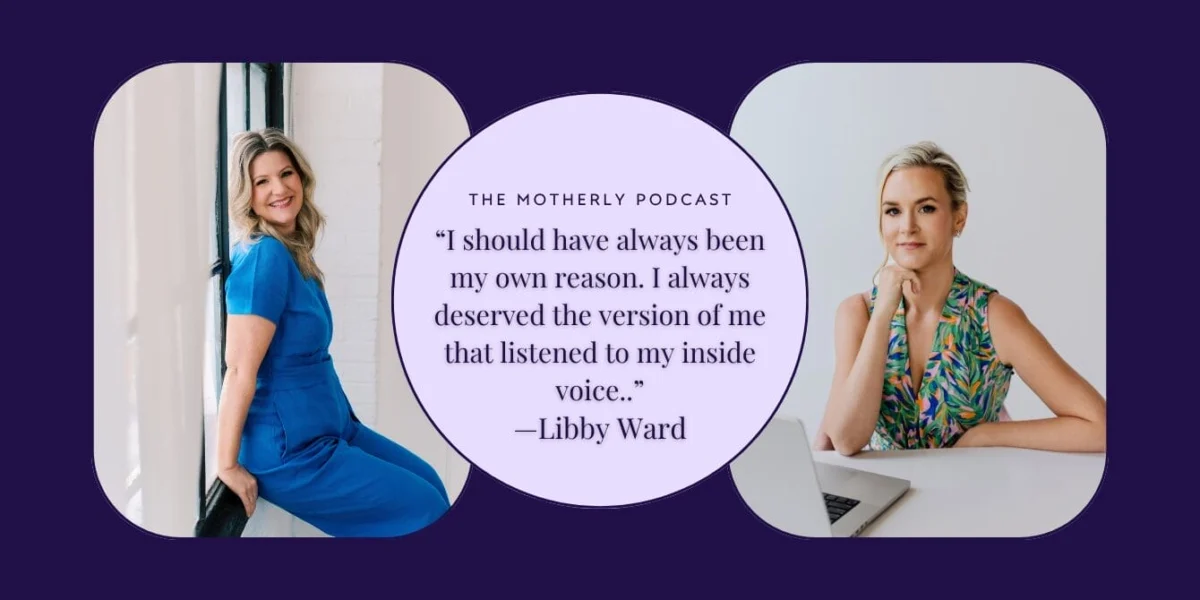
Libby Ward, a prominent voice who garnered millions of followers by candidly sharing the raw realities of motherhood—the frustrations, the exhaustion, and the relentless pressure to be everything at once—is embarking on a new chapter. Known for her unflinching honesty as @diaryofanhonestmom, Ward has now transitioned to using her own name, Libby Ward, to launch her debut memoir, "Honest Motherhood: On Losing My Mind and Finding Myself." This pivotal shift signifies a deeper dive into her personal journey, moving beyond the collective experience of motherhood to explore her individual path toward self-discovery and healing.

The memoir chronicles Ward’s life from a challenging childhood through the throes of postpartum depression, the pervasive experience of "mom rage," a late-in-life diagnosis of ADHD, and her subsequent, often nonlinear, journey toward self-acceptance and recognition. In a recent conversation on The Motherly Podcast with host Liz Tenety, Ward elaborated on the evolution of her platform and the profound personal revelations that shaped her book. Her story resonates with a significant demographic of mothers grappling with similar internal and external pressures in contemporary society.

The Genesis of "Honest Motherhood"
Initially, Ward’s intention was to pen a sociological exploration of motherhood, drawing from her observations, research, and the shared experiences of her vast online community. However, the overwhelming feedback from those around her, urging her to share more of her personal narrative, prompted a significant pivot. "The more I wrote, the more the people around me kept saying, ‘Your stories are incredible. You need to tell more of your own story,’" Ward recounted. This encouragement, coupled with the palpable sense of freedom she experienced when writing from her own lived experiences compared to academic or observational writing, solidified her decision. "It didn’t feel like a choice I made so much as the thing it was always meant to be," she reflected.

This transition marks a significant moment in the landscape of online maternal advocacy, where authenticity and vulnerability have become cornerstones. Ward’s evolution from a persona to a personal brand reflects a broader trend of individuals seeking deeper, more authentic connections with their audiences, particularly in spaces that often demand curated perfection.

The Shift from External Validation to Internal Worth
A central theme in Ward’s narrative, and a significant turning point in her journey, is the realization that her initial motivation for seeking help was misguided. She initially sought therapy and embarked on a path of healing with the primary goal of becoming a better mother for her children. "When motherhood broke me and I finally went to therapy, I did it because I wanted to be a better mom," she explained. Her aim was to be more regulated and present for her children, to heal for their sake.

However, the process of writing "Honest Motherhood" brought about a profound shift in perspective. Ward discovered that the most crucial reason for her healing should have always been herself. She came to understand that she deserved to honor her inner voice, prioritize her own needs, and treat herself as an individual of inherent worth, independent of her role as a mother. "What I discovered in writing the book is that I should have always been my own reason. I always deserved to listen to my inside voice, to care about my own needs, to treat myself as someone who mattered—not just because I was a mom, but because I was a person," Ward stated. This realization highlights a common struggle among mothers, who often place their children’s needs above their own, sometimes to their detriment.

Pivotal Moments of Awakening
Ward shared two powerful anecdotes that served as critical wake-up calls, forcing her to confront the unsustainable weight she was carrying. The first incident involved a chaotic late-night scene with her young children, where a simple task of packing shoeboxes for a charity event became a stark symbol of her internal state. As the boxes spilled out of her SUV in the cold, Ward recognized the stark contrast between her outward appearance of competence and her inner turmoil: "I was on the ground in the cold trying to repack them, and I just thought: this is me. I have this shiny facade. Everyone thinks I’ve got it together. But I am absolutely shattered inside." This moment illuminated the performative aspect of her life and the immense effort required to maintain a facade of having everything under control.

The second, perhaps more visceral, moment occurred during a particularly stressful morning commute with her young children. Her son, struggling with speech delays, was crying, and her daughter was being disruptive. In a surge of overwhelming frustration, Ward slammed on the brakes and let out a guttural scream. The profound impact of this outburst was witnessing the unadulterated fear on her children’s faces—a reaction she had never seen directed at her before. "When I came down from it, I saw fear on their faces. A fear I’d never seen directed at me before. The shame just washed over me. Everything I’d been holding in came flooding out," she described. This experience was a catalyst, forcing her to confront the emotional toll of suppressing her true feelings and the unsustainable nature of her efforts to maintain a perfect exterior. It led her to a critical reevaluation of the kind of mother she wanted to be, moving away from performance and towards authentic presence.

Deconstructing the Myth of the Ideal Mother
Ward’s work consistently challenges the pervasive and damaging "myth of the ideal mother." She argues that this idealized image is not only unattainable but actively harmful to mothers and their families. "It’s called a myth because it’s literally not possible," Ward asserted. She detailed the contradictory expectations placed upon mothers: the demand to be perpetually patient and kind while simultaneously ensuring children are perfectly behaved; the pressure to breastfeed while returning to work shortly after childbirth; the expectation to be a playmate, household manager, cook, and cleaner, all while maintaining a cheerful demeanor.

This relentless pressure is exacerbated by the sheer volume of information and conflicting advice mothers receive today, a phenomenon unprecedented in previous generations. "Our brains were never meant to process this much while also carrying everything. The reason it feels hard is because it actually is hard," she emphasized. The damage lies in the internalization of these impossible standards, leading to feelings of inadequacy, guilt, and burnout. Ward suggests that a critical step in dismantling this myth is recognizing that "none of us can actually do it all," which then allows for permission to let go of certain expectations. Furthermore, she points out that the pursuit of this ideal often stems from a lack of self-trust, developed from years of prioritizing external validation over internal needs.

The Practice of Honesty: A Granular Approach
Ward distinguishes honesty not as an abstract concept but as a practical, moment-to-moment practice. She describes it as "the practice of just stopping yourself in the moment and telling yourself the truth." This involves acknowledging one’s immediate emotional and physical state. For instance, when faced with a child’s tantrum, honesty entails recognizing the parental feeling of being triggered, while also acknowledging the objective reality of the situation—that there is no immediate danger.

This granular approach extends to daily routines. Ward advocates for using tools like journaling to gain clarity on one’s actual tasks, energy levels, and emotional state. "What’s actually on my list? How did I sleep? What am I feeling?" she poses as questions to consider. By laying out these truths, mothers can begin to identify what can be delegated, what can be done imperfectly, and where support can be sought. This process moves away from grand, overnight transformations towards incremental, sustainable changes rooted in self-awareness and self-compassion.

The Impact of an Adult ADHD Diagnosis
Ward also shared the significant impact of her adult ADHD diagnosis. She admitted that she had never considered the possibility, having only understood ADHD as a condition affecting young boys. Even her prior experience as an educational assistant for children with ADHD did not lead her to recognize the signs in herself. It was through online content that she began to suspect. After consulting with a psychiatrist, the diagnosis was clear, leading to a mix of difficulty and profound liberation.

"It gave me so much more compassion for myself," Ward revealed. She now understands that the inherent challenges of motherhood, particularly its monotonous aspects, are genuinely more difficult for her brain due to her neurodivergence. This diagnosis has provided a framework for understanding her experiences and has fostered a greater sense of self-acceptance. The validation that comes with naming and understanding a condition can be a powerful step toward healing and self-compassion, especially for women who have long navigated life without a clear explanation for their struggles.

Rebranding: Embracing Authenticity
The decision to rebrand from @diaryofanhonestmom to her given name, Libby Ward, was a deliberate step towards greater authenticity and a broader scope of her work. Ward explained her motivation: "I woke up one day and I was like, ‘I will die if I have to talk about motherhood for the rest of my life.’" While she remains deeply committed to supporting mothers, she recognized that her own growth and evolving interests necessitated a wider platform.

She felt it was incongruent to advocate for mothers to be their "full selves" while remaining confined to a single identity. "I can’t be the person who says ‘you deserve to be your full self’ while I’m standing inside a box," she articulated. This rebranding, though perhaps not the most strategic from a marketing perspective, was a necessary act of self-honesty. It allows her to explore a wider range of conversations and connect with a broader audience, signaling that mothers are multifaceted individuals with lives and identities beyond their maternal roles.

The Takeaway from "Honest Motherhood"
Ward’s overarching hope for readers of "Honest Motherhood" is that they will feel less alone and, more importantly, realize that profound change is possible. She wants to convey that the overwhelming feelings of burnout, exhaustion, and rage do not have to be a permanent state. Her own journey, while non-linear and messy, demonstrates that healing and self-discovery are achievable.

Her final message is one of empowerment: "The answers you’re looking for are already inside you. They’re not in a self-help book. They’re not from your favorite influencer. You actually have what you need. You just have to start telling yourself the truth." This sentiment underscores the core of her message—that true transformation begins with radical self-honesty and the courage to listen to one’s own inner wisdom. The book serves as a testament to this philosophy, offering a roadmap for mothers to navigate their own complex journeys toward becoming more fully themselves.