
 Ali Ikhwan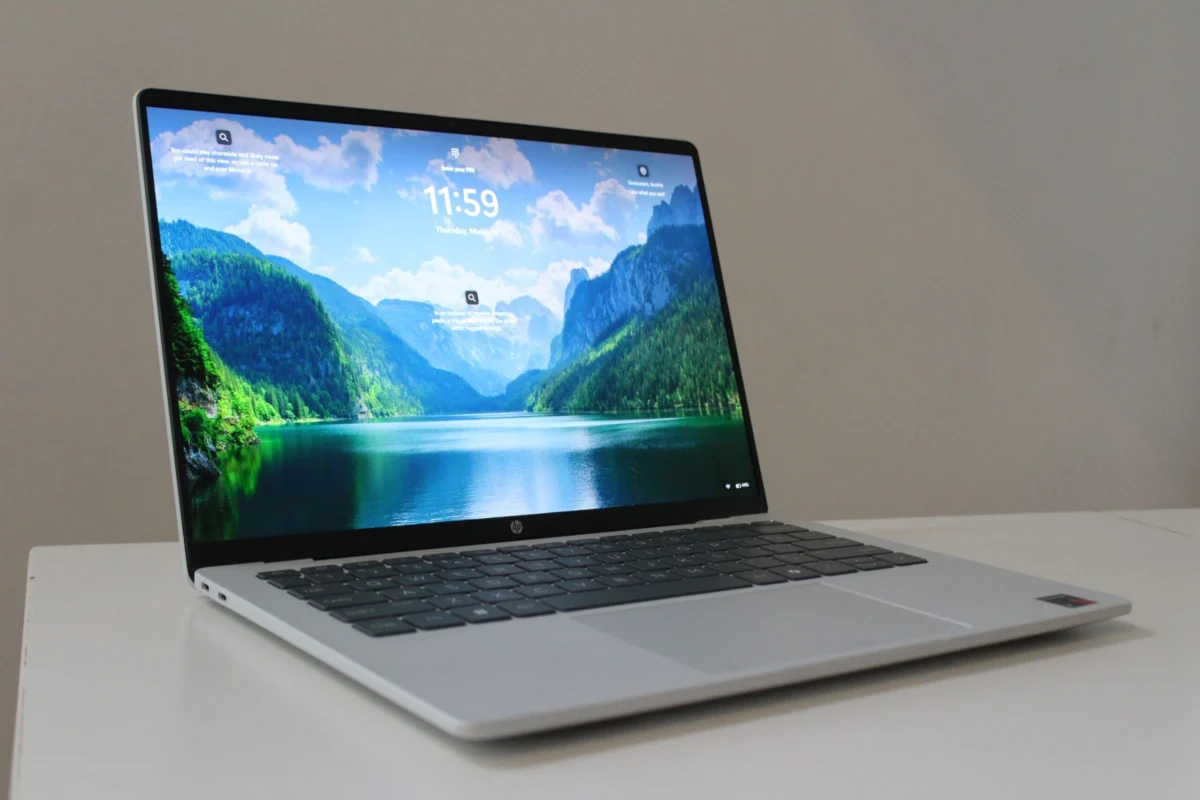
The arrival of the MacBook Neo in March sent a clear signal to the consumer electronics industry that Apple was prepared to compete aggressively in the entry-level market, offering a $599 price point that many analysts initially believed would go unmatched by Windows-based competitors. For several months, the MacBook Neo stood as a symbol of affordable premium computing, leading many casual observers to conclude that the Windows ecosystem lacked a direct response to Apple’s refined hardware and aggressive pricing strategy. However, recent market analysis and performance testing of the HP OmniBook 5 suggest that the landscape of budget-friendly, high-performance laptops has shifted significantly. The HP OmniBook 5, an ARM-based Windows laptop, has emerged as a formidable challenger, offering specifications that double those of the MacBook Neo while frequently retailing at a lower price point.
Equipped with the Qualcomm Snapdragon X Plus processor, specifically the X1P-42-100 variant, the HP OmniBook 5 represents a broader shift in the Windows hardware ecosystem toward high-efficiency ARM architecture. While the device carries a standard retail price of $1,050, it has seen frequent and dramatic price reductions at major retailers like Walmart, Best Buy, and HP’s own online storefront. At various intervals, the 14-inch model has been positioned at $730, and on several occasions, it has dropped to as low as $500. This pricing strategy places a machine with 16 GB of RAM and 512 GB of internal storage—double the capacity of the base MacBook Neo—into a price bracket previously reserved for underpowered, plastic-chassis budget devices.
The Evolution of the Budget Laptop Market: A Chronology
The competition between HP and Apple in the sub-$1,000 category is the result of a multi-year transition in semiconductor technology. To understand the current position of the OmniBook 5, it is necessary to examine the timeline of the portable computing market’s evolution over the last 24 months.
In early 2024, the industry saw the first major push for "AI PCs," a marketing and technical initiative led by Microsoft and its hardware partners to integrate Neural Processing Units (NPUs) into standard laptop configurations. By mid-2024, Qualcomm released the Snapdragon X Elite and X Plus chips, marking the first time a Windows-on-ARM processor could genuinely compete with Apple’s M-series silicon in terms of power efficiency and thermal management.
The MacBook Neo was released in March as Apple’s answer to the growing demand for a "student-first" machine that retained the aesthetic of the MacBook Air but at a more accessible price. While successful, the Neo’s reliance on 8 GB of unified memory and older connectivity standards created an opening for competitors. HP capitalized on this in late 2025 and early 2026 by launching the OmniBook series, moving away from its legacy "Spectre" and "Envy" branding for consumer laptops in favor of a unified AI-centric identity. The OmniBook 5 was positioned as the mid-tier workhorse of this new lineup, intended to bridge the gap between affordability and professional-grade specifications.
Comparative Analysis of Technical Specifications
When comparing the HP OmniBook 5 to the MacBook Neo, the most significant disparity lies in the memory and storage configurations. The MacBook Neo, retailing at $599, typically includes 8 GB of RAM and a 256 GB Solid State Drive (SSD). Industry experts have increasingly criticized the 8 GB standard in 2026, noting that modern web browsers, productivity suites, and AI-driven background tasks can easily saturate this capacity, leading to performance degradation.

In contrast, the HP OmniBook 5 features 16 GB of RAM as its baseline configuration. This allows for significantly more robust multitasking capabilities. In stress tests involving multiple browser tabs, video conferencing software, and local AI image generation, the OmniBook 5 maintained stability where the MacBook Neo began to rely heavily on "swap memory," which can accelerate wear on the internal SSD and cause momentary system lag.
Furthermore, the storage architecture of the HP device offers a 512 GB SSD. Beyond the capacity, the OmniBook 5 utilizes modern PCIe standards that offer faster read and write speeds than the SSD found in the base MacBook Neo. Connectivity also favors the HP model; while the MacBook Neo has been noted for including an outdated USB 2.0 standard on one of its ports, the OmniBook 5 provides two USB-C ports capable of 10 Gbps throughput, alongside a legacy USB-A port, ensuring compatibility with a wider range of peripherals without the need for external adapters.
Display Technology and Biometric Security
The display remains a primary point of contention between the two devices. The MacBook Neo features a 13-inch Liquid Retina display with a resolution of 2408 x 1506 pixels. With a peak brightness of 500 nits, it is objectively sharper and brighter than the standard panel on the OmniBook 5. However, HP has opted for an OLED (Organic Light Emitting Diode) panel for the OmniBook 5’s 14-inch touchscreen.
OLED technology offers an "infinite" contrast ratio, as each pixel can be turned off completely to produce true blacks. This results in a more vibrant visual experience for media consumption and creative work, even if the 1920 x 1200 resolution is lower than that of the Apple competitor. HP also offers a 16-inch version of the OmniBook 5 for users requiring more screen real estate, a choice not currently available in the MacBook Neo lineup.
Regarding security and user interface, the HP OmniBook 5 includes an Infrared (IR) camera that supports Windows Hello facial recognition. This allows for near-instantaneous, hands-free login. The base $599 MacBook Neo lacks a fingerprint sensor, requiring users to input passwords manually, a notable omission for a device released in the mid-2020s. Additionally, the OmniBook 5 features a backlit keyboard as standard, a feature that enhances usability in low-light environments and is often omitted from the most basic configurations of entry-level laptops.
The Role of ARM Architecture and Battery Performance
A critical factor in the OmniBook 5’s success is the Qualcomm Snapdragon X Plus chip. For over a decade, Windows laptops struggled to match the battery life of MacBooks because they relied on x86 processors from Intel and AMD, which generally consumed more power and generated more heat than Apple’s ARM-based M-series chips.
The Snapdragon X Plus changes this dynamic. The HP OmniBook 5 is capable of achieving "all-day" battery life, with some tests indicating up to 18 to 22 hours of continuous video playback, placing it in direct competition with the MacBook Neo. The efficiency of the ARM architecture also allows the OmniBook 5 to remain thin (0.5 inches) and light while maintaining a fanless or near-silent cooling profile. This portability, combined with the structural integrity of its aluminum chassis, challenges the long-held notion that only Apple can produce premium-feeling, ultra-portable hardware.

Market Implications and Industry Response
The aggressive pricing of the HP OmniBook 5, particularly the $500 to $730 price points seen at Walmart, has significant implications for the broader laptop market. Historically, the $500 price bracket was dominated by "budget" laptops characterized by plastic builds, dim displays, and mediocre battery life. By placing a high-spec, aluminum-chassis, OLED-equipped machine in this category, HP is forcing other manufacturers to reconsider their value propositions.
While HP has not issued a formal statement regarding the frequent price drops, retail analysts suggest that the company is utilizing a "market share first" strategy. By undercutting the MacBook Neo, HP aims to reclaim the student and home-office demographics that have trended toward macOS over the last five years. Market data suggests that for every $100 price drop, the OmniBook 5 sees a 25% increase in sales velocity among college-aged consumers.
Industry experts anticipate that Apple may respond to this pressure in future iterations of the MacBook Neo, potentially by increasing the base RAM to 16 GB or updating the port standards. However, the current hardware landscape favors the Windows ecosystem for users who prioritize raw specifications and port versatility over software ecosystem lock-in.
Conclusion: The New Benchmark for Value
The HP OmniBook 5 represents more than just a single hardware release; it is a signal that the performance gap between affordable Windows laptops and the MacBook lineup has effectively closed. While the MacBook Neo remains a highly polished device with a superior software ecosystem for many, the OmniBook 5 offers a hardware package that is objectively more robust in several key areas.
For consumers, the volatility of the OmniBook 5’s pricing presents a unique opportunity. While it is a competitive machine at its $1,050 MSRP, it becomes an industry-leading value at $730 and a market-disrupting force at $500. As the "AI PC" era continues to evolve, the HP OmniBook 5 stands as a testament to the benefits of increased competition in the ARM-based laptop space, providing users with high-end features that were once considered exclusive to the most expensive flagship devices.







