Indra Kusuma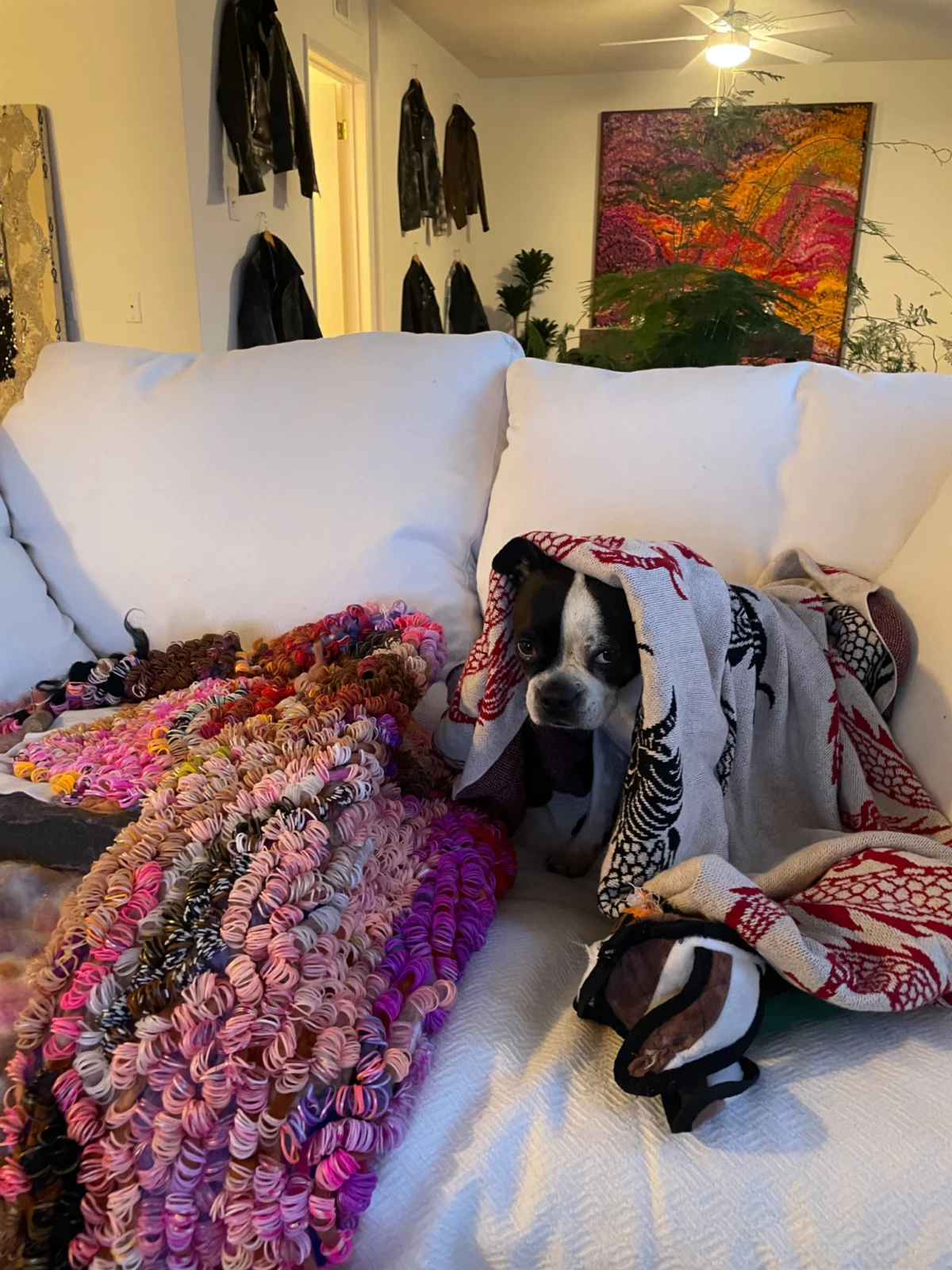
The trajectory of a multidisciplinary artist is rarely a linear path, yet for Los Angeles-based creator Hannah Buechler, the evolution from a childhood spent experimenting in a home garage to a professional career at the intersection of high fashion and fine art has been marked by a consistent dedication to tactile exploration. A graduate of the Savannah College of Art and Design (SCAD) with a degree in fibers, Buechler has spent the better part of the last decade cultivating a unique visual language that bridges the gap between structured corporate design and the free-form, emotive nature of contemporary collage.
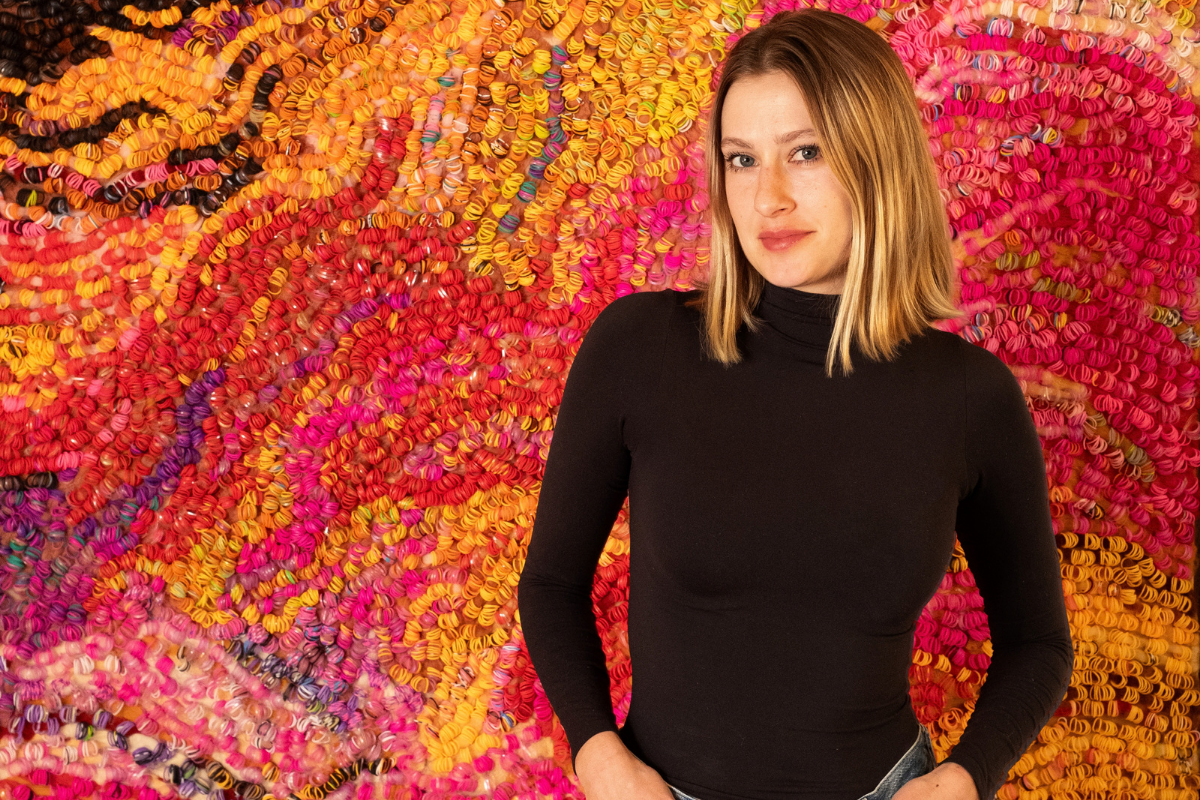
Buechler’s creative identity is deeply rooted in the material world. As the daughter of a scientist, her approach to art is inherently analytical, characterized by an obsessive investigation into the properties, origins, and structural potential of her chosen mediums. Whether working with resin, embroidery, or custom-made textiles, her practice is defined by a desire to transform simplicity into complexity through repetitive, rhythmic gestures. This commitment to craftsmanship has not only informed her studio practice but has also served as a cornerstone of her professional role at the apparel company Libertine, where she has served as a senior designer since 2021, specializing in pattern development, screenprinting, and complex digital graphics.
A Chronology of Creative Development
The foundation of Buechler’s work can be traced back to her early adolescent years, when she first identified the act of creation as her primary vocation. This realization transitioned into formal training at SCAD, where she developed the technical proficiencies that would later define her signature tactile collages.

Following her academic tenure, Buechler began the process of balancing professional obligations with a dedicated studio practice. In 2019, she produced significant works such as Wild Like the West Texas Winds, a gouache painting that signaled her interest in the interplay between organic shapes and structured pattern-making. This period also saw the development of her experimental ethos, including the "Freshman 25" project—a long-term archival effort involving the collection and thermal manipulation of approximately 100 food packaging units—which highlights her interest in the intersection of consumer waste and fine art.
By 2021, her career reached a significant milestone with her appointment at Libertine. The role provided a platform to refine her skills in surface design within a high-pressure commercial environment. Simultaneously, Buechler continued to expand her independent portfolio, culminating in the 2022–2025 development of her large-scale work, Cosmos. This period of productivity, often occurring during periods of personal isolation or environmental crisis, demonstrates the resilience required to maintain a dual-track career as both a corporate creative and an independent artist.

Technical Methodology and Material Innovation
Buechler’s methodology is best understood through the lens of material manipulation. In works such as Alaska (2022), she demonstrated a sophisticated understanding of structural integration. Commissioned as a response to a specific narrative—the documentation of a catch via the Japanese Gyotaku technique—the piece required an 11-month gestation period. To display the intricate beadwork on the reverse side of the textile, Buechler employed laser-cut plexiglass and industrial-grade fishing line, effectively turning the frame itself into a functional element of the artwork.
This reliance on non-traditional materials extends to her "loom band" series, which utilizes felt and wool to create dense, textured surfaces that evoke a sense of weight and history. Her 2025 works, Palisade and Contemplation, serve as case studies in how environmental stressors—specifically the Los Angeles wildfires—can dictate both the aesthetic palette and the thematic focus of an artist’s output. Palisade, for example, serves as a chromatic record of fire, utilizing black, gray, and white to represent the atmospheric conditions of the Santa Monica Mountains during the disaster, punctuated by vibrant, localized color shifts to signify the immediate threat.

The Influence of Anatomy and Memory
The influence of Buechler’s upbringing, particularly her exposure to the biological sciences, remains a recurring motif in her work. The incorporation of skeletal and anatomical forms—inspired by an actual human skeleton present in her childhood home—functions as a bridge between the clinical nature of science and the expressive potential of textiles.
In her piece The Weight of Memory, Buechler intentionally departed from her typical "freestyle" approach to create a deliberate, planned representation of the human skull. This shift underscores a broader trend in her practice: the tension between fluid, intuitive creation and rigid, disciplined planning. By forcing herself to move away from the fluid improvisation that characterizes her loom band works, she achieved a synthesis of form and texture that emphasizes the "weight" of human experience.

Broader Impact and Professional Implications
The career trajectory of Hannah Buechler offers a compelling case study for contemporary artists operating within the modern creative economy. By successfully navigating a 9-to-5 corporate environment while simultaneously building an eponymous studio, she embodies a model of "creative sustainability."
Industry experts often note that the crossover between fashion design and fine art is a fertile ground for innovation. Buechler’s work with screenprinting and digital graphics at Libertine informs the layered complexity of her physical collages, while the tactile, hands-on nature of her studio work prevents the stagnation often associated with purely digital design. Her ability to synthesize these two worlds—the commercial and the conceptual—suggests a growing trend toward "hybrid careers" in the design industry.

Furthermore, Buechler’s commitment to archival preservation and the use of personal history as a narrative vehicle—seen in the naming of her works after song titles, family quotes, and geographical markers—connects her work to the broader tradition of autobiography in contemporary art. Her stated goal to transition toward a full-time independent practice reflects the ambitions of many mid-career artists who utilize corporate stability as a launchpad for professional autonomy.
Future Directions and Philosophical Stance
As Buechler looks toward a future where she intends to prioritize her studio practice, the implications for her work are significant. The move toward larger, more representational installations suggests a scaling of her artistic ambitions. The success of Cosmos, which evolved from a small-scale textile experiment into a 63-by-48-inch multidisciplinary installation, proves that her methodology is capable of sustained growth.

Her inspirations—ranging from the heavy metal and electronic compositions of Electric Light Orchestra and Candlemass to the structural rigor of Alexander McQueen’s theatrical fashion—provide a diverse, if eclectic, framework for her future projects. By maintaining a balance between the rigid constraints of her corporate design roles and the uninhibited experimentation of her studio work, Buechler continues to push the boundaries of what is possible within the realm of fiber art.
The intersection of her personal life, her professional expertise, and her material-focused philosophy creates a robust foundation for her continued influence in the art world. Whether through the preservation of sentimental objects, the rigorous study of anatomical forms, or the translation of environmental trauma into tangible textile works, Buechler remains a figure of note for those observing the convergence of craft, design, and personal narrative in the 21st century. Her story serves as a reminder that the most compelling art often emerges not from a vacuum, but from the deliberate, patient accumulation of experience, technique, and a relentless curiosity regarding the world’s physical components.