rifanmuazin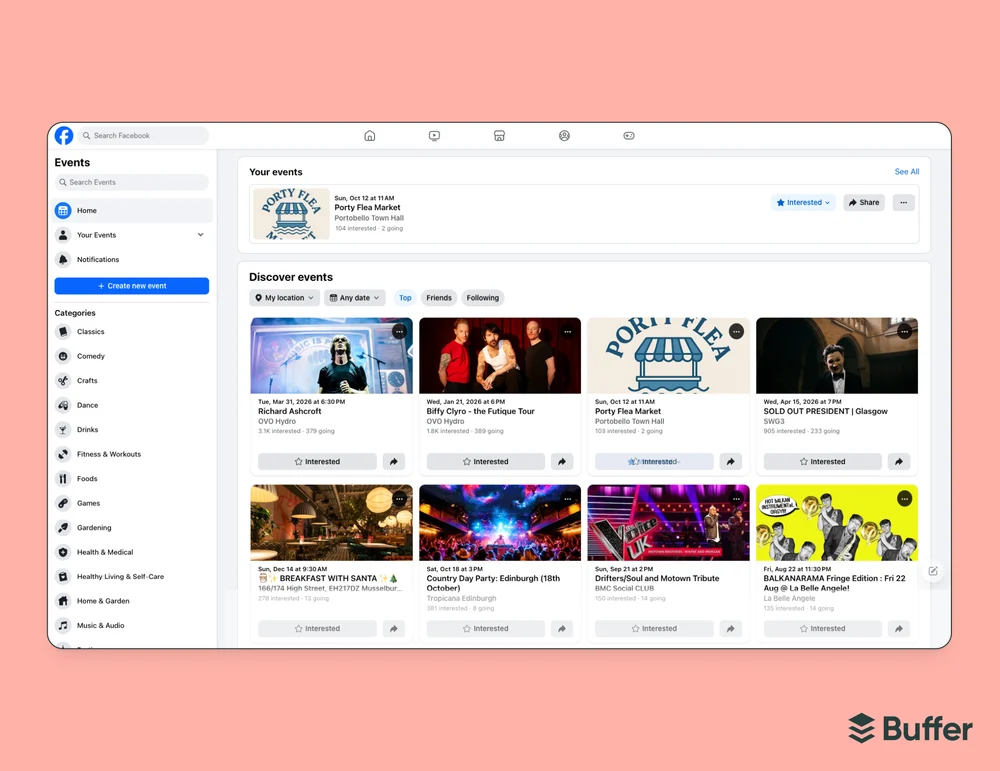
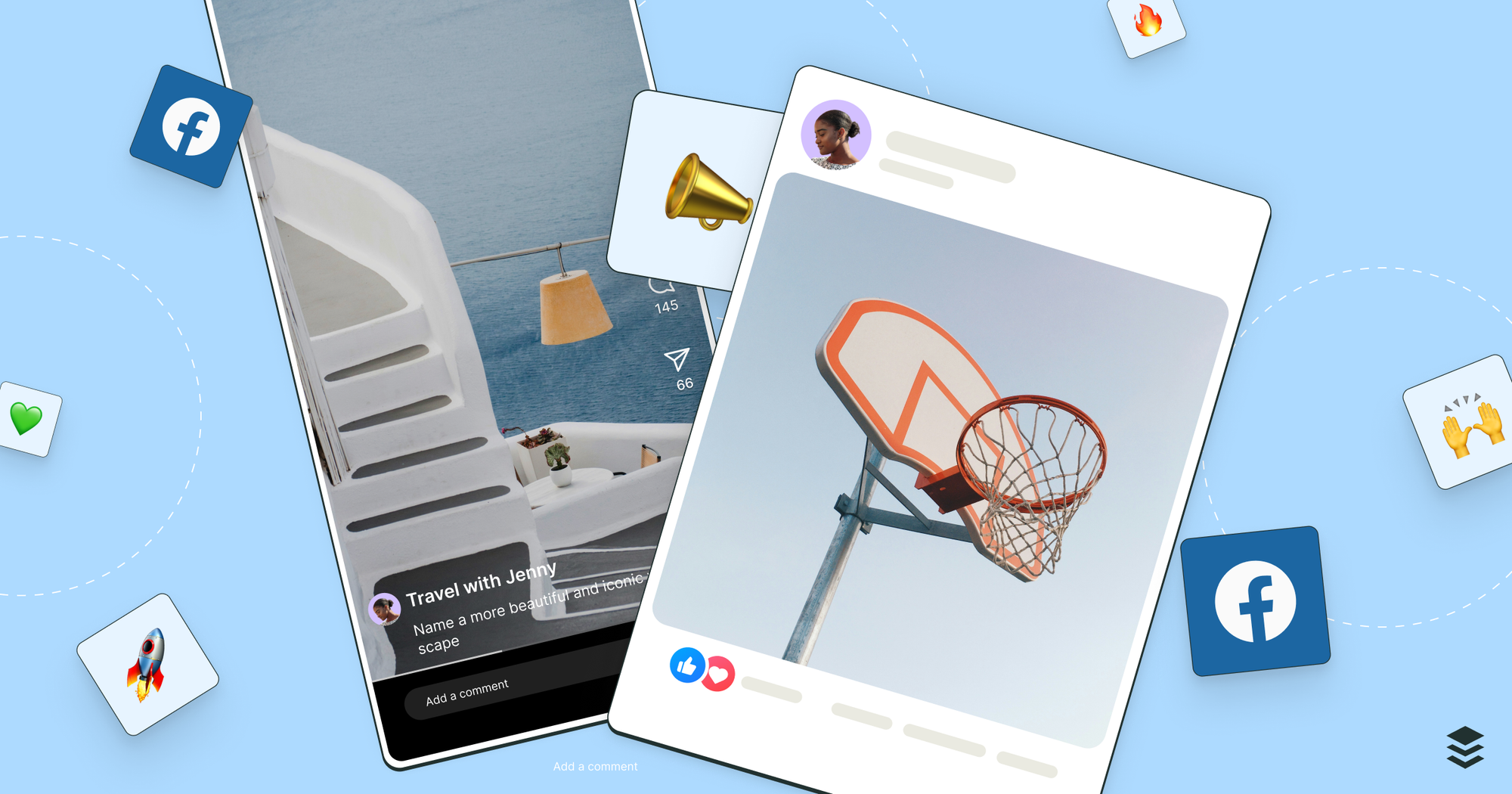
Despite persistent narratives suggesting its decline among younger demographics and shifts in algorithmic preferences, Facebook continues to stand as a formidable marketing platform for creators and small businesses in 2026. Its expansive global reach, adaptable content formats, and integrated engagement tools underscore its enduring utility in a highly competitive digital ecosystem. Industry experts affirm that for brands targeting specific generational cohorts or niche communities, Facebook remains a crucial arena for fostering authentic conversations and driving measurable results, provided strategic approaches are employed.
The Enduring Relevance of a Digital Giant
Facebook’s longevity and adaptability have allowed it to defy predictions of obsolescence. While the platform has certainly seen demographic shifts—with younger users diversifying across newer social media channels—its core user base of Millennials, Gen X, and older demographics remains highly engaged. With over 3 billion monthly active users globally, Facebook represents an unparalleled audience pool. This extensive reach is complemented by sophisticated targeting capabilities, enabling marketers to precisely identify and engage with desired consumer segments.
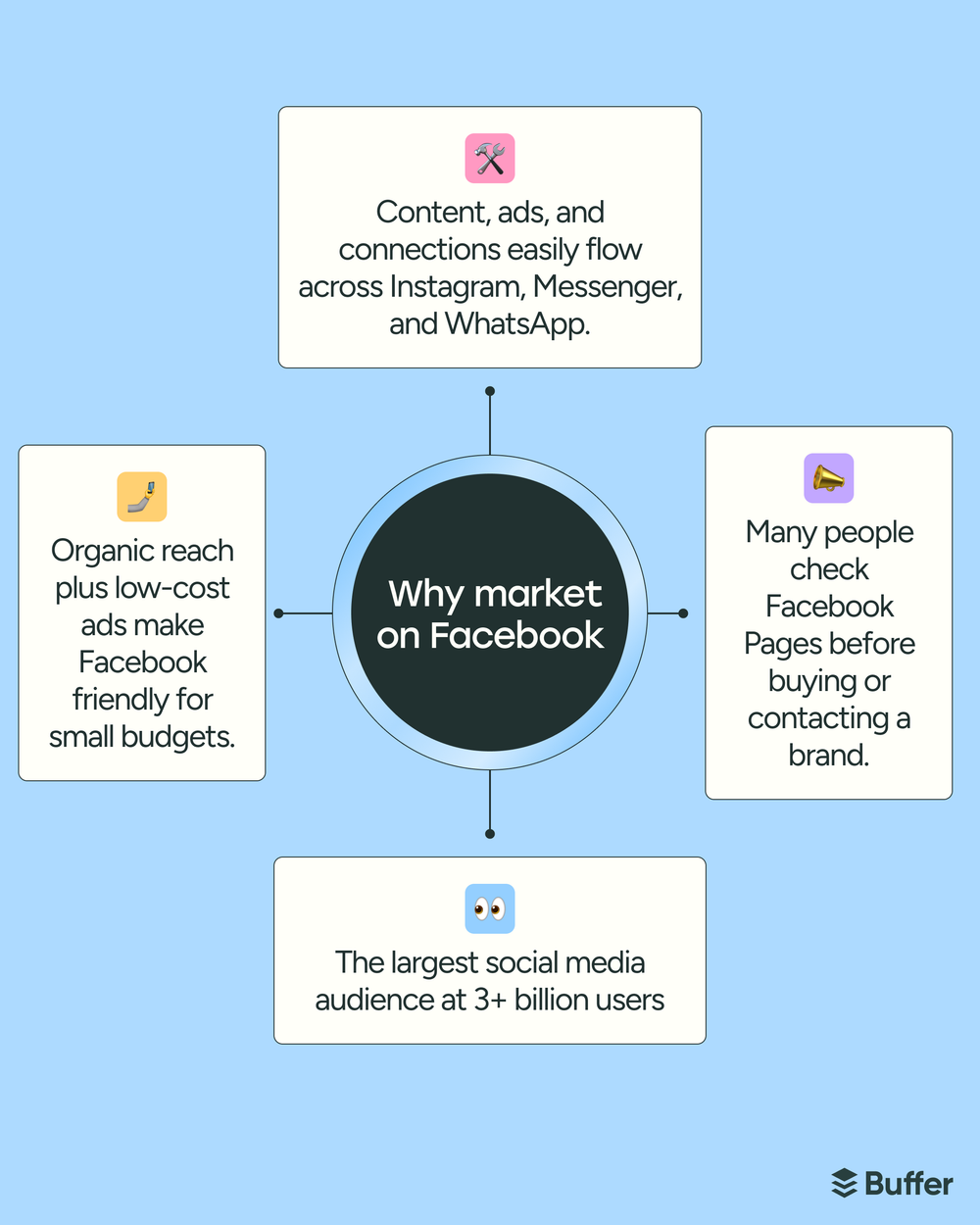
"For brands targeting Millennials, Gen X, or niche communities, Facebook is where real conversations are still happening," states Cashé Collocott, founder of Kidd Digital, a boutique social media agency. "Effective engagement requires a strategic presence and an understanding of the platform’s current dynamics." This sentiment is echoed by marketers who leverage Facebook for brand building and audience connection, emphasizing that success hinges on mastering its evolving functionalities.
Defining Facebook Marketing in the Current Era
Facebook marketing encompasses the strategic utilization of Meta’s suite of tools—including business pages, advertising solutions, community groups, short-form Reels, and Stories—to achieve diverse objectives such as brand development, audience connection, sales generation, and follower growth. For creators, small business owners, and marketing professionals, Facebook functions as a multifaceted digital hub, integrating a storefront, community forum, and word-of-mouth network within a single, scrollable interface.
A robust Facebook marketing strategy involves a clear roadmap outlining content types, target demographics, posting frequency, and key performance indicators (KPIs) such as engagement rates, click-throughs, direct messages, and sales conversions. Such a strategy ensures consistent brand visibility and prevents the platform from becoming an underutilized asset.
Strategic Advantages of Facebook Marketing in 2026
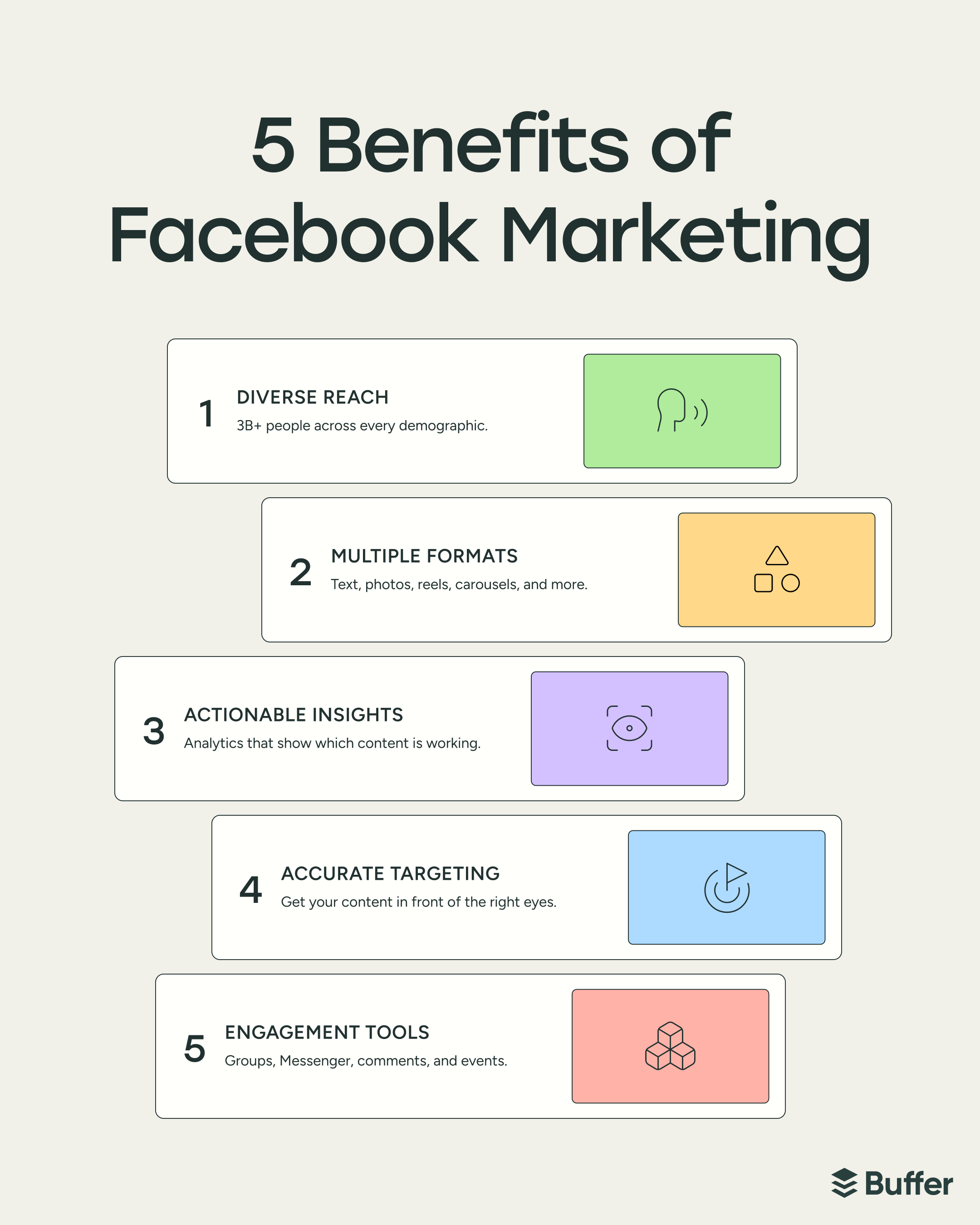
Facebook’s continued efficacy in 2026 can be attributed to several core benefits:
-
Massive and Diverse Global Reach: Facebook maintains its position as the world’s most-used social network. This vast user base offers unparalleled opportunities for businesses to connect with new customers across virtually any demographic, whether targeting local communities or global audiences, and catering to a wide array of interests.
-
Precision Audience Targeting: Meta’s advanced targeting tools allow advertisers to filter audiences based on interests, behaviors, geographical location, and even significant life events. This precision ensures that marketing content reaches individuals most likely to be receptive, optimizing ad spend and content relevance.
-
Versatile Content Formats: The platform supports a comprehensive range of content types, including long-form posts, carousels, video, Stories, and Reels. This versatility enables marketers to choose formats that best suit their message and audience preferences, without the necessity of utilizing every available option.
-
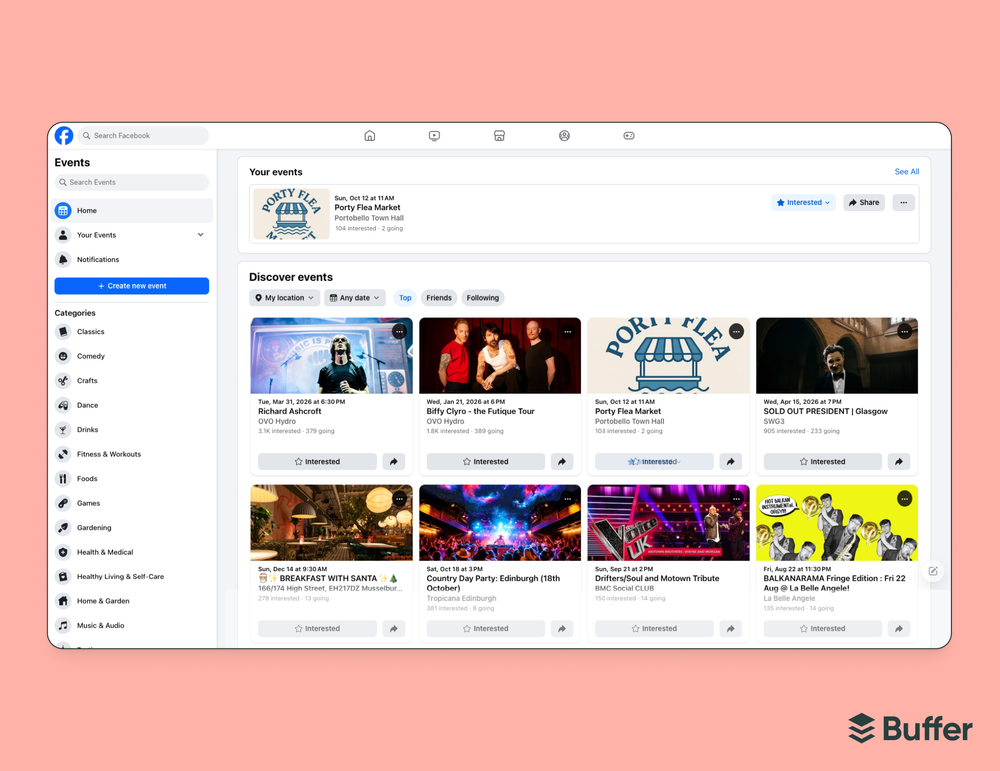
Integrated Community and Engagement Tools: Facebook provides robust features designed to facilitate community building and direct interaction. These include dedicated Groups, live video streaming, Messenger for direct communication, and an Events feature that remains a primary channel for discovering local happenings. This infrastructure supports deep engagement and fosters a sense of belonging among followers.

-
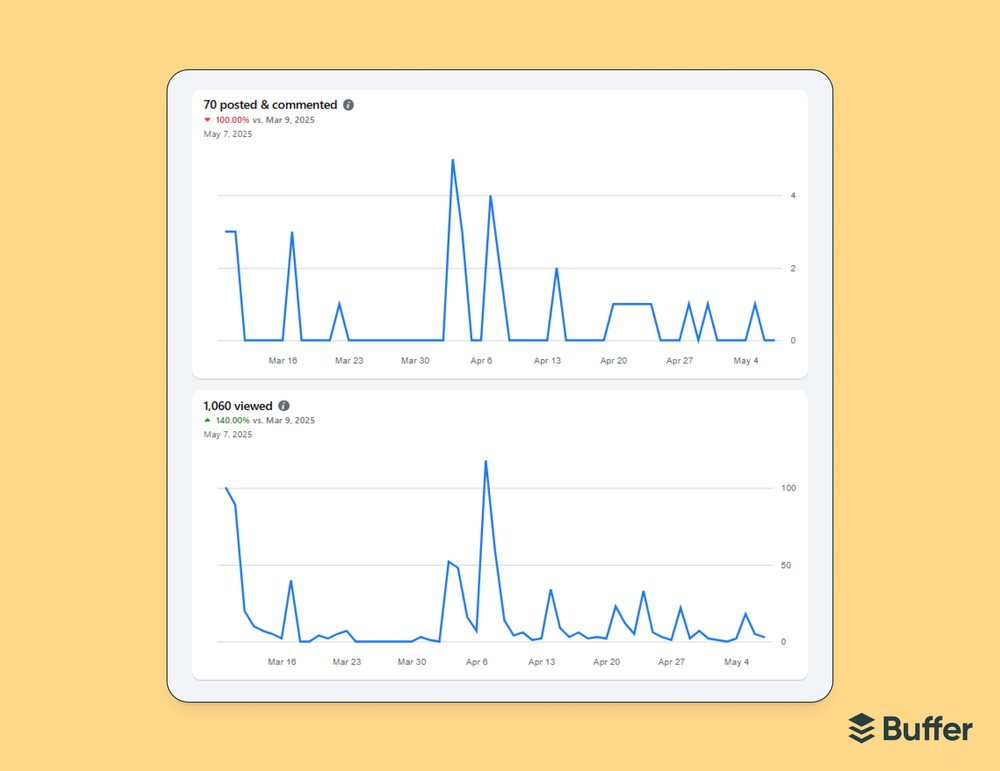
Actionable Insights and Analytics: Facebook’s native analytics tools offer comprehensive data on content performance, including reach, clicks, engagement, and audience demographics. These insights are crucial for refining marketing strategies over time. For instance, analyzing metrics can reveal discrepancies between content viewership and actual engagement, prompting adjustments to content value propositions.
Determining Facebook’s Suitability for Your Brand
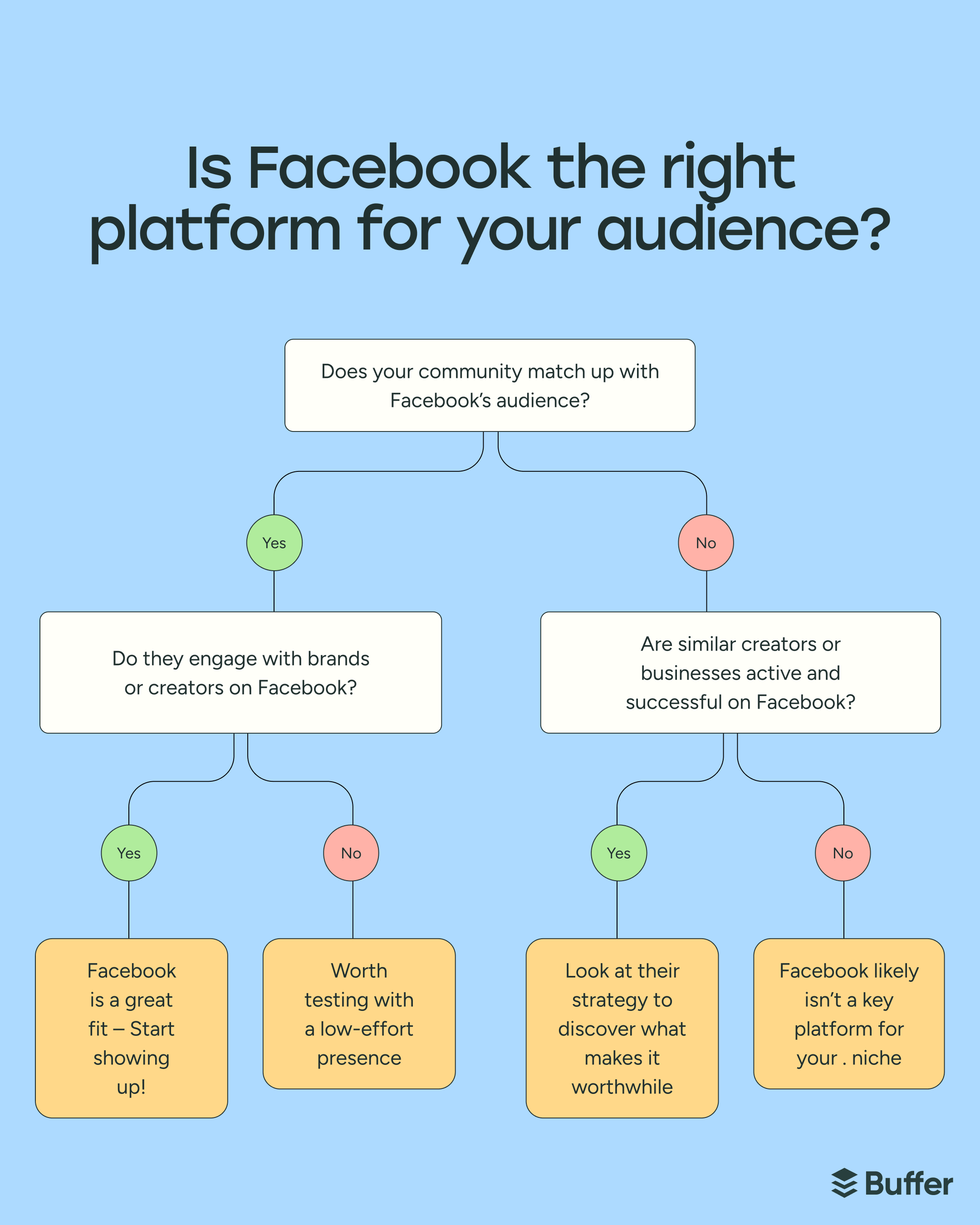
The fundamental question of whether Facebook marketing is appropriate for a particular business or brand can be answered by assessing audience presence on the platform. If the target audience actively uses Facebook, the potential for success is high.
Marketers can ascertain audience presence through several methods:
- Direct Audience Inquiry: Surveys sent via email lists or direct conversations with customers can reveal their preferred social media platforms and engagement habits with brands.
- Demographic Comparison: Aligning the demographic and psychographic profiles of a target audience with Facebook’s user base data can indicate platform suitability. Facebook’s user base is particularly strong among adults aged 25-65, making it ideal for brands targeting Millennials and Gen X.
- Competitor Analysis: Observing competitor activity and success on Facebook can signal whether the platform is a viable channel for a specific industry. A lack of competitor presence could indicate either an unsuitable audience or an untapped market opportunity.
For small businesses, a quick assessment involves considering: if your audience is actively engaging with businesses on Facebook, if your brand can consistently produce engaging content, and if you are prepared to interact directly with customers. Affirmative answers to these questions suggest that Facebook merits investment.
Setting Up a Facebook Marketing Presence: Business Page vs. Professional Mode
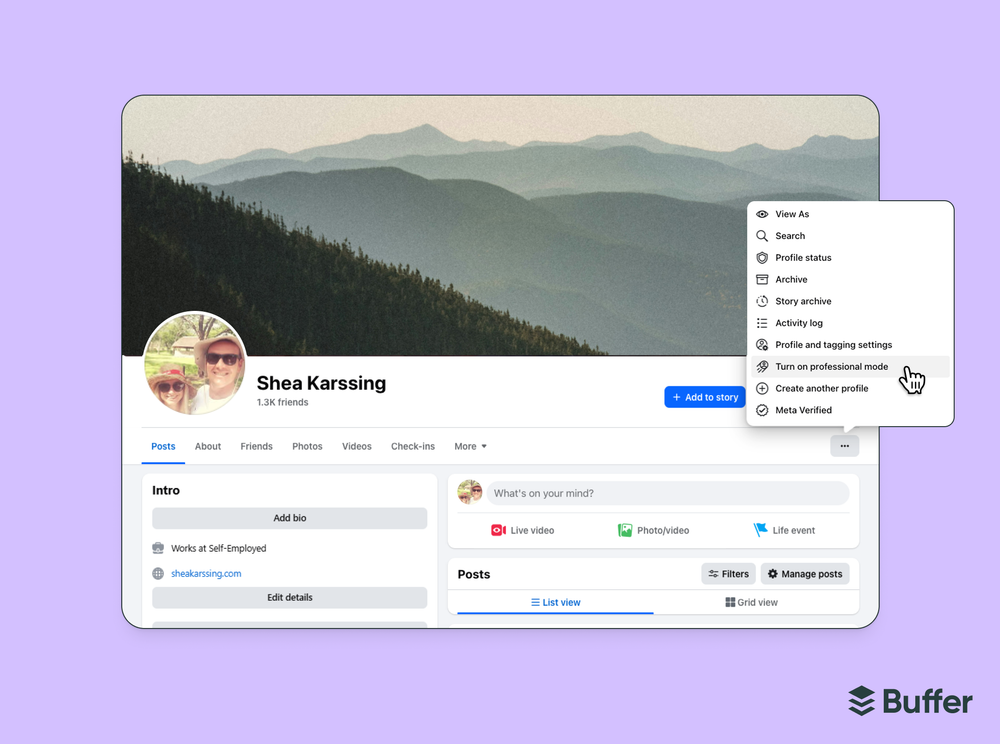
Businesses and creators have two primary avenues for establishing a marketing presence on Facebook: a dedicated Facebook Business Page or activating Professional Mode on an existing personal profile.
| Feature | Facebook Business Page | Professional Mode |
|---|---|---|
| Setup | Creates a separate public entity | Activated on an existing personal profile |
| Best for | Brands, businesses, public figures seeking a distinct identity | Creators desiring a unified personal and public presence |
| Tools Available | Full suite: Meta Business Suite, Ads Manager, advanced analytics | Creator dashboard, monetization features, growth prompts |
| Audience | Separate followers from personal network | Followers integrated with existing friends |
| Buffer Integration | Yes, for scheduling and analytics | Not currently supported in Buffer |
| Primary Objective | Professional brand identity distinct from personal account | Growing a public presence without managing multiple profiles |
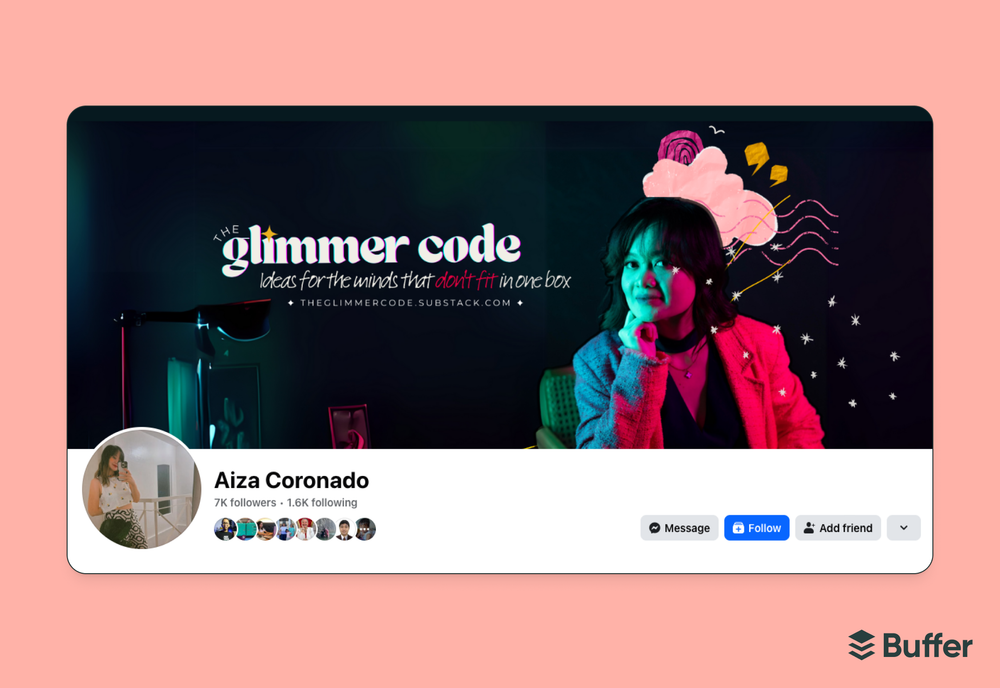
Facebook for Creators indicates that Business Pages offer more advanced tools, while Professional Mode streamlines the experience for individual creators. Cashé Collocott, who recently transitioned to Professional Mode, notes, "It allows for authenticity, letting people see behind the curated content. It’s perfect for testing content themes, tracking what resonates, and maintaining visibility without juggling multiple pages." Aiza Coronado, a lifecycle strategist, adds that Professional Mode facilitated organic growth through features like auto-invites and growth prompts, extending her reach beyond a standard personal page.
Setting Up a Business Page:
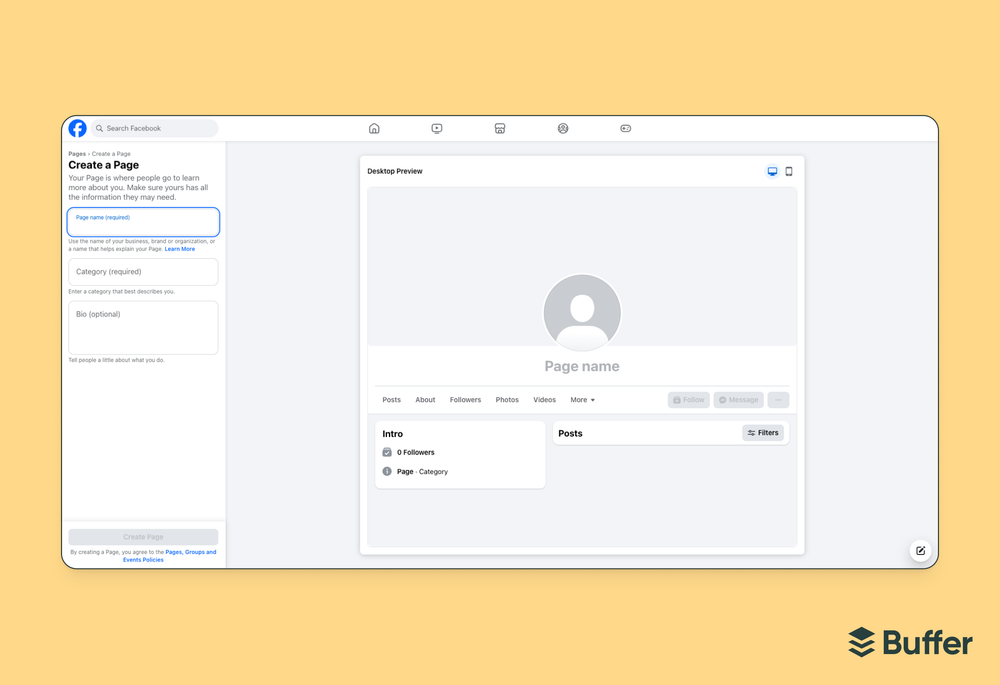
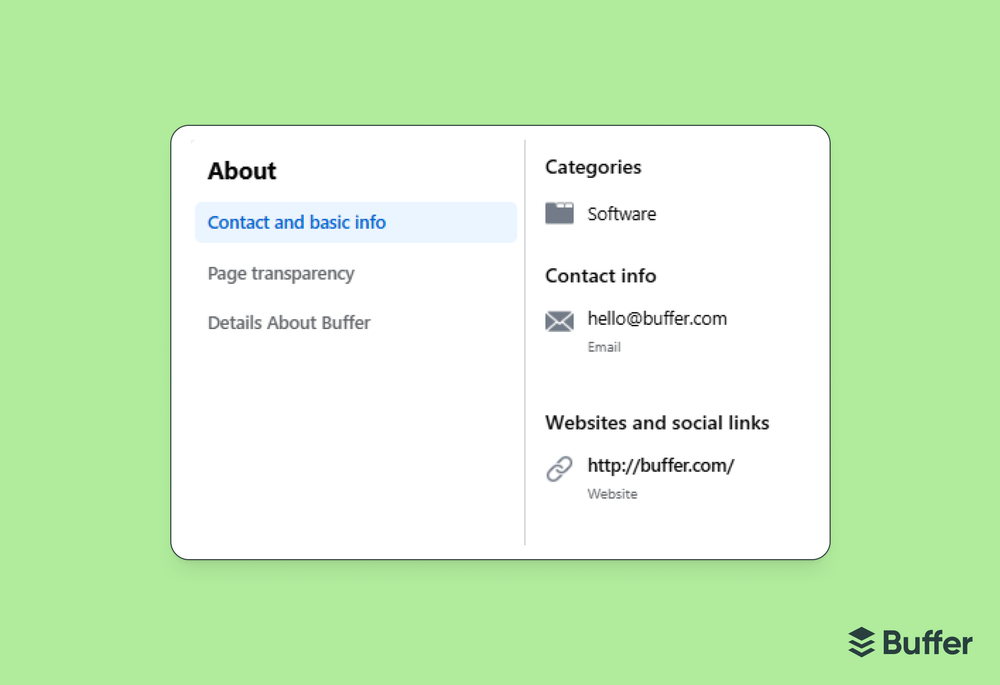
Creating a Business Page involves selecting a page name, category, and providing a brief biography. Key steps include adding a profile picture (logo for brands, professional headshot for individuals), a cover photo, and a call-to-action button (e.g., "Shop Now," "Contact Us") to guide visitor interaction. Populating the page with essential information such as contact details, operating hours, and a website link is crucial for establishing credibility.
Setting Up Professional Mode:
For creators wishing to leverage their existing profile, Professional Mode can be activated directly from the profile settings. This converts the profile into a public-facing entity while retaining personal connections, offering creator-specific tools like dashboards and monetization options.
Marketers are advised to choose one primary presence to avoid diluting audience engagement and operational effort.
Crafting an Effective Facebook Marketing Strategy
A successful Facebook marketing strategy follows a five-step framework:
- Define Goals and Metrics: Clearly articulate what success looks like (e.g., increased engagement, higher sales, enhanced brand awareness). Identify one or two primary objectives and track relevant metrics such as likes, clicks, shares, and direct messages using Facebook’s built-in insights.
- Identify Target Audience: Develop a detailed understanding of the target audience’s interests, pain points, and online behaviors. Narrowing the audience focus allows for the creation of highly relevant content that resonates deeply.
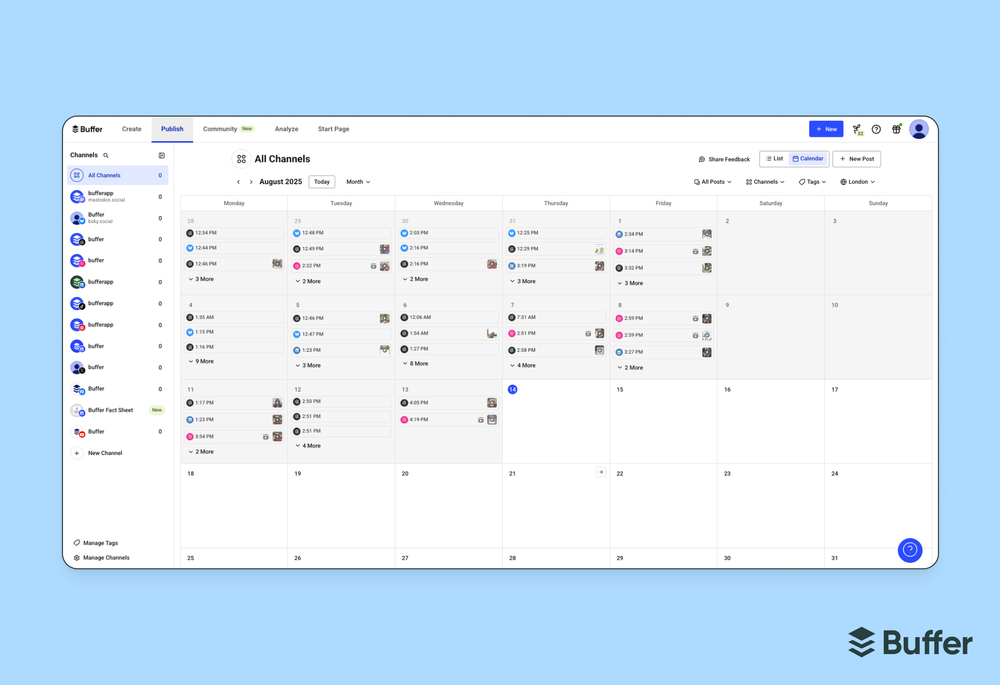
- Plan Content Calendar: Consistency is paramount. Develop a content calendar outlining posts for several weeks, incorporating a mix of product updates, behind-the-scenes glimpses, customer testimonials, educational tips, Reels, and relevant memes. Tools like Buffer can streamline content scheduling across platforms.
- Consistent Posting and Engagement: Beyond posting, active engagement is critical. Promptly responding to comments and direct messages (ideally within 24 hours) and asking follow-up questions fosters community and signals to the algorithm that the content is valuable, thereby increasing its reach.
- Analyze Performance and Adapt: Regularly review Facebook Insights to understand which content performs well and which does not. Monitor follower growth, engagement rates, and reach to refine the strategy continuously. This iterative process ensures that content remains relevant and effective.
Illustrative Case Studies in Facebook Marketing
Real-world applications highlight the diverse potential of Facebook marketing:
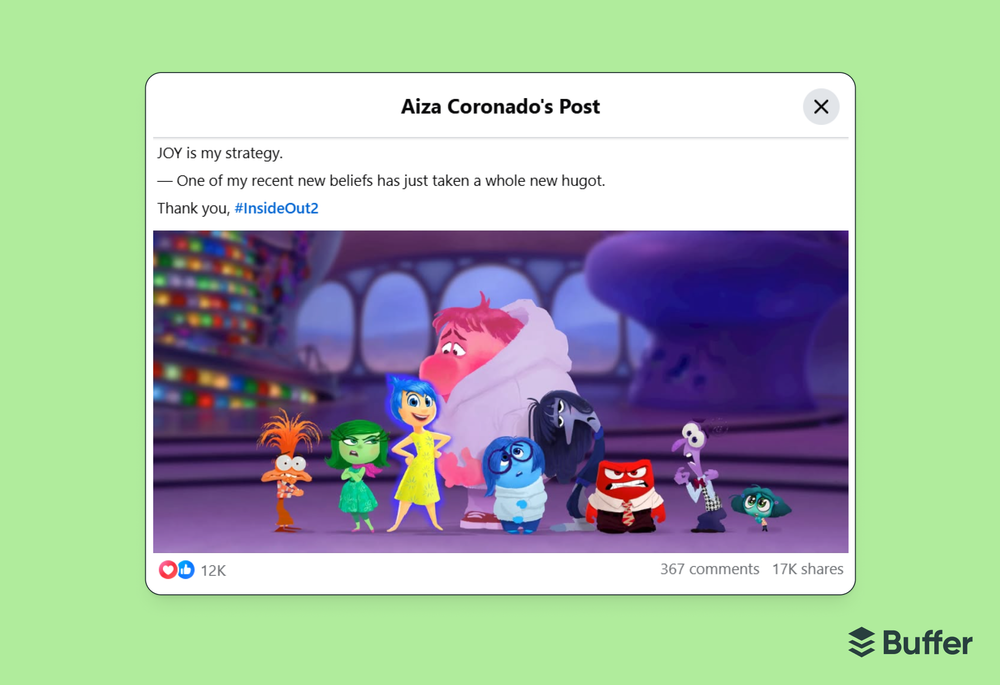
- Aiza Coronado’s Viral Post: A personal reflection by Aiza Coronado on the film Inside Out 2, shared directly on Facebook, garnered 17,000 shares. The post’s success was attributed to its emotional resonance, timely relevance, and alignment with themes of self-discovery, demonstrating the power of authentic storytelling. This aligns with principles outlined in Jonah Berger’s Contagious: Why Things Catch On, which emphasizes emotion and storytelling as drivers of virality.
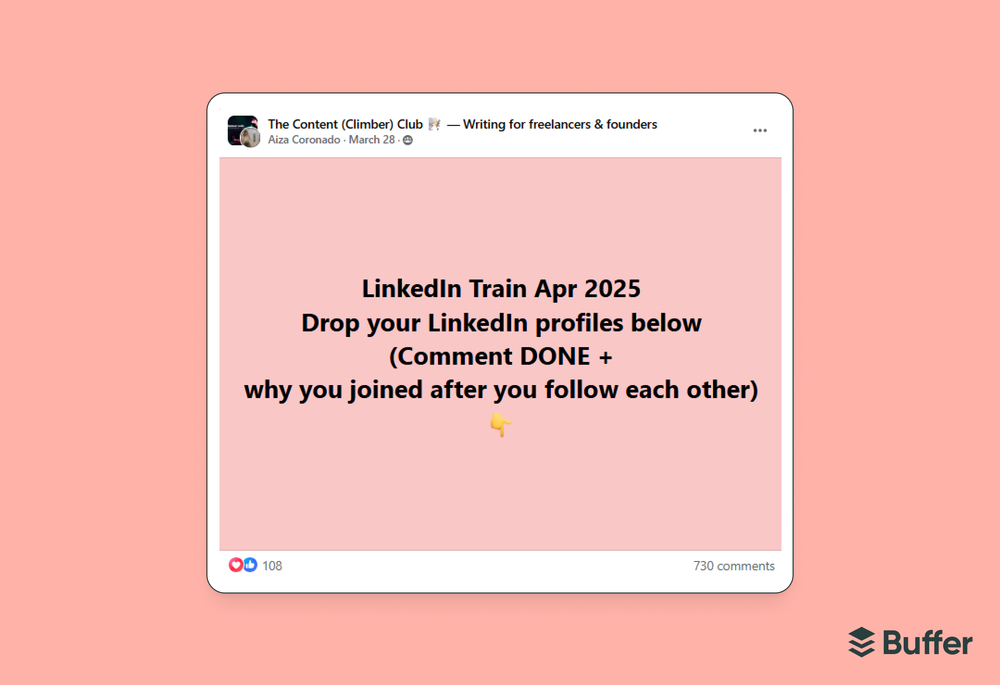
- Aiza Coronado’s Organic Sign-ups: Simple text-based posts were effectively used by Coronado to promote a LinkedIn challenge, resulting in over 350 organic sign-ups and significant engagement within the challenge group. This illustrates the effectiveness of direct, conversational text posts for gauging interest and driving conversions.
- Cashé Collocott’s Fitness Movement: Cashé Collocott spearheaded a campaign for a national fitness brand by launching structured Facebook Groups. These groups offered curated meal plans, scheduled workouts, and daily coaching interactions. Intensive micro-moderation, with coaches actively engaging in comments and hosting live Q&A sessions, transformed the groups into thriving communities, driving genuine transformations and demonstrating the power of structured community building.
Content Types for Maximizing Engagement
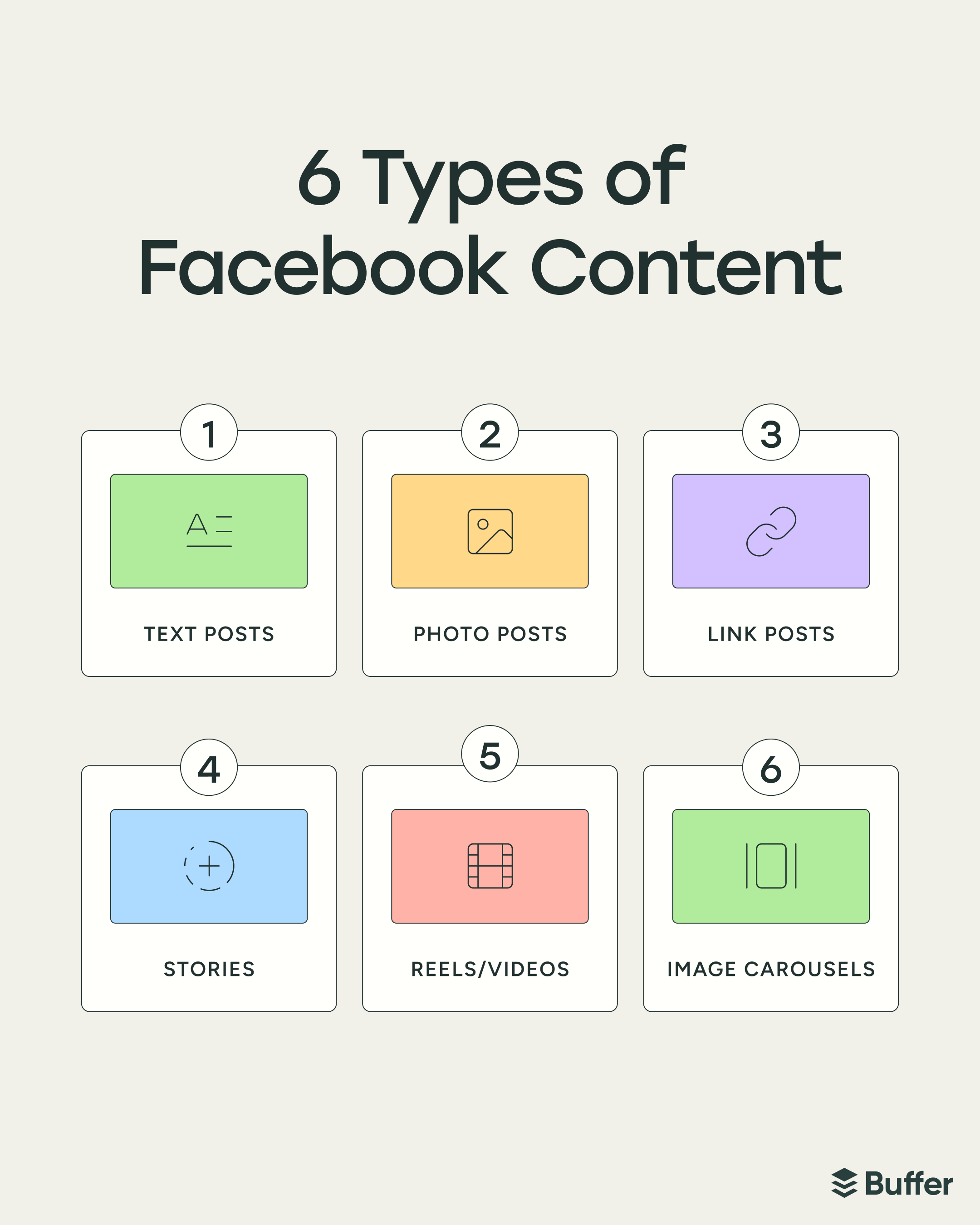
Facebook supports various content formats, each serving distinct marketing objectives:
| Content Type | Best for | Format Notes |
|---|---|---|
| Text posts | Conversation, polls, opinion, demand-testing | Plain text, often highest comment ratio |
| Photo posts | Engagement, brand visibility | Single image or carousel; resized to 500px wide for single images |
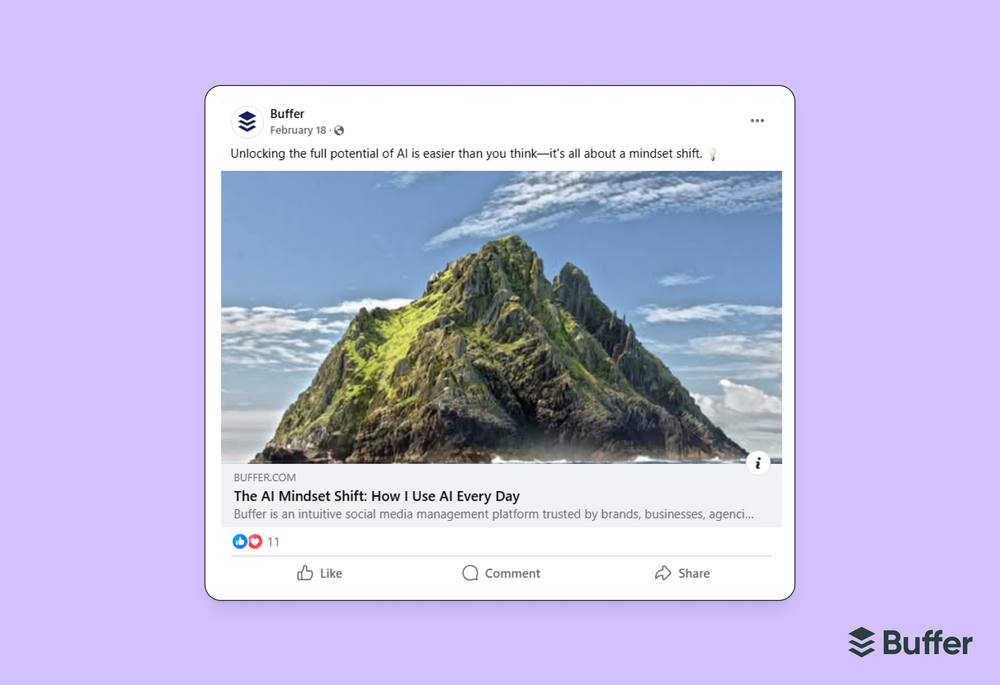
| Link posts | Driving traffic to external pages | Auto-generates a preview; 97.3% of US Facebook views go to non-link posts |
| Stories | Casual, time-limited content | Vertical, full-screen, 24-hour expiry |
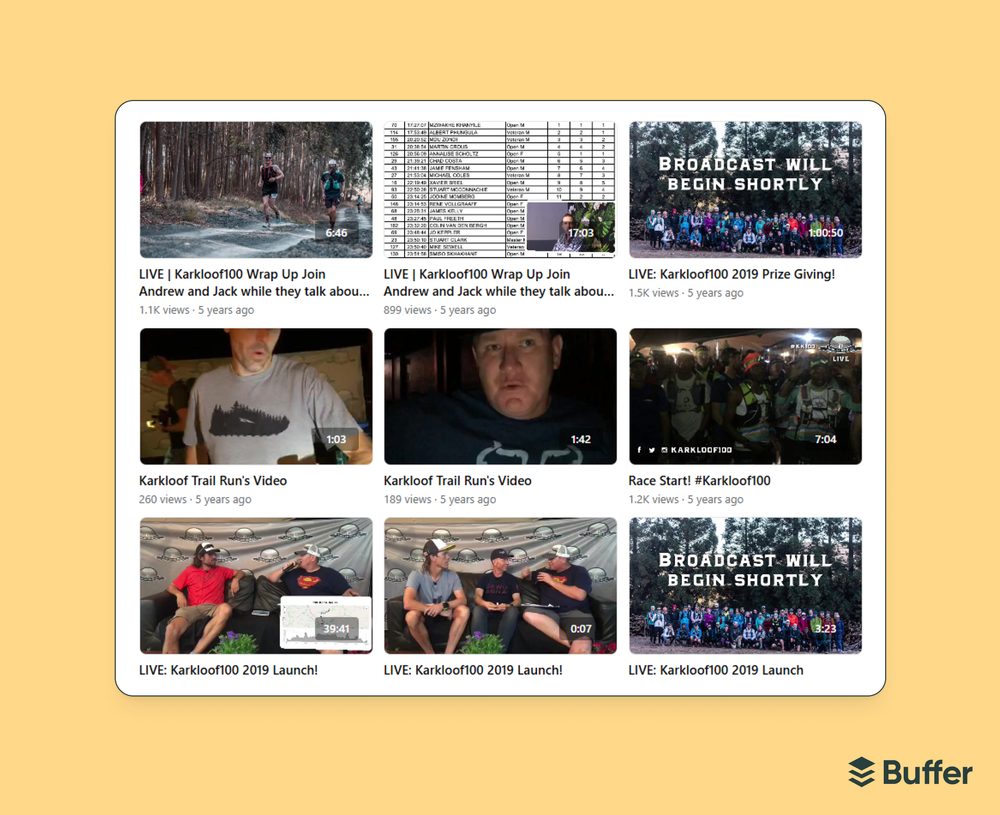
| Reels and Video | Reach, discovery, attention | Vertical 9:16, autoplay, under 90 seconds preferred |
| Image Carousels | Tutorials, product features, before/afters | Multiple images, swipeable, boost time-on-content |
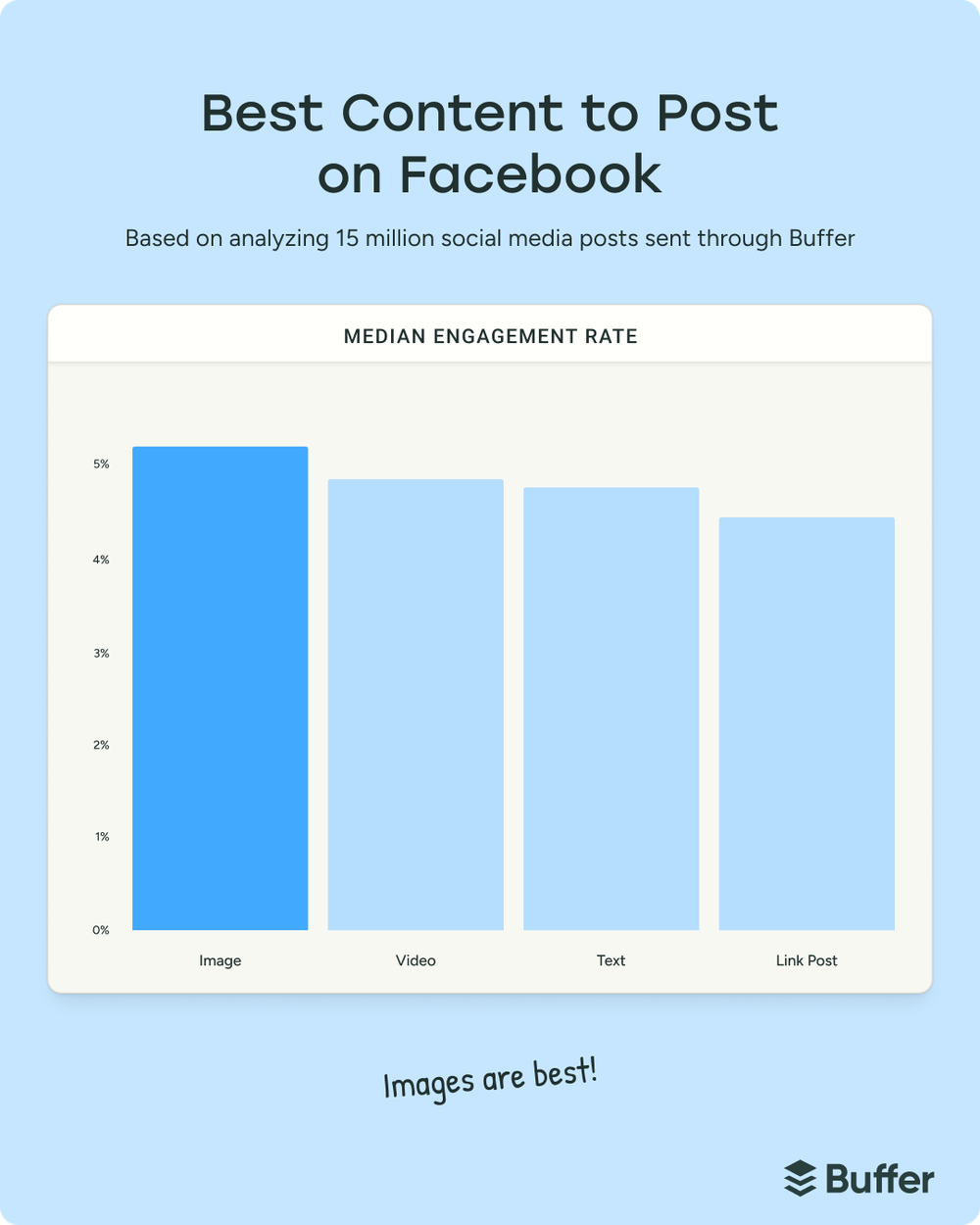
Research indicates that image posts consistently achieve high engagement rates, while Reels and video content excel in expanding reach and discovery. Text posts are effective for initiating discussions and gauging interest. Stories provide a casual, ephemeral channel for timely updates and direct messaging. Link posts, while useful for driving external traffic, may experience lower organic reach, prompting marketers to consider placing links in comments.
Best Practices for Optimizing Facebook Marketing
Effective Facebook marketing prioritizes social interaction over pure broadcasting. Key best practices include:
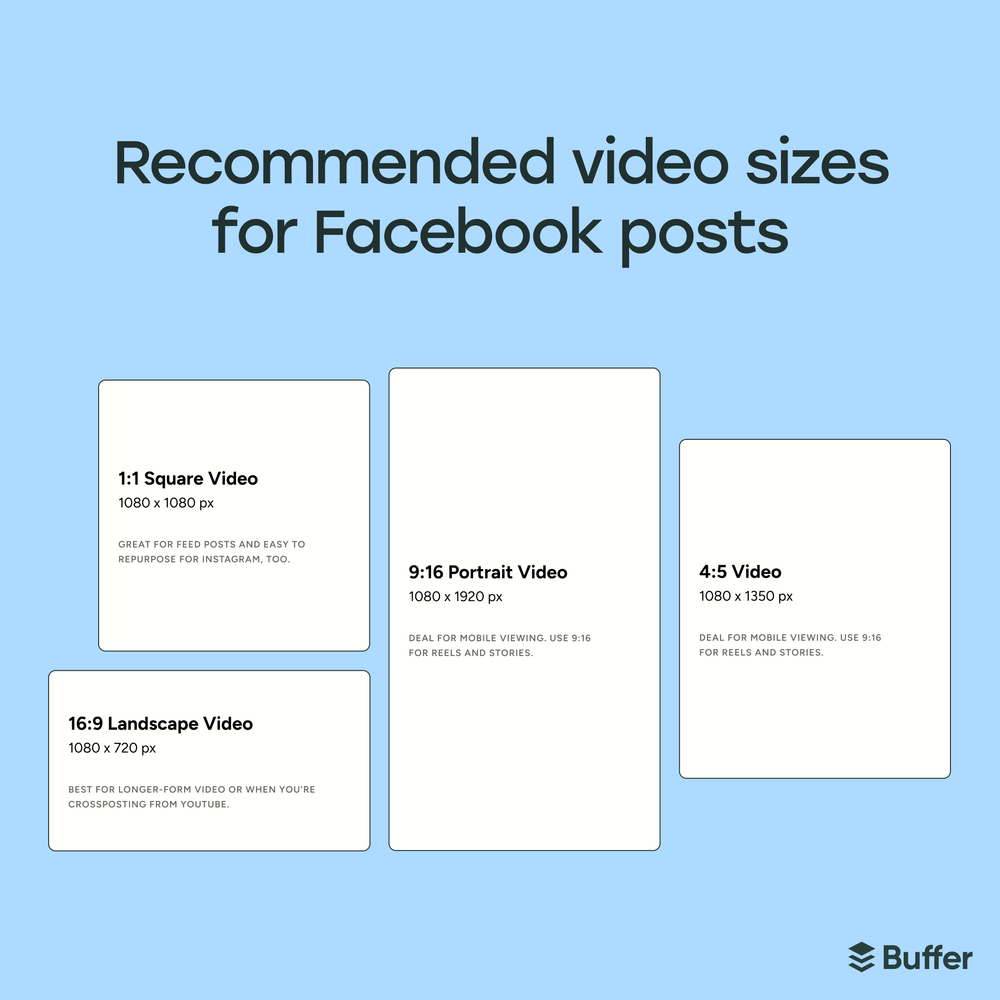
- Optimizing Image and Video Sizes: Adhering to recommended specifications (e.g., 1,200 x 630 px for landscape images, 1,080 x 1,920 px for Reels and Stories) ensures content appears professional and visually appealing across devices.
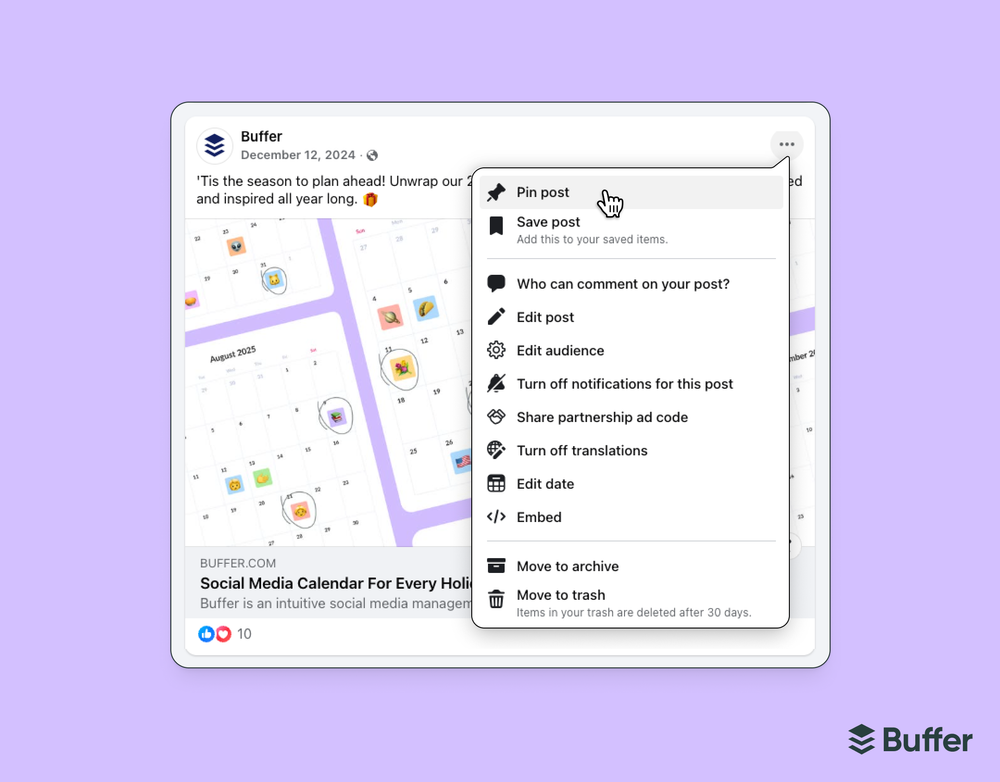
- Pinning Essential Posts: Marketers can pin crucial content—such as welcome messages, important announcements, or high-value resources—to the top of their page or group to ensure immediate visibility for new visitors.
- Crafting Compelling Calls to Action (CTAs): CTAs should be clear, friendly, and action-oriented, guiding the audience toward a specific desired outcome (e.g., "Join the conversation," "Download the free guide").
- Strategic Posting Times: While no universal "best time" exists, data often indicates strong engagement during weekday mornings. Marketers should leverage their own analytics to determine peak activity times for their specific audience.
- Leveraging Facebook Messenger: Utilizing Messenger for direct customer communication, support inquiries, and lead generation transforms passive followers into active participants and customers.
- Building Facebook Groups: Creating a dedicated Facebook Group fosters a strong community, allowing for collaborative discussions, exclusive content sharing, and direct interaction among brand advocates.
Facebook Advertising: Expanding Reach and Impact
While organic marketing forms the bedrock of a Facebook strategy, paid advertising offers powerful tools for expanding reach and achieving specific objectives. Facebook ads, encompassing various formats (single image/video, carousel, collection), enable businesses to reach broader audiences that may be difficult to access organically.
Facebook ad costs are variable, determined by factors such as audience size, competition, and ad quality. Common pricing models include Cost Per Click (CPC) and Cost Per Mille (CPM). Initial testing with smaller budgets (e.g., $50 over a week) can provide valuable insights into creative effectiveness before committing to larger campaigns.
Paid advertising is particularly beneficial when there are clear, measurable objectives, such as increasing mobile app downloads or driving specific sales targets. Meta Ads Manager provides extensive targeting capabilities, allowing advertisers to define audiences by location, demographics, interests, and behaviors with granular precision.
Boosted Posts vs. Meta Ads Manager:
Boosted posts offer a quick method to amplify the reach of an existing post, ideal for simple goals like increasing likes or website clicks. Meta Ads Manager, conversely, provides comprehensive control over campaigns, offering a wider range of objectives, advanced targeting options (custom audiences, lookalikes), and granular control over ad formats and placements across Facebook, Instagram, Messenger, and the Audience Network. Boosted posts are suitable for quick visibility, while Ads Manager is designed for sophisticated, goal-driven campaigns.
Tracking Performance with Data-Driven Insights
Monitoring Facebook marketing performance is essential for continuous improvement. This can be achieved through:
- Meta’s Native Tools: The Professional Dashboard, Meta Business Suite, Ads Manager, and Group Insights provide detailed metrics on reach, engagement, post performance, follower growth, and audience demographics. These tools are indispensable for understanding content effectiveness.
- Third-Party Analytics Tools: Platforms like Buffer Analyze offer intuitive dashboards for tracking key metrics, identifying top-performing content, and generating actionable insights, especially for those managing multiple social media accounts. Integrating a Facebook Pixel on a website further enhances tracking capabilities by monitoring visitor behavior post-click.
Ultimately, successful Facebook marketing in 2026 is characterized by a commitment to authentic engagement, strategic content planning, and data-driven optimization. By embracing its diverse features and adapting to its evolving landscape, businesses and creators can continue to harness Facebook’s immense power to build brands, foster communities, and drive commercial success.