Muhammad Hendra
Accessing real happiness when we are struggling can feel impossible—but it’s also a key to our recovery, healing, and well-being. This counterintuitive truth forms the bedrock of emerging psychological and neuroscientific understanding, challenging the long-held notion that genuine joy is only permissible or attainable once all personal or collective hardships have been resolved. Instead, experts increasingly advocate for the deliberate cultivation of positive emotional states, even in the shadow of difficulty, as a vital strategy for building resilience, fostering recovery, and enhancing overall well-being. The integration of such practices is gaining traction in mental health and educational sectors, emphasizing that making space for positive experiences is not a denial of suffering but rather an essential component of navigating it effectively.
The Psychological Landscape of Struggle and the Paradox of Joy
When individuals navigate personal crises, such as illness, loss, financial strain, or relationship breakdown, or when they bear witness to the profound suffering of others, their relationship with genuine joy or happiness often becomes complicated and confusing. This phenomenon is deeply rooted in human empathy and the brain’s natural response to threat and distress. Psychologically, happiness can feel distant, inaccessible, or even morally questionable. There is a common internal narrative that suggests experiencing joy during hard times is a form of betrayal, an undeserved luxury, or an act of insensitivity to one’s own pain or the pain of the world. This internal conflict can lead to a suppression of positive emotions, further exacerbating feelings of isolation and despair.
Neuroscientific research sheds light on this internal struggle. The brain’s negativity bias, a well-documented cognitive phenomenon, predisposes humans to pay more attention to, and remember more vividly, negative experiences than positive ones. This evolutionary adaptation, designed to ensure survival by alerting us to potential dangers, can inadvertently hinder our ability to perceive and internalize moments of beauty or joy during periods of stress. When an individual is in a heightened state of stress, the amygdala, the brain’s alarm center, becomes overactive, making it difficult for the prefrontal cortex, responsible for executive functions like emotional regulation and conscious thought, to process positive stimuli effectively. This physiological response contributes to the feeling that happiness is "out of reach" or somehow inappropriate.
The Imperative for Resilience: A Path to Healing and Empathy
Despite these ingrained tendencies, strengthening our capacity to notice and internalize moments of beauty, tenderness, connection, and gratitude has been shown to have a profoundly fortifying effect. This deliberate practice is not about ignoring or suppressing difficult emotions, but rather about consciously balancing the emotional landscape. By actively seeking and savoring positive experiences, individuals can build what psychologists refer to as "emotional reserves" or "fill their empty emotional tanks." This process directly contributes to enhanced resilience, the psychological capacity to adapt and thrive in the face of adversity.
Resilience is not merely about bouncing back from hardship; it is also about developing the capacity to grow through it. Research into post-traumatic growth (PTG) indicates that many individuals report positive psychological changes following traumatic experiences, often including a greater appreciation for life, deeper relationships, and a clearer sense of purpose. The cultivation of positive emotions, even small ones, plays a significant role in this growth trajectory by providing the psychological resources necessary to process trauma, find meaning, and integrate challenging experiences into a broader life narrative. Moreover, building personal resilience has broader implications: individuals who are more emotionally robust are better equipped to show up in supportive and healing ways for others, fostering a ripple effect of empathy and collective well-being.
Mindfulness as a Bridge: Wendy O’Leary’s Guided Practice
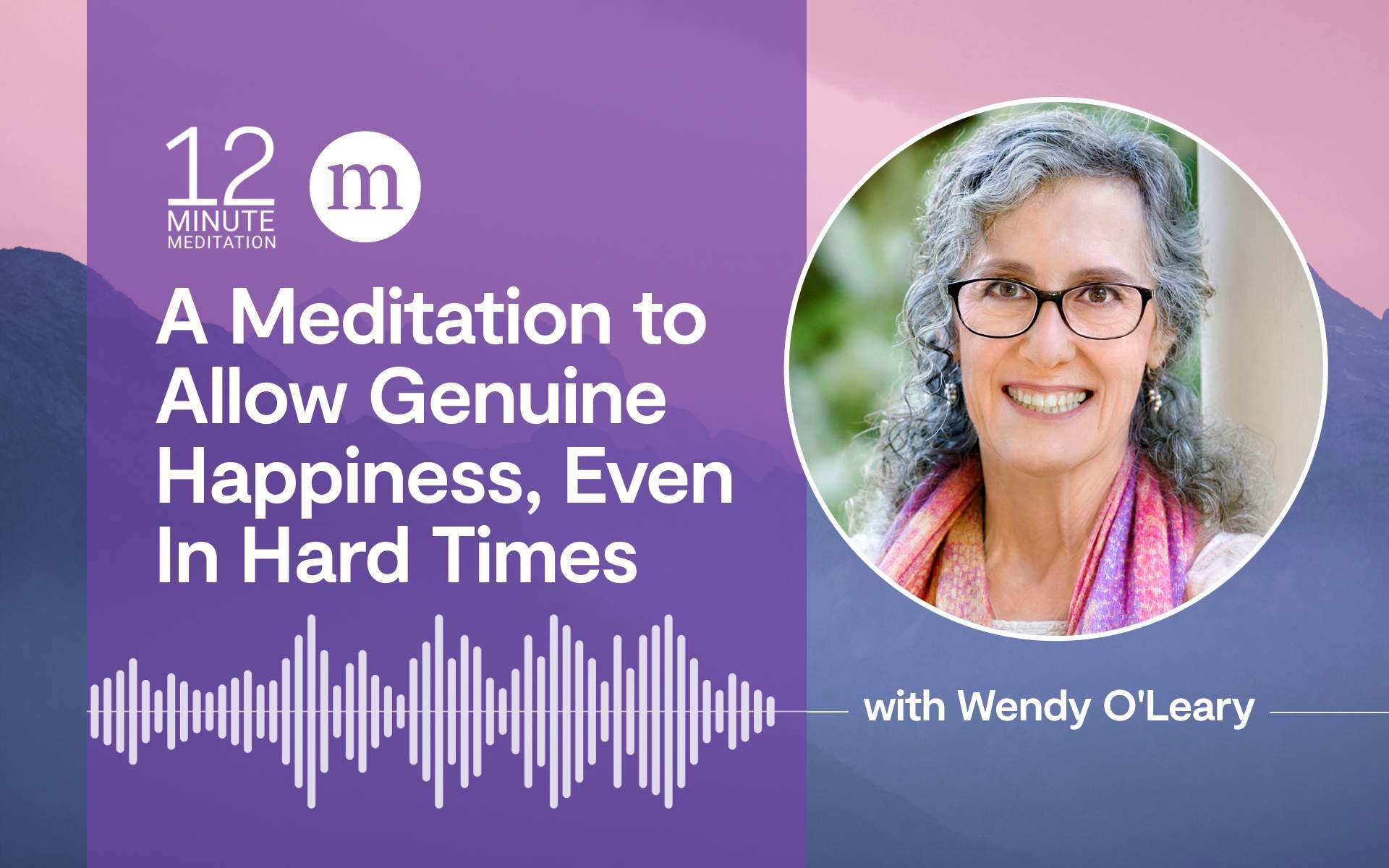
In this context, mindfulness practices offer a structured approach to navigate the complexities of joy and suffering. Wendy O’Leary, a distinguished author and health educator specializing in emotional resilience, advocates for guided practices that help individuals tune their attention to the positive realities that exist alongside genuine seasons of struggle. O’Leary’s approach, which aligns with broader mindfulness principles, emphasizes gentle awareness and acceptance rather than forced emotional shifts. Her work, including children’s books and an adult book on self-compassion, underscores her commitment to making emotional resilience accessible to diverse audiences. Her upcoming publication, "Let’s Grow Happiness," a card deck for children, further exemplifies her dedication to nurturing positive emotional development from a young age.
O’Leary’s meditation framework is designed to address the common internal questions: "How can I even think about being happy when I’m having such a hard time right now?" or "How can I be happy when there is so much suffering in the world?" These questions reflect a deeply ingrained societal and individual resistance to allowing joy amidst pain. Her practice posits that happiness is not merely accessible once basic needs are met or struggles are resolved, but that it is also essential for well-being and resilience in the immediate present. This duality – that things can be hard and we might also be able to touch some happiness – is central to her teaching. The practice is explicitly not an encouragement to suppress or "push down" difficult emotions, but rather a "very gentle invitation to also make a little space for the good" as one is able, thereby enhancing capacity and overall well-being.
The "Taking in the Good" Framework: Rick Hanson’s Influence
O’Leary’s guided practice is adapted from the influential work of Dr. Rick Hanson, a neuropsychologist and author renowned for his "taking in the good" practice. Hanson’s approach is rooted in the understanding of neuroplasticity, the brain’s ability to reorganize itself by forming new neural connections throughout life. He argues that while negative experiences are often quickly "downloaded" into long-term memory due to the brain’s negativity bias, positive experiences tend to be fleeting unless consciously savored and internalized.
The "taking in the good" practice involves four simple steps, often summarized as HEAL:
- Have a positive experience: Notice something pleasant, no matter how small. This could be a warm cup of coffee, a kind word, a moment of peace, or a natural beauty.
- Enrich it: Linger on the positive experience for 10-20 seconds or longer. Let it fill your senses, deepen your feeling, and absorb it.
- Absorb it: Intentionally sense that the experience is sinking into you, becoming a part of you. Imagine it as a warmth or light permeating your being.
- Link it (optional): If appropriate, you can link the positive experience to something difficult, using the positive to soothe or resource yourself in relation to the negative.
By consciously dwelling on positive experiences, even for short periods, individuals can actively rewire their brains to be more receptive to joy and less dominated by negative thought patterns. This deliberate process helps to strengthen neural pathways associated with positive emotions, gradually shifting the brain’s baseline toward greater contentment and resilience. Hanson’s work is supported by a growing body of neuroscientific evidence demonstrating how mindfulness and gratitude practices can alter brain structure and function, leading to reduced stress, improved mood, and enhanced cognitive flexibility.
A Chronology of Understanding: From Philosophy to Neuroscience
The concept of finding solace or even joy amidst suffering is not new; it has roots in ancient philosophical and spiritual traditions. Stoic philosophers, for instance, emphasized cultivating inner tranquility and wisdom regardless of external circumstances. Various religious traditions have long preached the importance of gratitude and finding blessings even in times of trial. However, the modern scientific validation of these practices is a relatively recent development, largely emerging in the late 20th and early 21st centuries.
- Late 1970s – Early 1980s: Jon Kabat-Zinn introduces Mindfulness-Based Stress Reduction (MBSR) to a Western medical context, demonstrating the efficacy of mindfulness in managing chronic pain and stress. This marked a pivotal moment in integrating contemplative practices with scientific inquiry.
- 1990s: The rise of positive psychology, spearheaded by Martin Seligman, shifts the focus from treating mental illness to understanding and promoting human flourishing. Research begins to explore factors like gratitude, optimism, and resilience.
- Early 2000s: Advances in neuroimaging techniques allow scientists to observe the brain’s activity in real-time, providing empirical evidence for how practices like meditation and gratitude affect brain structures and functions, particularly in areas related to emotion regulation and reward.
- Mid-2000s onwards: Researchers like Rick Hanson popularize concepts like neuroplasticity and the deliberate cultivation of positive experiences, making scientific insights accessible to a broader public. Concurrently, studies increasingly link mindfulness and positive emotion practices to tangible health benefits, from improved cardiovascular health to enhanced immune function.
This chronological progression highlights a shift from anecdotal wisdom to empirically supported interventions, solidifying the scientific basis for practices like those advocated by Wendy O’Leary and Rick Hanson.
Empirical Evidence and Supporting Data
The efficacy of cultivating positive emotions and practicing mindfulness, even during periods of struggle, is supported by a robust body of scientific evidence:
- Stress Reduction: Studies have consistently shown that mindfulness practices reduce levels of the stress hormone cortisol, lower blood pressure, and improve sleep quality. A meta-analysis published in JAMA Internal Medicine found that mindfulness meditation programs can moderately improve anxiety, depression, and pain.
- Emotional Regulation: Research indicates that regular mindfulness practice enhances the prefrontal cortex’s ability to regulate the amygdala, leading to more controlled emotional responses and a reduced reactivity to stressors.
- Increased Well-being and Life Satisfaction: Gratitude practices, specifically, have been linked to higher levels of positive emotions, increased feelings of happiness, and greater overall life satisfaction. A study by Emmons and McCullough (2003) found that participants who regularly listed things they were grateful for reported higher levels of alertness, enthusiasm, and determination.
- Physical Health Benefits: Beyond mental health, the cultivation of positive emotions has been associated with improved immune function, reduced inflammation, and better cardiovascular health outcomes.
- Enhanced Social Connection: Practices that foster appreciation and connection, such as gratitude, have been shown to strengthen social bonds, increase empathy, and reduce feelings of loneliness.
These findings collectively underscore that integrating moments of genuine happiness is not a luxury but a fundamental component of psychological and physiological well-being, particularly when navigating difficult circumstances.
Statements from the Field: Expert Consensus
The growing body of evidence has led to a consensus among psychologists, neuroscientists, and mental health professionals regarding the importance of these practices. Dr. Kristin Neff, a leading researcher in self-compassion, often emphasizes that self-kindness and acknowledging one’s own suffering, while simultaneously recognizing common humanity and practicing mindfulness, are crucial for emotional resilience. Similarly, Dr. Stephen Porges’ Polyvagal Theory highlights how feelings of safety and connection, which can be fostered through positive emotional experiences, are fundamental to regulating the autonomic nervous system and promoting healing.
Leading organizations like the American Psychological Association and the National Institute of Mental Health increasingly recognize mindfulness and positive psychology interventions as valuable tools for promoting mental health and preventing burnout. Educators and therapists are incorporating these methods into curricula and clinical practices, moving beyond traditional pathology-focused models to embrace a more holistic approach to human flourishing. The consensus is clear: actively making space for positive emotions and experiences, even when life is challenging, is not an act of denial but a strategic investment in one’s capacity to cope, heal, and thrive.
Broader Societal Implications and Applications
The individual cultivation of genuine happiness and resilience has profound broader societal implications. In an increasingly interconnected world grappling with complex challenges—from climate change and global pandemics to social injustice and economic instability—the collective emotional well-being of communities is paramount. Individuals who are more resilient are better equipped to engage constructively with these challenges, rather than succumbing to overwhelm or despair.
- Public Health: Integrating mindfulness and positive emotion practices into public health initiatives can serve as a preventative measure against mental health crises, reducing the burden on healthcare systems.
- Education: Teaching children and adolescents emotional literacy and resilience skills, as Wendy O’Leary’s work aims to do, can equip future generations with vital tools for navigating life’s inevitable difficulties, fostering more empathetic and stable societies.
- Workplace Wellness: Companies are increasingly recognizing the value of promoting employee well-being through mindfulness training and stress reduction programs, leading to improved productivity, reduced absenteeism, and a more positive work environment.
- Community Building: Collective practices of gratitude and appreciation can strengthen social cohesion, enhance mutual support networks, and foster a sense of shared purpose in communities facing adversity.
By empowering individuals to access and nurture genuine happiness, even amidst struggle, society as a whole becomes more robust, compassionate, and capable of addressing its most pressing issues.
Navigating the Nuances: Avoiding Toxic Positivity
It is crucial to distinguish between the intentional cultivation of genuine happiness and the detrimental phenomenon known as "toxic positivity." Toxic positivity is the excessive and ineffective overgeneralization of a happy and optimistic state across all situations, often leading to the denial, minimization, or invalidation of authentic human emotional experience. While the practices advocated by O’Leary and Hanson encourage making space for the good, they do not suggest ignoring or suppressing valid feelings of sadness, anger, fear, or grief.
The core difference lies in acceptance. Genuine resilience-building practices acknowledge and validate suffering, holding space for it without judgment, while simultaneously inviting awareness of co-existing positive elements. Toxic positivity, conversely, often dismisses struggle with platitudes like "just be positive" or "look on the bright side," which can make individuals feel misunderstood, shamed for their feelings, and isolated. The "gentle invitation" aspect of O’Leary’s practice is key: it is about adding to one’s emotional capacity, not replacing difficult emotions with forced cheerfulness. The goal is integration, not suppression.
In conclusion, the journey to real happiness during times of struggle is not a detour from healing but an integral part of it. The scientific community, through the lenses of psychology and neuroscience, increasingly affirms what ancient wisdom traditions have long suggested: that consciously noticing and savoring moments of beauty, tenderness, connection, and gratitude can profoundly fortify individuals. These practices, exemplified by the work of Wendy O’Leary and rooted in Rick Hanson’s "taking in the good" framework, are not about escaping pain but about building the emotional and neurological resources necessary to navigate it with greater resilience, foster deeper connections, and ultimately, facilitate profound healing and well-being, both individually and collectively.