Muhammad Hendra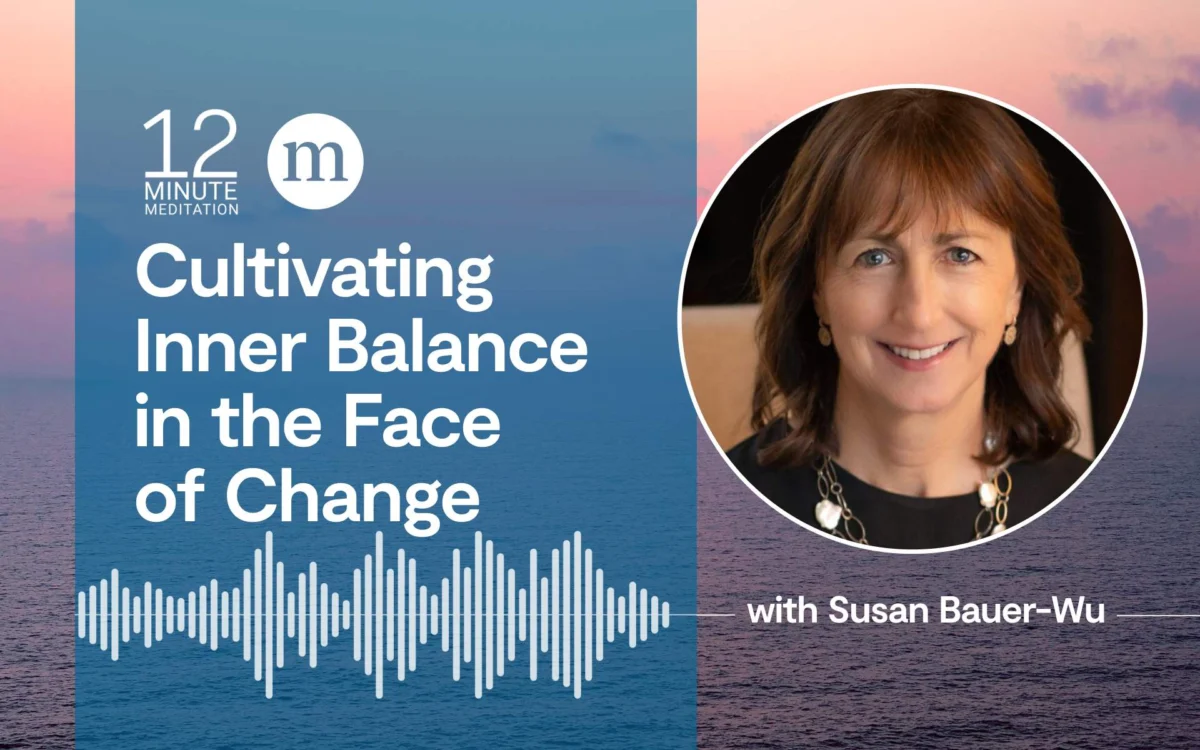
Life’s inherent characteristic of perpetual change presents a significant challenge to maintaining personal equilibrium, a state that Susan Bauer-Wu, a distinguished mindfulness teacher and President of the Mind & Life Institute, addresses through a guided meditation designed to anchor individuals in the present moment and foster equanimity. This practice is presented as a crucial mechanism for navigating the complexities of modern existence, offering a pathway to balance amidst life’s inevitable fluctuations.
Understanding Equanimity: A Cornerstone of Psychological Resilience
Equanimity, as defined by Bauer-Wu and supported by various psychological frameworks, represents a state of mental calmness, composure, and evenness of temper, especially in a difficult situation. It is characterized by a quality that is both receptive and stable, fundamentally contrasting with a reactive mind. In practice, equanimity manifests as a feeling of ease and allowing, enabling individuals to experience the full spectrum of human emotions—from suffering to joy—without becoming overwhelmed or excessively attached to outcomes. This sophisticated emotional state combines an understanding mind with a compassionate heart, distinguishing it sharply from indifference or apathy. Instead, it signifies a profound capacity to allow life to unfold, free from personal attachments to specific results or the tendency to internalize external events. Ultimately, equanimity involves approaching each moment with deliberate care and gentleness, fostering a deep sense of inner balance irrespective of external circumstances.
The concept of equanimity is not new; it has deep roots in ancient philosophical and spiritual traditions, including Buddhism, Stoicism, and various contemplative practices across cultures. In these contexts, equanimity (often translated from terms like "upekkha" in Pali or "ataraxia" in Greek) was considered a virtue and a vital component of liberation from suffering. Modern psychology has increasingly recognized the practical benefits of this ancient wisdom, integrating principles of equanimity into therapeutic approaches such as Mindfulness-Based Stress Reduction (MBSR) and Acceptance and Commitment Therapy (ACT). Research indicates that cultivating equanimity can significantly enhance psychological well-being, reduce symptoms of anxiety and depression, and improve overall stress resilience. For instance, a 2016 meta-analysis published in JAMA Internal Medicine reviewed numerous studies on mindfulness meditation and found consistent evidence for its efficacy in reducing psychological distress, a benefit often attributed to the cultivation of equanimity.
The Evolving Landscape of Mental Well-being and Mindfulness
The global landscape of mental health has seen a dramatic shift in recent decades, marked by increasing rates of stress, anxiety, and burnout. The World Health Organization (WHO) has highlighted mental health as a growing public health concern, with an estimated 1 in 8 people living with a mental disorder. Factors such as rapid technological advancement, economic instability, social fragmentation, and global crises contribute to a pervasive sense of unease and a struggle for many to maintain mental equilibrium. In response, there has been a surge in interest in mindfulness and meditation practices, moving from niche spiritual disciplines to mainstream health interventions.
This shift can be traced through a rough chronology:
- Mid-20th Century: Early Western psychologists and spiritual teachers began exploring Eastern contemplative practices, often in academic or counter-cultural settings.
- 1979: Dr. Jon Kabat-Zinn founded the Mindfulness-Based Stress Reduction (MBSR) program at the University of Massachusetts Medical Center, marking a pivotal moment in secularizing mindfulness and introducing it into medical settings.
- 1980s-1990s: Research into the therapeutic benefits of mindfulness began to accumulate, focusing on stress reduction, chronic pain management, and anxiety.
- 2000s: The "mindfulness revolution" gained momentum, with an explosion of research, publications, and popular interest. Mindfulness moved into corporate wellness programs, schools, and even military training.
- 2010s-Present: Mindfulness and related practices like cultivating equanimity are increasingly integrated into clinical psychology, neuroscience, and public health initiatives, supported by growing scientific evidence. Organizations like the Mind & Life Institute, where Susan Bauer-Wu serves as President, play a crucial role in bridging contemplative wisdom with scientific inquiry.
Susan Bauer-Wu’s Framework for Inner Balance
Susan Bauer-Wu’s work stands at the forefront of this integration, leveraging her unique background as a registered nurse, nursing educator, mindfulness teacher, and researcher. Her approach to fostering equanimity is deeply informed by both clinical understanding of human suffering and extensive experience in contemplative practices. Her guidance, particularly through meditations focused on grounding and cultivating equanimity, offers practical tools for individuals to navigate personal and collective challenges.
Bauer-Wu’s methodology emphasizes a structured, yet compassionate, engagement with the present moment. The core steps typically involve:
- Anchoring Attention: Beginning with focused attention on the breath or bodily sensations to establish a baseline of present moment awareness. This initial step helps to disengage from the constant stream of thoughts and external distractions.
- Observing Change: Acknowledging the impermanent nature of internal and external experiences—sensations, thoughts, emotions, and external events—without judgment. This builds an understanding that nothing is truly constant.
- Cultivating Non-Reactivity: Intentionally stepping back from the habitual tendency to react impulsively to pleasant or unpleasant experiences. This involves observing feelings without immediately trying to change or cling to them.
- Embracing Allowing: Developing an attitude of acceptance towards whatever arises, fostering a sense of ease and spaciousness. This is where the "allowing life to unfold" aspect of equanimity becomes prominent.
- Extending Compassion: Integrating self-compassion and compassion for others into the practice, recognizing shared humanity in the face of life’s challenges. This prevents equanimity from veering into indifference.
This structured approach, which can be seen as a chronological progression within a single meditation session or over a period of consistent practice, systematically trains the mind to respond to change with stability rather than agitation. Bauer-Wu’s book, Leaves Falling Gently: Living Fully with Serious & Life-Limiting Illness through Mindfulness, Compassion & Connectedness, further exemplifies her dedication to applying these principles in profound and challenging life circumstances, demonstrating the universal applicability and resilience-building power of equanimity.
Supporting Data: The Neuroscience of Equanimity
The benefits of cultivating equanimity are increasingly substantiated by neuroscientific research. Studies using fMRI (functional magnetic resonance imaging) have shown that regular mindfulness meditation, a precursor to equanimity, can lead to measurable changes in brain structure and function.
- Amygdala Regulation: Research published in Psychological Science (2013) demonstrated that mindfulness training can reduce amygdala reactivity to emotional stimuli. The amygdala, often called the brain’s "fear center," plays a key role in emotional responses. A less reactive amygdala correlates with greater emotional stability and less impulsive reactions—hallmarks of equanimity.
- Prefrontal Cortex Activation: Studies have also indicated increased activity and connectivity in the prefrontal cortex, particularly the dorsolateral prefrontal cortex, which is involved in executive functions like attention, planning, and emotional regulation. This enhanced prefrontal activity supports the ability to observe thoughts and emotions without immediate entanglement, a core aspect of equanimity.
- Insula and Interoception: The insula, a brain region involved in interoception (the sense of the physiological condition of the body), shows altered activity in meditators. Improved interoceptive awareness allows individuals to better understand their internal states, fostering a more grounded and less reactive response to physical and emotional sensations.
- Cortisol Levels: Research on stress biomarkers has consistently shown that mindfulness practices can reduce levels of the stress hormone cortisol. Lower cortisol levels are associated with reduced anxiety and improved mood, contributing to the physiological basis of a calm and balanced state. A study in Health Psychology (2018) found that mindfulness-based interventions significantly reduced inflammatory markers and stress hormone levels in participants.
These scientific findings provide a robust empirical foundation for the claims made by mindfulness practitioners like Susan Bauer-Wu, illustrating how meditation facilitates the cultivation of equanimity at a physiological and neurological level.
Expert Perspectives and Broader Implications
The work of Susan Bauer-Wu and others in the field resonates with a broader consensus among mental health professionals and public health advocates. Leading psychologists, neuroscientists, and educators increasingly emphasize the critical role of emotional regulation, resilience, and mindful awareness in fostering individual and collective well-being.
Dr. Richard Davidson, a renowned neuroscientist and founder of the Center for Healthy Minds at the University of Wisconsin-Madison, often speaks on the malleability of the brain and the potential for training qualities like equanimity through contemplative practices. His research underscores that well-being is a skill that can be learned and honed. Similarly, organizations like the American Psychological Association advocate for evidence-based interventions that promote emotional resilience, many of which draw upon principles of mindfulness and acceptance.
The implications of widespread equanimity cultivation extend far beyond individual mental health.
- Public Health: A population with greater equanimity would likely experience lower rates of stress-related illnesses, reducing the burden on healthcare systems. Preventative mental health strategies, including mindfulness education, could become a standard component of public health initiatives.
- Education: Integrating mindfulness and equanimity practices into school curricula could equip younger generations with essential emotional regulation skills, fostering more compassionate and resilient citizens. Studies by organizations like Mindful Schools have shown positive impacts on student attention, emotional control, and social skills.
- Workplace Productivity and Culture: Companies are increasingly recognizing the value of mindful employees. Workplaces that encourage equanimity can benefit from reduced burnout, improved decision-making under pressure, enhanced collaboration, and a more positive organizational culture.
- Societal Cohesion: In an increasingly polarized world, the ability to observe events without immediate, intense personal attachment or reactive judgment—a hallmark of equanimity—could contribute to more constructive dialogue, empathy, and collective problem-solving. It fosters a capacity for understanding diverse perspectives without succumbing to emotional overwhelm or tribalism.
- Environmental Responsibility: A deepened sense of presence and non-attachment, cultivated through equanimity, can also foster a greater appreciation for the interconnectedness of all life and a more mindful approach to environmental stewardship.
In conclusion, Susan Bauer-Wu’s contributions, anchored in her diverse expertise and the scientific backing of mindfulness research, offer a critical framework for cultivating equanimity. In an era defined by rapid change and escalating stressors, the ability to maintain inner balance is not merely a personal virtue but a foundational skill for individual well-being and collective resilience. By engaging with guided practices that ground us in the present moment and foster an attitude of allowing, individuals can learn to ride the waves of life’s ups and downs with a profound sense of ease and stability, ultimately contributing to a more balanced and compassionate world.