Cintya Tara Annisa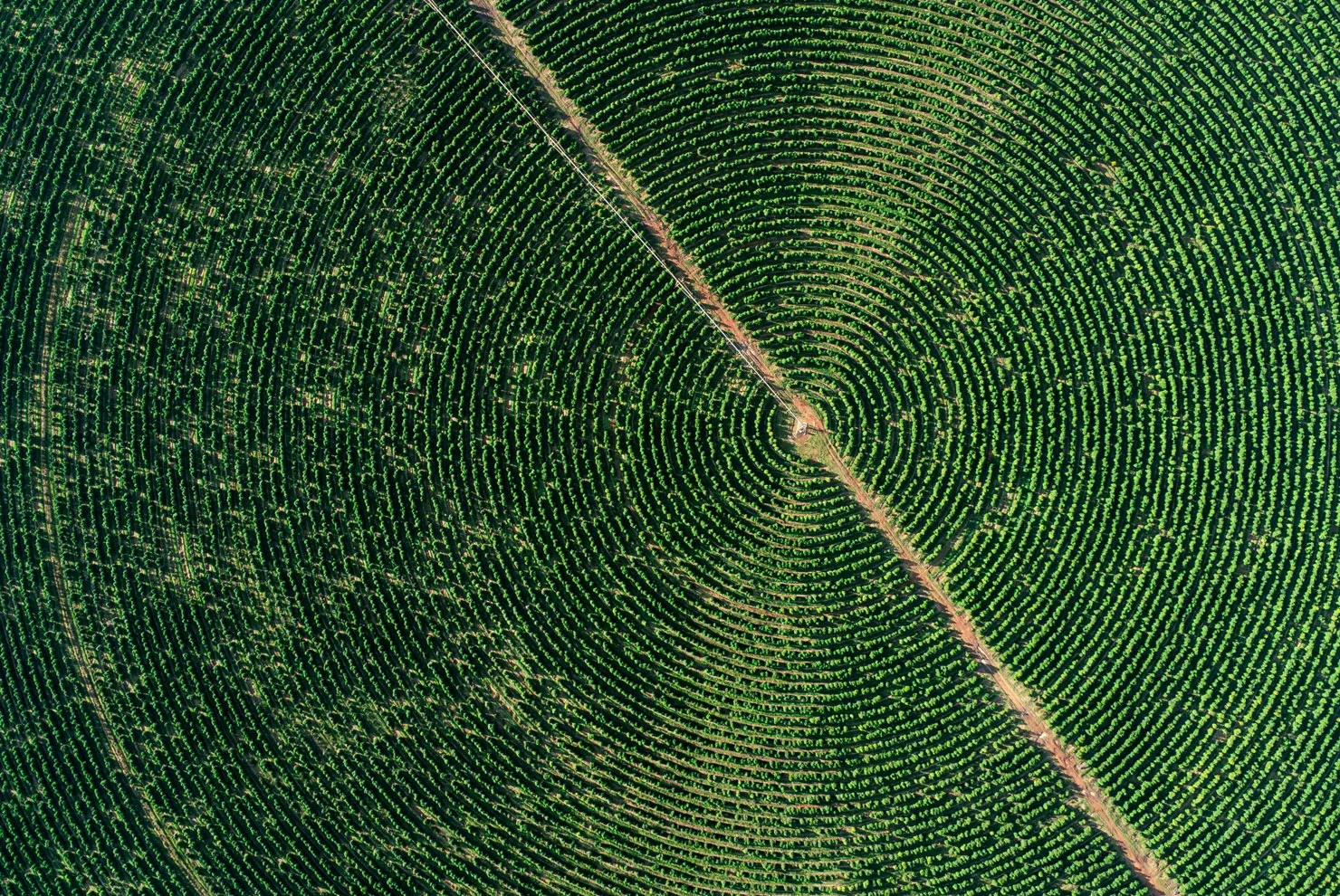
A coalition of the world’s most prominent coffee roasters and traders has announced the formation of the Coffee Canopy Partnership, a large-scale technological initiative designed to map global coffee production and ensure compliance with the European Union Deforestation Regulation (EUDR). Led by JDE Peets and including major industry players such as the Louis Dreyfus Company (LDC), Sucden, Neumann Kaffee Gruppe (NKG), Touton, Sucafina, and Tchibo, the partnership aims to create a definitive, high-resolution digital map of the world’s coffee-growing regions. This effort represents a significant private-sector response to the looming regulatory requirements that threaten to reshape the global coffee trade.
The initiative comes at a critical juncture for the industry. While the EUDR was originally slated for earlier implementation, the European Parliament and Council recently moved to delay the enforcement of the law. Medium and large-sized enterprises are now expected to comply by the end of 2026, while small and micro-enterprises have until mid-2027 to meet the new standards. Despite these postponements, the complexity of the regulation has created a sense of urgency among stakeholders who must prove that their products are not sourced from land deforested after December 31, 2020.
The Regulatory Framework: Understanding EUDR Requirements
The European Union Deforestation Regulation (Regulation 2023/1115) is a landmark piece of legislation aimed at minimizing the EU’s contribution to global deforestation and forest degradation. The law covers seven primary commodities: cattle, cocoa, coffee, oil palm, rubber, soya, and wood, as well as several derived products. Under the regulation, any operator or trader who places these commodities on the EU market must conduct extensive due diligence.
The core of the EUDR is the requirement for geolocation coordinates. Every shipment of coffee entering the European Union must be linked to the specific plot of land where it was produced. If that plot was subject to deforestation after the 2020 cutoff date, the product is prohibited from sale within the EU. Furthermore, the regulation requires that the production complies with the relevant legislation of the country of origin, including land-use rights and labor laws.
The implementation of these rules has faced significant pushback from producing nations and industry groups. Critics argue that the "one-size-fits-all" approach fails to account for the nuances of smallholder farming. In many coffee-producing regions, land titles are informal, and precise mapping technology is inaccessible to individual farmers. The Coffee Canopy Partnership is positioned as a solution to this "digital divide," providing the technical infrastructure necessary to keep smallholders integrated into the European market.
Technological Strategy and Implementation Timeline
The Coffee Canopy Partnership will utilize a combination of advanced satellite imagery, artificial intelligence (AI), and on-the-ground verification to build its mapping database. The project is structured in phases, beginning with a massive data collection effort in East Africa.
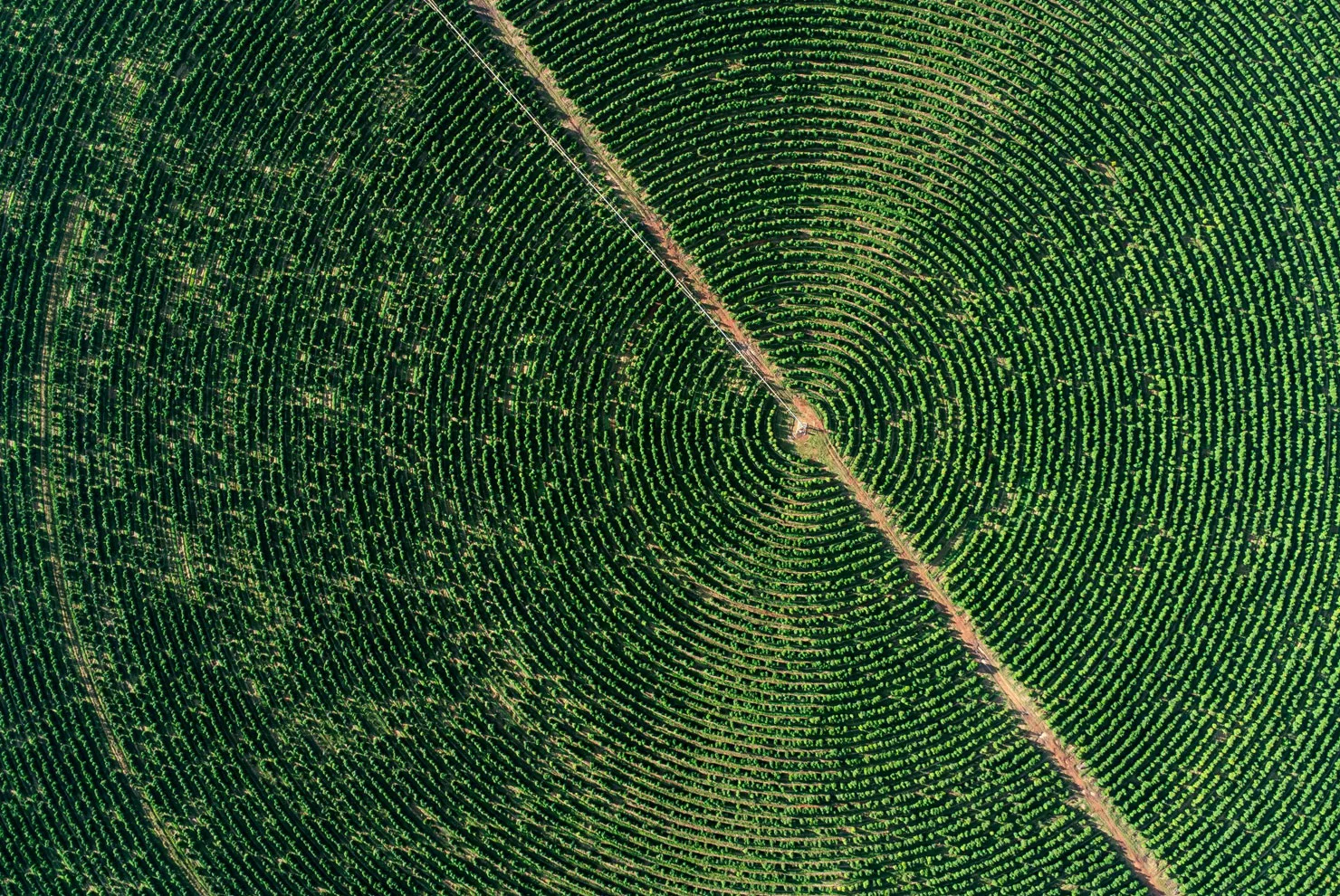
The initial phase, which commenced in April 2024, focuses on approximately 1.2 million square kilometers of land across Ethiopia, Tanzania, Kenya, Uganda, Burundi, and Rwanda. These nations were selected due to their high concentration of smallholder farmers and the diversity of their coffee-growing environments. The partnership aims to complete the East African mapping by June 2024, providing an immediate baseline for some of the world’s most vulnerable supply chains.
The project’s technological objective is twofold. First, it seeks to establish a highly accurate "2020 Baseline Map" to identify what was forested land at the end of the EUDR’s cutoff year. Second, it will generate an updated 2024-2025 map to detect any forest cover changes that have occurred since then. By using AI to analyze satellite data, the partnership hopes to overcome one of the primary technical hurdles of the EUDR: the misclassification of agroforestry.
In many regions, coffee is grown under a canopy of native trees—a practice known as shade-growing. Traditional satellite mapping often struggles to distinguish between these sustainable coffee farms and natural primary forests. If a shade-grown farm is incorrectly flagged as a forest, the farmer could be unfairly barred from the EU market. The Coffee Canopy Partnership intends to use high-resolution sensors and AI algorithms trained to recognize the specific signatures of coffee cultivation to prevent such errors.
The Economic Stakes for Smallholder Farmers
The global coffee industry relies heavily on small-scale producers. According to data from the International Coffee Organization (ICO), approximately 12.5 million farms produce coffee globally, and an estimated 95% of these are smallholders operating on less than five hectares of land. These farmers produce roughly 70% to 80% of the world’s coffee.
For these producers, the EUDR presents a potential existential threat. The "burden of proof" mandated by the regulation falls heavily on the supply chain. If a roaster in Germany or a trader in Switzerland cannot provide the exact coordinates and proof of non-deforestation for a lot of coffee, they will likely avoid purchasing from that source to mitigate legal risk. Without institutional support, millions of farmers in Africa, Southeast Asia, and Central America could find themselves "de facto" excluded from the European market, which accounts for approximately one-third of global coffee consumption.
The Coffee Canopy Partnership seeks to mitigate this risk by providing the mapping data at scale. By pooling resources, the member companies—many of whom compete fiercely in the marketplace—are effectively creating a public or semi-public good for their supply chains. The goal is to ensure that the transition to a deforestation-free sector is inclusive rather than exclusionary.
Industry Perspectives and Institutional Responses
The formation of the partnership has drawn a mix of cautious optimism and scrutiny from industry observers. In official statements, the participating companies have emphasized the necessity of collaboration. JDE Peets, the primary architect of the initiative, noted that the scale of the EUDR challenge is too large for any single company to address in isolation.

"The transition towards a deforestation-free coffee sector is a collective responsibility," a spokesperson for the partnership stated during the announcement. "By combining our expertise and resources, we can provide the accuracy and transparency required by the EUDR while protecting the livelihoods of the farmers who are the backbone of our industry."
However, some environmental and social watchdog groups have raised questions regarding the historical context of the participating firms. Organizations such as Mighty Earth and various NGOs have long pointed out that large commodity traders have historically benefited from the expansion of agricultural frontiers into forested areas. The shift toward mapping and preservation is seen by some as a necessary, if belated, acknowledgment of the industry’s environmental footprint.
There is also the question of data ownership and transparency. As these companies build a comprehensive map of the world’s coffee farms, the resulting data will be an incredibly valuable asset. Industry analysts are watching closely to see how this data will be shared with local governments and whether it will be used to empower farmers or further consolidate the power of large multinational buyers.
Broader Implications and Future Outlook
The success of the Coffee Canopy Partnership could serve as a blueprint for other sectors struggling with EUDR compliance. If the coffee industry can successfully map millions of smallholder plots using AI and satellite technology, similar models could be applied to the cocoa sector in West Africa or the rubber industry in Southeast Asia.
Beyond mere compliance, the initiative has the potential to improve agricultural productivity and environmental resilience. Accurate mapping allows for better monitoring of climate change impacts, such as shifting growing altitudes and the spread of pests like coffee leaf rust. It also facilitates the implementation of "landscape-level" restoration projects, where companies and governments work together to replant degraded areas and create wildlife corridors between farms.
However, challenges remain. On-the-ground verification—the process of sending human inspectors to confirm what satellites see—is expensive and logistically difficult in remote or conflict-prone regions. Furthermore, the 2027 deadline for a completed global map is ambitious, requiring significant co-investment from both the private sector and international institutions.
As the coffee industry prepares for the 2026 and 2027 deadlines, the Coffee Canopy Partnership stands as one of the most significant efforts to reconcile the demands of modern environmental regulation with the realities of global smallholder agriculture. Whether it can deliver on its promise of an inclusive, deforestation-free future will depend on the continued cooperation of the "hot dog guys"—the industry giants who now find themselves tasked with fixing the very landscapes their demand helped shape.