Ali Ikhwan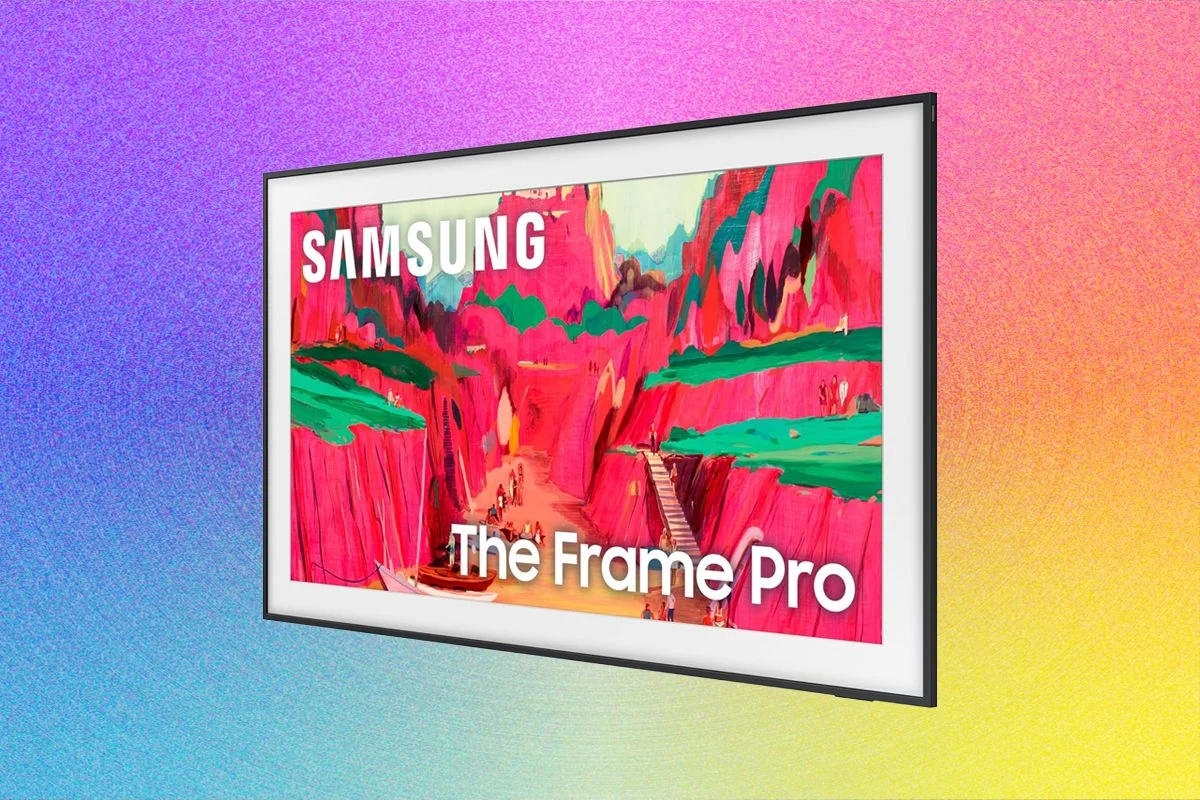
The modern living room has undergone a radical transformation over the last decade, shifting from a space dominated by a utilitarian "black mirror" to an integrated environment where technology serves as a centerpiece of interior design. For years, consumers have utilized their televisions for more than just traditional broadcast media, integrating smart home controls, high-fidelity music streaming, and console-free gaming into their daily routines. However, the emergence of the "art television" represents the most significant aesthetic shift in the industry to date. The Samsung Frame Pro stands at the vanguard of this movement, offering a sophisticated blend of high-refresh-rate performance and museum-quality digital curation. Recent hands-on testing suggests that while the Frame Pro maintains the core identity of a high-performance television, its primary value proposition lies in its ability to convincingly mimic physical artwork, effectively eliminating the visual void of an inactive screen.

The Evolution of Lifestyle Displays and Technical Specifications
The concept of the lifestyle television was pioneered by Samsung in 2017 with the original "The Frame," a device designed to blend seamlessly into a gallery wall. The Frame Pro represents the latest iteration of this philosophy, incorporating significant hardware upgrades to satisfy both aesthetic purists and demanding tech enthusiasts. Unlike standard displays that prioritize maximum brightness at the expense of realism, the Frame Pro utilizes a Neo QLED matte display. This panel technology is engineered specifically to reduce glare and mimic the texture of paper or canvas, a feature that has become a hallmark of the series.
The technical specifications of the 65-inch model tested highlight a strategic balance of features. The device supports a 144-Hz refresh rate, a significant jump from standard 60-Hz or 120-Hz lifestyle displays, making it a viable option for competitive gaming. It features a unique connectivity suite, including the Samsung Wireless One Connect box. This breakout box utilizes Wi-Fi 7 technology to transmit signals to the TV from up to 30 feet away, though the television itself operates on Wi-Fi 5 for streaming compatibility. This dual-band approach ensures that high-bandwidth peripherals, such as gaming PCs or 4K Blu-ray players, can operate with minimal latency while maintaining stable internet connectivity for built-in apps.

Chronology of Setup and Design Integration
The installation process for the Samsung Frame Pro distinguishes itself through a tool-less, modular design. Upon unboxing, the television presents a sleek, all-black frame that serves as a foundation for customizable bezels. These magnetic accents, available in White, Teak, Brown, and Sand Gold, snap into place without the need for screws or precise measurements. For the 65-inch model, these bezels retail for approximately $199, a premium cost that reflects their role in the device’s "camouflage" capability.
A critical component of the setup is the Samsung Wireless One Connect box. In a departure from traditional cable management, this device houses all HDMI ports, the Ethernet port, and power connections, allowing the TV to be mounted flush against a wall with only a single, nearly invisible cord—or no cord at all if using the wireless transmission feature. During testing, the flexibility of the One Connect box allowed for the concealment of peripheral devices like the Xbox Series X and Google TV streamer in separate cabinets, maintaining the "art gallery" aesthetic of the room. However, testers noted that the integration with external audio-visual (AV) receivers requires a specific configuration. Connecting all HDMI devices directly to the One Connect box and using the eARC port solely for audio to the receiver proved to be the most stable method, preventing the glitches and unintended power-offs reported in more complex daisy-chain setups.

Digital Curation and the Art Store Ecosystem
The soul of the Frame Pro is its Art Mode, which transforms the screen into a digital canvas when the TV is not in active use. Users are initially provided with a rotating selection of approximately 30 complimentary pieces. To unlock the full potential of the hardware, Samsung offers an Art Store subscription for $4.99 per month. This subscription provides access to a curated library of over 5,000 works, ranging from Renaissance masterpieces to contemporary photography.
High-profile inclusions such as Andrew Wyeth’s Christina’s World and various works by Vincent van Gogh are rendered with striking accuracy on the Pantone-certified display. The certification ensures that color reproduction meets rigorous industry standards, particularly for skin tones and natural landscapes. Furthermore, the Frame Pro incorporates an AI art generator, allowing users to create unique, high-resolution ocean scenes or abstract works based on keyword prompts. For those wishing to display personal memories, the SmartThings app facilitates the batch uploading of mobile photos, which can be formatted with digital "mats" to enhance the illusion of a framed photograph.

Performance Analysis: Cinema and Gaming
While the Frame Pro is marketed as a lifestyle product, its performance in traditional media consumption remains a focal point. The Neo QLED panel provides a backlit experience that is notably brighter than traditional OLED displays, making it well-suited for rooms with significant ambient light. During HDR10+ testing, the upscaling capabilities of the Samsung AI processor were evident, particularly in older film content. Using the Filmmaker Mode—a setting designed to disable post-processing and present movies as the director intended—the TV revealed intricate details, such as individual scales on a character’s costume or the grain of a 1970s film stock.
However, the display technology does involve certain trade-offs. The Frame Pro utilizes local dimming via 24 vertical bands located at the bottom of the frame. This configuration can result in "light bloom" or "haloing" around bright objects on a dark background, a phenomenon more pronounced than on Mini-LED or OLED screens which feature thousands of independent dimming zones. Additionally, Samsung continues its trend of omitting Dolby Vision support, opting instead for the royalty-free HDR10+ standard. While HDR10+ is supported by major platforms like Amazon Prime Video and Hulu, the absence of Dolby Vision may be a deterrent for cinephiles with extensive physical media libraries.

On the gaming front, the Frame Pro excels due to its 144-Hz support and integrated cloud gaming hub. Platforms like Xbox Cloud Gaming and Steam Link are built directly into the UI, allowing for high-fidelity gaming without a console. Testing with Cyberpunk 2077 and Forza Horizon 5 demonstrated smooth motion handling and low input lag, particularly when using the dedicated Micro HDMI port for a wired connection to a gaming PC.
Supporting Data and Market Context
The release of the Frame Pro comes at a time of heightened competition in the lifestyle TV sector. Market data indicates that "aesthetic integration" is now a top-five priority for premium TV buyers, alongside screen size and smart features. Competitors like LG’s Gallery Series and Hisense’s CanvasTV have attempted to capture this demographic, but Samsung’s established Art Store ecosystem remains a dominant force.

According to industry analysts, the success of the Frame series has influenced a broader trend in consumer electronics: the move toward "invisible technology." By incorporating motion sensors that automatically dim the display or enter a low-power state when a room is empty, the Frame Pro addresses environmental concerns and prevents screen burn-in, a common anxiety associated with leaving a static image on a display for extended periods.
Broader Implications for Interior Design and Technology
The implications of the Samsung Frame Pro extend beyond the realm of consumer electronics and into the field of interior architecture. By successfully masquerading as a high-end art piece, the television allows homeowners to reclaim the "focal wall" of their living spaces. No longer must a room be designed around a massive black rectangle; instead, the technology adapts to the decor.

The inclusion of AI-driven features—such as the Smart Calibration tool, which uses a smartphone camera to adjust color balance based on specific room lighting—points to a future where hardware is increasingly software-defined. As AI continues to evolve, the ability for a television to not only display art but to generate and curate it based on the user’s mood or the time of day represents a new frontier in personalized home environments.
In conclusion, the Samsung Frame Pro is a specialized instrument that prioritizes form as much as function. While it may not offer the absolute deepest blacks found in top-tier OLED panels, its matte finish, industry-leading art library, and sophisticated connectivity make it a unique outlier in a crowded market. For the consumer who views their home as a gallery, the Frame Pro is less of a television and more of a transformative piece of furniture that happens to play 4K movies and high-refresh-rate games. It is a testament to the fact that in the modern era, the most impressive technology is often the kind that knows how to disappear.