
In the contemporary digital landscape, maintaining a consistent and strategic presence across social media requires robust infrastructure. For enterprises, marketing agencies, independent creators, and solopreneurs alike, the selection of a primary social media management tool dictates workflow efficiency, budget allocation, and audience engagement capabilities. Two prominent contenders in this sector—Buffer and Later—frequently emerge as top solutions for scheduling content, connecting with target audiences, and analyzing performance metrics. However, their underlying structural philosophies, pricing models, and feature sets differ significantly. Understanding these disparities is essential for organizations aiming to optimize their digital marketing operations without incurring unnecessary overhead.
Background Context and Evolution of Social Media Management Tools
The market for social media management platforms has expanded rapidly over the past decade, driven by the increasing complexity of multi-channel digital marketing. Early social media tools functioned primarily as simple queue-based queue systems designed to post content at predetermined intervals. Over time, as platforms diversified and user bases fragmented across networks such as Instagram, TikTok, LinkedIn, and emerging decentralized platforms like Bluesky and Mastodon, the demand for sophisticated operational hubs intensified.
Buffer entered the market with a value proposition centered on simplicity, transparency, and flexible, channel-based scalability. Conversely, Later positioned itself as a visually focused platform tailored specifically for image- and video-centric networks, prioritizing grid planning, visual content calendars, and specialized workflows for platforms like Instagram and TikTok. As both platforms have evolved to incorporate artificial intelligence assistants, advanced analytics, and community management hubs, the choice between them has become increasingly nuanced, forcing brands to evaluate their operational priorities carefully.
Financial Frameworks, Pricing Models, and Accessibility
Cost is frequently the primary determinant in software procurement. The pricing architectures of Buffer and Later reflect fundamentally different approaches to monetization and resource scaling.
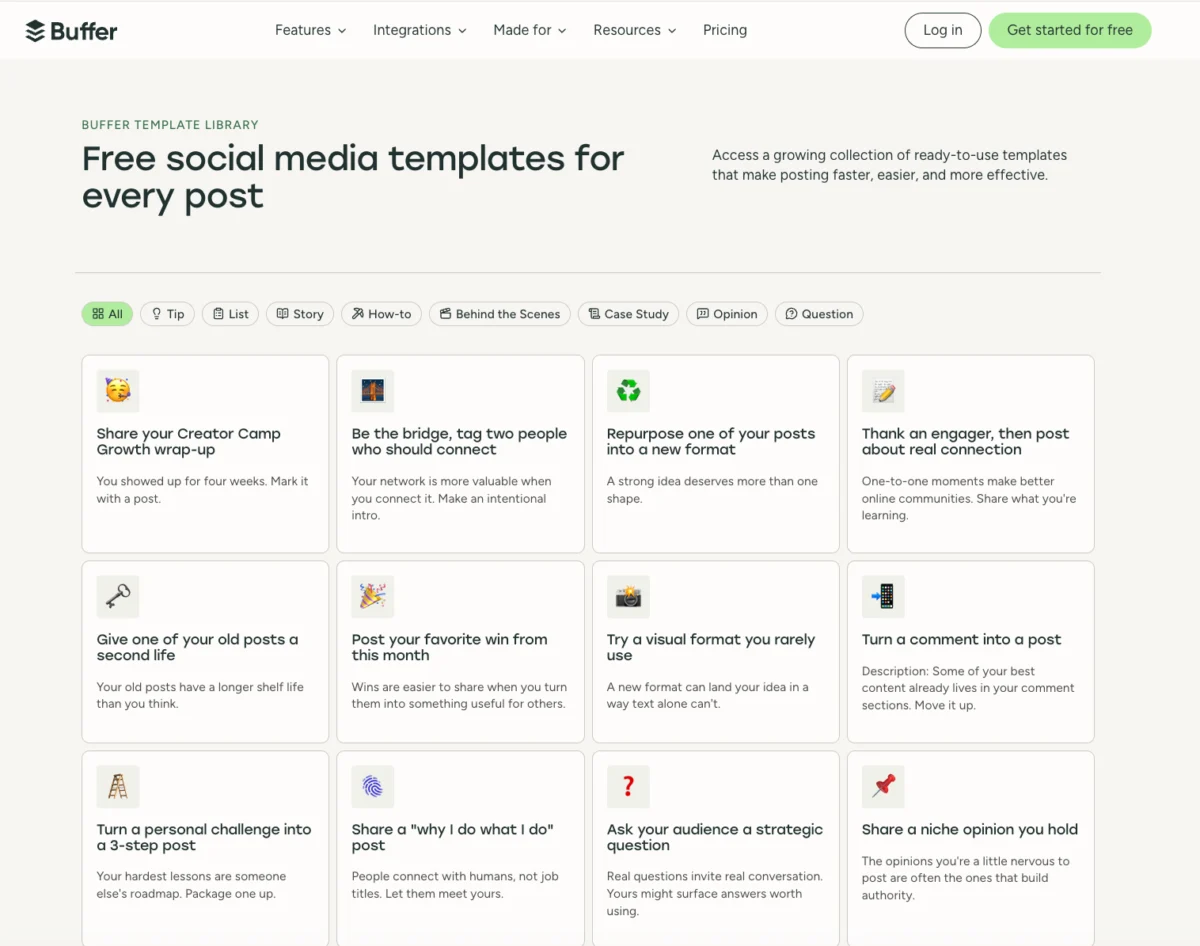
Buffer employs a flexible, channel-based pricing model. Users can select the exact social media channels they require, paying exclusively for the specific endpoints they utilize. Furthermore, Buffer provides a permanent free plan supporting up to three social media channels on any platform, alongside basic analytics and unlimited basic AI assistance. Paid plans for Buffer begin at a competitive entry point of $6 per month per channel, ensuring that solopreneurs and small businesses can scale their expenditures linearly with their growth.
In contrast, Later does not offer a permanent free tier, requiring users to commit to paid subscriptions immediately following a 14-day trial period. Later utilizes a bundled pricing approach centered on "social sets." Each social set bundles one account from each supported platform (Instagram, Facebook, Threads, Pinterest, TikTok, LinkedIn, YouTube, and Snapchat). Consequently, users cannot mix and match individual channels à la carte. If a business requires two accounts on the same platform—such as a personal brand LinkedIn profile and a corporate LinkedIn page—they must purchase additional social sets, which significantly elevates the baseline expenditure. Later’s paid plans initiate at $25 per month for starter tiers and scale upwards depending on team seats and connected social sets.
User Seat Allocation and Team Scalability
Team collaboration infrastructure represents another critical divergence between the two platforms. For growing marketing teams and agencies, predictable user seat pricing prevents unexpected budgetary expansion.
Buffer structures user accounts to favor collaborative scalability. The platform’s Free and Essentials plans include a single user seat, whereas the Team plan includes an unlimited number of user accounts. This structure ensures that organizations can onboard multiple marketing staff members, copywriters, and client stakeholders without incurring per-seat penalties.
Later assigns a fixed number of user accounts to each plan tier: the Starter plan accommodates one user, the Growth plan includes two seats, and the Scale plan incorporates four. Additional seats can be purchased on team plans for a per-user monthly fee. Furthermore, Later utilizes "access groups" to compartmentalize permissions, linking specific user groups to predetermined social sets and media libraries. While effective for agency environments managing distinct client portfolios, this architecture can introduce structural rigidity if cross-functional teams require overlapping access to non-bundled assets.
Platform Compatibility and Supported Networks
Digital marketing strategies frequently depend on broad network compatibility. A comprehensive analysis of supported social channels reveals distinct operational boundaries for each tool.
Buffer supports an expansive roster of 11 distinct platforms: Instagram (Creator, Business, and Personal profiles), Facebook (Pages and Groups), X (formerly Twitter), LinkedIn, TikTok, Pinterest, Google Business, Mastodon, YouTube, Threads, and Bluesky. This broad compatibility makes Buffer particularly attractive for organizations engaging in cross-platform dissemination, including emerging text-based and decentralized protocols.
Later supports eight platforms: Instagram (Business and Creator profiles only), Facebook (Pages only), Threads, Pinterest, TikTok, LinkedIn, YouTube, and Snapchat. Notably, Later excludes support for X, Bluesky, Mastodon, and Google Business, while uniquely incorporating Snapchat. Additionally, Later’s restrictions regarding Instagram profiles—omitting personal profiles and requiring specific account types for automated publishing—may present limitations for independent creators utilizing personal accounts.
Content Creation, Scheduling, and Workflow Efficiency
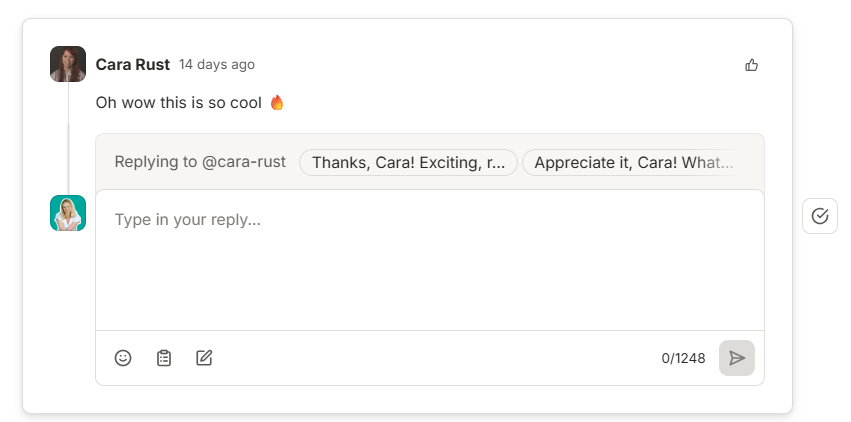
Both platforms provide centralized dashboards for drafting, scheduling, and publishing content across multiple networks. However, their mechanics for high-volume publishing and asset management diverge considerably.
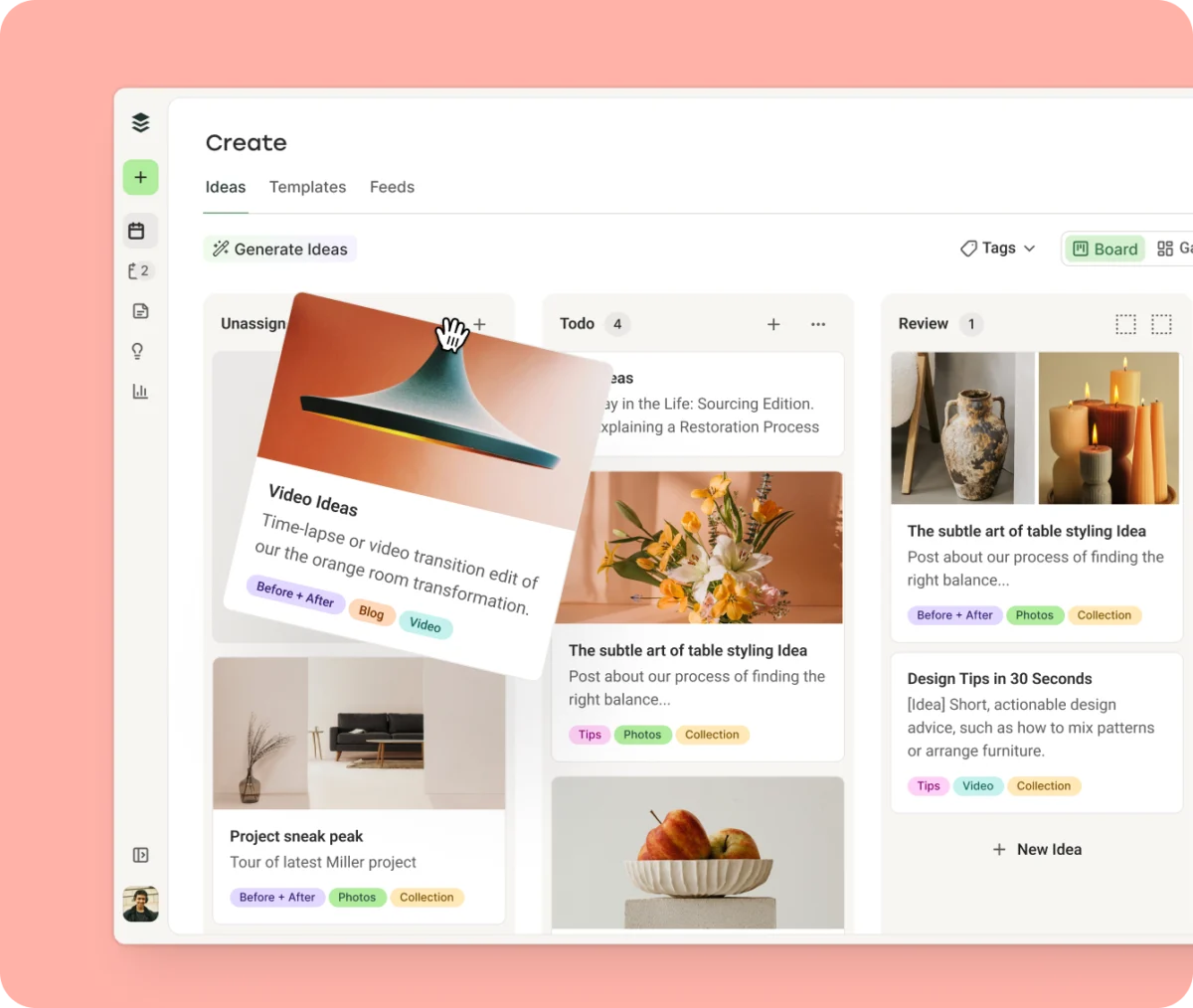
Buffer accommodates bulk content publishing by allowing users on paid plans to upload up to 100 posts simultaneously via a CSV file, facilitating the rapid deployment of large-scale campaigns. Additionally, Buffer’s channel groups enable marketers to save pre-configured combinations of social accounts—such as a corporate group comprising LinkedIn, Facebook, and Threads—and publish to them concurrently with a single click.
Later addresses high-volume planning through its signature visual grid planner, which allows users to preview Instagram and Pinterest feeds via a drag-and-drop calendar interface. Later also features saved caption repositories and automated hashtag suggestions generated from post text. However, Later imposes limits on the number of scheduled posts per profile—even on paid tiers—restricting Starter users to 30 posts per profile monthly and Growth users to 180, with unlimited scheduling reserved exclusively for the highest-tier Scale plan. Buffer, conversely, permits 10 scheduled posts per channel on its free tier and offers unlimited scheduling across all paid plans.
Artificial Intelligence Integration and Automation
Artificial intelligence has become a standard feature in modern marketing software, designed to accelerate ideation and copywriting workflows.
Buffer integrates its AI Assistant across all plan tiers, including the permanent free version, with unlimited usage limits. Users can generate content ideas, draft captions, and repurpose text across platforms without encountering artificial credit ceilings. This unfettered access mitigates the risk of workflow interruptions during intensive campaign development.
Later incorporates AI-driven content generation through a credit-based system available exclusively on paid subscription tiers. Users consume credits to generate captions, content pillars, or post concepts. Once monthly credit allocations are exhausted, users must either wait for the billing cycle to reset or purchase supplementary token packs.
Community Management and Engagement Metrics
Audience retention and active community management are vital components of social media governance. Both tools offer centralized engagement features, though their accessibility and analytical depth vary.
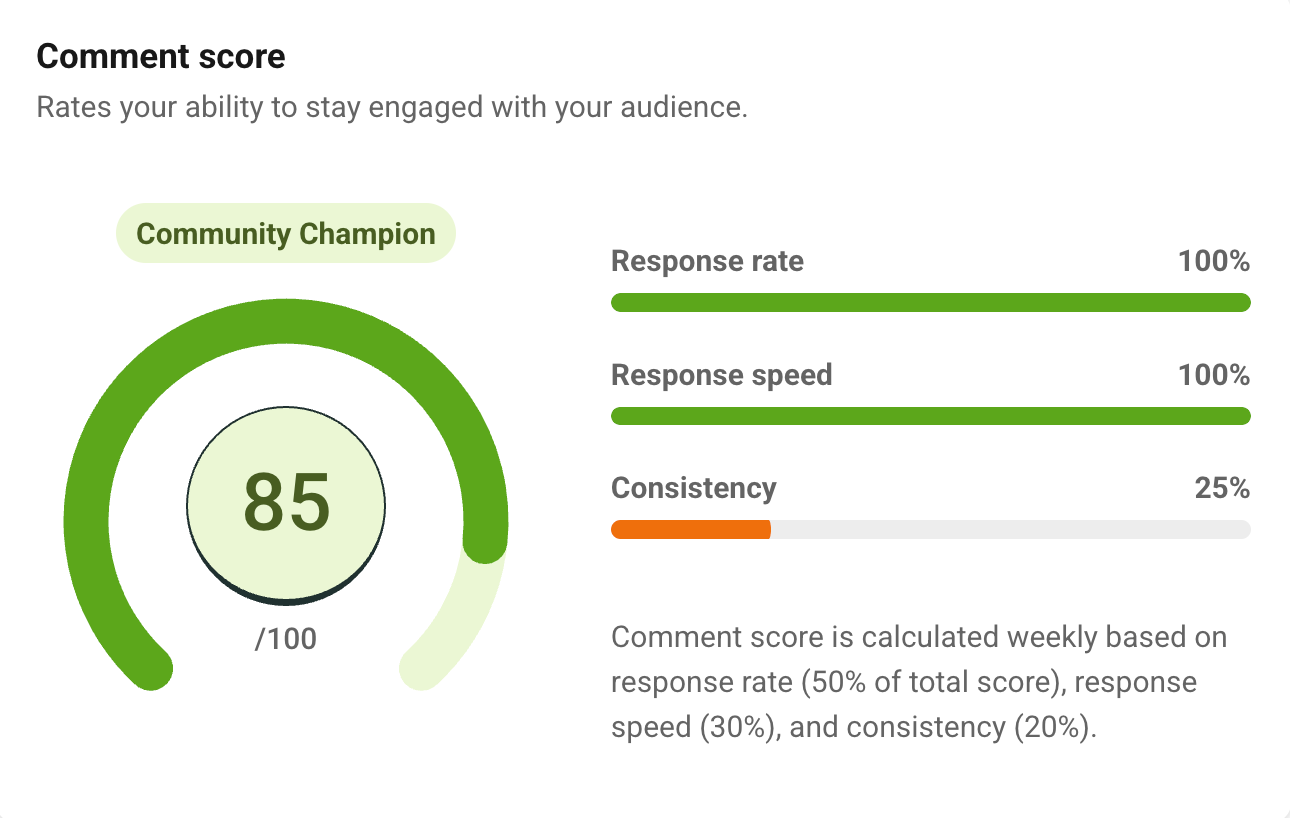
Buffer includes its Community management hub across all plans, including the free tier. This tool aggregates comments and mentions, offering AI-generated response suggestions, saved replies for frequently asked questions, and a unique "comment score" metric that tracks response speed and consistency across connected accounts. This visibility helps marketing teams maintain rigorous engagement standards.
Later offers a unified social inbox on its Growth and Scale tiers, aggregating direct messages and comments from Instagram, Facebook, and TikTok. Later’s inbox includes a comment-hiding utility designed to combat spam and inappropriate remarks. Furthermore, Later offers advanced social listening tools as a paid add-on on the Scale plan, enabling brand sentiment analysis, trend tracking, and competitive benchmarking at an additional, customized cost.
Analytics, Insights, and Reporting Capabilities
Data-driven decision-making relies on accurate, digestible performance metrics. Buffer and Later approach analytics through distinct structural frameworks.
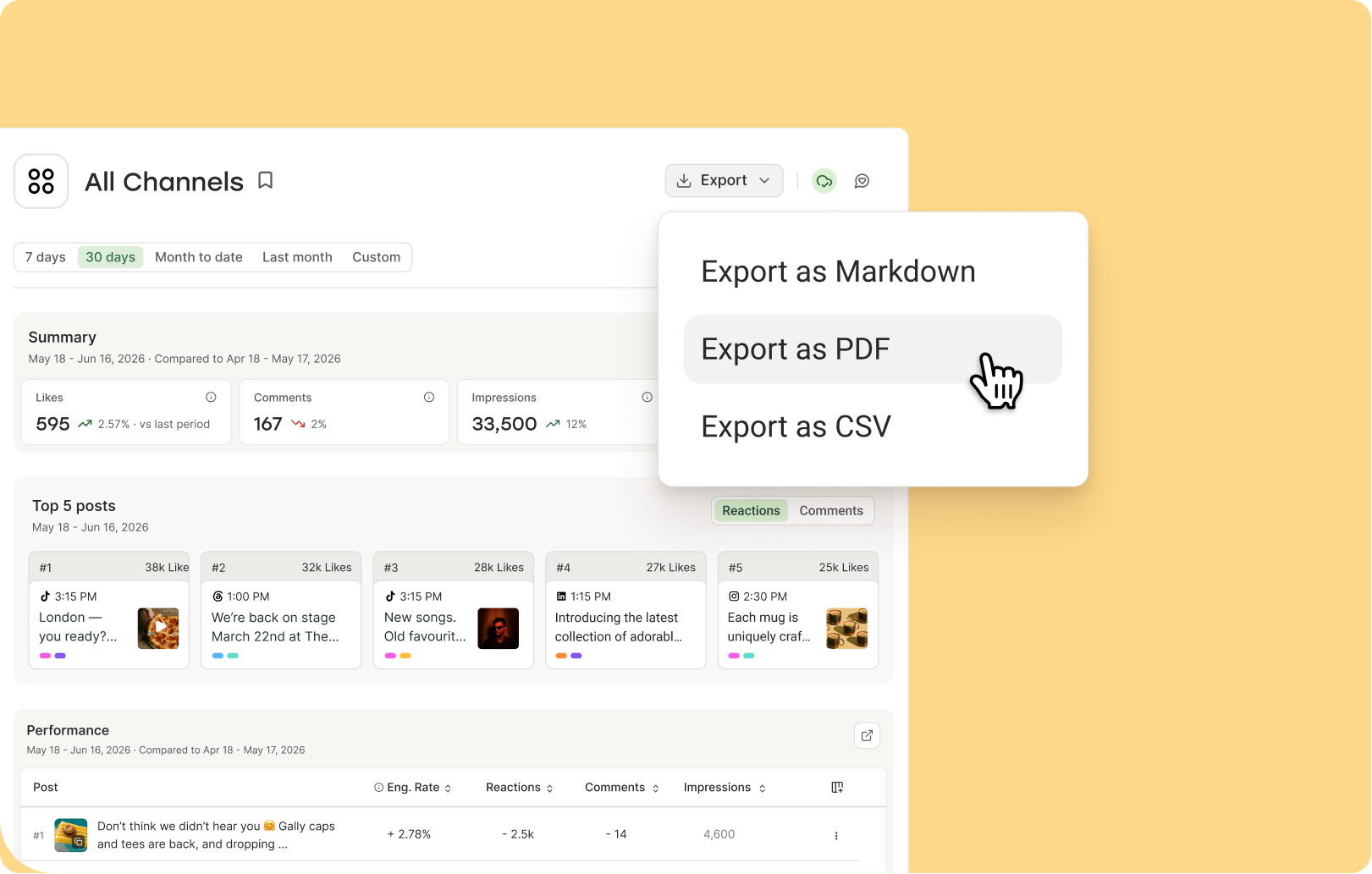
Buffer provides foundational insights on its free plan and advanced analytics on paid tiers. A notable differentiator is Buffer’s AI-powered "Takeaways" feature, which synthesizes complex performance charts into actionable strategic recommendations, highlighting successful content patterns and advising on future publishing adjustments. Reports can be easily exported for client or management review.
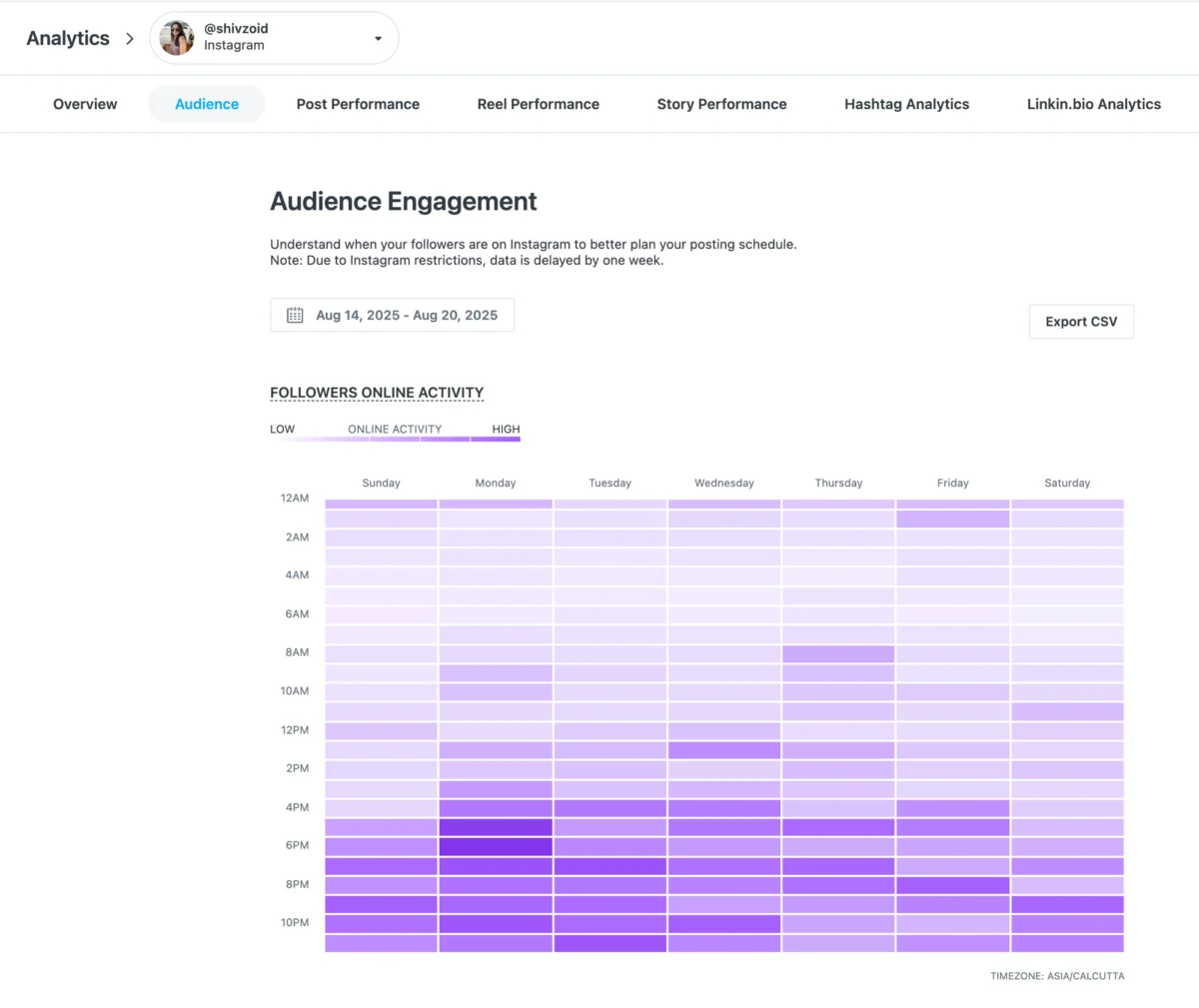
Later restricts comprehensive analytics to its paid subscription tiers, though link-in-bio analytics remain accessible across all plans. Later’s analytics offer granular audience demographic breakdowns—including age, gender, and geographic location—as well as algorithmic heatmaps indicating optimal publishing times based on follower activity. While Later does not support direct PDF report generation, performance data can be exported in CSV format, and Instagram users can generate shareable 90-day performance links.
Link-in-Bio Infrastructure and Commerce Integration
Both platforms provide dedicated landing page builders designed to maximize conversion rates from social media profile bios.
Buffer’s Start Page enables users to construct modular landing pages utilizing customizable content blocks, including image grids, video embeds, and text modules. Multiple blocks of the same type can be deployed simultaneously to highlight diverse campaigns or partnerships. Affiliate monetization is supported by embedding customized affiliate links directly into designated blocks.
Later’s Linkin.bio tool emphasizes visual commerce. It integrates directly with Shopify, allowing brands to link specific social media posts directly to product inventory to track conversion metrics. Additionally, Later incorporates an integration with Mavely, enabling creators to convert standard links into monetized affiliate links directly within the interface. However, Later’s structural layout relies more heavily on fixed templates, such as carousel image banners, offering less modular freedom than Buffer’s block-based approach.
Strategic Implications and Selection Criteria
The selection between Buffer and Later depends heavily on organizational structure, budgetary constraints, and platform priorities.
Buffer is generally better suited for solopreneurs, small businesses, and multi-platform digital marketers who require expansive network compatibility (including X, Bluesky, and Mastodon), flexible channel-based pricing, unlimited AI assistance, and unlimited user seats on collaborative plans. Its predictable cost structure and robust free tier make it an accessible entry point for resource-conscious entities.
Later is optimized for visually driven brands, Instagram- and TikTok-centric creators, and agencies managing dedicated visual campaigns. Its drag-and-drop calendar, robust visual grid previews, integrated e-commerce tracking via Shopify, and specialized influencer marketing add-ons provide powerful tools for brands where visual aesthetics and direct product conversions are paramount.
Ultimately, organizations must evaluate their core operational workflows, target audience distribution, and scaling projections before committing to either ecosystem. Utilizing available trial periods allows marketing teams to empirically test dashboard usability and ensure seamless integration with existing digital strategies.