rifanmuazin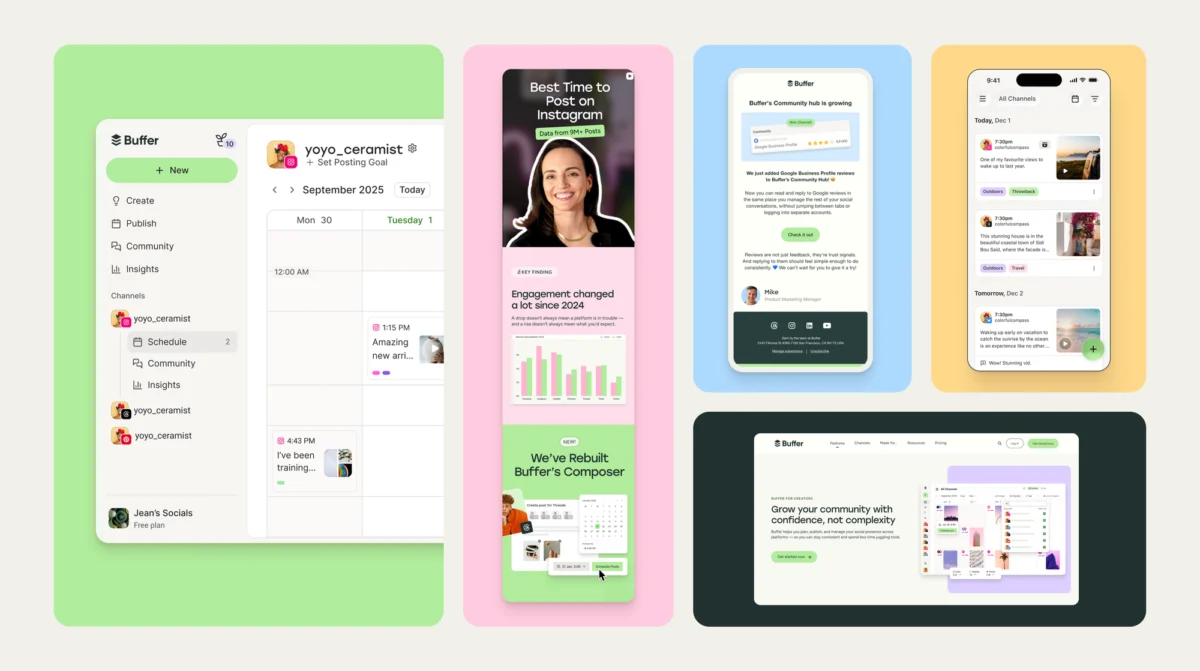
Buffer, a prominent social media management platform, today announced a comprehensive redesign of its core product, introducing a refreshed visual language and a streamlined navigation system aimed at providing creators and businesses with enhanced flexibility and a calmer, clearer user experience as the social media landscape continues its rapid evolution. This significant update, years in the making, marks a pivotal moment for Buffer as it repositions itself to meet the increasingly complex demands of digital content strategy in 2026 and beyond.
The redesign is more than a superficial facelift; it represents a strategic recalibration to address the inherent challenges of managing a robust online presence. According to Buffer’s internal communications, the overarching goal is to transform the platform into a more intuitive, insightful, and less chaotic environment, fostering what they term "momentum" for their users. This momentum, they contend, is cultivated through a blend of calm, actionable insight, and adaptability to the diverse needs of various businesses and content creators. The company emphasized that while the underlying functionalities remain robust, the revamped interface provides a stronger foundation for future innovations, including smarter scheduling, deeper analytics, and AI-powered assistance.
Addressing the Evolving Digital Landscape
The decision to embark on such a profound redesign stems from a deep understanding of the contemporary social media environment. Over the past decade, social platforms have transformed from simple communication tools into multifaceted digital ecosystems, often characterized by complex algorithms, fragmented audiences, and an overwhelming volume of content. This has led to a paradoxical situation where tools designed to simplify social media management have themselves become increasingly intricate. Data from recent industry reports indicates that over 60% of small to medium-sized businesses (SMBs) and independent creators struggle with consistent content delivery and understanding audience engagement metrics, often citing platform complexity and time constraints as major hurdles. The sheer volume of daily active users across platforms, now exceeding 5 billion globally, underscores the critical need for efficient and effective engagement strategies.
"Social platforms, by their very nature, can feel like chaotic public squares, driven by opaque algorithms and often polarizing discourse," stated Joel Gascoigne, CEO of Buffer, in a recent interview. "We hear from our users, and experience it ourselves, how challenging this environment can be when you’re trying to build a brand or grow a business. Our redesign is a direct response to this. We believe that true momentum isn’t forced; it emerges from a space that empowers calm, provides clear insights, and offers the flexibility to adapt."

Buffer’s journey began with a singular focus: to simplify social media publishing. As the platform grew and evolved, adding features for engagement, analytics, and team collaboration, the original architectural structure, while effective for its time, started to show limitations. Users, while appreciative of new functionalities, sometimes reported a growing sense of complexity. This feedback, combined with an internal desire to push the boundaries of user experience, catalyzed the redesign initiative.
A New Architecture for Enhanced Usability
At the heart of the redesign are two significant structural changes: a completely overhauled navigation system and an updated visual language.
The new navigation introduces a centralized sidebar, a departure from previous layouts where certain features might have been less intuitively grouped. This sidebar now serves as a command center, allowing users to effortlessly switch between different social channels, content groups, and workflow contexts, whether they are planning posts, engaging with their community, or diving into performance analytics. This consolidation is designed to reduce cognitive load and minimize the need for users to jump between disparate sections, thereby promoting a more fluid and uninterrupted workflow. For creators new to the platform, this streamlined approach aims to flatten the learning curve, allowing for quicker adoption and mastery of core functionalities. Conversely, for seasoned professionals managing multiple accounts and complex campaigns, the enhanced visibility and organizational structure promise greater control and efficiency.
"Simplicity has always been a cornerstone of Buffer’s appeal," explained Catherine Hou, Head of Product at Buffer. "But as we expanded our feature set, we inadvertently added layers of complexity. This redesign was about going back to our roots, simplifying the user journey while simultaneously building a robust framework that can support the sophisticated tools our users will need in the future. The centralized sidebar, for instance, is not just about aesthetics; it’s about creating a mental model for our users that is consistent and intuitive, regardless of the task at hand."
A Refined Visual Language: Calmness and Clarity
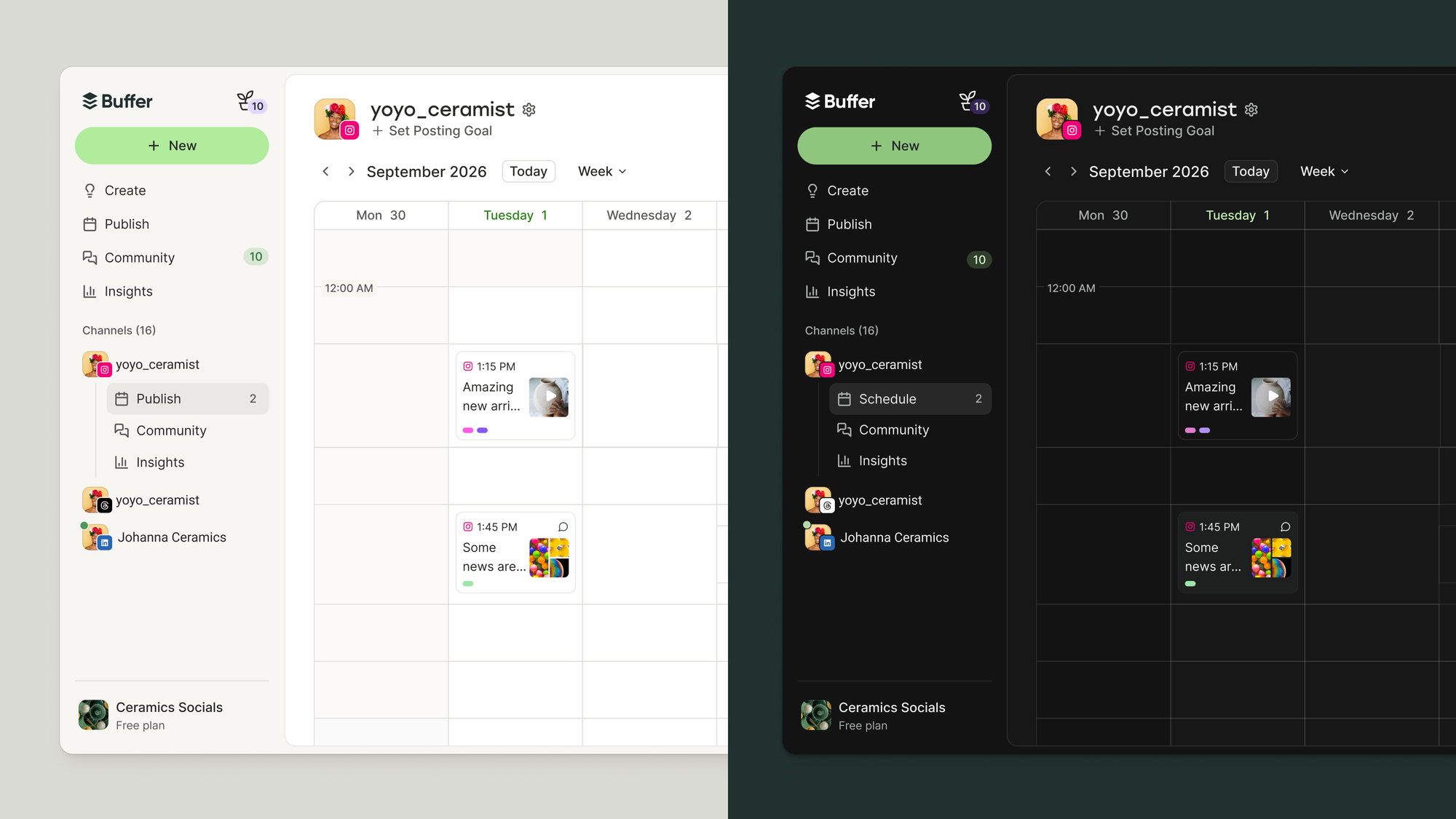
Complementing the structural changes is a comprehensive refresh of Buffer’s visual language. The update introduces a lighter color palette, refined typography, and a cleaner overall aesthetic. This shift is intentional, designed to evoke a sense of calm and clarity, providing a welcome respite from the often-overstimulating nature of social media itself. The company drew an analogy to rearranging furniture – the underlying structure remains, but the space feels more functional and harmonious.
This visual evolution has been a gradual process, with elements quietly appearing on Buffer’s marketing site and various campaigns over the past year. Today’s product launch brings these disparate elements together, creating a unified and cohesive brand experience across all touchpoints, from the website to the web application and mobile apps.
"Buffer has always embraced a slightly unconventional, curious, and independent spirit," said Alex MacLeod, Head of Design at Buffer. "Our previous interface, while functional, didn’t always fully embody that ethos as the product grew. This refresh was about bringing that spirit back, consistently applying it to every pixel. It’s not about reinvention, but about rediscovering our core identity and ensuring our visual presence truly supports our mission to empower creators and businesses." The design team focused on creating an interface that is not only aesthetically pleasing but also highly functional, reducing visual clutter and emphasizing key information to aid decision-making.
Strategic Implications and Future Outlook
The redesign is not merely a response to current market trends but a proactive step towards Buffer’s strategic vision for the future. The company explicitly states that the new architecture creates "space to grow," hinting at a roadmap filled with advanced features. These include "smarter scheduling" powered by AI to optimize post times, "deeper insights" that move beyond basic analytics to offer more actionable intelligence, and further "AI assistance" to streamline content creation and strategy. These planned enhancements align with broader industry trends where artificial intelligence is increasingly being integrated into marketing and content management tools to boost efficiency and effectiveness. Industry analysts project that AI integration in marketing software will grow by over 25% annually over the next five years, making Buffer’s forward-looking strategy particularly timely.
This strategic move places Buffer in a competitive position within the crowded social media management market. By focusing on a "calmer, clearer, easier" experience, Buffer aims to differentiate itself from competitors who may prioritize feature bloat over user simplicity. The emphasis on fostering "momentum" through insight and flexibility speaks to a more holistic approach to social media success, acknowledging the psychological and strategic demands placed on modern digital professionals.

"Buffer’s redesign is a smart play in a market that’s only getting more complex," observed Sarah Jenkins, a senior analyst at Digital Dynamics Research. "As the creator economy matures and businesses invest more heavily in social media, tools need to evolve beyond basic scheduling. Buffer’s focus on user experience, combined with hints of AI integration and deeper insights, positions them well to capture a segment of users who are overwhelmed by current solutions and seeking a more intuitive, yet powerful, platform."
The company’s mission remains steadfast: to help creators and businesses establish and expand their online presence. This involves empowering them to publish consistently, understand what resonates with their audience, and achieve growth without feeling like they are constantly battling the system. The redesign is presented as the foundational first step towards a more robust, intelligent, and user-centric Buffer.
Buffer leadership expressed immense pride in the team’s diligent work, highlighting the care, attention to detail, and empathy demonstrated throughout the redesign process. They also extended gratitude to the community of creators and businesses whose invaluable feedback played a crucial role in shaping this significant platform evolution. As the digital world continues to shift, Buffer invites its users and the broader industry to follow along on this journey, promising further innovations designed to simplify and amplify social media success.