
 Angie Faith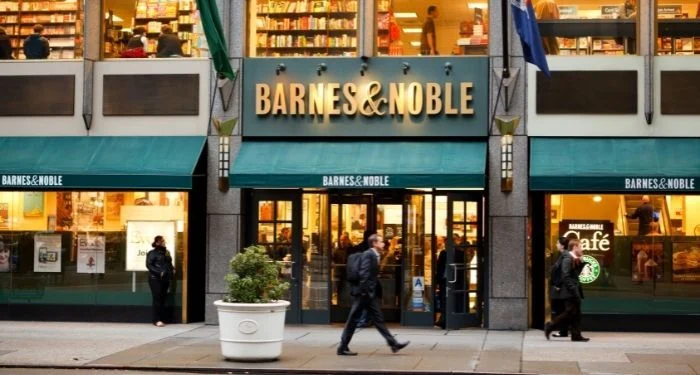
The American retail book landscape is undergoing a profound structural transformation, driven largely by the aggressive physical expansion and strategic acquisitions executed by Barnes & Noble. Under the leadership of CEO James Daunt, who took the helm of the nation’s largest bookstore chain, the company has pivoted away from the defensive, cost-cutting measures that characterized its operations during the digital e-reader boom of the 2010s. Instead, Barnes & Noble has embarked on a multi-pronged growth strategy defined by opening scores of greenfield retail locations and absorbing financially distressed, historic regional independent bookstore chains.
The latest development in this ongoing retail saga is the acquisition of Joseph-Beth Booksellers, a revered regional institution operating its last two remaining storefronts in Cincinnati, Ohio, and Lexington, Kentucky. This transaction follows closely on the heels of high-profile acquisitions of other beloved regional brands, including Colorado’s Tattered Cover and the Bay Area’s Books Inc. While corporate leadership maintains that these acquired properties will preserve their historic branding, distinct local identities, and embedded culinary operations—such as Joseph-Beth’s popular Bronte Bistro restaurants—the transactions have reignited a complex debate within the literary community regarding the delicate balance between corporate preservation and the dilution of independent bookselling culture.
A Strategic Pivot Under James Daunt
To understand the current trajectory of Barnes & Noble, one must examine the operational philosophy introduced by James Daunt. Daunt, who previously achieved acclaim for turning around the British bookstore chain Waterstones, stepped into the CEO role at Barnes & Noble with a mandate to decentralize the corporate retail model. Historically, major big-box bookstores suffered from centralized buying mandates, where corporate headquarters dictated uniform stock configurations across hundreds of disparate geographical markets, regardless of local reading preferences.
Daunt reversed this policy, granting local store managers and booksellers absolute autonomy over their inventory curation. By empowering booksellers to stock titles that resonate with their specific neighborhood demographics, Barnes & Noble stores began to mirror the vibrant, highly curated atmospheres of independent bookstores. This operational shift transformed the customer experience, driving a resurgence in foot traffic, elevating physical book sales, and generating the capital necessary for physical expansion.
Buoyed by this retail renaissance, Barnes & Noble accelerated its real estate footprint. The company opened approximately 60 new stores in 2025 and has committed to launching an additional 60 locations throughout 2026. However, building new stores from the ground up is only one component of the company’s aggressive expansion blueprint. The other involves stepping in as a financial savior for storied independent and regional chains facing insurmountable insolvency crises.
The Chronology of Distress and Acquisition
Barnes & Noble’s entry into the independent and regional chain acquisition market is marked by a clear pattern: stepping in during bankruptcy proceedings to rescue cultural landmarks that would otherwise liquidate entirely. This strategy not only secures prime retail real estate with established customer bases but also positions the corporate giant as a protector of literary heritage, albeit one with consolidated market power.
The pattern solidified in 2024 when Tattered Cover, a legendary independent bookstore institution in Denver, Colorado, filed for Chapter 11 bankruptcy protection. Plagued by pandemic-era debt, shifting consumer habits, and rising commercial real estate pressures, Tattered Cover faced imminent liquidation. Barnes & Noble intervened, securing court approval to purchase the struggling chain for $1.83 million. The acquisition ensured that Tattered Cover’s flagship and remaining community spaces kept their doors open, keeping hundreds of thousands of volumes on shelves and preserving jobs for local booksellers.
The playbook was repeated in 2025 on the West Coast. Books Inc., a historic San Francisco-based chain frequently cited as the oldest independent bookseller in the American West, encountered severe financial headwinds. Following its own bankruptcy filing, Barnes & Noble stepped forward with a $3.25 million acquisition offer. Much like the Tattered Cover arrangement, the corporate parent promised to maintain the Books Inc. banner, honoring its deep-rooted ties to the Bay Area literary community.
The continuation of this trend arrives with the 2026 acquisition of Joseph-Beth Booksellers. Operating extensive community hubs in Cincinnati and Lexington, Joseph-Beth had long served as a cultural anchor for the Ohio and Kentucky regions, distinguished not only by its expansive book inventories but also by its full-service Bronte Bistro dining spaces. As economic pressures mounted on independent regional players, Joseph-Beth found itself navigating financial viability hurdles, prompting the agreement with Barnes & Noble. Under the terms of the acquisition, the Joseph-Beth name will remain intact, and the Bronte Bistro restaurants will continue normal operations, bridging the gap between corporate ownership and local tradition.
Industry Data and Financial Implications
The financial metrics surrounding these transactions highlight a fascinating paradox in modern retail economics. While multi-million-dollar valuations for legacy chains like Tattered Cover ($1.83 million), Books Inc. ($3.25 million), and Joseph-Beth Booksellers represent fractions of Barnes & Noble’s broader corporate revenue, their strategic value is immeasurable.
Independent bookstores operate on notoriously thin margins, typically ranging between 1% and 5% net profit. When supply chain disruptions, inflation, minimum wage increases, and skyrocketing urban commercial rents collide, even beloved institutions with robust loyal customer bases can quickly find themselves insolvent. For Barnes & Noble—a massive enterprise backed by institutional ownership under hedge fund Elliott Investment Management—deploying a few million dollars to acquire established, turnkey retail locations represents an exceptionally cost-effective alternative to greenfield lease negotiation, build-out construction, and local market penetration from scratch.
Furthermore, these acquisitions allow Barnes & Noble to neutralize potential localized competition while simultaneously capturing a distinct demographic of consumers who actively avoid shopping at big-box corporate stores. By maintaining the facade, branding, and localized staffing of Tattered Cover, Books Inc., and Joseph-Beth, Barnes & Noble effectively operates a dual-brand strategy: capturing mainstream shoppers through its primary eponymous stores while retaining indie-loyalist market share through its acquired regional subsidiaries.
Reactions, Debate, and the Independent Bookstore Dilemma
Reactions from the broader literary and publishing communities to Barnes & Noble’s acquisition spree are marked by a deep, unresolved ambivalence.
On one hand, the alternative to a corporate buyout is frequently total liquidation. For patrons of Joseph-Beth, Tattered Cover, and Books Inc., the prospect of losing these cultural institutions entirely—resulting in vacant commercial spaces and communities devoid of comprehensive brick-and-mortar literary hubs—is viewed as an unmitigated tragedy. From this perspective, Barnes & Noble acts as a benevolent steward, injecting the necessary capital, supply chain efficiency, and operational stability required to keep historical bookstores alive. Employees retain their livelihoods, local authors maintain vital venues for book launch events, and neighborhoods retain their literary gathering places.
On the other hand, a vocal segment of authors, publishers, and purists view the trend with suspicion and underlying apprehension. Critics question the long-term viability of a "distinct identity" under corporate ownership. The fear is that while immediate branding and management structures may remain insulated, subtle corporate homogenization inevitably seeps inward over time. Centralized vendor agreements, standardized point-of-sale systems, human resources consolidation, and overarching corporate risk aversion can gradually erode the idiosyncratic character that defines true independent bookstores.
Moreover, independent bookselling advocacy groups, such as the American Booksellers Association (ABA), monitor these developments with institutional caution. The consolidation of independent storefronts under a singular corporate umbrella reduces the diversity of ownership within the retail book ecosystem. When a single corporate entity dictates purchasing terms for both mass-market chains and historic regional indies, publishers face a more concentrated purchasing power dynamic, which can influence title discovery, promotional co-op fees, and discount structures across the industry.
The Broader Outlook for Physical Retail Books
As Barnes & Noble pushes forward into the latter half of the decade, its aggressive expansion model serves as a definitive case study in modern retail survival. While independent bookstores continue to open across the country—driven by passionate entrepreneurs and community-supported funding models—the mid-sized regional chain model faces severe structural headwinds.
The successful integration of Joseph-Beth Booksellers into the Barnes & Noble portfolio will serve as a critical barometer for future transactions. If the Cincinnati and Lexington locations continue to thrive artistically and commercially without alienating their loyal customer bases, the blueprint for corporate rescue of distressed regional booksellers will be cemented as a viable, permanent fixture of the American retail landscape.
Ultimately, the transformation of Joseph-Beth, Tattered Cover, and Books Inc. encapsulates the complex reality of contemporary commerce: heritage brands saved from extinction through corporate consolidation. For readers walking the aisles in Cincinnati, Lexington, Denver, and San Francisco, the books remain on the shelves, the coffee is still poured in the bistros, and the doors remain open—even if the ledger behind the counter now balances in a corporate boardroom.