Michael Sholeh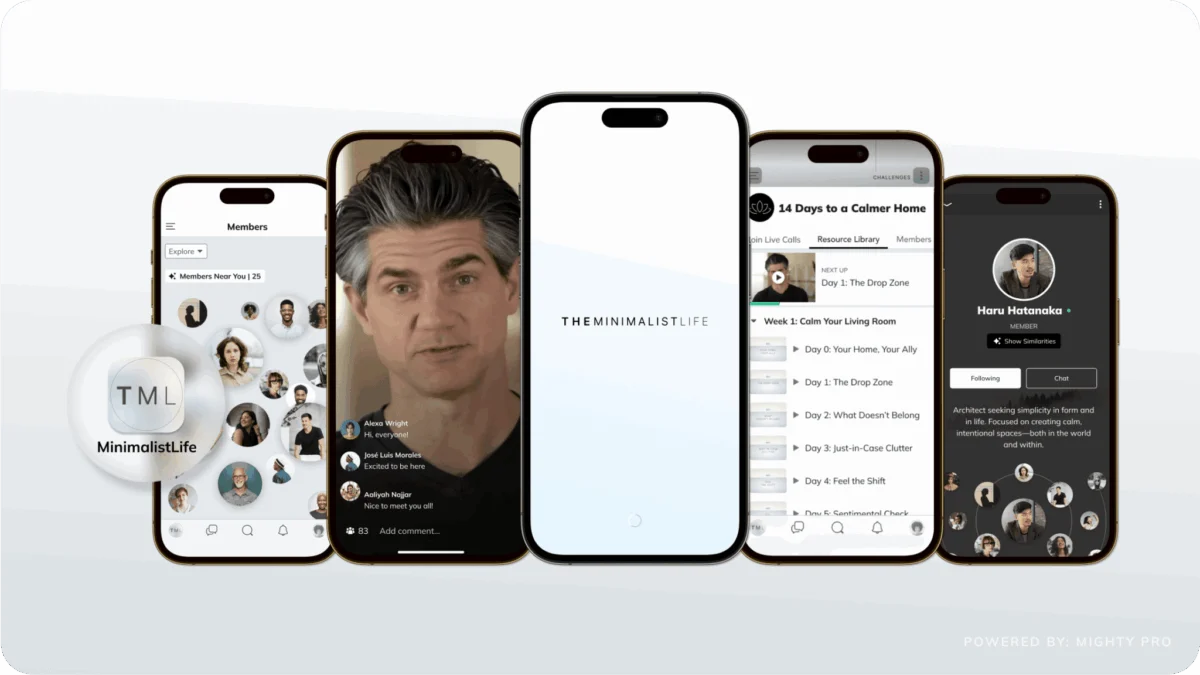
For the past seventeen years, the contemporary minimalism movement has experienced a remarkable evolution, transitioning from an obscure counter-cultural philosophy into a mainstream lifestyle choice embraced by millions worldwide. Central to this global shift has been Joshua Becker, a prominent voice and author whose digital footprint—spanning over 1,700 written articles, 400 YouTube videos, and multiple bestselling books—has guided countless individuals through the physical purging of their living spaces. Yet, despite the widespread popularity of decluttering guides and organizational literature, a persistent psychological and practical hurdle has continued to plague practitioners: the challenge of long-term habit retention. Addressing this critical gap in the personal development sector, Becker has officially announced the launch of a new, private membership initiative titled The Minimalist Life. This enterprise marks a structural pivot from passive content consumption to active, community-driven accountability, designed to integrate minimalist principles into a lifelong operational framework.
The Historical Evolution of the Modern Minimalism Movement
To understand the significance of this new initiative, one must examine the trajectory of the minimalism movement over the last two decades. Emerging strongly in the wake of the late-2000s global economic recession, minimalism found a receptive audience among consumers suffering from burnout, financial anxiety, and the psychological burdens of hyper-consumerism. Pioneers like Becker argued that physical clutter directly correlates with mental overwhelm, proposing that reducing material possessions frees up time, money, and emotional energy for more meaningful pursuits.
During the early 2010s, the movement relied heavily on blogs, independent essays, and early-stage social media platforms to spread its message. As digital connectivity accelerated, this grassroots philosophy transformed into an international industry encompassing documentaries, podcasts, specialized home-organization products, and structured online courses. Becker’s own digital enterprise, Becoming Minimalist, emerged as a cornerstone of this ecosystem. His signature educational program, the Uncluttered Course, went on to assist more than 90,000 participants in systematically reducing their household belongings.
Despite these quantitative milestones, anecdotal feedback gathered by movement leaders over the years highlighted a systemic limitation. While educational resources excelled at inspiring initial enthusiasm and facilitating massive one-time purges, they frequently fell short in providing the ongoing support structures necessary to maintain minimalist habits amidst the relentless pressures of modern consumer culture.
The Retention Crisis and the Shift Toward Ongoing Habit Formation
Industry analysts and behavioral psychologists have long noted that initiating a lifestyle change—whether related to diet, financial management, or home organization—is significantly easier than sustaining it over a multi-year horizon. Habit loop theory suggests that without environmental cues, social reinforcement, and continuous feedback mechanisms, individuals inevitably revert to prior baseline behaviors when confronted with stress or convenience-driven marketing.
For years, Becker received a recurring refrain from followers: "I start strong, but I struggle to keep minimalism going over time. How can I keep this going?" This fundamental question exposed a core vulnerability in the traditional business model of digital self-help. Most consumers do not merely desire a temporary organizational project; they seek a permanent psychological recalibration. They want intentionality to govern their daily routines, professional choices, and interpersonal relationships long after the physical closets have been cleared.
Recognizing that education alone is insufficient to drive permanent behavioral transformation, Becker conceptualized a platform that moves beyond static reading materials and pre-recorded video modules. The core thesis underlying The Minimalist Life is that true lifestyle integration requires active community engagement, recurring monthly touchpoints, and a systematic expansion of minimalist principles into non-physical domains of human existence.
Structure and Operational Framework of The Minimalist Life
Designed as a comprehensive, multi-disciplinary ecosystem, The Minimalist Life breaks away from the conventional paradigm of the standalone online course. Rather than delivering all course material upfront for independent consumption, the newly launched private community operates on a continuous, month-by-month developmental model.

The curriculum addresses minimalism not merely as a home-decor strategy or a closet-cleaning exercise, but as a holistic framework applicable to several critical pillars of daily life:
- Domestic Environment: Advanced maintenance strategies to prevent the re-accumulation of household clutter.
- Financial Management: Aligning spending habits with core personal values to reduce debt and curb consumer impulses.
- Time and Schedule Management: Eliminating non-essential commitments to cultivate mental whitespace and combat burnout.
- Digital Well-being: Managing information overload, reducing screen time, and establishing boundaries with digital devices and social media platforms.
- Habit and Behavioral Psychology: Utilizing cognitive behavioral tools to anchor intentional choices into everyday routines.
- Relational Dynamics: Navigating social expectations, gift-giving pressures, and familial differences regarding consumption.
Furthermore, the platform arrives at a critical juncture in the digital landscape. With the rapid proliferation of generative artificial intelligence, consumers are increasingly inundated with automated, algorithmically generated content that lacks authentic human perspective. In direct contrast to this trend, The Minimalist Life positions human interaction, peer accountability, and direct mentorship from Becker as its primary value propositions.
Economic Positioning and Launch Strategy
The commercial rollout of The Minimalist Life commenced with a targeted introductory window designed to incentivize early adoption. Recognizing the economic diversity of his global audience, Becker established a founding member pricing structure set at $18 per month or $180 annually, representing a two-month cost savings for yearly subscribers. This promotional pricing tier has been explicitly restricted, with an expiration date set for June 30th, after which standard membership rates are expected to apply.
This pricing strategy reflects standard industry practices for subscription-based community platforms (often referred to as paid community models), which have gained substantial traction among creators, educators, and thought leaders seeking recurring revenue streams while fostering deeper relationships with their audiences. By transitioning a portion of his readership from a transactional product consumer base to a relational membership model, Becker is securing a sustainable financial foundation for his ongoing advocacy work while simultaneously guaranteeing dedicated users a higher-touch experience.
Implications for the Personal Development and Creator Economy
The launch of The Minimalist Life carries broader implications for the wider self-improvement and creator economy sectors. For over a decade, the dominant monetization strategy for digital educators has relied on high-ticket, finite online courses or ad-supported content models. However, rising consumer skepticism toward one-off courses—coupled with completion rates that routinely hover in the single digits—has forced content creators to rethink how value is delivered.
Subscription-based private communities represent a maturing of the creator economy, shifting the focus from volume metrics (such as page views and video impressions) to retention metrics and genuine community outcomes. By addressing the psychological friction of long-term habit maintenance, Becker’s pivot suggests a future where digital mentorship relies less on passive knowledge transfer and more on active, peer-supported lifestyle engineering.
Moreover, the expansion of minimalism into non-material domains reflects an maturation of the movement itself. As cultural awareness of climate change, economic volatility, and digital distraction grows, the definition of minimalism is rapidly expanding. It is no longer viewed strictly as an aesthetic choice characterized by white walls and capsule wardrobes, but rather as a radical resistance to modern attention economies and compulsive consumption cycles.
Future Outlook and Community Integration
As the doors to The Minimalist Life swing open, the immediate metric of success will be determined not merely by initial subscriber volume, but by the long-term retention and reported life satisfaction of its members. Navigating the transition from conceptual agreement to daily behavioral execution remains one of the most stubborn challenges of the human condition.
For Joshua Becker, who has dedicated nearly two decades to charting the intellectual and practical contours of living with less, this new community represents both a culmination of past work and an entirely uncharted frontier. Whether this model can effectively bridge the gap between initial inspiration and lifelong execution will be closely watched by observers of the self-help industry and consumer culture alike. For now, thousands of individuals seeking a quieter, more intentional existence have been handed a new set of tools—and crucially, a community to help them wield those tools over the long haul.