Muhammad Hendra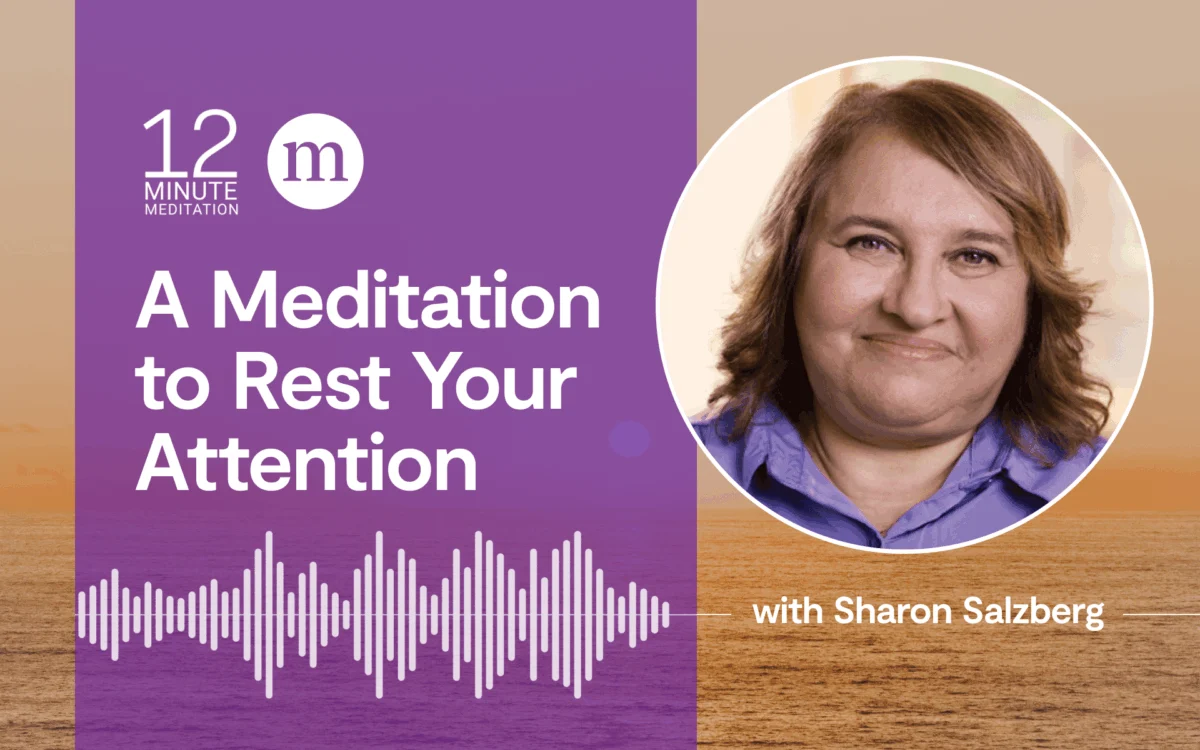
In an increasingly digitized and demanding global landscape, where the human mind is perpetually assailed by a cacophony of information and an unrelenting demand for engagement, the concept of attention has evolved into a contested commodity. Renowned meditation teacher and New York Times best-selling author, Sharon Salzberg, offers a profound counter-narrative, positing that attention is not a resource to be actively extracted or leveraged, but rather a precious gift to be nurtured, rested, and restored. Her recent guided meditation, focused on the practice of holding awareness with the lightest touch, provides a timely and deeply restorative antidote to the pervasive fatigue of modern cognitive overload.
The Modern Attention Crisis: A World Vying for Focus
The assertion that we live in a "noisy world" vying for our attention is not mere hyperbole; it is an empirically supported reality. The advent of smartphones, social media, and 24/7 news cycles has ushered in an era of unprecedented informational density and constant connectivity. Research consistently highlights the erosion of sustained attention spans. A 2015 Microsoft study, often cited, suggested that the average human attention span had dropped to eight seconds, shorter than that of a goldfish, though this specific comparison has been debated. More robust studies, such as those by Professor Gloria Mark at the University of California, Irvine, indicate that knowledge workers typically switch tasks every three minutes and 19 seconds, and that it takes an average of 23 minutes and 15 seconds to return to the original task after an interruption. This constant fragmentation of focus contributes significantly to mental fatigue, reduced productivity, and heightened stress levels.
Furthermore, the language we commonly employ when discussing attention underscores this extractive mindset. We "pay" attention as if it’s a financial transaction, "give" attention as if it’s a finite offering, "court" attention from others, and "leverage" it for strategic advantage. This transactional framing implicitly suggests that attention is a depletable resource, constantly at risk of being overdrawn or misspent. In such an environment, the very act of pausing and intentionally allowing attention to rest becomes not just a luxury, but a critical imperative for mental well-being and cognitive resilience.
Sharon Salzberg’s Paradigm Shift: Attention as a Nurtured Gift
Sharon Salzberg’s teachings fundamentally challenge this conventional, commoditized view of attention. Drawing from decades of immersive study and practice in Buddhist meditation traditions, she advocates for a radical reorientation: understanding attention not as a tool to be wielded, but as an intrinsic capacity to be cultivated with care and gentleness. For Salzberg, the shift from active verbs like "pay" or "leverage" to the more passive, yet deeply potent, verb "rest" signifies a profound conceptual and practical difference. Resting attention implies a release from the effortful grip of concentration, allowing the mind to settle naturally, without force or striving.
This philosophy is deeply rooted in the principles of mindfulness, which emphasizes present-moment awareness cultivated with an attitude of non-judgment. Unlike focused concentration that can lead to mental strain, resting attention encourages a soft, expansive awareness where thoughts, sensations, and emotions are observed without attachment or immediate reaction. It is about creating a spaciousness within the mind, rather than attempting to control or direct every mental occurrence. This gentle approach acknowledges the inherent wandering nature of the mind and offers a compassionate alternative to the often-frustrating attempts to maintain rigid focus in a distracting world.
The Guided Meditation: A Practical Path to Restoration
Salzberg’s recent guided meditation is a practical manifestation of this philosophy, designed to be "down-to-earth and deeply restorative." The core instruction – practicing "holding our awareness with the lightest touch possible" – is central to the experience. This phrase encapsulates the essence of non-striving in mindfulness. It teaches practitioners to be present without excessive effort, to observe without judgment, and to allow the mind to settle naturally rather than forcing it into stillness.
In practice, this might involve bringing gentle awareness to the breath, bodily sensations, or sounds, and when the mind inevitably wanders (as minds are wont to do), simply noticing the distraction and kindly guiding attention back, without self-reproach. The "lightest touch" implies a delicate balance: engaging enough to be present, but not so much as to create tension or resistance. This iterative process of noticing and returning, performed with compassion, gradually strengthens the muscle of attention while simultaneously cultivating a sense of inner peace and ease. The meditation is made accessible through both a written script, allowing for self-paced practice, and an audio version, providing guided support. Benefits reported by practitioners of such restorative attention practices include reduced stress and anxiety, improved emotional regulation, enhanced cognitive flexibility, and an overall greater sense of well-being and presence in daily life.
Sharon Salzberg’s Enduring Legacy: A Chronology of Influence
Sharon Salzberg’s journey to becoming one of the most influential meditation teachers in the Western world is a testament to her dedication and pioneering spirit.

-
Early Life and Discovery (1971): Salzberg began her meditation journey in 1971, at a time when Asian meditation practices were largely unfamiliar in the West. Driven by a deep curiosity about the nature of mind and suffering, she embarked on a transformative path, traveling to India and other parts of Asia. There, she immersed herself in intensive study with revered Buddhist masters such as S.N. Goenka, Dipa Ma, and Munindra. These early experiences laid the foundational understanding of vipassana (insight) and metta (lovingkindness) meditation that would define her life’s work.
-
Founding the Insight Meditation Society (1976): A pivotal moment in the Western mindfulness movement occurred in 1976 when Salzberg, along with Joseph Goldstein and Jack Kornfield, co-founded the Insight Meditation Society (IMS) in Barre, Massachusetts. IMS quickly became a seminal institution, offering intensive silent retreats and establishing a hub for the transmission of authentic Buddhist meditation practices to a growing Western audience. Its establishment marked a crucial step in making these ancient wisdom traditions accessible and relatable outside of monastic contexts.
-
Pioneering Role and Early Publications (1980s-1990s): Throughout the 1980s and 1990s, Salzberg played a crucial role in popularizing mindfulness and lovingkindness meditation. Her teachings emphasized practical application and demystified complex concepts, making them approachable for a broad secular audience. Her seminal book, Lovingkindness: The Revolutionary Art of Happiness (1995), became a foundational text for many practitioners, introducing the transformative power of metta meditation.
-
Expanding Reach and Best-Selling Works (2000s-Present): Salzberg’s influence continued to expand into the 21st century. Her works, including Real Happiness: The Power of Meditation: A 28-Day Program (2010), became New York Times best-sellers, further solidifying her status as a leading voice in the mindfulness movement. Real Happiness offered a structured, accessible entry point for beginners, demonstrating the practicality of meditation in everyday life. Her subsequent book, Real Change: Mindfulness to Heal Ourselves and the World (2020), broadened her scope, exploring how individual practice can foster collective well-being and social engagement.
-
Global Teacher and Media Contributor: Today, Salzberg continues to guide retreats worldwide, sharing her insights with countless individuals. She is a weekly columnist for On Being and a regular contributor to The Huffington Post, leveraging contemporary media platforms to disseminate her teachings. Her consistent presence and clear articulation of mindfulness principles have ensured her ongoing relevance in an ever-evolving world.
Scientific Validation: The Neuroscience of Resting Attention
The profound effects of practices like "resting attention" are increasingly substantiated by scientific research, particularly in the field of contemplative neuroscience. Studies utilizing fMRI and EEG technologies have illuminated how mindfulness meditation, even with a gentle approach, can induce significant changes in brain structure and function.
- Brain Plasticity: Research demonstrates that regular meditation can lead to neuroplastic changes, particularly in areas associated with attention, emotion regulation, and self-awareness. The prefrontal cortex, responsible for executive functions like planning and decision-making, shows increased gray matter density in experienced meditators.
- Default Mode Network (DMN): The DMN, a network of brain regions active when the mind is wandering or unfocused, tends to be less active in meditators. A reduction in DMN activity is correlated with decreased self-referential thought and rumination, contributing to a sense of mental clarity and calm. Resting attention, by gently observing thoughts without engaging with them, can effectively reduce overactivity in the DMN.
- Amygdala Regulation: The amygdala, the brain’s "fear center," responsible for processing emotions like fear and anxiety, shows reduced reactivity in individuals who practice mindfulness. This translates to a greater capacity for emotional regulation and resilience in the face of stressors.
- Attention Networks: While resting attention is not about intense concentration, it paradoxically strengthens attentional control. By repeatedly returning awareness to the present moment after distraction, meditators train their brain’s attentional networks, improving their ability to focus when needed and to disengage from distractions more effectively. This is consistent with Attention Restoration Theory (ART), which posits that engaging in activities that allow for effortless attention (like observing nature or gentle meditation) can restore one’s capacity for directed attention.
Data from numerous studies published in journals such as Mindfulness, Emotion, and Psychological Science consistently show that mindfulness practices lead to reductions in perceived stress, improvements in mood, enhanced working memory, and increased cognitive flexibility. These scientific findings lend considerable weight to Salzberg’s teachings, bridging ancient wisdom with modern understanding of the human mind.
Statements and Inferred Reactions: A Collective Embrace of Mindfulness
While specific official statements on this particular guided meditation are not available, the broader landscape of reactions to Salzberg’s work and the growing mindfulness movement offers valuable insight.
- From Mindfulness Community Leaders: Leaders within the mindfulness community consistently laud Salzberg for her clarity, compassion, and unwavering commitment to making these practices accessible. Figures like Jon Kabat-Zinn, often credited with bringing mindfulness into mainstream healthcare, would likely emphasize the importance of foundational teachers like Salzberg in establishing the credibility and depth of the field. They would concur that cultivating a gentle, non-striving approach to attention is crucial for sustainable practice.
- From Mental Health Professionals: Therapists and psychologists increasingly integrate mindfulness into their clinical practices for anxiety, depression, and stress management. They would undoubtedly view Salzberg’s "resting attention" meditation as a valuable tool, offering a practical, evidence-informed strategy for clients to develop greater self-regulation and inner peace, particularly in navigating chronic stress and information overload.
- From Practitioners: Thousands of individuals worldwide who have attended Salzberg’s retreats or read her books frequently express gratitude for her down-to-earth teaching style and the transformative impact of her guidance. Common feedback includes a newfound ability to manage stress, a greater sense of presence in daily life, and a deeper understanding of their own minds. The concept of "resting attention" resonates deeply, providing relief from the relentless pressure to constantly perform and focus.
- From Employers and Educators: In corporate and academic settings, there is a growing recognition of the need for employee and student well-being initiatives. Programs incorporating mindfulness, often drawing on the principles taught by Salzberg, are being implemented to combat burnout, improve concentration, and foster a more positive work and learning environment. The notion of restoring attention rather than simply demanding more of it aligns with progressive approaches to productivity and human flourishing.
Broader Impact and Implications: Reclaiming Agency in the Digital Age
Sharon Salzberg’s continued advocacy for nurturing attention has profound implications beyond individual well-being. It speaks to a broader societal imperative to reclaim human agency in an age dominated by technology and external demands.
- Societal Shift Towards Conscious Living: Her work contributes significantly to a growing global trend towards more conscious living, where individuals are actively seeking ways to disconnect from digital noise and reconnect with their inner experience. This includes movements towards digital detoxes, slow living, and prioritizing mental health.
- Empowering Individuals Against Exploitation: By reframing attention as a gift to be nurtured, Salzberg empowers individuals to resist the extractive forces of the attention economy, which often profits from distraction and engagement-at-all-costs. It encourages a mindful consumption of information and technology, rather than passive absorption.
- Building Resilience Against Burnout: In an era characterized by high demands and constant pressure, the ability to rest and restore attention is a critical buffer against burnout. Her teachings offer practical strategies for building mental and emotional resilience, enabling individuals to navigate challenges with greater equanimity.
- Fostering Compassion and Connection: The practice of "lightest touch" extends beyond individual attention to encompass how we engage with others and the world. By cultivating a gentle, non-judgmental awareness, practitioners often report an increased capacity for empathy and compassion, fostering stronger interpersonal connections and contributing to a more harmonious society.
- The Future of Human Flourishing: As artificial intelligence and automation continue to evolve, the unique human capacities for conscious attention, creativity, and empathy will become even more valuable. Salzberg’s work helps cultivate these essential human qualities, positioning them as cornerstones for future flourishing in a rapidly changing world.
In conclusion, Sharon Salzberg’s persistent and compassionate guidance on "resting attention" serves as a vital beacon in our often-overwhelmed world. Her profound insights, rooted in ancient wisdom and validated by modern science, offer a practical and accessible pathway to reclaim one of our most precious resources. By shifting our perspective from attention as a commodity to attention as a gift to be nurtured, she not only provides tools for individual restoration but also contributes to a broader societal movement towards greater mindfulness, well-being, and conscious engagement with life. Her latest guided meditation stands as a timely invitation to pause, breathe, and rediscover the potent power that emerges when attention is allowed to simply be.