Ali Ikhwan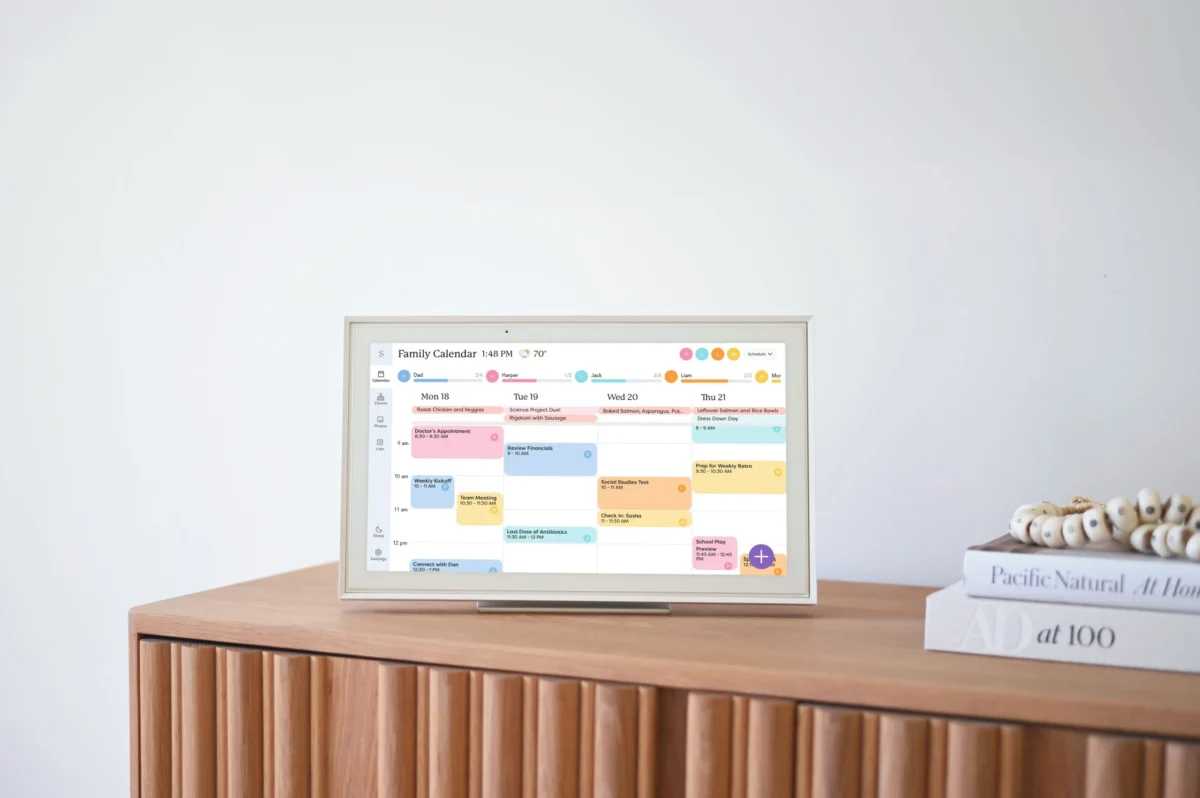
The management of a modern household has increasingly transitioned from a series of disparate tasks into a complex logistical operation requiring sophisticated technological intervention. As families navigate the intersection of professional obligations, educational requirements, and extracurricular commitments, the traditional methods of organization—such as paper planners or basic shared digital calendars—are frequently proving insufficient. This gap in the market has facilitated the rise of dedicated family hubs, exemplified by devices like the Skylight Calendar, which integrate hardware, software, and artificial intelligence to centralize the "mental load" of domestic life.
The Landscape of Modern Domestic Logistics
For the contemporary family, the challenge of synchronization is multifaceted. Statistical data from sociological studies frequently highlight the "mental load"—the invisible labor of planning and organizing—which disproportionately falls on one or two heads of household. In a family of five, this involves tracking the schedules of three children across different educational institutions, coordinating work-life balance for two adults, and managing recurring tasks such as meal planning, grocery procurement, and property maintenance.
While mobile-based solutions like Google Calendar, Apple Calendar, and Microsoft Outlook have long served as the backbone of digital scheduling, they often lack the physical presence required to keep all family members informed in real-time. The emergence of dedicated household displays represents a strategic shift toward "ambient computing," where information is available at a glance within shared physical spaces, such as kitchens or mudrooms, without the need for an individual to consult a personal mobile device.
Technical Specifications and Ecosystem Integration
The Skylight Calendar enters this market as a specialized touchscreen interface designed specifically for high-traffic areas. Available in 10-inch, 15-inch, and 27-inch variants, the device is built to serve as a digital command center. Unlike general-purpose tablets, these units are designed for permanent or semi-permanent installation, featuring built-in stands and wall-mounting capabilities.
A critical component of the system’s utility is its ability to aggregate data from multiple external sources. By syncing with major calendar providers, the device creates a unified view of family life. However, the hardware is only one half of the equation. The accompanying mobile application allows family members to contribute to the ecosystem remotely, ensuring that the central hub is updated the moment a change occurs in the field.
During technical evaluations of the 15-inch model, the interface proved intuitive for "touchscreen natives"—children and adolescents who have grown up with tablet technology. This demographic engagement is pivotal; when children aged 12 to 15 engage with a shared calendar, the responsibility for schedule management begins to shift from the parents to the individuals, fostering autonomy and reducing the frequency of redundant communication regarding family plans.
The Role of Artificial Intelligence in Household Management
A significant trend in the 2024 consumer electronics market is the integration of generative AI and machine learning into domestic tools. Skylight’s implementation of this is found in its "Sidekick" assistant, a feature locked behind a "Plus" subscription model ($79 annually or $8 monthly). Sidekick utilizes Optical Character Recognition (OCR) and natural language processing to convert unstructured data into actionable calendar events.
For decades, the manual entry of school schedules, sports rosters, and medical appointments has been a primary source of friction in domestic organization. AI assistants now allow users to take a photograph of a physical flyer or forward a complex email directly to the device. While current iterations of the technology occasionally require manual verification for perfect accuracy, the reduction in labor is measurable. Analysts suggest that this "low-friction" data entry is the key to maintaining long-term user engagement with organizational software.
Furthermore, these AI tools are being applied to the "grocery-meal-prep" pipeline. By scanning printed recipes, the system can automatically generate ingredient lists and categorize them by grocery store aisle. This integration addresses a common logistical failure point: the transition from a plan (what to eat) to an action (buying the ingredients).
Comparative Analysis: Hardware vs. Software-Only Solutions
The market for family organization is currently split between hardware-software hybrids and software-only applications.
- Hardware-Software Hybrids (Skylight, Hearth Display): These provide a physical anchor in the home. The primary advantage is visibility; the schedule is always "on" and accessible to everyone, including children who may not yet have personal smartphones. The primary disadvantage is the lack of portability; the Skylight, for instance, lacks an internal battery, requiring a constant power connection and limiting its use to specific locations.
- Software-Only Solutions (Jam Family Calendar, FamilyWall): These applications offer lower barriers to entry as they do not require an initial hardware investment.
- Jam Family Calendar focuses on an intuitive, color-coded interface that mirrors many of the Skylight’s software features.
- FamilyWall provides a more expansive suite of tools, including family budgeting, document storage, and real-time location sharing. Features like "Countdown to Special Days" cater to users who struggle with memory-based tasks, such as tracking birthdays or anniversaries.
The choice between these models often depends on the age of the children and the family’s existing digital habits. Families with adolescents may find the mobile-first approach of FamilyWall sufficient, whereas families with younger children or a desire for a centralized "command center" tend to favor hardware solutions.
Chronology of Implementation and User Adaptation
The adoption of a centralized digital hub typically follows a distinct chronological path within a family unit:
- Phase 1: Consolidation. The primary organizer imports existing digital calendars (Google, Apple, etc.) and establishes a color-coded system for individual family members.
- Phase 2: Hardware Deployment. The physical device is placed in a high-traffic area. Initial engagement often comes from younger family members drawn to the novelty of the touchscreen interface.
- Phase 3: Habitual Integration. The family begins to use secondary features, such as the shared grocery list and chore charts. The "paper list on the fridge" is phased out in favor of the cloud-synced app.
- Phase 4: Delegation. As the system becomes the "single source of truth," children begin to check the calendar before asking parents about upcoming plans, and parents begin to assign tasks (chores) via the interface.
Privacy Implications and Technical Limitations
The transition to a shared family hub is not without its challenges. One of the primary concerns identified by privacy experts is the "transparency paradox." When a personal calendar (such as a work or private Google Calendar) is synced to a shared family device, personal notes and sensitive appointments become visible to all household members. This requires users to adopt new habits regarding note-taking or to utilize filtering settings to maintain a degree of individual privacy.
Technically, the reliance on a wired connection remains a point of contention for some users. The inability to move the 15-inch or 27-inch screens to a comfortable seated position for long-term planning sessions—such as weekly meal scheduling—forces a reliance on the mobile app. This creates a split experience where the mobile app is used for data entry and the hardware is used primarily for consumption and reference.
Broader Impact and Future Outlook
The broader impact of these devices is found in the redistribution of domestic labor. By making the family’s schedule and needs visible to everyone, the "mental load" is externalized. When a child sees that the grocery list is empty or that a sibling has a practice at the same time they wanted to see a friend, they are forced to engage with the reality of family logistics.
Industry analysts predict that the next five years will see further integration of smart home ecosystems. We can expect these hubs to eventually communicate directly with smart appliances—for example, the calendar’s meal plan could automatically preheat an oven or notify a smart refrigerator to order low-stock items.
In conclusion, while a digital calendar cannot physically perform manual labor such as laundry or cleaning, the centralization of information represents a significant reduction in the cognitive stress of modern parenting. The Skylight Calendar and its competitors are not merely digital replacements for the kitchen calendar; they are the precursors to a fully integrated, AI-assisted domestic environment. As families continue to struggle with "time poverty," the value of a system that can automate the "planning of the doing" will only continue to rise.