
 Ali Ikhwan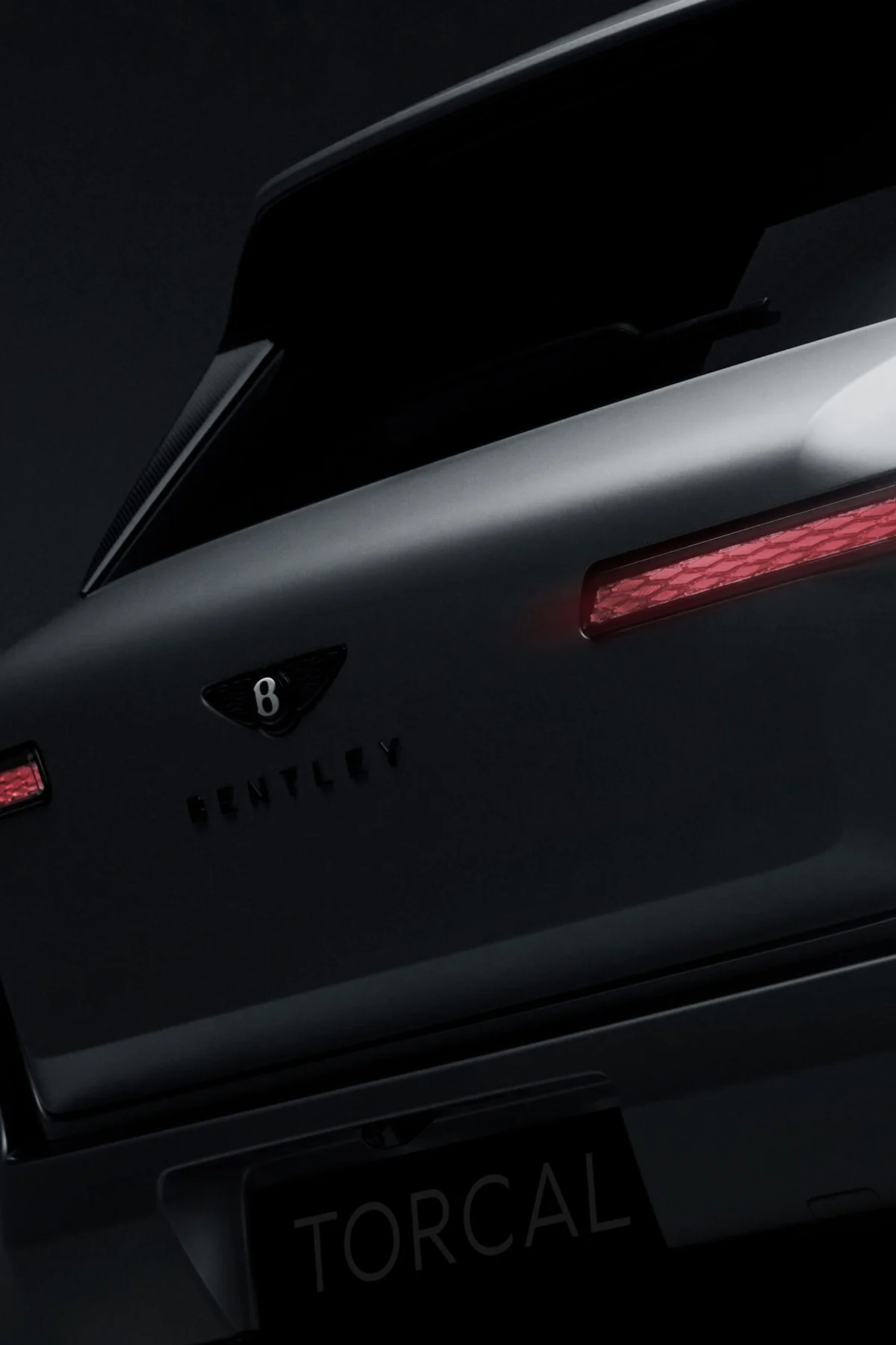
The British luxury automotive manufacturer Bentley has officially confirmed that its inaugural fully electric vehicle will be named the Torcal, marking a pivotal transition for the 105-year-old marque as it navigates the complexities of the global shift toward electrification. In a strategic announcement released today, Bentley provided a preliminary glimpse of the vehicle’s rear profile and established September 23, 2026, as the date for the SUV’s global debut. While technical specifications remain largely confidential, the company has disclosed that the Torcal will measure approximately five meters in length and is engineered to deliver a driving range exceeding 300 miles on a single charge. This milestone follows years of internal deliberation and a recalibration of the company’s "Beyond100" sustainability strategy, placing the Torcal at the center of Bentley’s future product portfolio.
Etymology and Design Philosophy of the Torcal
The selection of the name "Torcal" follows a naming convention established by the Bentley Bentayga, where nomenclature is derived from significant natural landmarks. The Torcal takes its name from El Torcal de Antequera, a nature reserve in the Sierra del Torcal mountain range in Andalusia, Spain, renowned for its unusual limestone karst formations. Beyond the geographical connection, the name carries linguistic significance within the automotive sector; it is derived from the Latin torquere, meaning "to twist." This is the etymological root of the word "torque," a critical metric of rotational force that is particularly relevant to electric motors, which are characterized by their ability to deliver maximum torque instantaneously.
Internal documents and trademark filings from earlier this year revealed that Bentley had also secured the name "Barnato," a tribute to Woolf Barnato, the three-time Le Mans winner and former chairman of the company. While "Barnato" was initially considered a strong contender by industry analysts, the decision to proceed with "Torcal" suggests a preference for a name that aligns with the rugged yet refined identity of an SUV while emphasizing the mechanical prowess of electric propulsion.
Visually, the Torcal maintains a clear lineage with the existing Bentley lineup, specifically the Bentayga, though it introduces several departures in form and function. During a private preview at the company’s headquarters in Crewe, England, the vehicle was described as possessing a "powerful and purposeful" stance. It retains the signature long hood and upright front fascia synonymous with the brand, but introduces a more pronounced sloping roofline at the rear. This design choice is not merely aesthetic; a tapering roofline is a common aerodynamic strategy in electric vehicle (EV) design to reduce drag and maximize battery efficiency.
The most distinctive exterior feature is the reimagined front grille. In the absence of a traditional internal combustion engine requiring a radiator for cooling, Bentley has replaced the ventilation mesh with a solid "wall" of illuminated crystals. This design is reportedly inspired by the classic Continental T, aiming for a visual impact that avoids the "quiet luxury" trend in favor of a more assertive, high-tech presence.
Technical Ambitions and Interior Innovation
The interior of the Torcal represents a synthesis of traditional craftsmanship and modern digital integration. Bentley’s design team has consciously avoided the industry trend toward "hyperscreens" that span the entire dashboard. Instead, the Torcal features a central OLED display that curves downward, a design language similar to recent updates seen in the Porsche Cayenne. Notably, Bentley has confirmed that it will not offer a separate passenger-side screen, a decision that differentiates it from competitors like Ferrari and Mercedes-Benz.
To maintain tactile engagement, the cabin retains physical switchgear for critical functions, blending analog buttons with high-resolution digital interfaces. The vehicle will also feature all-round power-assisted doors and a switchable glass sunroof, allowing occupants to adjust the transparency of the overhead panel.

The 300-mile range target reflects Bentley’s commitment to "grand touring" capabilities, though it remains to be seen how the vehicle’s substantial weight—a byproduct of Bentley’s luxury fitments and large battery packs—will affect performance. The Torcal is expected to utilize a dedicated EV platform shared within the Volkswagen Group, likely leveraging advancements in 800-volt charging architecture to ensure rapid replenishment of the battery during long-distance travel.
A Chronology of Bentley’s Electrification Strategy
Bentley’s journey toward the Torcal has been marked by a series of strategic pivots. Under the leadership of former CEO Adrian Hallmark and current Chairman and CEO Frank-Steffen Walliser, the company has had to balance environmental mandates with the practical realities of the luxury market.
- 2020: Bentley announces the "Beyond100" strategy, pledging to become an end-to-end carbon-neutral organization and to offer a fully electric lineup by 2030.
- 2022: The company commits £2.5 billion ($3.2 billion) to transform its Crewe manufacturing facility into a "Dream Factory" for EV production.
- 2024: Following a cooling of global EV demand, Bentley introduces the "Beyond100 Plus" strategy. This revised roadmap pushes the target for a 100% electric lineup back five years to 2035.
- 2025: Bentley confirms that plug-in hybrid (PHEV) models will remain a core part of the portfolio well into the next decade to provide a transition for customers not yet ready for full electrification.
- 2026: The scheduled global reveal of the Torcal on September 23.
This timeline reflects a broader trend among ultra-luxury manufacturers who are discovering that their traditional client base is more hesitant to adopt battery-electric technology than previously anticipated.
Market Context: Navigating the Luxury EV "Graveyard"
The launch of the Torcal comes at a precarious moment for the high-end electric vehicle sector. Several of Bentley’s direct competitors have faced significant challenges in translating their brand prestige into the electric era.
The Lamborghini Lanzador, a planned electric GT, was shelved earlier this year after the company cited near-zero demand for such a product among its core demographic. Similarly, Ferrari’s first EV, the Luce, received a polarized reception that contributed to a temporary dip in the company’s market valuation, leading the Italian manufacturer to delay its second electric model until 2028.
Data from the wider market underscores these difficulties. Mercedes-Benz reported that its electric G-Wagon sold only 1,450 units in Europe through early 2025, compared to nearly 10,000 units of the internal combustion version. Audi was forced to discontinue the Q8 E-tron and shutter its Brussels assembly plant due to a "global decline in customer orders in the electric luxury class." Furthermore, the Porsche Taycan, once the poster child for luxury EV success, has faced staggering depreciation rates, with some reports indicating a 50% loss in value within a single year.
Bentley’s CEO, Frank-Steffen Walliser, acknowledges these headwinds but argues that Bentley’s timing may actually be advantageous. He suggests that the "early adopters" who sought EVs primarily for their novelty and "high-tech" look are being replaced by a second wave of buyers who want a car that feels "authentic" to the brand’s DNA. By waiting until 2026, Bentley aims to deliver a product that avoids the gimmicks of early EVs in favor of a more refined, traditional luxury experience.
Financial Resilience and Operational Adjustments
Despite the broader market volatility, Bentley has maintained a level of financial stability, though it is not immune to global economic pressures. In March 2025, the company reported its seventh consecutive year of profitability, posting an operating profit of €216 million on revenue of €2.6 billion. However, this represented a 42% decrease in profit compared to the previous year.

The decline is attributed to several factors, including a cooling economy in China—a vital market for Bentley—and the significant capital expenditures required to modernize its historic Crewe headquarters. To fund the transition to the Torcal and subsequent electric models, Bentley has undertaken a restructuring program, which included the reduction of 275 management and non-manufacturing roles earlier this year.
The investment in Crewe is substantial. The company is currently self-funding the conversion of its A1 building into a dedicated battery-electric assembly line, alongside the construction of a new design center and a state-of-the-art paint shop. These upgrades are intended to ensure that the Torcal can be produced with the same level of bespoke craftsmanship that defines Bentley’s internal combustion models.
Implications and Global Outlook
The success of the Torcal will likely hinge on its reception in two distinct markets: the West and Asia. While European and North American buyers have shown increased skepticism toward luxury EVs due to concerns over range, charging infrastructure, and resale value, the Asian market—particularly China—remains a potential stronghold.
Initial reports regarding the Ferrari Luce suggest that while it faced criticism in Western media, its first-year allocation in Asia was sold out almost immediately. For Bentley, the Torcal represents an opportunity to recapture momentum in China, where domestic EV manufacturers are rapidly moving upmarket and challenging established European marques.
Industry analysts suggest that Bentley’s decision to keep selling hybrids alongside the Torcal is a prudent "hedging" strategy. By offering a 5-meter SUV that looks and feels like a Bentley but happens to be electric, the company is betting that its customers will prioritize the brand experience over the powertrain.
As the September 2026 reveal approaches, the Torcal stands as more than just a new model; it is a litmus test for the viability of ultra-luxury electrification. If Bentley can successfully translate its "silent speed" and effortless torque into a battery-powered format without alienating its traditionalist base, the Torcal could provide the blueprint for the brand’s survival in the post-combustion era. If not, Bentley may find itself further extending the lifespan of its hybrid and combustion engines well into the late 2030s. For now, the automotive world waits to see if the "most considered car" in Bentley’s history can thrive in an increasingly uncertain market.







