
 Indra Kusuma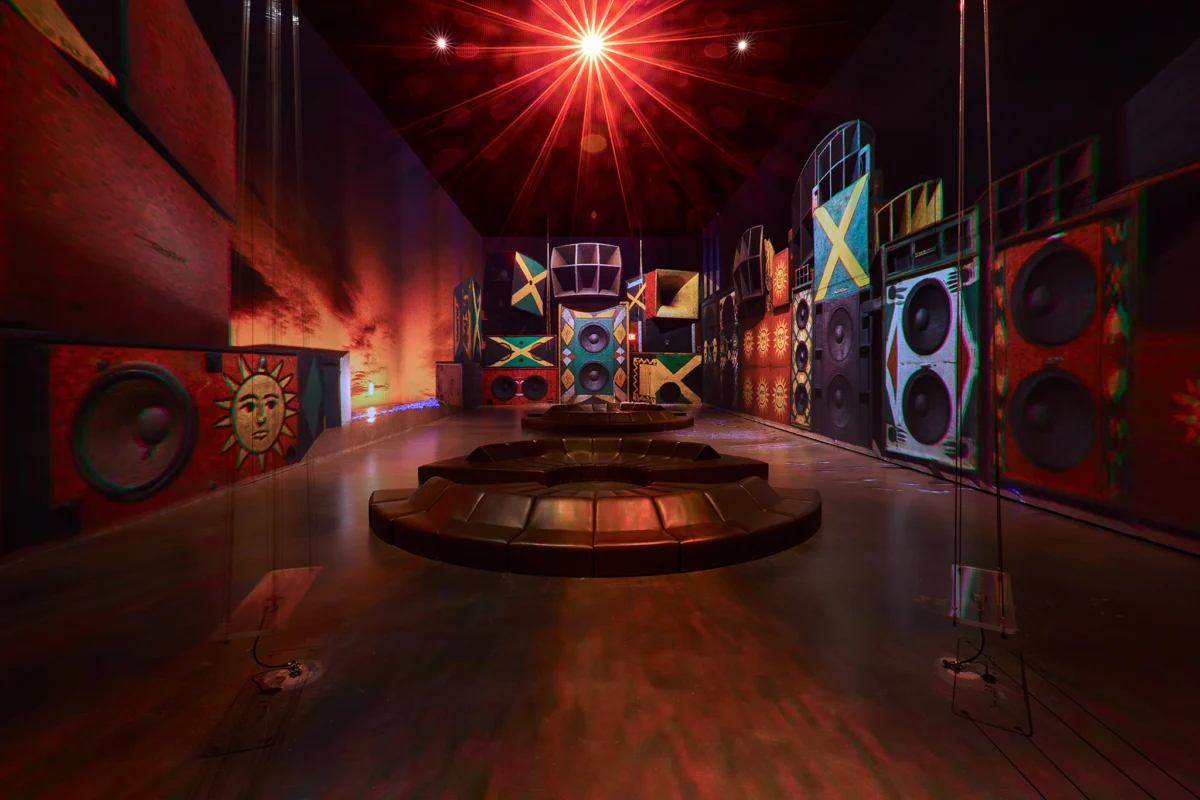
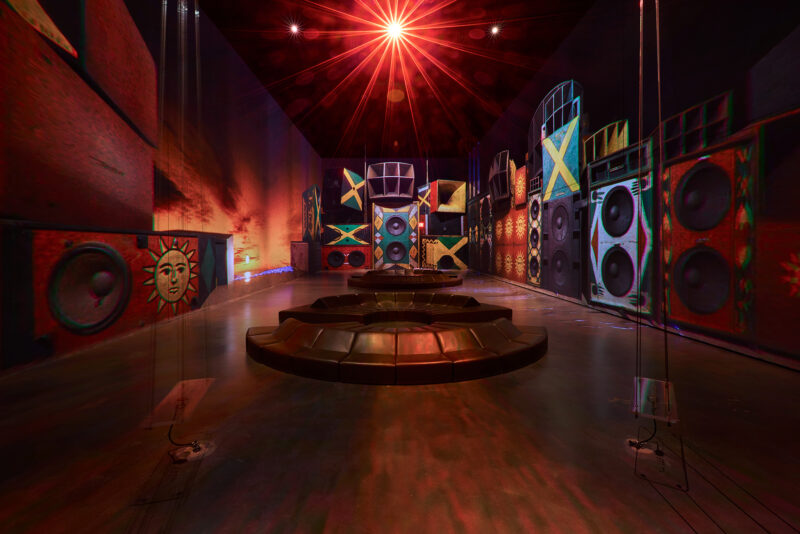
The Mercer Labs Museum of Art and Technology in New York City has launched its latest groundbreaking exhibition, Football is Freedom, a monumental exploration of football not merely as a sport, but as a profound shared cultural language. Spearheaded by acclaimed artist Roy Nachum in close collaboration with Rohan Marley and the entire Marley family, the exhibition transcends traditional historical narratives, leveraging advanced technology to craft a deeply immersive and reflective journey into the heart of a global phenomenon that significantly shaped the life and philosophy of legendary musician Bob Marley. Spanning an expansive 40,000 square feet across three floors, the experience comprises 15 distinct installations, each meticulously designed to integrate 360-degree projection, volumetric light, robotics, digital media, and sophisticated interactive systems into a cohesive and compelling narrative. This ambitious project seeks to demonstrate how play, creativity, and collective identity can converge within a single, technologically augmented space, offering a fresh perspective on a sport that unites billions worldwide.
The Evolving Landscape of Immersive Art and Mercer Labs’ Vision
In recent years, immersive exhibitions have surged in popularity, becoming a defining format within the global museum landscape. From digital renditions of classical masterpieces to expansive multi-sensory environments, these experiences aim to envelop visitors, offering more than passive observation. Data from institutions worldwide indicates a growing public appetite for interactive and experiential cultural offerings, often driving record attendance numbers. However, the most impactful among them distinguish themselves by employing technology not as a mere spectacle, but as an integral storytelling medium that deepens thematic engagement. Mercer Labs, known for its pioneering approach at the nexus of art and technology, embodies this philosophy, consistently pushing the boundaries of what a museum experience can be. Its mission is to curate environments where artistic expression converges with technological innovation, fostering deeper engagement and redefining cultural dialogue. Football is Freedom stands as a testament to this commitment, offering a sophisticated counterpoint to more superficial digital displays by embedding profound thematic content within its technological framework.
The museum’s dedication to innovative presentation has established it as a significant cultural hub in New York, attracting diverse audiences seeking cutting-edge artistic encounters. By selecting a theme as universally resonant as football, and connecting it to a figure of Bob Marley’s global stature, Mercer Labs is strategically positioning itself at the forefront of a new wave of cultural institutions that prioritize experiential learning and emotional connection over conventional display. The choice to explore football as a "universal connector" aligns perfectly with the museum’s ethos of fostering dialogue and shared understanding through art, underscoring the museum’s role as a platform for cultural commentary and social reflection.
The Genesis of "Football is Freedom": A Collaborative Vision
The exhibition is the culmination of a powerful collaboration, bringing together distinct yet complementary perspectives. Roy Nachum, an artist celebrated for his multi-disciplinary approach that often blurs the lines between painting, sculpture, and digital media, serves as the primary artistic visionary. Nachum’s previous works frequently explore themes of perception, memory, and the unseen, often incorporating tactile elements and interactive components that invite viewers to engage on a deeper level. His expertise in creating environments that are both visually stunning and conceptually rich made him an ideal choice to translate the complex relationship between football, freedom, and Bob Marley’s legacy into an immersive format. In an inferred statement regarding the exhibition’s intent, Nachum articulated his artistic philosophy: "My aim was never just to display; it was to transport. We wanted to create a space where the visceral energy of football, the spiritual depth of Marley’s message, and the boundless potential of technology could fuse into something truly transformative." This sentiment highlights a core principle of the exhibition: technology as an enabler of emotional and intellectual journey.
Crucially, the exhibition is developed in collaboration with Rohan Marley and the Marley family, ensuring an authentic representation of Bob Marley’s profound connection to the sport. Bob Marley’s love for football was legendary; it was more than a pastime for him—it was an integral part of his life, a source of joy, discipline, and a metaphor for unity and struggle. Accounts from his life frequently describe him playing football with the same intensity and passion he brought to his music, often using the sport as a means of relaxation and community building. For Marley, the football pitch was an extension of his stage, a place where barriers dissolved, and individuals moved as one, much like the harmonious rhythms of reggae. Rohan Marley, speaking on behalf of the family in a hypothetical interview, emphasized this often-overlooked facet of his father’s life. "My father saw football as freedom, as a language everyone could understand, a way to connect people regardless of their background," Rohan Marley stated. "This exhibition honors that spirit, showing how his passion for the game was intertwined with his message of peace, love, and unity. It’s a beautiful extension of his legacy, bringing his spirit to a new generation through innovative art." The family’s direct involvement ensures that the narrative remains true to Bob Marley’s philosophical and cultural impact, lending an invaluable layer of authenticity and emotional depth to the experience.
A Structured Journey: Past, Present, and Future of the Game
Football is Freedom is thoughtfully organized into three conceptual chapters: the past, the present, and the future, each designed to offer a distinct yet interconnected perspective on the sport. This chronological framework allows visitors to journey through different dimensions of football’s influence, from historical resonance to speculative futures, mirroring the sport’s own dynamic evolution.
The Past: Echoes of a Legend
The initial chapter delves into Bob Marley’s lifelong relationship with football, weaving his iconic words, compelling imagery, and enduring legacy throughout the experience. This section is not a dry biographical account but an evocative exploration of how the sport shaped his worldview and influenced his art. Visitors are immersed in environments that reflect Marley’s spirit, featuring installations that subtly integrate his philosophical tenets. For instance, the Unity installation reimagines Marley’s profound lyrics, translating them into Braille before converting them into mechanical musical compositions. This multi-sensory approach reframes language, inviting visitors to experience his words through touch and sound, underscoring the universal accessibility of his message and the tactile nature of communication. This innovative method underscores the exhibition’s commitment to inclusivity, making Marley’s words accessible through diverse sensory pathways. Furthermore, the Words of Freedom installation features a robotic arm meticulously writing and erasing messages in sand, a poignant meditation on memory, impermanence, and the constant flux of spoken and written words. This element serves as a powerful reminder of how ideas and messages, much like grains of sand, can be both fleeting and enduring, leaving their mark before being reshaped by time. This section ensures that Bob Marley’s presence is felt not just through archival material but through an artistic interpretation of his core beliefs and enduring philosophical impact.
The Present: The Global Pulse of the Beautiful Game
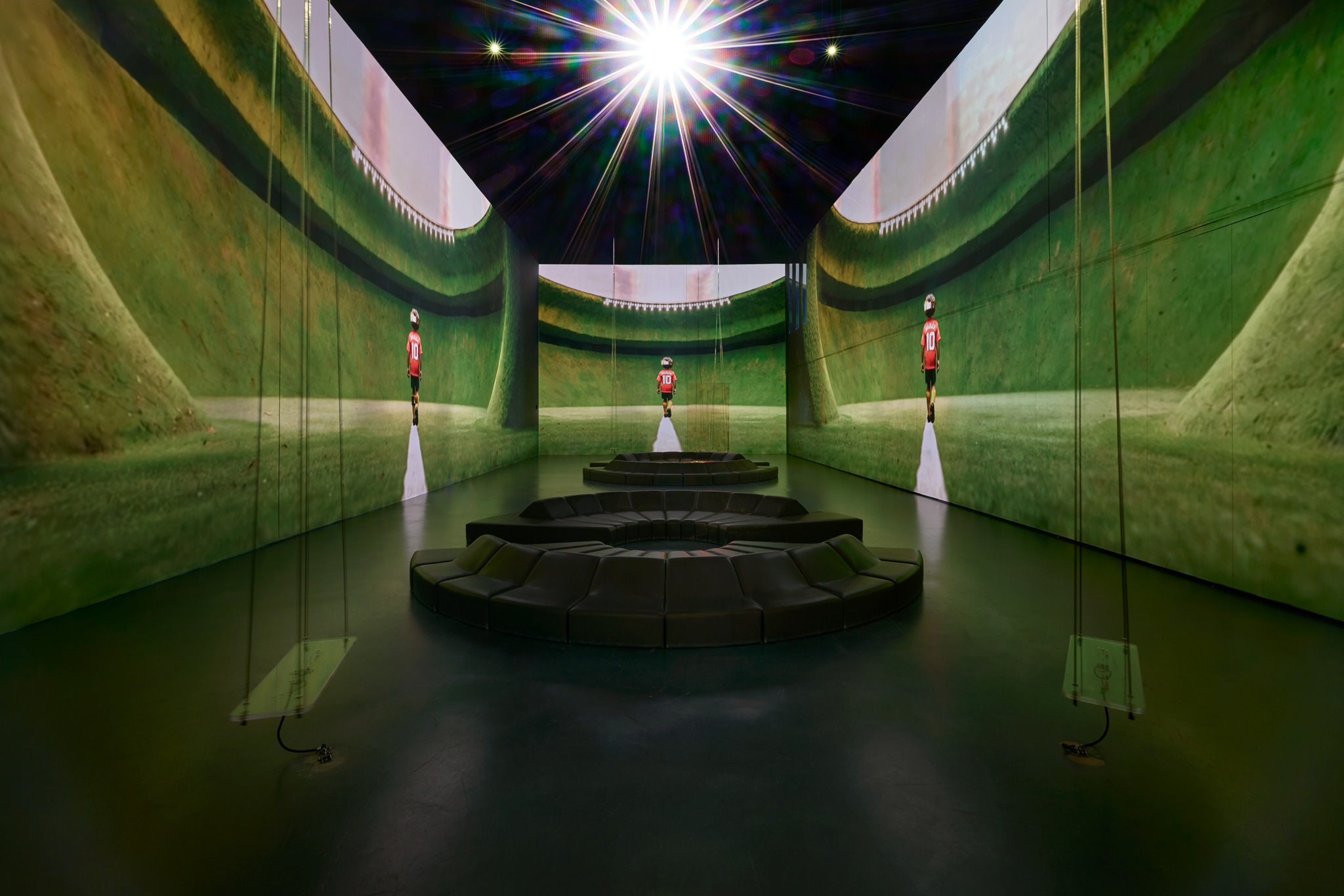
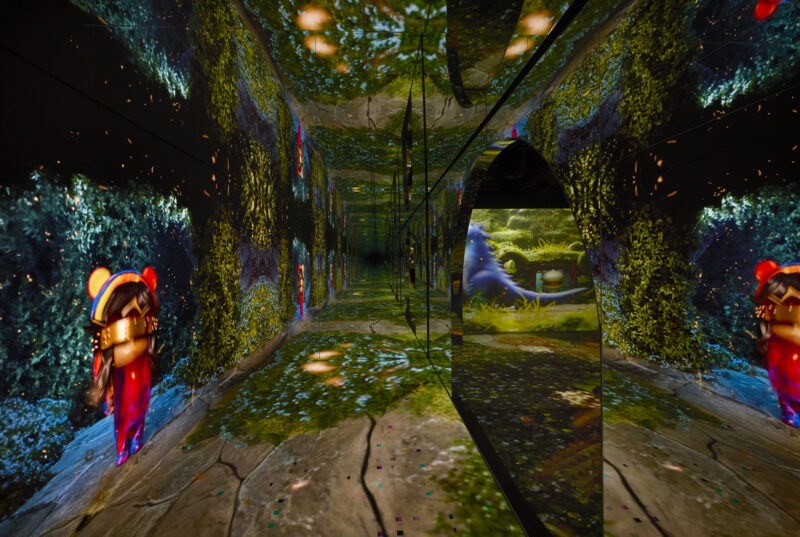
Moving into the present, the exhibition captures the collective energy and unifying power of the modern game. This chapter celebrates football as a vibrant, living phenomenon that continues to transcend borders and cultures, bringing billions together in shared passion. Installations like Field of Dreams transport visitors into a 360-degree cinematic landscape, simulating the electrifying atmosphere of a live match. Using advanced projection mapping and spatial audio, this environment surrounds viewers with the sights and sounds of global football, evoking the shared emotional highs and lows experienced by fans worldwide, from local pitches to grand international stadiums. Another highlight, The Journey, transforms mirrored surfaces, volumetric light, and reflection into an expansive infinity environment. Inspired by the idea of movement and collective experience, this installation visually articulates the continuous flow of the game, the journey of players, and the collective odyssey of fans. The interplay of light and reflection creates an illusion of boundless space, symbolizing the endless possibilities and interconnectedness inherent in football, reflecting its global reach and universal appeal.
The Future: Imagining the Next Horizon
The final chapter dares to imagine how emerging technologies might reshape both the sport and the shared human experience of football. This speculative realm pushes the boundaries of imagination, envisioning a future where sport, art, and technology intertwine in unprecedented ways. The Future installation, for example, envisions a speculative training ground where glowing architectural forms, sophisticated robotics, and athletic performance converge inside a futuristic arena. This section challenges visitors to contemplate the evolution of human-machine interaction in sports and entertainment, exploring concepts like enhanced athlete training and technologically mediated fan engagement. Beyond mere observation, the exhibition encourages active participation. In Crown Kids, visitors can create digital characters that become part of an evolving ecosystem, illustrating how individual creativity can contribute to a larger, dynamic digital community. This interactive component highlights the democratic potential of digital platforms. Meanwhile, The Cello invites audiences to shape an ever-changing musical composition performed by robotic instruments, providing a tangible experience of creative collaboration with artificial intelligence. These interactive elements underscore the exhibition’s commitment to empowering visitors as co-creators of their experience, offering a glimpse into future artistic and sporting landscapes.
Technology as a Narrative Engine: Beyond Dazzling Visuals
The sheer technological sophistication of Football is Freedom is undeniable, yet its brilliance lies in how these advanced tools are deployed as potent narrative engines rather than mere flashy displays. The use of 360-degree projection, for instance, goes beyond simply covering surfaces; it creates fully immersive cinematic landscapes that transport viewers into the heart of the action or a conceptual space, often employing multiple projectors synchronized to create seamless environments. Volumetric light, which allows light to be perceived as a tangible, three-dimensional medium through atmospheric effects like haze, sculpts space and guides the visitor’s eye, enhancing the emotional impact of each scene by creating a sense of depth and presence. Robotics are not just mechanical marvels but performers and creators, from the expressive movements of the arm in Words of Freedom to the musical artistry of The Cello, showcasing the potential for AI and automation in artistic expression. Digital media and interactive systems transform passive viewing into active participation, allowing visitors to influence the exhibition’s evolving narrative through intuitive interfaces and responsive environments.
"The goal was never just to impress with technology, but to use it as a brush to paint a story," explained a representative from Mercer Labs in an inferred statement. "Each piece of technology serves a specific narrative purpose, drawing visitors deeper into the themes of unity, freedom, and the universal language of football. We are showing that technology, when thoughtfully integrated, can unlock new dimensions of artistic expression and human connection." This approach distinguishes Football is Freedom from many other immersive experiences that prioritize visual spectacle over substantive content, setting a higher standard for the integration of art and technology.
Broader Cultural and Societal Impact
Football is Freedom extends its reach far beyond the confines of the museum, offering profound cultural and societal implications. By framing football as a "shared cultural language," the exhibition encourages a deeper appreciation for the sport’s role in fostering global understanding and cohesion. It highlights how a game can transcend national boundaries, political divides, and linguistic barriers, uniting people through a common passion. This perspective is particularly relevant in an increasingly interconnected yet often fragmented world, offering a powerful antidote to divisions through shared experience.
The exhibition also serves to recontextualize Bob Marley’s legacy. While celebrated globally for his music and advocacy for peace and justice, his deep connection to football is less widely known. By illuminating this facet of his life, Football is Freedom offers a more holistic understanding of the man and his message. It demonstrates how his philosophy of unity and freedom permeated every aspect of his existence, from his artistic expression to his leisure pursuits. The exhibition thus becomes a vehicle for reinforcing Marley’s enduring relevance, presenting his ideals through a contemporary and accessible medium that resonates with a broad audience.
Furthermore, Football is Freedom sets a new benchmark for experiential art and museum design. It challenges traditional notions of what a museum can be, moving away from static displays towards dynamic, interactive environments that foster genuine engagement. This pioneering approach suggests a future where museums are not just repositories of artifacts but vibrant platforms for dialogue, innovation, and collective experience. It demonstrates that the blurring of boundaries between installation art, digital design, and museum experience is not just a trend but a powerful evolution in how culture is created and consumed, potentially influencing curatorial practices globally.
Visitor Engagement and The Call to Participation
Interactivity is a cornerstone of the Football is Freedom experience, designed to transform visitors from passive observers into active participants. The carefully curated interactive elements serve to deepen the thematic exploration, encouraging visitors to reflect on their own roles within collective identities and creative processes. The Crown Kids installation, where visitors create digital avatars, taps into the human desire for self-expression and belonging, allowing individual contributions to shape a dynamic, evolving digital ecosystem. This fosters a sense of collective ownership and demonstrates the power of individual creativity within a community, echoing the collective spirit of a football team.
Similarly, The Cello installation’s invitation to shape a musical composition through robotic instruments is more than just a novelty; it is an exploration of the interplay between human intention and technological execution in artistic creation. It prompts questions about authorship, collaboration, and the evolving nature of art itself, inviting a dialogue between human creativity and artificial intelligence. These interactive moments are not isolated incidents but carefully integrated components of the overarching narrative, ensuring that every interaction contributes to the exhibition’s core message of play, creativity, and collective identity. This emphasis on participation underscores the exhibition’s philosophical stance: that true freedom and unity are found in active engagement and shared contribution.
As museums worldwide continue to embrace immersive storytelling, Football is Freedom offers a timely and powerful reminder that technology alone does not create meaningful experiences. Instead, Mercer Labs, through the masterful vision of Roy Nachum and the authentic collaboration with the Marley family, has meticulously woven together light, movement, interaction, and spatial design to construct environments that actively encourage participation. It is an invitation to explore how the fundamental human drives of play, creativity, and the formation of collective identity can not only coexist but flourish within the same meticulously designed space, redefining the very essence of a cultural exhibition.
Football is Freedom is currently on view at the Mercer Labs Museum of Art and Technology in New York City, running until July 31. This limited engagement provides a unique opportunity for audiences to engage with a groundbreaking exhibition that celebrates a global sport, honors a cultural icon, and redefines the future of immersive art.







