Michael Sholeh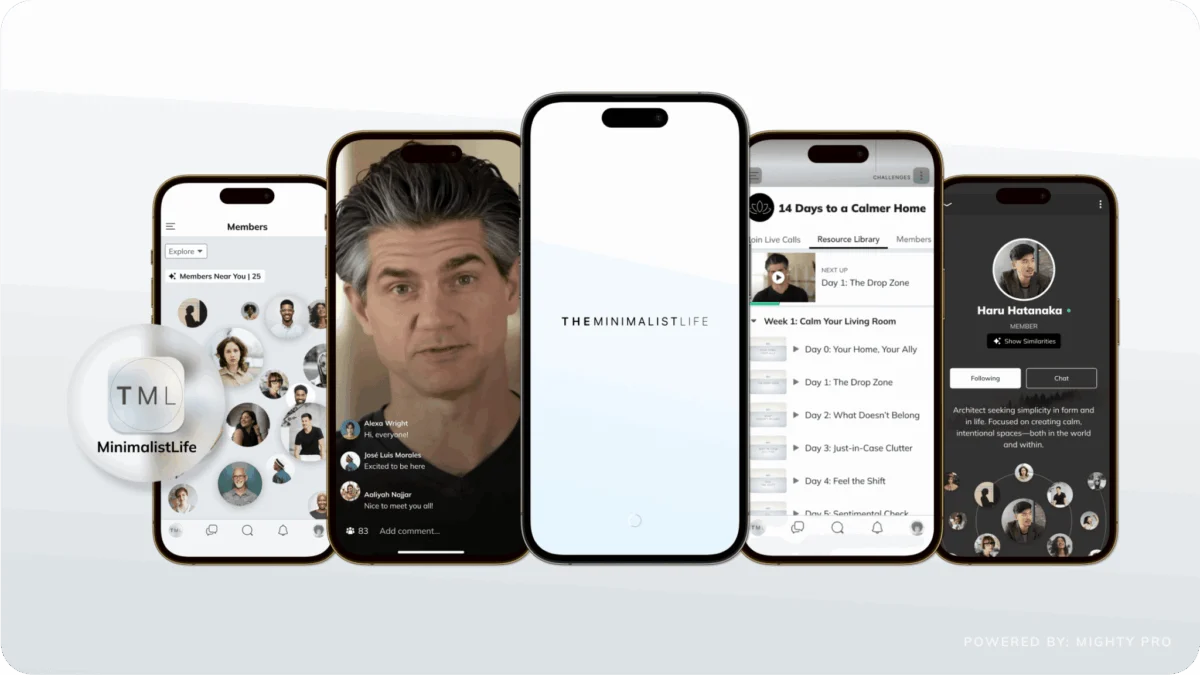
The launch follows nearly two decades of digital publishing during which Becker authored over 1,700 articles, produced 400 educational videos, and facilitated the "Uncluttered" course for more than 90,000 participants. The new community aims to bridge the gap between initial education and lifelong practice, offering a structured environment for addressing finances, digital habits, schedules, and interpersonal relationships through the lens of intentionality.
The Evolution of a Movement: A Seventeen-Year Chronology
The announcement of The Minimalist Life is the culmination of a journey that began in 2008. To understand the significance of this new offering, it is necessary to examine the timeline of Becker’s influence and the broader growth of the minimalism movement.
In 2008, following a conversation with a neighbor while cleaning out his garage, Becker founded Becoming Minimalist. At the time, the United States was entering the Great Recession, a period characterized by economic instability that prompted many households to re-evaluate their relationship with material possessions. Between 2008 and 2012, the blog grew from a personal diary into a major resource, coinciding with the rise of other figures in the space, such as Leo Babauta of Zen Habits and The Minimalists (Joshua Fields Millburn and Ryan Nicodemus).
By 2015, the movement had reached mainstream consciousness. Becker released "The More of Less," which became a national bestseller, followed by "The Minimalist Home" in 2018. During this period, the "Uncluttered" course was launched to provide a 12-week roadmap for home organization. However, internal data and feedback from the 90,000-strong student base revealed a recurring challenge: while participants could successfully remove physical clutter during a structured course, they frequently struggled to sustain those changes once the external structure was removed.
In 2024, recognizing the limitations of static content in an era increasingly dominated by automated and AI-generated information, Becker began developing a model focused on human interaction and monthly accountability. This led to the June 2025 launch of The Minimalist Life community.
Addressing the "Clutter Rebound": Supporting Data and Psychology
The necessity for a community-based approach is supported by various psychological and economic indicators regarding consumer behavior in the 21st century. Research suggests that the average American home contains approximately 300,000 items, and the size of the average U.S. home has nearly tripled over the past 50 years, even as family sizes have decreased.
Despite the proliferation of decluttering advice, consumer debt continues to rise. According to the Federal Reserve Bank of New York, total household debt in the U.S. reached a record $17.69 trillion in early 2024. This suggests that "one-time" decluttering efforts are often insufficient to counteract the systemic drivers of overconsumption.
Behavioral psychologists point to the "hedonic treadmill"—the tendency of humans to quickly return to a relatively stable level of happiness despite major positive or negative events or life changes—as a primary reason why people return to old shopping habits. Studies on habit formation, including those popularized by researchers like Wendy Wood, indicate that social support and environmental cues are more effective for long-term change than willpower alone. By creating a private community, Becker’s new program seeks to provide the "social proof" and consistent environmental reinforcement necessary to make minimalism a permanent identity rather than a temporary project.
Structure and Features of The Minimalist Life
The Minimalist Life is structured as an ongoing membership rather than a finite course. The program incorporates several key components designed to facilitate "legitimate personal development," as described in the announcement:

- Thematic Monthly Focus: Each month, the community targets a specific area of life. While physical possessions remain a core pillar, the curriculum expands into "Minimalist Finances," "Minimalist Scheduling," and "Minimalist Digital Life."
- Live Interactive Sessions: Moving away from the static nature of YouTube videos, the community features live calls with Becker. This allows for real-time troubleshooting and personalized advice, addressing the nuances of individual living situations.
- Peer Accountability: Members are encouraged to interact within a private forum, fostering a sense of shared mission. This is intended to combat the isolation that can occur when individuals adopt a lifestyle that runs counter to the prevailing consumer culture.
- Founding Member Incentives: To catalyze the initial growth of the community, Becker has introduced a "founding member" rate of $18 per month or $180 per year. This promotional pricing is scheduled to expire on June 30, after which the membership fee is expected to adjust to a standard market rate.
Market Context: The Rise of the Subscription Economy in Wellness
The launch of The Minimalist Life reflects a broader trend in the $5.6 trillion global wellness economy: the shift toward subscription-based "communities of practice." As the market for self-help books and one-off digital downloads becomes saturated, consumers are increasingly seeking "high-touch" experiences that offer access to experts and like-minded peers.
This trend is also a response to the "AI-generated content" surge mentioned by Becker. As large language models become capable of generating infinite amounts of generic advice, the value of human-led, verified, and interactive communities has increased. For content creators like Becker, the membership model provides a more stable and predictable revenue stream while allowing for deeper engagement with their most dedicated followers.
Furthermore, the focus on "Digital Minimalism" within the community highlights a growing concern over the "Attention Economy." With the average adult spending upwards of seven hours a day on digital screens, the application of minimalist principles to smartphone usage and social media consumption has become a high-demand niche within the broader productivity and wellness industry.
Analysis of Broader Implications and Societal Impact
The transition of Becoming Minimalist from a blog to a community-centric platform has several implications for the future of the minimalism movement.
First, it signals a maturation of the movement. Minimalism is no longer just about "getting rid of stuff"; it is being reframed as a comprehensive philosophy of life management. By including modules on finances and relationships, Becker is positioning minimalism as a tool for holistic mental health. Numerous studies, including research from UCLA’s Center on Everyday Lives of Families (CELF), have linked high clutter levels in the home to increased cortisol (stress hormone) levels in owners. By providing a framework to sustain a clutter-free life, programs like The Minimalist Life may have tangible public health benefits.
Second, the move highlights the importance of "intentionality" as a counter-cultural value. In an economy built on frictionless transactions and "one-click" purchasing, a community that enforces a pause and encourages deliberation acts as a significant economic disruptor at the individual level. If successful, such communities could lead to a measurable reduction in consumer waste and a shift in spending toward experiences and services rather than physical goods.
Finally, the timing of the launch—coming 17 years after the blog’s inception—suggests that even established digital brands must pivot toward "human-centric" models to remain relevant. Becker’s emphasis on "human interaction" serves as a critique of the current digital landscape, where social media algorithms often prioritize engagement over well-being.
Official Positioning and Future Outlook
While Becker’s announcement is framed as an invitation to his existing readership, it also serves as a definitive statement on the future of the Becoming Minimalist brand. By explicitly stating that the community is for those who want to "move beyond consuming content," Becker is challenging his audience to transition from passive readers to active practitioners.
The success of The Minimalist Life will likely be measured not just by its membership numbers, but by the long-term retention of its users and the qualitative "life change" stories that emerge from the private forum. As the June 30 deadline for founding members approaches, the industry will be watching to see if this model becomes the new standard for influencers in the lifestyle and personal development space.
For now, the launch stands as a testament to the enduring appeal of the "less is more" philosophy and the growing recognition that in a complex world, simplicity requires not just an initial effort, but a sustained, community-supported commitment. Joshua Becker’s 17-year journey from a garage in suburban America to the head of a global digital community reflects a broader societal yearning for focus in an age of distraction.