
In a significant stride for independent creators and product developers alike, the founder of Unstream, a platform dedicated to helping music fans directly support their beloved artists, has unveiled a sophisticated, AI-driven content automation engine. This innovative system transforms internal product data into a steady stream of engaging social media posts, effectively solving the perennial challenge of consistent marketing for side projects and startups. Moving beyond sporadic "impulse posting," the new engine now consistently generates 21 unique posts weekly across Instagram, Threads, and Bluesky, freeing the founder to focus on product development while ensuring continuous brand presence and artist promotion.
The Genesis of Unstream: A Mission Beyond Streaming’s Limitations
Unstream emerged last year from a recognized need to empower artists in an increasingly complex digital music landscape. While streaming services have democratized access to music, they often present significant challenges for artists, particularly independent ones, in terms of fair compensation and direct fan engagement. Many artists struggle to earn sustainable income from streaming alone, leading to a growing demand for alternative support mechanisms such as direct donations, merchandise sales, and concert ticket purchases. Unstream was conceived to bridge this gap, providing a centralized hub where fans could discover diverse ways to support their favorite musicians beyond the often-opaque economics of traditional streaming platforms.
The initial development of Unstream was a testament to rapid prototyping, with its first iteration coming together over a single weekend of "vibe coding." Subsequent months saw continuous iterative improvements and refinements to the core product. However, as is common with many passionate side projects, marketing efforts often took a backseat to development. The founder’s early marketing strategy, characterized by spontaneous posts on platforms like Threads and Instagram, proved unsustainable. This "impulse posting" approach, while occasionally effective, was disruptive and prevented the sustained, strategic engagement necessary to build an organic audience and fulfill Unstream’s mission effectively. This scenario is widely echoed across the startup ecosystem, where founders, especially those with technical backgrounds, often prioritize product build-out over consistent public relations and marketing.
Unlocking the Latent Content Goldmine Within the Product
The pivotal moment arrived when the founder recognized that the very data pools created for Unstream’s functionality were, in fact, an untapped content engine. This realization underscored a broader principle applicable to many businesses: valuable marketing assets often lie hidden within existing product infrastructure or operational data.
Unstream’s internal structure yielded three primary content sources:
- A Database of Verified Independent Artists: Approximately a month prior to the automation’s implementation, Unstream introduced a feature allowing artists to claim and verify their profiles. This enabled musicians to curate their direct support links and confirm their presence on various platforms. To date, 114 artists have utilized this feature, creating a clean, verified, and actively engaged list of smaller independent musicians. This direct connection to a growing roster of artists forms a core pillar of Unstream’s value proposition and a rich, authentic source of promotional content. The indie music sector continues to grow, with market reports indicating a significant increase in artist self-releases and direct-to-fan sales, making platforms like Unstream increasingly vital.
- A Curated Pool of Established Artists: To broaden its appeal and highlight the universal need for direct artist support, Unstream also cultivated a database of more established musicians. Utilizing Claude Code, an AI assistant, a script was developed to pull data from the WikiInfo and MusicBrainz APIs. This was initially for SEO purposes but quickly proved invaluable for content generation. These artists are typically in the "second- or third-tier" of prominence – not global superstars like Taylor Swift, but well-known working musicians whom many fans mistakenly believe can only be supported through mainstream streaming. A crucial filter was applied to include only currently active artists, ensuring that promotion directly benefits those actively creating and performing today. This addresses a common misconception that only emerging artists require direct fan support.
- A Comprehensive Shipped Features Log: Beyond artist data, the development process itself generated a valuable content source: a detailed log of every feature shipped. Each entry includes the feature’s name, rollout date, and a concise description. This log not only powers an in-app changelog, demonstrating continuous improvement to users, but also serves as a ready-made list of talking points for social media, showcasing Unstream’s ongoing evolution and commitment to its user base.
The Technical Architecture: Components of the Automated Engine
The automated content engine is a testament to intelligent integration, combining AI assistance, API-driven scheduling, and cloud-based execution to achieve hands-off marketing. The workflow, though seemingly complex, is designed for efficiency and scalability.
The core tools integrated into this system include:
- Claude Code: Serving as the central AI assistant, Claude Code was instrumental in developing the scripts that populate Unstream’s artist databases and, crucially, in building the TypeScript automation that assembles social media posts from pre-defined templates. Its consistent use throughout Unstream’s development minimized context-switching for the founder, streamlining the integration process.
- The Buffer API: This serves as the primary interface for scheduling and publishing posts across various social media platforms. Once a week’s content is generated, the automation pushes everything to Buffer, which then manages the timely publication on Instagram, Threads, and Bluesky. The API’s capabilities extend to platform-specific customizations, such as tagging Threads posts with the "Music" topic and appending relevant hashtags on Instagram and Bluesky, all without manual intervention.
- GitHub Actions: The execution environment for the automation. A specific action, "schedule weekly social posts," is configured to trigger every Monday at 9 a.m. This action calculates the upcoming calendar week, runs the TypeScript script, and initiates the content generation and scheduling process. This fully automated trigger eliminates the need for manual oversight, ensuring consistent operation.
- iA Writer: While the system operates autonomously, iA Writer, a distraction-free text editor, provides a crucial human oversight layer. All generated posts and the upcoming schedule are stored as Markdown files in the project repository. This allows the founder to conduct spot-checks and review upcoming content, ensuring quality and alignment with brand voice without interrupting the automated flow.
- MusicBrainz and WikiInfo: These large, open-source music databases are fundamental data sources. MusicBrainz, in particular, is utilized to populate platform links and artist metadata for the established artist profiles. By pulling from the same APIs that power Unstream’s search functionality, the content pipeline ensures consistency and accuracy with the product’s core data.
Inside the Engine: A Week of Automated Content Creation
Every Monday morning at 9 a.m., the GitHub Actions script initiates a meticulously orchestrated four-step process to generate a full week’s worth of social media content:
Step 1: Curated Artist Selection
The TypeScript script begins by selecting six artists for the upcoming week: three from the verified independent artist pool and three from the established artist pages. The indie artists are drawn from the 114 musicians who have claimed their Unstream profiles, representing a diverse range of emerging talent. The established artists are chosen from the WikiInfo and MusicBrainz-generated pool, showcasing artists who can benefit from alternative support channels. A critical component of this selection process is a "promoted" flag. Once an artist is featured, this flag is set, preventing their re-selection until every other artist in their respective pool has had an opportunity to be promoted. This deduplication layer is vital for ensuring equitable promotion and the long-term sustainability of the content engine, preventing repetitive content and maintaining audience engagement.
Step 2: Building the Seven-Day Content Calendar
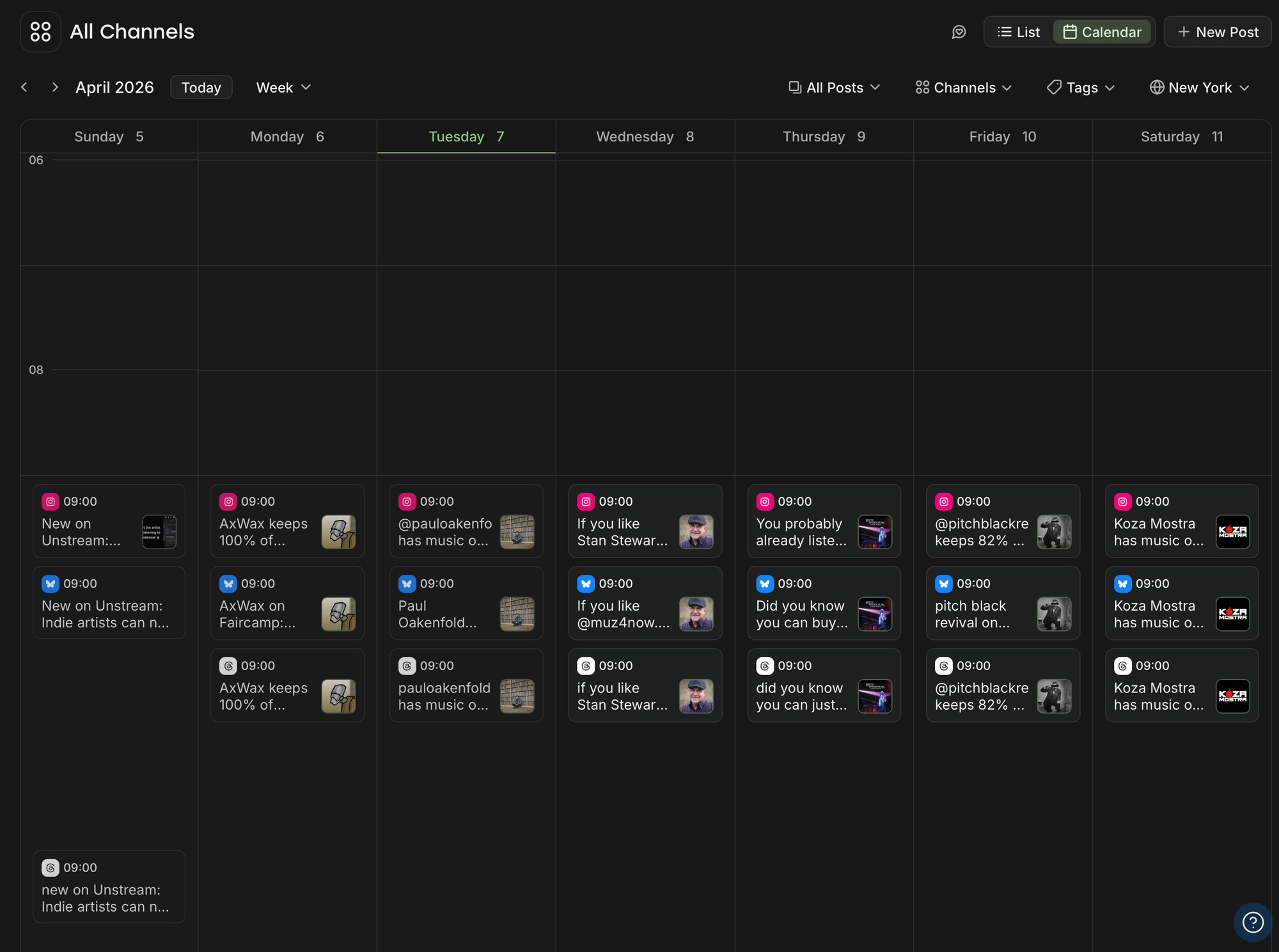
The six selected artists are then organized into a seven-day schedule, with one post dedicated to an artist each day. To maintain variety and broad appeal, indie and established artists alternate daily. The seventh day of the week is consistently reserved for a "feature spotlight," drawing content from the shipped features log. This structured calendar ensures a balanced mix of artist promotion and product updates. This single calendar is then adapted for publishing across three distinct platforms – Instagram, Threads, and Bluesky – resulting in a total of 21 unique posts scheduled each week.
Step 3: Dynamic Post Content Generation
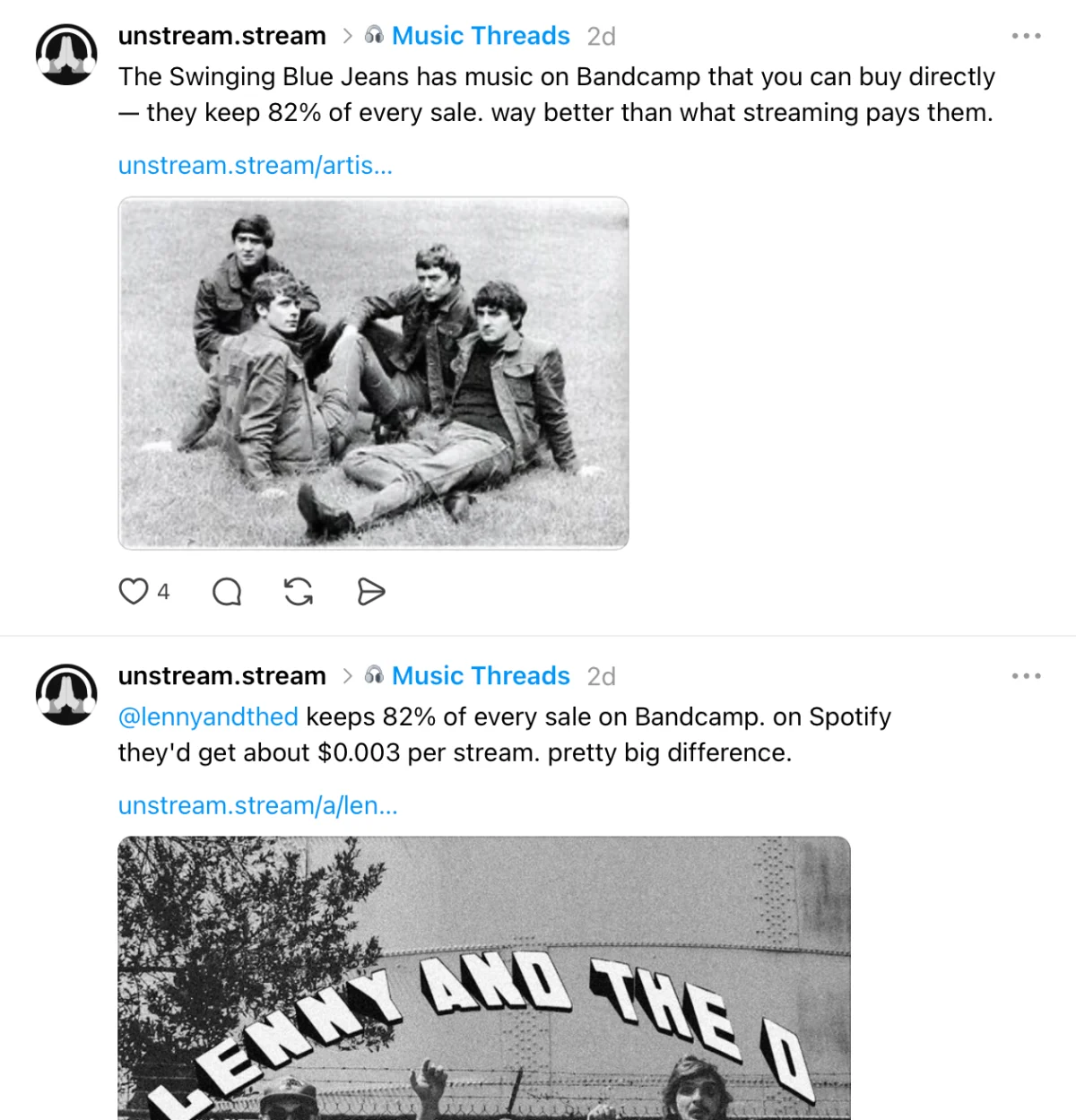
This is where the TypeScript code performs its heavy lifting, dynamically generating post content for each scheduled slot. For artist posts, the script intelligently pulls relevant data such as the artist’s Instagram handle (if available), lists the various platforms where fans can offer direct support, and crafts descriptive copy using a set of standardized templates. The messaging is strategically tailored: for indie artists, the focus is on discovery and direct support ("Check out this artist; here’s how you can support them!"). For established artists, the angle shifts to educating fans about alternative support channels beyond mainstream streaming ("Love this artist on Spotify? Support them better through these platforms!"). Feature posts are direct and informative, detailing "what’s new and why it matters" for Unstream users.
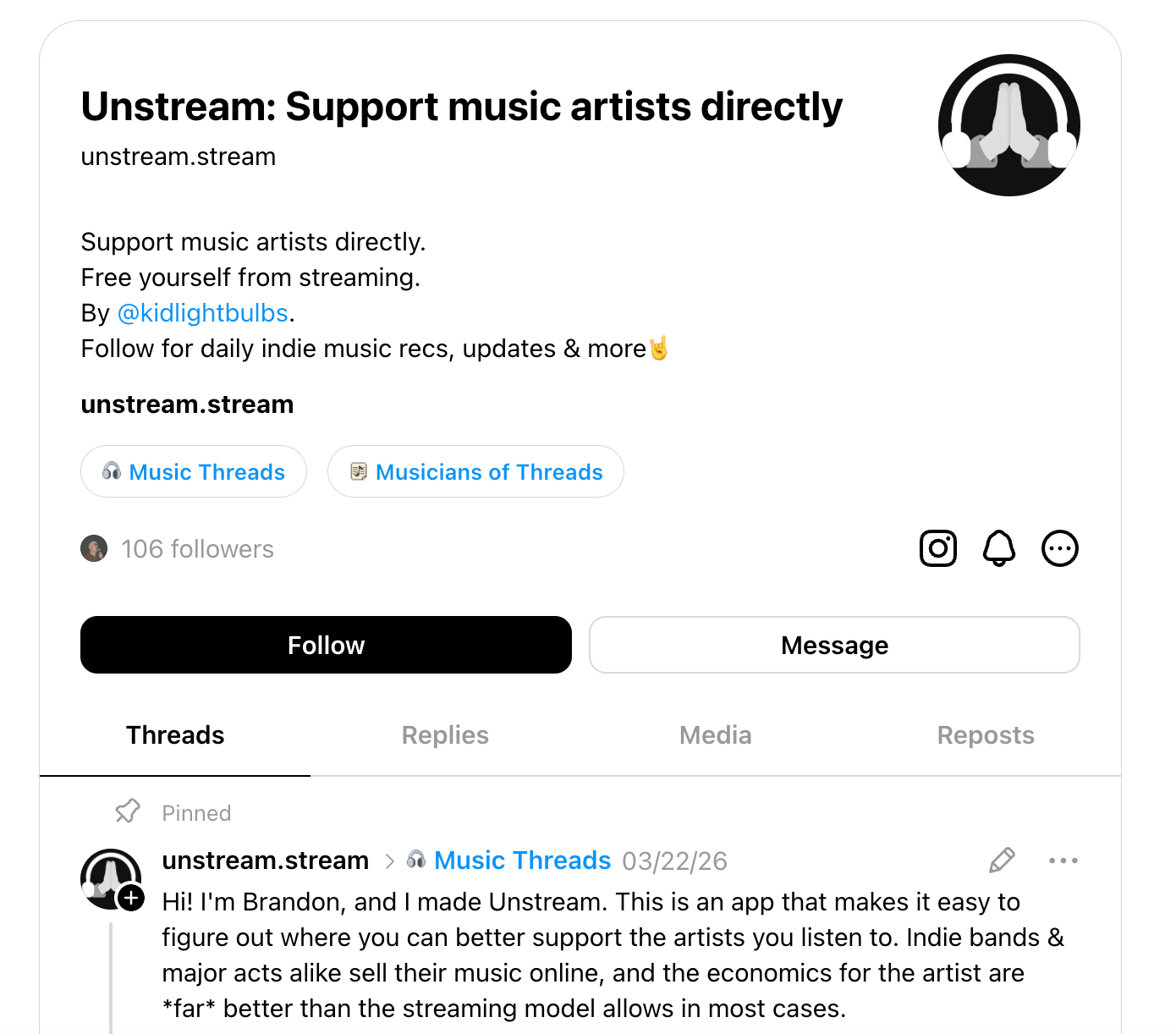
Visual content is also automated; artist photos are pulled either from their verified Unstream profiles or directly from the same search API that powers the Unstream platform itself, ensuring visual consistency. Platform-specific metadata, such as relevant hashtags for Instagram and Bluesky, and topic assignments for Threads (e.g., "Music"), are applied programmatically. The system’s ability to draw from a wide array of artists is exemplified by its current queue, featuring diverse talents like "Neccos for Breakfast" (an emerging indie artist), classical composer Steve Reich, and prolific sci-fi TV scorer Bear McCreary.
Step 4: Seamless Scheduling via Buffer API
Upon completion of content generation, all 21 posts for the upcoming week are automatically transmitted and scheduled through the Buffer API. These posts seamlessly land in the Buffer queue, pre-scheduled to publish daily at 9 a.m. across all three targeted social platforms. This final step culminates in a fully populated social media calendar, ready for execution without any further manual input from the founder.
The Sustainability Mechanism: Deduplication and Organic Growth
One of the most critical aspects ensuring the longevity and effectiveness of Unstream’s content engine is its sophisticated deduplication layer. Without this mechanism, the system would quickly exhaust its content pools or become repetitive, diminishing engagement and value.
The deduplication logic operates on two fronts:
- Artist Promotion: Every artist featured in a social media post is flagged as "promoted." The system is programmed to prevent the re-selection of any artist until every other artist within their respective pool (indie or established) has also had a turn. Once an entire pool has been cycled through, the "promoted" flags for that pool are reset, and the cycle begins anew. This ensures that all artists receive equitable exposure over time.
- Feature Spotlights: Similarly, each entry in the "shipped features" log includes an "announced" tracker (true/false). When a feature is posted about, its tracker flips to "true." Once all features in the log have been announced, the entire list resets to "false," allowing for future re-promotion of relevant updates.
This intelligent deduplication makes the system inherently sustainable. Furthermore, it naturally expands as Unstream grows. As more independent artists verify their profiles on the platform, and as the founder continues to ship new features, the underlying content pools automatically grow larger. This creates a virtuous cycle where product growth directly feeds the content engine, increasing its diversity and reach without requiring additional manual input for content creation. This organic scalability is a key differentiator for the system.
Cultivating a Unique Brand Voice with AI
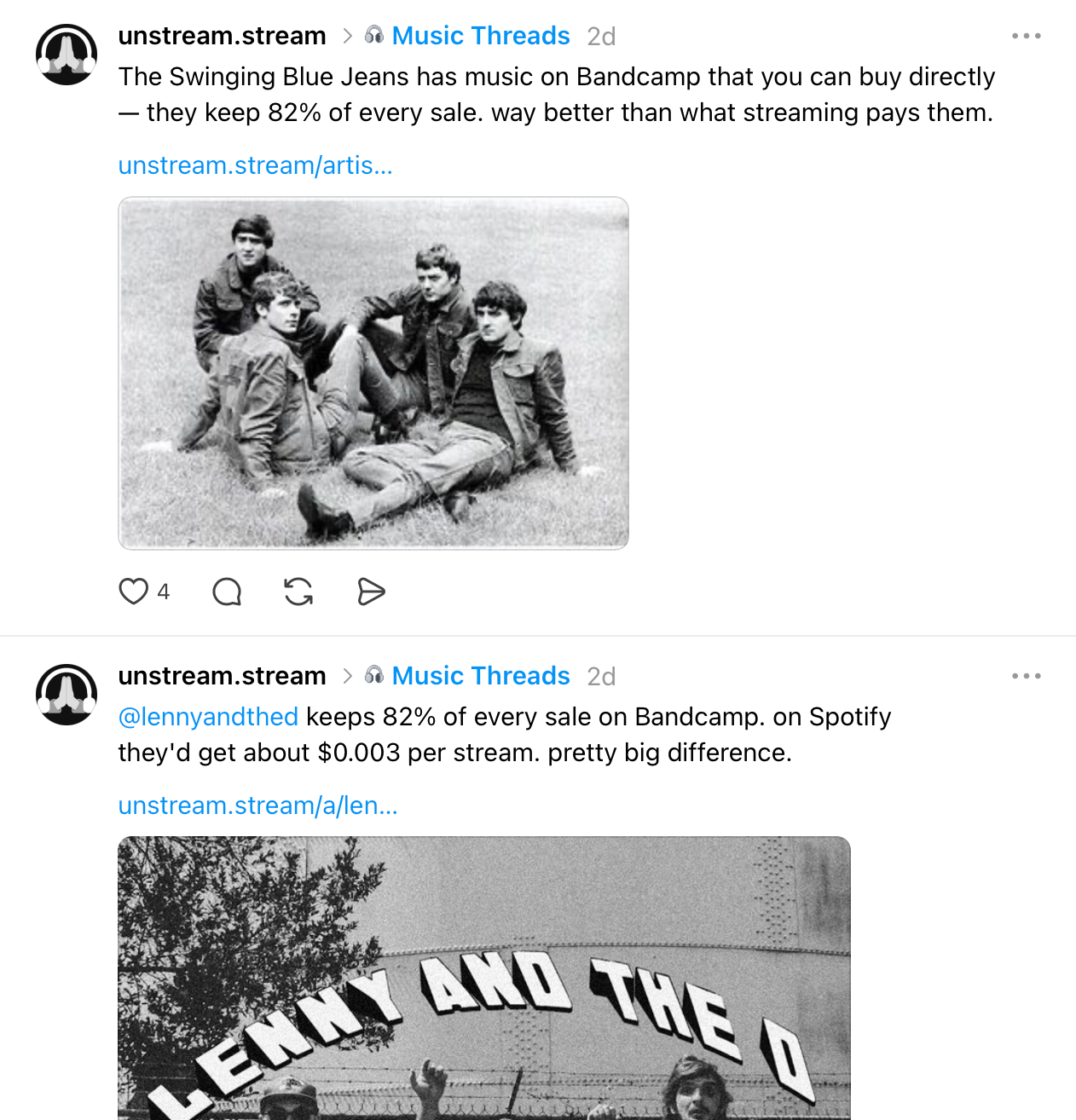
A significant concern for any AI-assisted content strategy is the risk of generating generic, impersonal content. From the outset, the Unstream founder understood that authenticity was non-negotiable; consistency would only matter if the content genuinely resonated with the brand’s voice and mission. To circumvent the pitfalls of boilerplate AI output, significant effort was invested in "teaching" Claude Code to adopt the founder’s distinct communication style.
This rigorous training involved several strategic steps:
- Long-Form Content Analysis: Claude was first trained on the founder’s entire back catalog of published blog posts (available at bgreen.lol). These longer-form pieces provided the AI with a deep understanding of the founder’s thought processes, analytical style, and overall narrative approach.
- Short-Form Content Analysis: Recognizing that social media posts require a different cadence, the founder then provided Claude with the last 50 Threads posts, acquired via an alpha version of the Buffer API. This dataset was crucial for teaching the AI how to distill ideas into concise, impactful social copy.
- Voice and Tone Guidelines: Based on the analysis of both long and short-form content, Claude was instructed to study the underlying tone. Specific guidelines were provided: adhere to key talking points about music, artists, and Unstream, and bias towards the punchier, shorter style characteristic of the Threads posts. All these instructions were codified into a
voice-and-tone.mdfile – a comprehensive set of rules describing the desired communication style. - Template Generation and Refinement: Using these guidelines, Claude proposed initial boilerplate templates for social media posts. The founder then made manual tweaks to these templates, ensuring they perfectly aligned with the desired tone and messaging.
The result is a system where templates provide structural consistency, but the carefully crafted voice guidelines imbue each post with personality. This distinction transforms what could be perceived as sterile, AI-generated content into posts that genuinely sound like a passionate individual sharing something they are excited about, fostering a stronger connection with the audience.
Impact and Future Trajectory
The implementation of this automated content engine has yielded significant strategic benefits for Unstream. While individual post engagement metrics (a handful of likes and reposts, a few dozen to a few hundred views on Threads) may appear modest, the primary objective of the workflow was achieved: consistent presence. The founder transitioned from an erratic, time-consuming "impulse posting" routine to reliably publishing 21 pieces of content per week across three platforms. This consistent daily presence is fundamental for organic social media growth and brand building, particularly for a burgeoning side project.
The strategic value lies not merely in the quantity of posts, but in the time savings and scalability. The founder is now largely unburdened by daily marketing tasks, allowing dedicated focus on product development and feature enhancement. Moreover, the system’s inherent design ensures it becomes more robust and diverse over time; every new verified artist and every new feature shipped organically expands the content pool, creating a self-sustaining marketing loop.
Looking ahead, the next phase for Unstream’s content engine involves expanding its reach to platforms like TikTok. Given the modular nature of the current setup, adding a new platform primarily entails integrating another API call, making the expansion a relatively straightforward technical endeavor. This planned evolution underscores the system’s adaptability and future-proofing.
Broader Implications for the Creator Economy and Beyond
The Unstream founder’s journey offers valuable insights for other builders, creators, and small businesses grappling with consistent marketing challenges. The underlying principles of this automation can be widely applied, even with different technological stacks:
- Leverage Existing Data: Most businesses, regardless of industry, possess structured data – customer lists, project logs, testimonials, feature roadmaps, partner networks – that can be repurposed as raw material for a content engine. The key is to recognize these internal assets as external marketing opportunities.
- Embrace a Balanced Content Strategy: The "two-bucket approach," alternating between promoting others (artists) and promoting the product (features), is crucial for maintaining audience interest. For freelancers, this could mean balancing client success stories with lessons learned. For SaaS companies, it might involve juxtaposing customer testimonials with product updates. This balance prevents a feed from becoming a monotonous billboard and fosters a sense of community and value.
- Prioritize Deduplication for Sustainability: The inclusion of tracking logic that prevents immediate repeats and ensures a full cycle through available content is fundamental. This mechanism transforms a one-time content batching effort into a continuously running engine, preventing content exhaustion and maintaining long-term engagement.
- Invest in Voice Guidelines for AI-Generated Content: If AI is used for content drafting, a well-defined "voice file" is paramount. It dictates the tone, style, and personality of the generated content, ensuring it sounds authentic and consistent with the brand, rather than generic and detached. This human-guided AI output maintains trust and connection with the audience.
- Start with "Good Enough": The pursuit of perfection can often be the enemy of progress. Achieving consistent presence, even with initial modest engagement numbers, is a critical first step. The Unstream story demonstrates that building a robust, consistent system that improves over time is more valuable than sporadic efforts aimed at viral hits.
This case study highlights a growing trend in digital marketing: the strategic blend of human insight and AI automation to empower small teams and individual creators. It democratizes sophisticated marketing capabilities, allowing founders to build their products and communities simultaneously, without being overwhelmed by the demands of constant content creation.
Empowering Developers: Buffer’s Role in the Ecosystem
For developers inspired by Unstream’s success and looking to integrate similar automation into their projects, Buffer actively provides comprehensive resources. Their developer documentation offers detailed guides on the GraphQL schema, authentication flows, and quick-start examples, facilitating seamless integration. Additionally, the Buffer MCP (Multi-Channel Publishing) server docs walk through connecting the API with Claude or any other MCP-compatible AI agent, further lowering the barrier to entry for advanced automation.
Buffer’s commitment extends beyond documentation, offering hands-on support through their support team and a vibrant Discord server where developers can connect, share insights, and collaborate on API-driven projects. This ecosystem of resources fosters innovation and empowers a new generation of creators to build efficient, automated marketing solutions. Unstream’s achievement serves as a compelling example of what can be accomplished when product development and marketing automation are approached with strategic foresight and technical ingenuity.