Pranda Michaela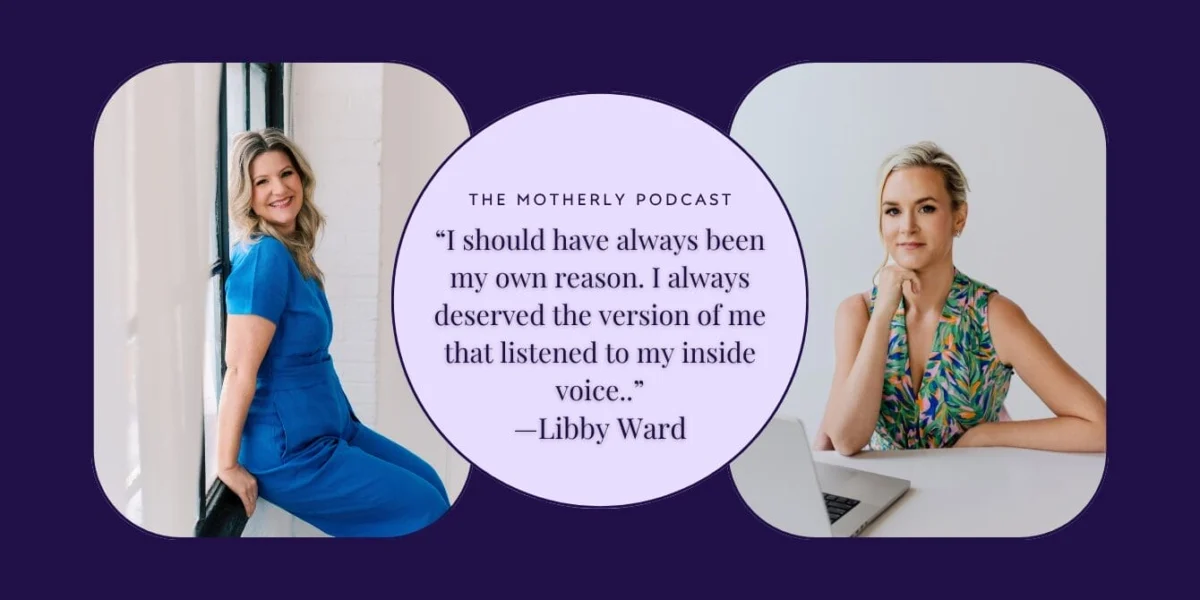
Libby Ward, a prominent voice who garnered millions of followers by candidly articulating the often-unspoken struggles of motherhood, has transitioned from her @diaryofanhonestmom persona to her own name, launching her debut memoir, "Honest Motherhood: On Losing My Mind and Finding Myself." This significant shift signifies not only a rebranding but a deeper exploration of her personal journey, moving beyond the collective experience of motherhood to a more individual narrative of healing and self-discovery. The memoir, a bestseller, chronicles her path through a challenging childhood, postpartum depression, the pervasive issue of "mom rage," a late-diagnosed ADHD, and her ongoing ascent toward reclaiming her identity. Ward’s evolution, from a digital influencer sharing the "quiet parts out loud" to a published author and speaker, underscores a profound commitment to authenticity and self-acceptance.

The decision to write a memoir, rather than a more academic exploration of motherhood, stemmed from the overwhelming encouragement of those around her. Initially, Ward intended to pen a social commentary, drawing on observed experiences, research, and the shared narratives of her vast online community. However, the personal stories she began to weave into her writing resonated so deeply that the path toward a memoir became clear. "The more I wrote, the more the people around me kept saying, ‘Your stories are incredible. You need to tell more of your own story,’" Ward recounted in a recent interview on The Motherly Podcast. This realization led to a more fluid and liberating writing process, where her personal experiences flowed more naturally than academic data.

A pivotal moment in Ward’s journey was the realization that her pursuit of healing should not solely be for her children, but for herself. "When motherhood broke me and I finally went to therapy, I did it because I wanted to be a better mom," she explained. "I wanted to show up more regulated, more present – I wanted to heal for the sake of my kids." However, through the introspective process of writing her memoir, she discovered a more fundamental truth: "I should have always been my own reason. I always deserved to listen to my inside voice, to care about my own needs, to treat myself as someone who mattered – not just because I was a mom, but because I was a person." This profound shift in perspective highlights a common struggle for mothers, who often prioritize their children’s well-being above their own, sometimes to their detriment.

Ward’s memoir delves into specific experiences that served as wake-up calls, illustrating the immense pressure and emotional toll of idealized motherhood. One such instance involved a chaotic late-night scene where shoeboxes spilled from her SUV while she was already stretched thin with two young children and extensive volunteer commitments. "I was on the ground in the cold trying to repack them, and I just thought: this is me. I have this shiny facade. Everyone thinks I’ve got it together. But I am absolutely shattered inside." This moment epitomized the disconnect between her external presentation and her internal reality.

Another significant event, described in the book, occurred during a stressful morning with her two young children. Her son’s unintelligible cries and her daughter’s escalating behavior led to an explosive outburst of "guttural rage" from Ward. The visceral reaction, followed by the sight of fear in her children’s eyes, was a stark realization of the emotional deficit she had accumulated. "I realized I’d put so much energy into keeping things perfect that I had no capacity left for anything," she admitted. This experience propelled her to confront the "myth of the ideal mother" and question the kind of parent she truly wanted to be.

The Damaging Myth of the Ideal Mother
Ward’s discourse on the "myth of the ideal mother" resonates with a widespread cultural narrative that often sets impossible standards for mothers. She defines this myth as inherently unattainable, citing the contradictory expectations placed upon mothers: to be endlessly patient and kind while ensuring perfect child behavior; to breastfeed exclusively while returning to work early; to manage households, cook, clean, and plan everything, all while appearing perpetually serene. "There’s only so much time in a day," Ward stated. "And mothers today are getting more information, at a higher velocity, from more conflicting sources, than any generation before. Our brains were never meant to process this much while also carrying everything. The reason it feels hard is because it actually is hard."

The pressure to conform to this idealized image, Ward suggests, often stems from a lack of self-trust, particularly for women who have not been taught to prioritize their own needs. When disappointing others feels like a high-stakes event, mothers may constantly seek external validation, scanning their environment for cues on how to "be" a good mother. "You’re the only one with the information about your own life – your support system, your sleep, your kids’ needs, your nervous system. Nobody else has that. And that’s where the real work begins." This highlights the importance of internal validation and self-awareness in navigating the complexities of motherhood.

Honesty as a Foundation for Healing
Ward emphasizes that honesty, far from being a vague concept, is a practical, granular tool for healing. It involves the conscious effort to pause in challenging moments and acknowledge the truth of one’s experience. "It’s the practice of just stopping yourself in the moment and telling yourself the truth," she explained. This can manifest as recognizing personal triggers when a child is having a meltdown, or acknowledging the dysregulation occurring in both parent and child. This practice extends to daily journaling, where honest self-assessment of sleep, emotions, and responsibilities allows for practical adjustments. "What can move? What can I do a worse job at and still be okay? Where can I ask for help?" These questions, born from honesty, pave the way for realistic self-management and the ability to delegate or let go of non-essential tasks.

The Impact of an Adult ADHD Diagnosis
The memoir also chronicles Ward’s adult ADHD diagnosis, a revelation that profoundly impacted her understanding of her own experiences. Initially, she held common misconceptions about ADHD, associating it solely with young boys. Her own experiences, including working as an educational assistant with children with ADHD without recognizing the traits in herself, underscore the often-misunderstood nature of the condition in adults, particularly women. "It wasn’t until I started seeing content online that I slowly got less skeptical," she shared. The psychiatrist’s question, "How have you made it until now?" upon confirming the diagnosis, speaks to the profound challenges she had navigated without understanding the underlying neurobiological factors.

The diagnosis brought both difficulty and immense relief. "It gave me so much more compassion for myself," Ward stated. She recognized that the "everyday monotony of motherhood is genuinely harder for my brain. That’s just the truth of how I’m wired." Naming this aspect of her identity provided a framework for understanding her struggles and a pathway to more effective coping strategies.

Rebranding and Embracing a Fuller Identity
Ward’s decision to rebrand from @diaryofanhonestmom to her own name, Libby Ward, represents a significant step in her personal and professional evolution. This shift was driven by a desire to embrace a more multifaceted identity. "I woke up one day and I was like, ‘I will die if I have to talk about motherhood for the rest of my life.’ Not because I don’t care – I care deeply. But there are other parts of me that were starting to grow, other conversations I wanted to have." She recognized the incongruity of advocating for mothers to be more than just mothers while confining her own platform to a single narrative.

This rebranding, occurring just before the book’s release, was a deliberate act of authenticity. "Maybe it wasn’t strategic to do it right before the book. But I was like – if my whole thing is about being authentic, this is the most authentic thing I can do." Ward now sees herself as standing "on top of the box," free to explore a broader range of topics while still centering motherhood. Her message to other mothers is that it is permissible, and indeed essential, to be more than one thing.

The Takeaway: Finding Strength in Honesty
Ultimately, Ward hopes her memoir, "Honest Motherhood," will offer readers a profound sense of connection and the belief that change is possible. She aims to convey that the feeling of burnout, rage, and exhaustion does not have to be a permanent state. Her journey, she emphasizes, was non-linear and messy, not a prescriptive five-step plan. "If I can get there, it’s possible for you too."

Her core message is one of empowerment: "The answers you’re looking for are already inside you. They’re not in a self-help book. They’re not from your favorite influencer. You actually have what you need. You just have to start telling yourself the truth." This underscores the transformative power of self-awareness and radical honesty as the foundation for personal growth and well-being, not just for mothers, but for all individuals navigating life’s complexities.

The article is sponsored by Jeep. Thank you for supporting the brands that support Motherly and mamas.