Ali Ikhwan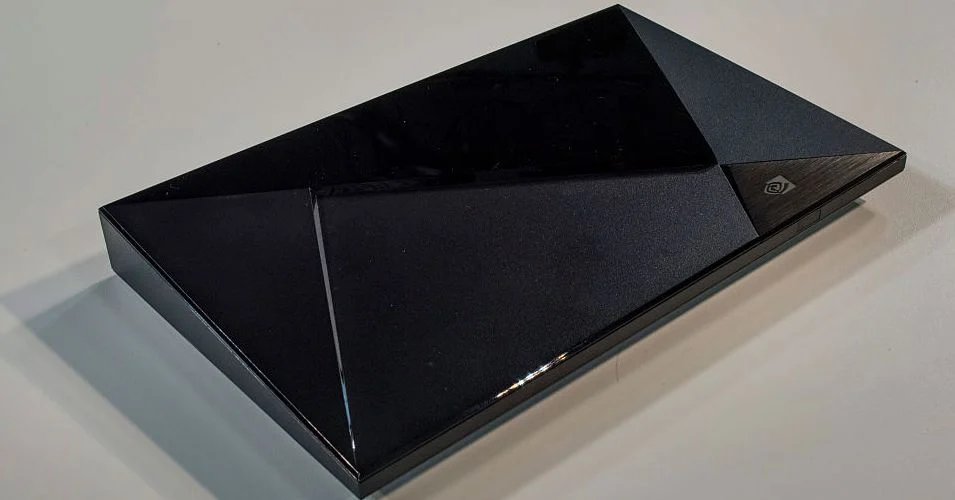
The technology landscape of 2026 is defined by a singular, unavoidable economic reality: the voracious appetite of generative artificial intelligence for memory and storage has fundamentally altered the cost structure of consumer electronics. As global supply chains prioritize high-bandwidth memory (HBM) and advanced NAND flash for enterprise-grade AI accelerators, the ripple effects are reaching even the most established corners of the hardware market. Nvidia, the primary architect of the current AI infrastructure boom, has provided a stark example of this shift, confirming that its long-running Shield TV Pro streaming device will see a $100 price increase, effective immediately.
The decision to raise the price of a device that debuted in 2019 to $299.99 represents a significant inflection point for the home entertainment market. For years, the Shield TV Pro occupied a unique position as a premium "passion project" for Nvidia, offering hardware-accelerated upscaling and robust media playback that outperformed standard streaming dongles. However, as of October 2, 2026, the cost of the unit has surged by 50 percent, reflecting the intense competition for the basic silicon components that underpin modern computing.
A Chronology of a Legacy Device in an AI-Driven Market
To understand the current price adjustment, one must look at the trajectory of the Shield TV series. Launched in its "Pro" iteration in late 2019, the device was powered by the Tegra X1+ processor. Even by the standards of 2026, the device remained a formidable media powerhouse, capable of handling complex codecs and high-bitrate streaming that often caused lesser hardware to stutter.
- 2019: The Nvidia Shield TV Pro launches with a retail price of $199.99, alongside a standard non-Pro version priced at $149.99.
- 2023–2024: As the generative AI boom accelerates, global demand for DRAM and NAND storage spikes. Nvidia, heavily invested in the data center sector, begins shifting production priorities to meet the unprecedented needs of large language model (LLM) training.
- 2025: The non-Pro Shield TV model is officially discontinued as manufacturing capacity is diverted.
- January 2026: Nvidia representatives describe the Shield as an ongoing commitment, noting that the company is still actively manufacturing units to meet steady consumer demand.
- October 2026: Citing "substantial" increases in the cost of industry-standard components, Nvidia adjusts the MSRP of the remaining Shield TV Pro units to $299.99.
The Economics of Component Scarcity
Nvidia’s official confirmation of the price hike centers on the shifting economics of the semiconductor industry. A spokesperson for the company stated, "Starting October 2, SHIELD Pro will be priced at $299. The cost of components, including memory, has increased substantially across the industry."
This statement highlights a broader industry trend. Modern generative AI models require massive amounts of memory to function efficiently. As companies like Nvidia, Microsoft, Google, and Amazon procure record-breaking quantities of memory modules for their cloud-based AI clusters, the available supply for secondary markets—such as set-top boxes, smartphones, and mid-range laptops—has shrunk. Because Nvidia continues to manufacture the Shield TV Pro rather than relying on a fixed stockpile of pre-AI-era components, it is forced to purchase memory at current market rates.
When those procurement costs rise, they are inevitably passed down to the consumer. For a device as mature as the Shield TV, this creates a pricing paradox: the hardware is older, but the cost to build it is higher than it was at the time of its release.
Broader Market Implications: The End of the "Budget Premium" Era
The price increase for the Shield TV Pro is not an isolated incident; it is part of a systemic trend of rising costs across the consumer electronics sector. Since 2025, major manufacturers have been forced to adjust the pricing of gaming consoles and home entertainment hardware to protect profit margins against ballooning material costs.
- Sony PlayStation 5 Pro: Initially launched in 2024 at $699.99, the console has seen incremental price adjustments, now sitting at $899.99.
- Microsoft Xbox: Following multiple price increases throughout 2025, the cost of current-generation Xbox consoles has risen significantly to offset the cost of internal storage and processing components.
- Nintendo: The company has also adjusted pricing for its current-gen hardware, signaling that even companies historically resistant to hardware price hikes are bowing to supply chain pressures.
For the consumer, this suggests that the era of stagnant or declining prices for consumer electronics has likely ended. The "AI tax," as some analysts have begun calling it, refers to the indirect cost of component scarcity caused by the AI industry’s insatiable demand for hardware. While companies like Nvidia are the primary drivers of this demand, they are simultaneously subject to the same supply constraints they helped create.
The Future of the Shield TV and Niche Streaming
The decision to maintain the Shield TV Pro at a $300 price point places the device in an precarious market position. At its original $199 price, the Shield was considered a "must-have" for power users, Plex server enthusiasts, and those requiring high-end codec support. At $300, it enters a price bracket where consumers may be more inclined to invest in a dedicated small-form-factor PC or a more modern alternative that might offer newer feature sets.
Nvidia’s strategy appears to be one of controlled, low-volume production. By raising the price, the company can likely sustain the manufacturing line for the "passion project" without suffering losses, while simultaneously filtering out casual buyers who would be better served by lower-cost streaming alternatives like the Apple TV or various Google TV dongles.
Industry analysts suggest that the Shield’s survival as a product line is testament to its unique software ecosystem. Despite the aging Tegra silicon, the Shield’s ability to act as a localized media server and its mature integration with Android TV keeps it relevant. However, as the gap between its price and its internal hardware specifications widens, the target audience for the device will likely shrink to only the most dedicated enthusiasts.
Assessing the Long-Term Impact
As of early October 2026, stock of the Shield TV Pro remains sparse. While the official Nvidia online store lists the device as out of stock, third-party retailers such as Best Buy have begun listing the unit at the new $299.99 price point.
The implications for the broader market are clear: the cost of legacy hardware will continue to fluctuate based on its reliance on high-demand components. If a device requires common components like RAM, flash storage, or standard power management integrated circuits (PMICs), its price is no longer tied strictly to its age or its feature set. Instead, it is tied to the daily spot price of silicon in a world where AI infrastructure consumes almost everything the factories can produce.
For the average consumer, this means that the "bang for the buck" calculus has fundamentally shifted. Hardware that was once considered a bargain due to its maturity is now being priced out of the mid-range market. As we look toward the remainder of 2026 and into 2027, the primary challenge for hardware manufacturers will be balancing the necessity of component procurement with the shrinking disposable income of consumers facing rising costs across all tech sectors.
Nvidia’s move with the Shield TV Pro serves as a microcosm for this tension. It is a reminder that in the age of artificial intelligence, no piece of hardware is immune to the economic forces that are currently reshaping the digital world. Whether this will lead to a new wave of hardware innovation or a consolidation of the market into fewer, more expensive devices remains to be seen. For now, the Shield TV Pro remains, but it carries the heavy price tag of an industry transformed by its own technological ambition.