
 Ali Ikhwan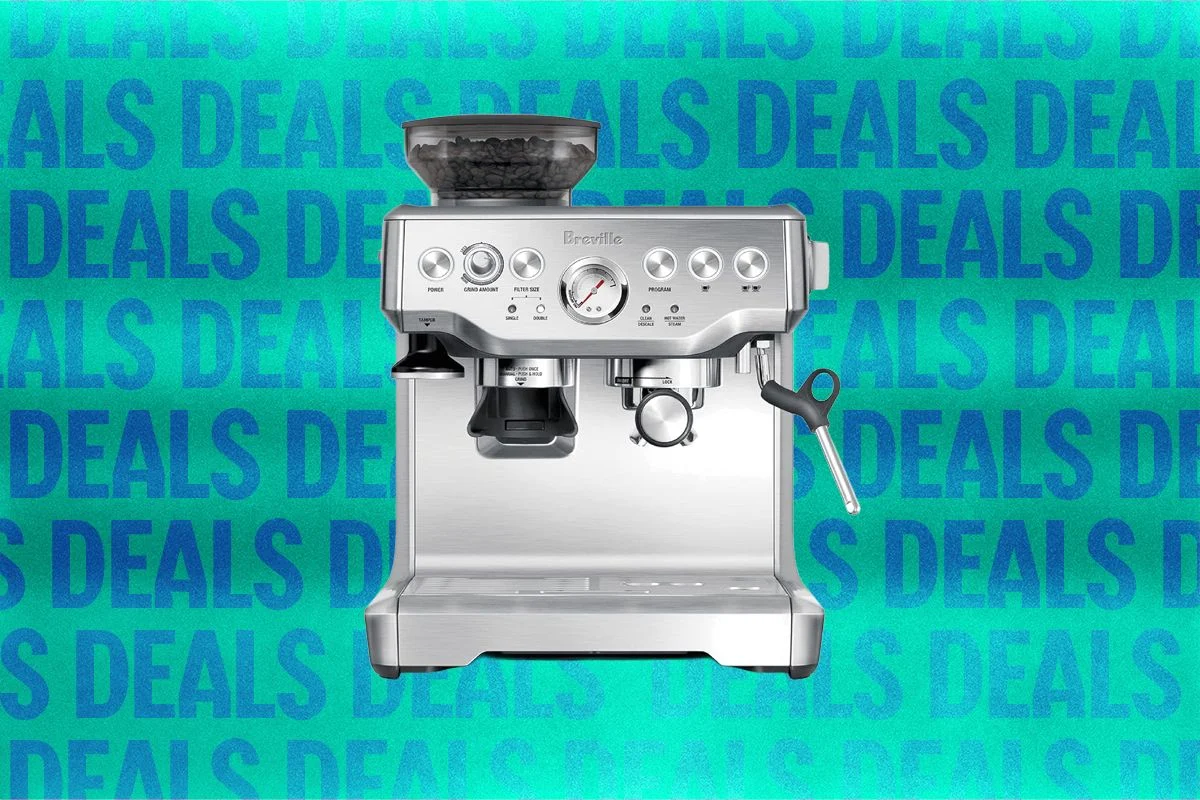
The timing of these discounts aligns with a broader industry trend where high-end home brewing technology is becoming a primary focus for consumer electronics retailers. According to recent market analysis, the shift toward "prosumer" home coffee setups has accelerated as the cost of retail specialty coffee drinks continues to rise, with many consumers seeking to offset daily expenditures that now frequently exceed $7 per beverage.
Market Dominance and the Breville Barista Express
The Breville Barista Express (BES870XL) has long maintained its position as the benchmark for entry-level semiautomatic espresso machines. For over a decade, this specific model has dominated Amazon’s sales charts in the espresso category, a feat attributed to its integration of professional-grade features within a consumer-friendly interface.
The current early Prime Day promotion brings the Barista Express down to a $500 price point, a significant decrease from its standard $700 MSRP. Historical pricing data indicates that this $500 threshold is rarely breached, typically occurring only during major holiday sales or inventory clearances.
Technically, the Barista Express is a "semiautomatic" machine, meaning it provides the user with an integrated conical burr grinder and a high-pressure steam wand, yet requires manual intervention to dose, tamp, and time the extraction. This balance allows enthusiasts to learn the nuances of espresso theory—such as grind size and tamping pressure—without the need for multiple disparate pieces of equipment. The machine’s longevity has also become a selling point; industry reports and long-term user tests, including those conducted by senior technology editors, suggest a functional lifespan exceeding seven years under regular maintenance.
The Rise of the Challenger: Ninja Luxe Cafe Pro
While Breville has enjoyed long-term market stability, the 2024 entry of Ninja into the semiautomatic espresso market has introduced new competition. The Ninja Luxe Cafe Pro, which debuted to a skeptical reception from coffee purists, has quickly gained traction due to its emphasis on automation and ease of use. During the current 2026 sales event, the Luxe Cafe Pro is listed at $600, a $150 reduction from its $750 list price.
The Ninja Luxe Cafe Pro distinguishes itself through "Barista Assist" technology, which includes weight-based dosing. In traditional machines, users must often use a separate digital scale to ensure they are using the correct amount of coffee grounds. The Ninja system automates this process, adjusting the grind duration based on the weight of the coffee in the portafilter. Additionally, the machine features a unique magnetic whisk system in its milk carafe, which facilitates automatic frothing for both hot and cold beverages. This feature addresses a common pain point for beginners: the difficulty of manually texturing milk with a traditional steam wand.
Comparative Analysis of Early Prime Day Deals
The decision for consumers between these two discounted units often comes down to the desired level of manual control versus automated convenience.
Technical Specifications and Performance
The Breville Barista Express utilizes a 15-bar Italian pump and a 1600W thermocoil heating system, which ensures that the water is delivered at the precise temperature required for optimal extraction. Its built-in grinder offers 16 grind settings, which, while sufficient for medium and dark roasts, can sometimes struggle with the precision required for ultra-light specialty roasts.
In contrast, the Ninja Luxe Cafe Pro offers a more diverse range of beverage options, including a "drip coffee" function and specialized settings for cold brew. However, performance data suggests that while the Ninja excels at milk-based drinks and convenience, the Breville remains the superior choice for those focused on the "pure" espresso shot. The Breville’s stainless steel construction and mechanical pressure gauge provide a tactile experience that many enthusiasts prefer over the Ninja’s digital interface and plastic-heavy components.

Reliability and Support
Breville’s established presence in the market provides a significant advantage in terms of post-purchase support. The company has a robust network for repairs and a history of honoring warranties, which is a critical consideration for a $500 investment. Ninja, while a powerhouse in the blender and air fryer markets, is still building its reputation for long-term durability in the high-pressure environment of espresso brewing.
The Economic Context of Home Espresso in 2026
The aggressive pricing seen in these early Prime Day deals is reflective of the current economic landscape. Consumer spending on small appliances saw a slight contraction in late 2025, leading major manufacturers to rely on high-volume sales events like Prime Day to meet annual revenue targets.
Furthermore, the "Starbucks Effect"—where high retail coffee prices drive consumers toward home solutions—has created a permanent market for machines in the $500 to $800 range. Industry analysts suggest that a consumer who replaces a $7 daily latte with home-brewed espresso can recoup the cost of a $500 Breville Barista Express in approximately 72 days, assuming a $1.50 cost per home-brewed shot (including beans, milk, and electricity).
Chronology of Prime Day Coffee Sales
The evolution of coffee machine discounts during Amazon’s signature sales event has followed a distinct trajectory over the past five years:
- 2021-2022: Discounts were primarily focused on pod-based systems (Nespresso and Keurig) as consumers sought maximum convenience during the transition back to office work.
- 2023-2024: A shift occurred toward "super-automatic" machines—units that grind, tamp, and brew at the touch of a button—but at high price points exceeding $1,000.
- 2025-2026: The current trend emphasizes "semiautomatic" machines. Consumers are increasingly willing to perform some manual labor to achieve higher quality results, provided the machines are priced competitively.
The current $200 discount on the Barista Express is the largest price drop for the model since the Black Friday period of 2023.
Industry and Consumer Reactions
Retail analysts have noted that the early release of these deals is a strategic move to capture "early bird" shoppers before the peak traffic of the official Prime Day window. "By offering the lowest price in years several days early, Amazon is effectively locking in sales that might otherwise go to competitors like Best Buy or Target, who often price-match during the actual event," stated Marcus Thorne, a retail strategy consultant.
Specialty coffee retailers, such as Seattle Coffee Gear, have also responded by offering similar bundles, often including free bags of beans or extended warranties to compete with Amazon’s raw price cuts. This competition has resulted in a "buyer’s market" for coffee equipment that is expected to last through the end of the month.
Broader Impact and Future Outlook
The success of these sales is likely to influence the product development roadmaps for both Breville and Ninja. For Breville, the continued popularity of the aging Barista Express may delay the release of a direct successor, as the company focuses on its higher-end "Oracle" and "Touch" lines. For Ninja, the positive reception of the Luxe Cafe Pro’s automated features will likely lead to further integration of AI and weight-sensors in future kitchen gadgets.
As the home espresso market matures, the distinction between professional and consumer equipment continues to blur. The availability of high-quality machines at the $500 mark democratizes access to specialty coffee, potentially impacting the foot traffic of traditional coffee chains.
For the consumer, the 2026 early Prime Day deals represent a rare intersection of high-quality hardware and deep-discount pricing. Whether choosing the battle-tested reliability of the Breville Barista Express or the innovative automation of the Ninja Luxe Cafe Pro, the financial incentive to transition to home brewing has rarely been more compelling. As the official Prime Day dates approach, market watchers expect these specific inventory lots to deplete rapidly, marking this early window as the optimal time for purchase.







